
Silber
-
Posts
53 -
Joined
-
Last visited
Content Type
Profiles
Forums
Store
Articles
Gallery
Events
Library
Everything posted by Silber
-
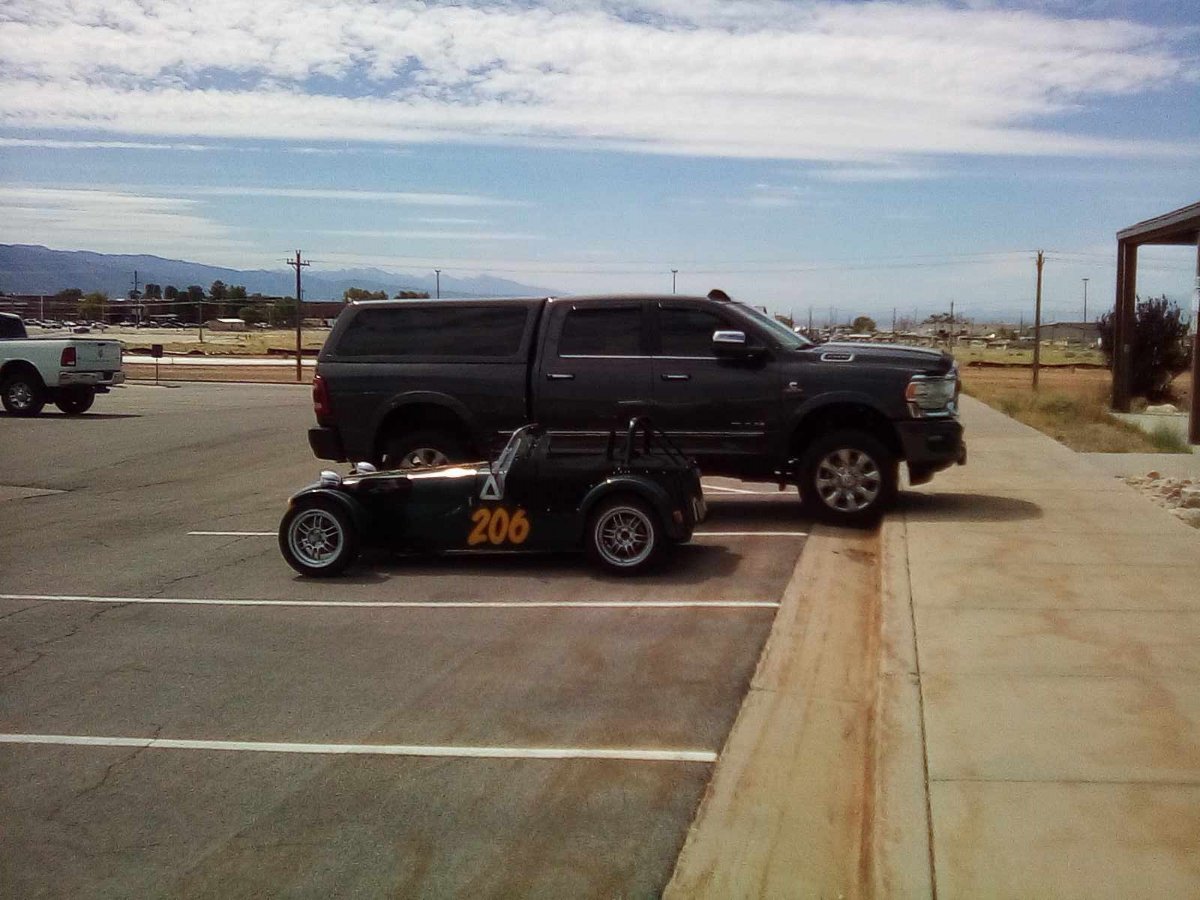
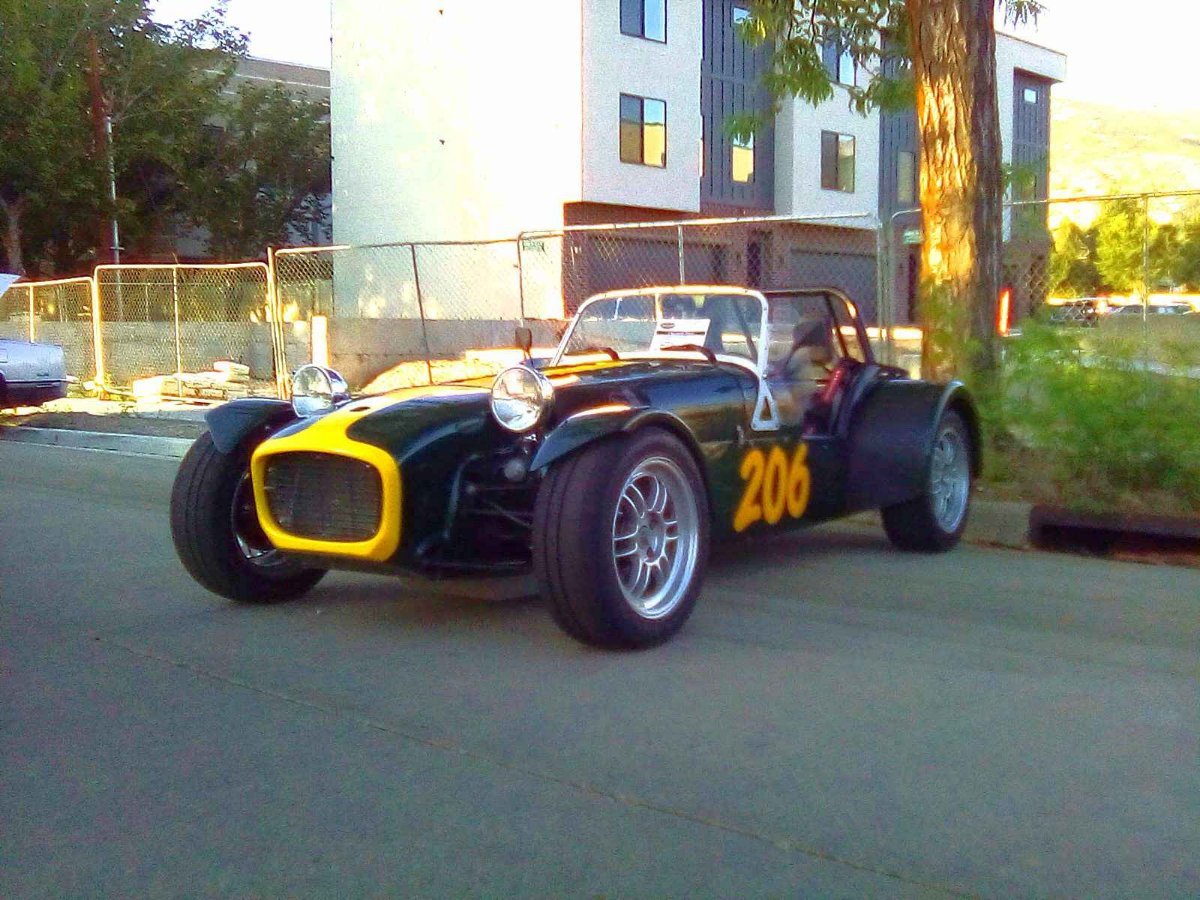
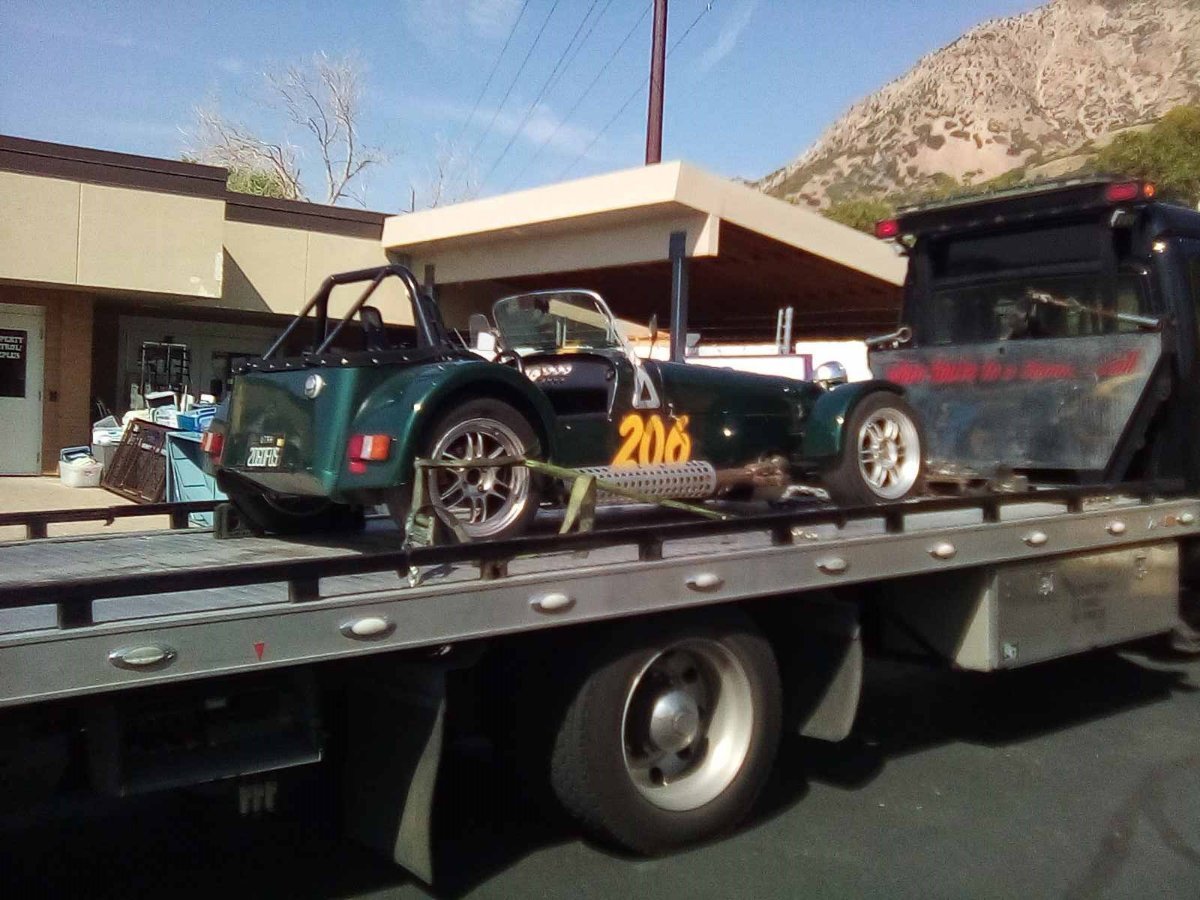
I was driving the car quite a bit during the summer, even daily driving it for a couple weeks when our old Jeep Cherokee had a catastrophic water pump failure. It was fun parking it up next to the typical monster trucks people around here usually drive. But, the summer did not end without any problems. I was out at a local university for work when I went to start the car and drive back to the office, but the car did something like "chugga, chugga, clunk," and then I had no starter. I tried bump starting it and jump starting it, but neither worked. Hot, flustered, and a bit embarrassed as most of my coworkers were there, I decided to utilize roadside assistance and get the car home where I could diagnose the problem without pressure. I let the car sit for about a month as life with a young family keeps me busy, but finally had the chance to try and diagnose the problem. The symptoms were no starter and no fuel pump, which prompted me to look at all the fuses. Checked every one of them and all was good, but when I happened to turn the headlight switch on with the ignition on, I heard a buzzing coming from the fuse box. The culprit? The ignition relay. The parts store didn't have a comparable replacement, but I could hijack the relay for the heated windscreen, swapped it over, and boom, everything working and engine started right up. I'm so glad it was an easy fix, and happy that it was also fairly painless to diagnose. Could have done it in the parking lot at the university, but alas, you live and you learn. I'm looking forward to a bunch of drives before they salt the roads here and enjoying the nice fall weather.

-
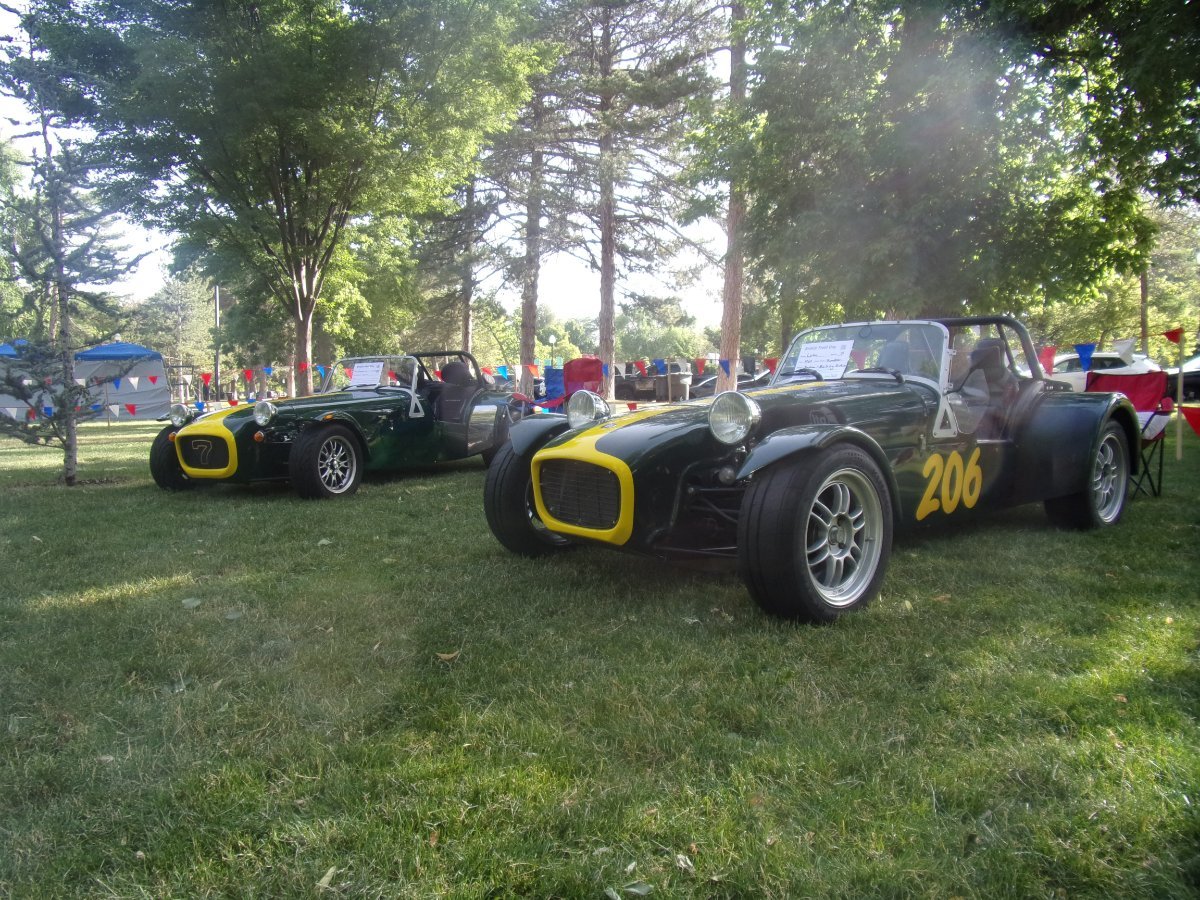
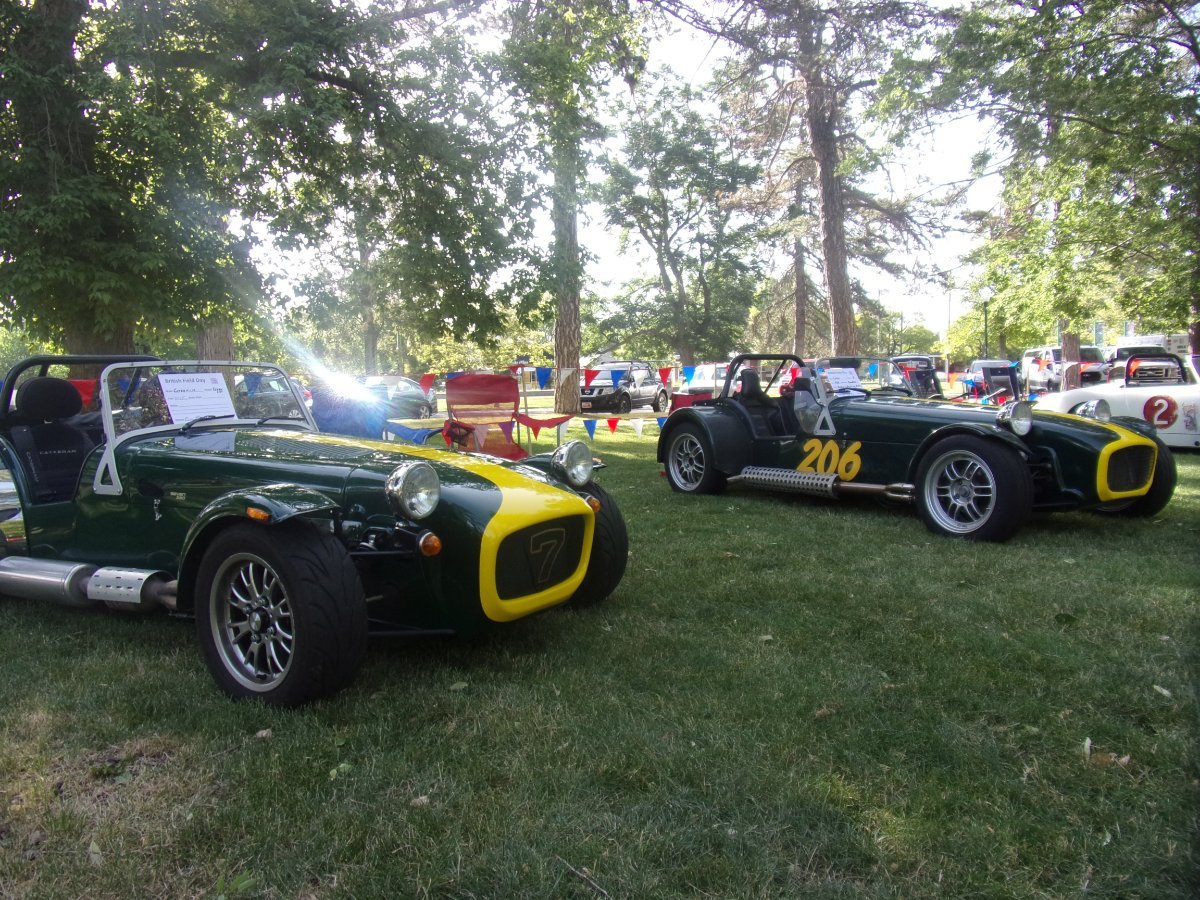
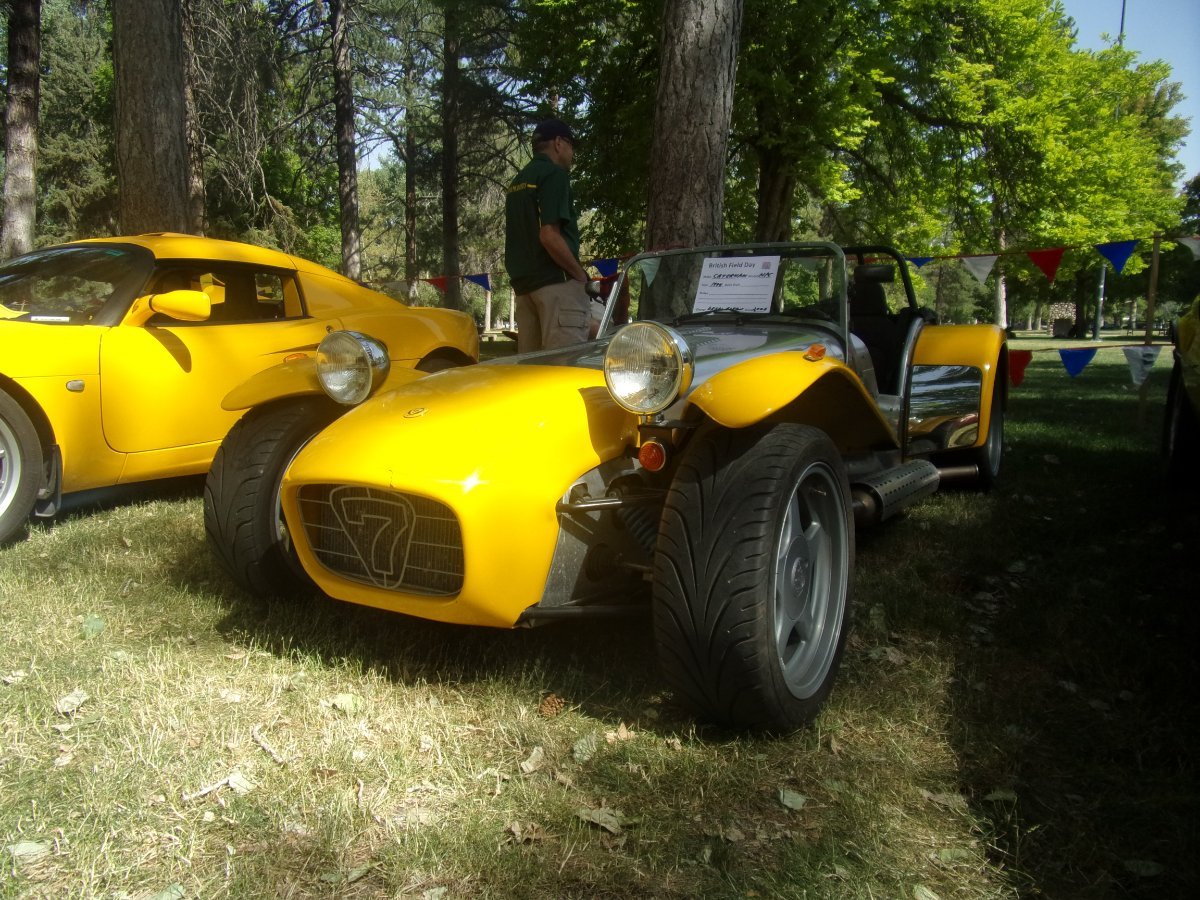
Due for an update. Had a fun time at the British Field Day in Salt Lake City. Two Caterhams there in addition to my Birkin. I helped set up the "Race Course" with a good friend and experienced autocrosser to allow a course that flowed a lot better than last year, the main requirement was we needed to keep the average speed below 25 mph. I had the fastest time of the day by the end, narrowly jumping ahead of my friend in his Bugeye Sprite according to the "old man timing system" that was a gentleman doing the stopwatch on his phone. I calculated the average speed of my fast time to be 21.03 mph. Mission accomplished!
-
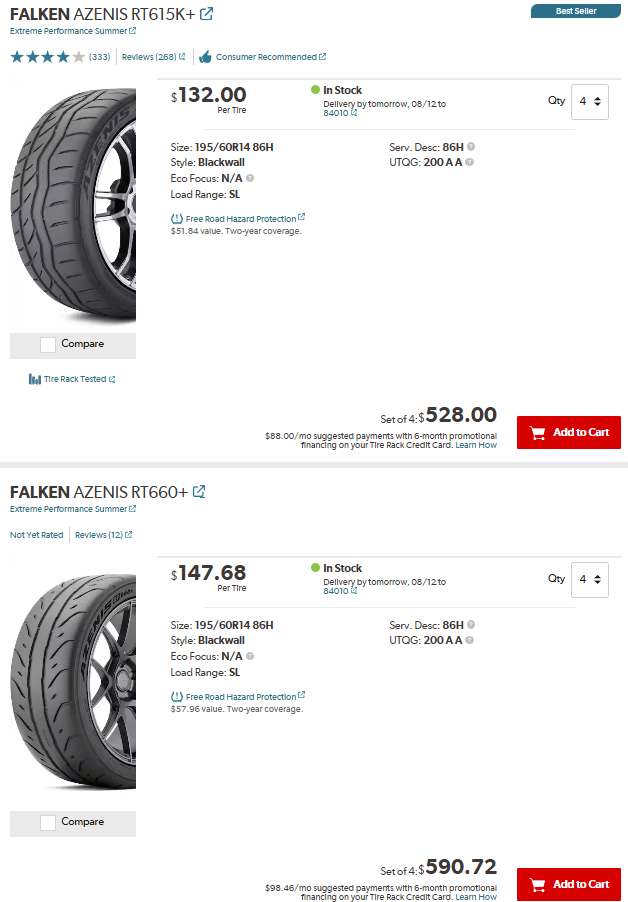
I suggest going with the R888Rs if you want to maintain a grippy tire in the same size. Another option is moving up to 195 width tires which opens up a couple of Falken tires that would both be adequate replacements for your Star Specs.
-
I also participated yesterday and today in a two-day charity car show in the town I live in. Last year I had to choose between the Utah British Field Day event and this one, but to my benefit British Field Day is next weekend so I will be able to attend both. Mostly classic American cars, but I had a nice neighboring Austin Mini and a Midget a couple of cars down that brought a British vibe to our side of the show. Imagine what it would be like if all cars were about this size, instead of the 8000 lb behemoths that are commonplace nowadays.
-
My friend's shop was home to some lovely cars. I only took pictures of the two that were in the shop, but in addition to the Bugeye Sprite and 914 below, there was also another Bugeye, a first gen Camaro, a Nissan Skyline GTR R32, and a nice E36 M3 sedan.
-
Overdue for an update. Spent a bunch of time working on the cooling system, which you can read about in this thread. Long story short, the car runs a little hotter than I would like, but the cooling system seems to be operating correctly. Once that was sorted, it was time to get the suspension dialed in and some new tires (finally!). A friend of mine offered to help me do a string alignment at his shop and mount my new tires, so I loaded up to drive a couple of counties over to where he lives. I saw at least one person taking a video of me driving down the interstate like this We were able to fairly easily get the specs I wanted. End result! Decided to go with -2.0 degrees of camber in the front, -1.6 degrees in the rear, and zero toe all around. As mentioned in an earlier post, the intention with these specs is to try and dial out the understeer. Initial drives show little change on turn-in characteristics, but the front end has more grip once the suspension is loaded in a corner. I'll need to take it to an autocross to really tell, and I'm excited about the new tires as well. I went with Kumho V730s, 205/50r15 front and rear. I love the nearly semi-slick look, and I think they will be much better than the Bridgestones from 2018.
-
From what I've seen the thermostat is integrated into the housing, so the whole housing is replaced. It sits on the left side of the engine near the front, and is thankfully really easy to replace. It's more work to drain the coolant than replace the housing. 210-215 °F is still safe, but my preference is to keep the coolant temps closer to 200. Maybe I'm fretting too much over 15°, but I can imagine that in 95° heat cruising down the 1+ kilometer front straight of my local track I will probably see even higher temperatures. Yes on 50/50 coolant and a pressure cap.
-
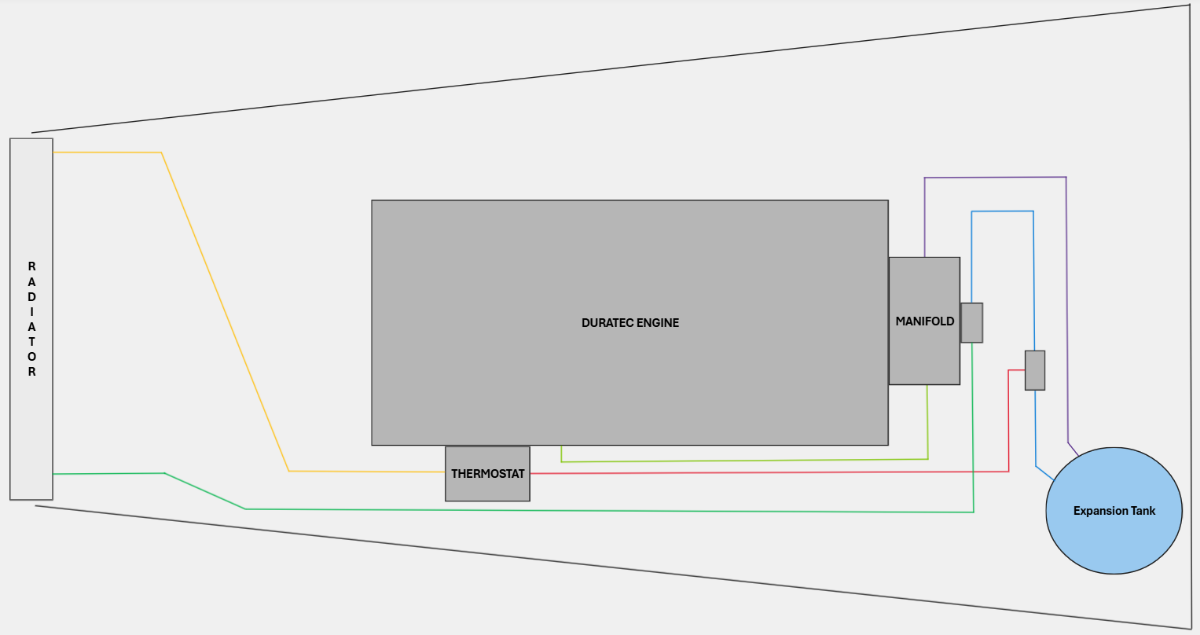
Due for an update. I finally got around to working on this problem. Here's what happened: Removed and tested the new thermostat along with the old thermostat in a pot of boiling water. Both thermostats were functional. Re-routed the system to eliminate the heater core, capping the bypass on the thermostat housing. Removed the heater and covered the holes. Removed the thermostat out of the old housing and reinstalled to allow full flow. Flushed the system with water two times. Reinstalled the new thermostat/housing and burped the system. The result? Mixed and dissatisfied. Everything seems to be working, but this thermostat keeps the system between 210-215 °F, which is hotter than I like. Stayed in that range on both the drive to work (47 °F ambient) and the drive home (68 °F ambient). I'm not confident it'll stay that way when it's 90+ in the summer, or during track/autocross. Positives: the car warms up faster and warms up regardless of the car being stationary or in motion, and removing the heater has reduced footwell temperatures, which will be very nice in the summer. I'm considering trying another standard replacement thermostat from the local parts store, or even trying a lower temp thermostat like this one.
-
That makes sense. Simplify and add lightness, right?
-
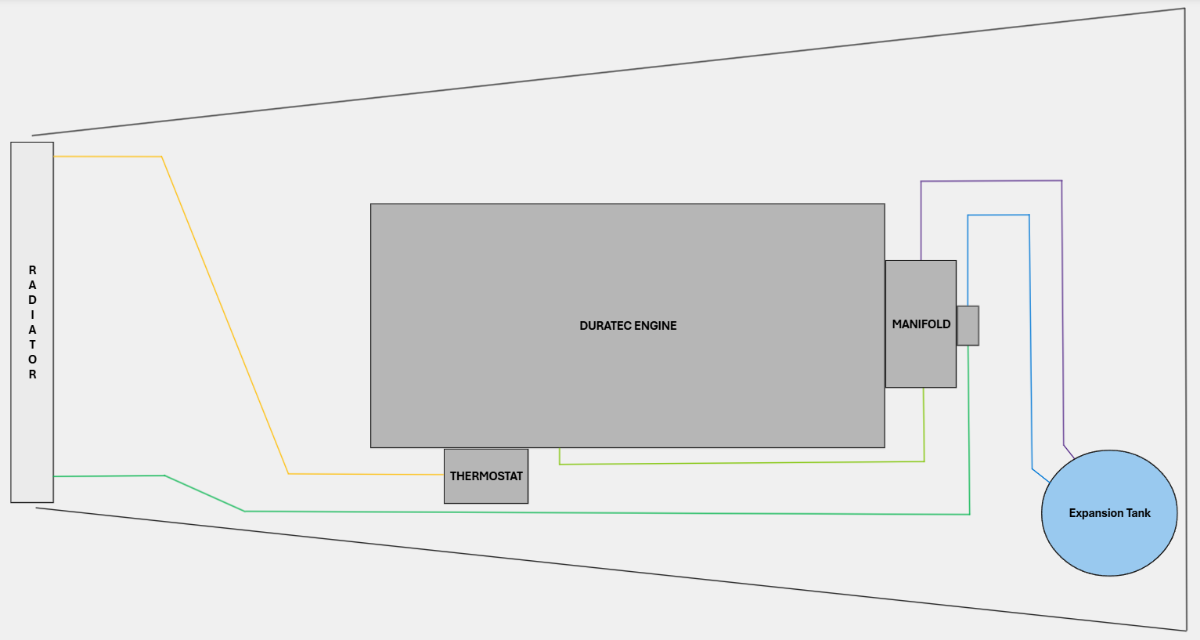
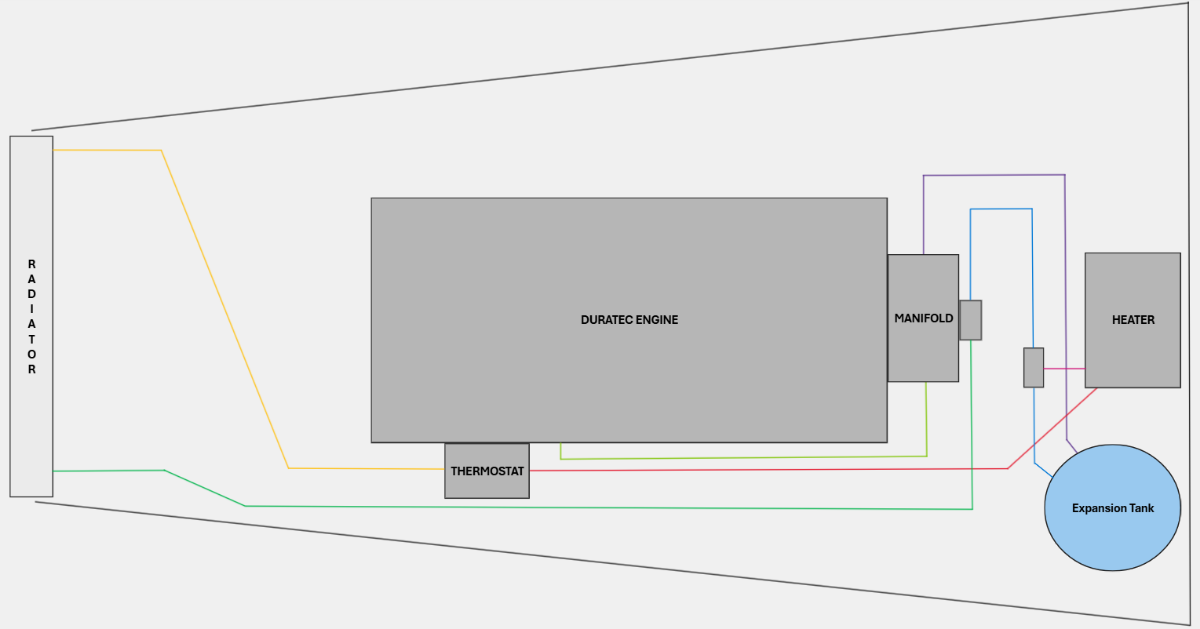
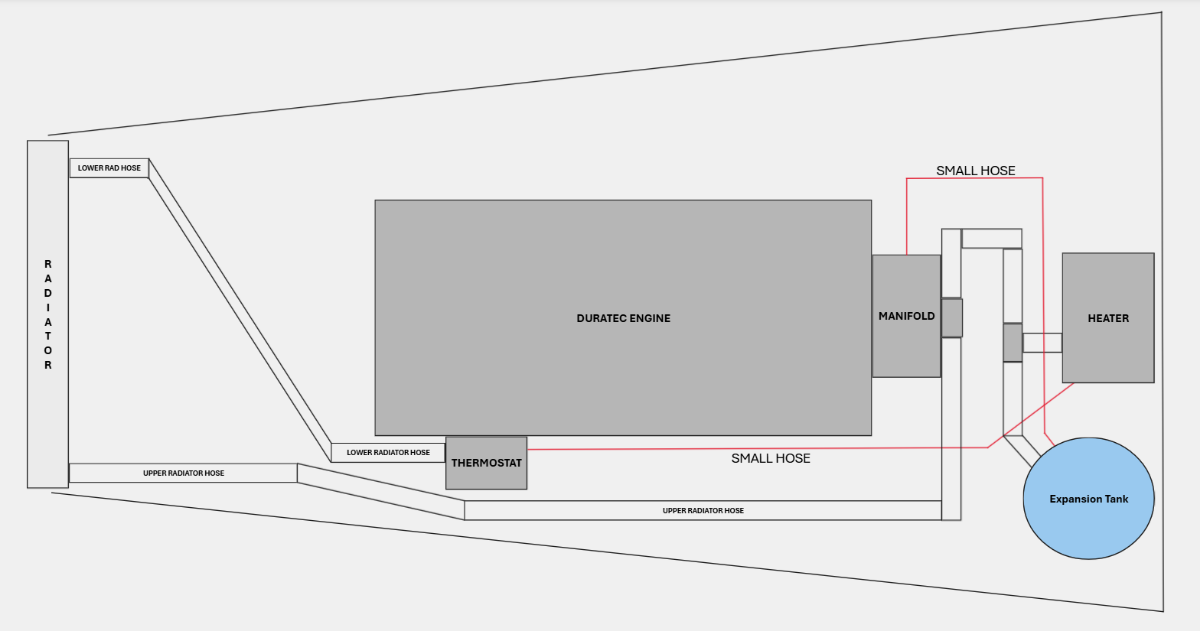
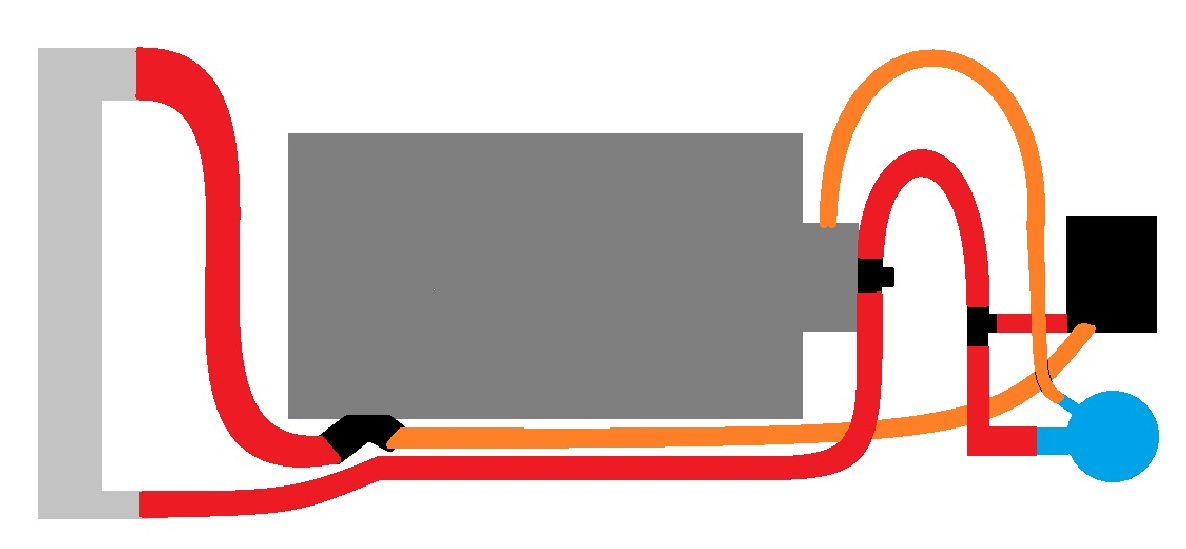
Pinching the thermostat → heater hose is easy enough. I'll give it a try. I believe the indicating temp sensor is coming off the connector between hoses 2 & 4 per your diagram. There is another sensor directly in the manifold. I plan on testing the thermostat. I appreciate everyone's feedback. I'm going to try MV8's suggestion to pinch the one hose to the heater first just for another data point, but after that the plan is to: Tear into the system again and remove the thermostat and heater Test the thermostat and depending on results install it again, install a new one, or install a modified housing that allows constant flow Properly flush the system instead of just drain and fill I remade my diagram to hopefully make it easier to read. First picture is the current system, second picture is how I plan to bypass the heater.
-
Looks like I'm going to be re-plumbing the system because I'm left scratching my head about this cooling system. I did not get the thermostat to open at all while the engine was running today. I started off running the engine with the expansion tank off, rear of the car raised. I saw a bunch of bubbles in the expansion tank, but the thermostat did not open at 180 F. The radiator fan kicked on at 190 again, and I confirmed it is spinning correctly drawing air through the radiator. The lower coolant hose was cold when I shut the engine off at 210 F, at which point coolant started bubbling up out of the expansion tank. I put the cap back on, and found that some hot coolant flowed through the lower radiator hose. What? Started the engine after a few minutes, 190 F, rear still raised and expansion tank cap on. Lower radiator hose cooled off with airflow from the radiator fan, and stayed cool when I shut the engine off at 210 F. I started to relieve pressure from the expansion tank cap, with my hand on the lower radiator hose, and as I was relieving pressure I could feel hot coolant flowing through the lower hose. I don't understand what is going on... is the thermostat opening only when I relieve pressure in the system? Left the car for a few hours and tried one more time. Expansion tank cap on, car flat on the ground, the thermostat still did not open. I opened up the expansion tank while the engine was running at 200 F, no flow through the lower radiator hose, but I did notice some more bubbles, so I raised the rear of the car and let it burp for a few minutes. Put the expansion tank cap back on, shut off the engine, and no flow through the lower radiator hose. Relieved the pressure in the tank and felt the coolant flow again. So my thoughts are that I've got a faulty thermostat, or this system is very difficult to burp/bleed and is really causing flow issues, or some other problem yet to be diagnosed. I did, however, find that there is another bypass that I had missed that runs from the engine block just behind the thermostat housing to the manifold on the back of the engine. Everything on the right side of the diagram I posted gets properly hot, the upper radiator hose gets fairly warm, and the radiator and lower hose remain cold.
-
Not going to be able to get to working on it until Friday at the earliest, but here's the plan: Prop up the rear of the car and allow engine to warm up enough to open the thermostat and run the fan. Purpose is to see if the system will burp and operate normally. If Step 1 does not result in normal behavior, drain and flush the system while also changing the routing to bypass the heater completely. The fan switch for the heater doesn't work, and I don't drive the car in the winter due to salted roads, so removing the heater was already something I was considering. Repeat Step 1 with the new routing and flushed system. I'll report back here with my progress.
-
It also looks like the Zetecs have a different location for the thermostat, at the back of the engine instead of next to the water pump.
-
The thermostat housing is on the front left side of the engine, and the small hose from that runs to the heater. The small line from the expansion tank runs to the manifold on the back of the engine. I made a new drawing with a different program that should make it more clear. Looking at the other drawings, it appears that expansion tanks typically have a third hose for a breather. I only saw two lines coming from the tank, so I'll need to take a closer look tonight.
-
That's the thermostat. My system looks fairly similar to the Duratec diagram, but the bypass from the thermostat goes directly to the heater core, and the expansion tank is in a different location.
-
Here is a really quick drawing of the layout of the system: Black box on the right is the heater core. The bypass from the thermostat goes to the heater core. The "t" on the manifold on the back of the engine also has a sensor in it, not indicated in the drawing. Only spot to burp/bleed is the expansion tank. The line you are referring to on the expansion tank goes to the manifold on the back of the engine. I plan on renting a pressure tester. I'll keep the vacuum method in mind if I don't feel confident the system can be bled through burping. Thanks for the link. The advantage is I already have 4+ gallons of green, haha! I'll stick with the G-05 for now, and plan on doing a proper cleaning/flush of the system if problems persist. I'll report back on progress when I get back to working on the car this weekend. Thanks for the responses everyone! My conclusion is that there is a solid chance that the system just simply needs to be properly burped, so I'll start with pressure testing the system and burping with the rear of the car raised, while also verifying that the radiator fan is spinning the right direction. If the car is still exhibiting the same behavior of long warmup/insufficient cooling at operating temp, I'll proceed with cleaning and flushing the system.
-
1) The car has a standalone, F.A.S.T. XFI 2.0 2) Interesting idea, and could be valuable to have a visual confirmation of what is happening if the issue isn't resolved . 3) There is a heater core (sitting under the brake/clutch reservoirs), but I'll look into that tool. 4) Agreed that a pressure test would be prudent. 5) I have a similar large funnel that I use. I guess the Caterham radiators are smaller? You would think with a large radiator the car wouldn't have a hard time staying below 215 degrees... Low hanging fruit for diagnosing the issues appears to be making sure the system is properly burped. I'll try jacking the car up in the rear to guarantee that the expansion tank is the highest point. Using an older picture, I am only trying to burp the system from the expansion tank. I haven't noticed any other bleed valves, but could easily be missing something.
-
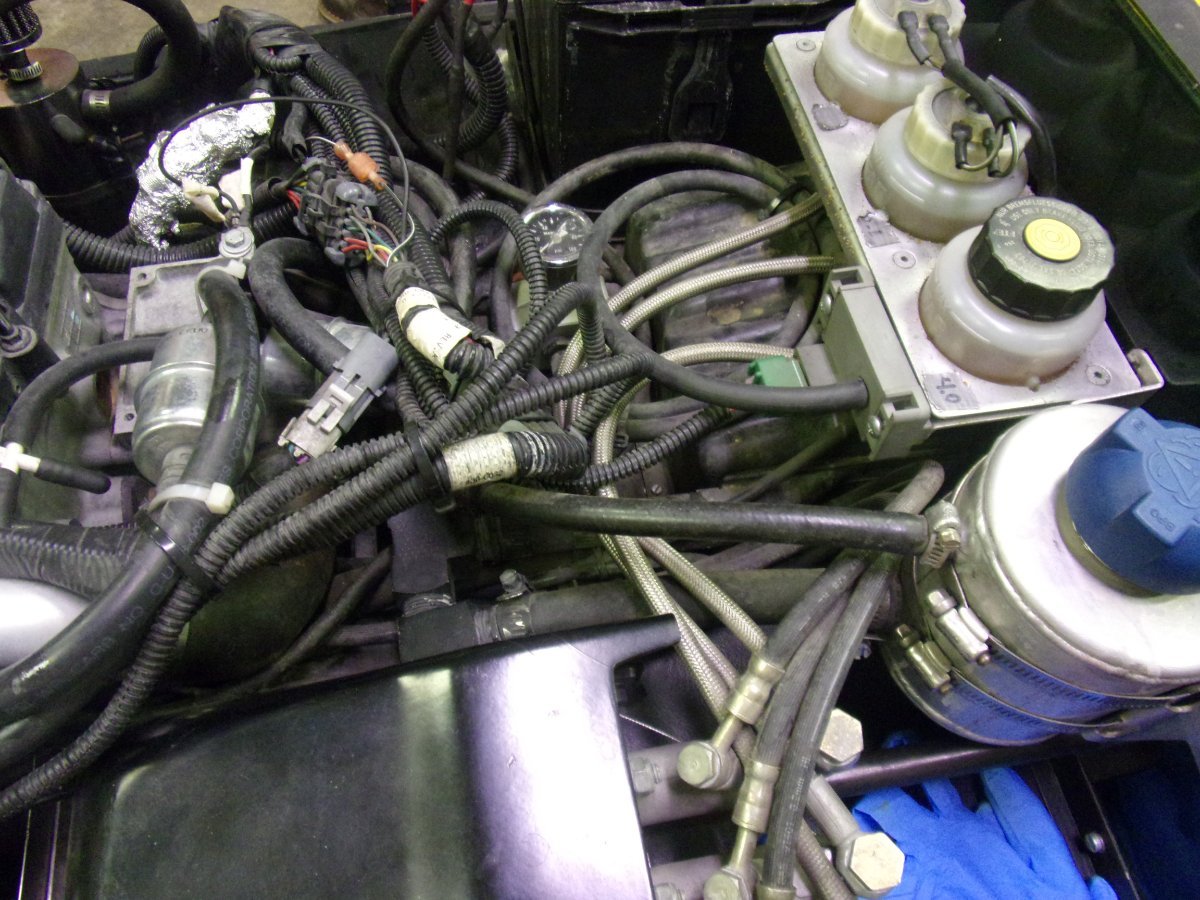
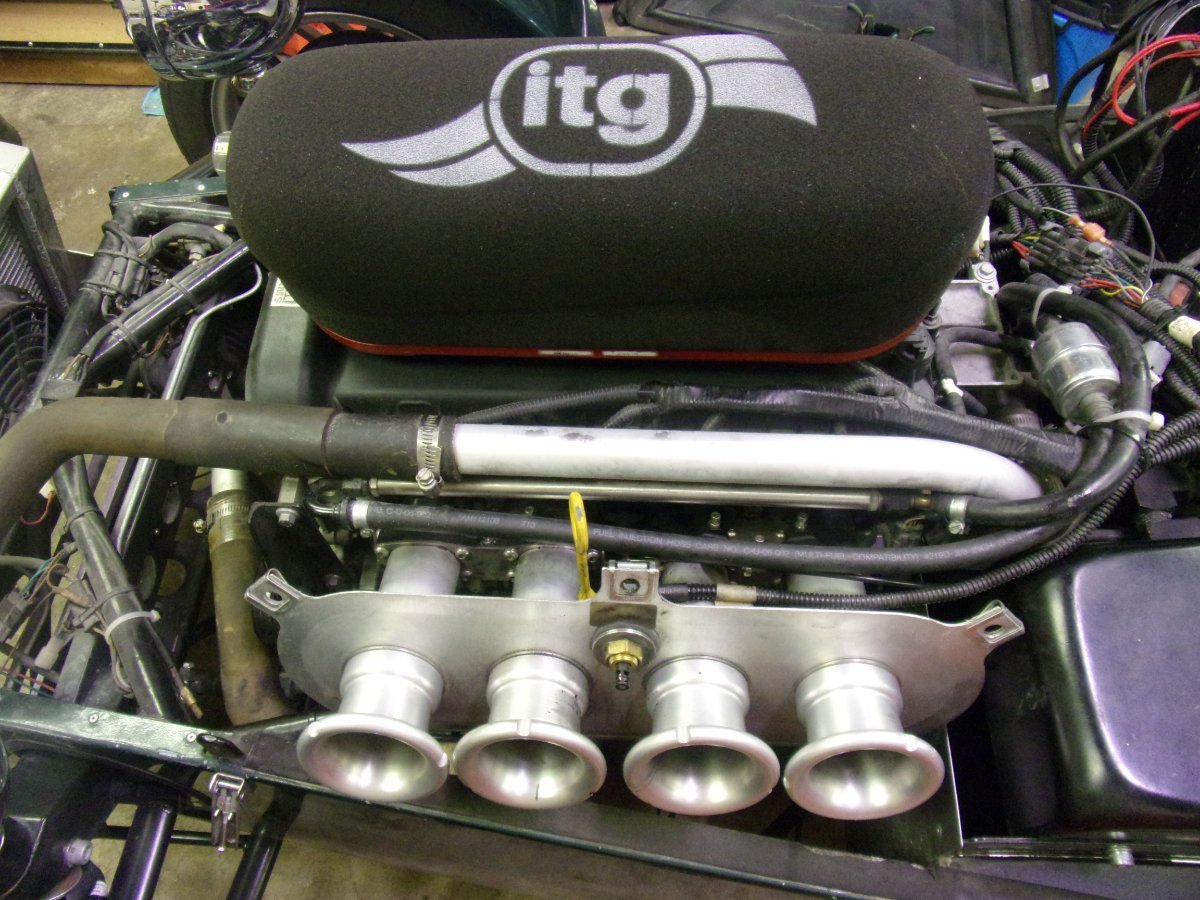
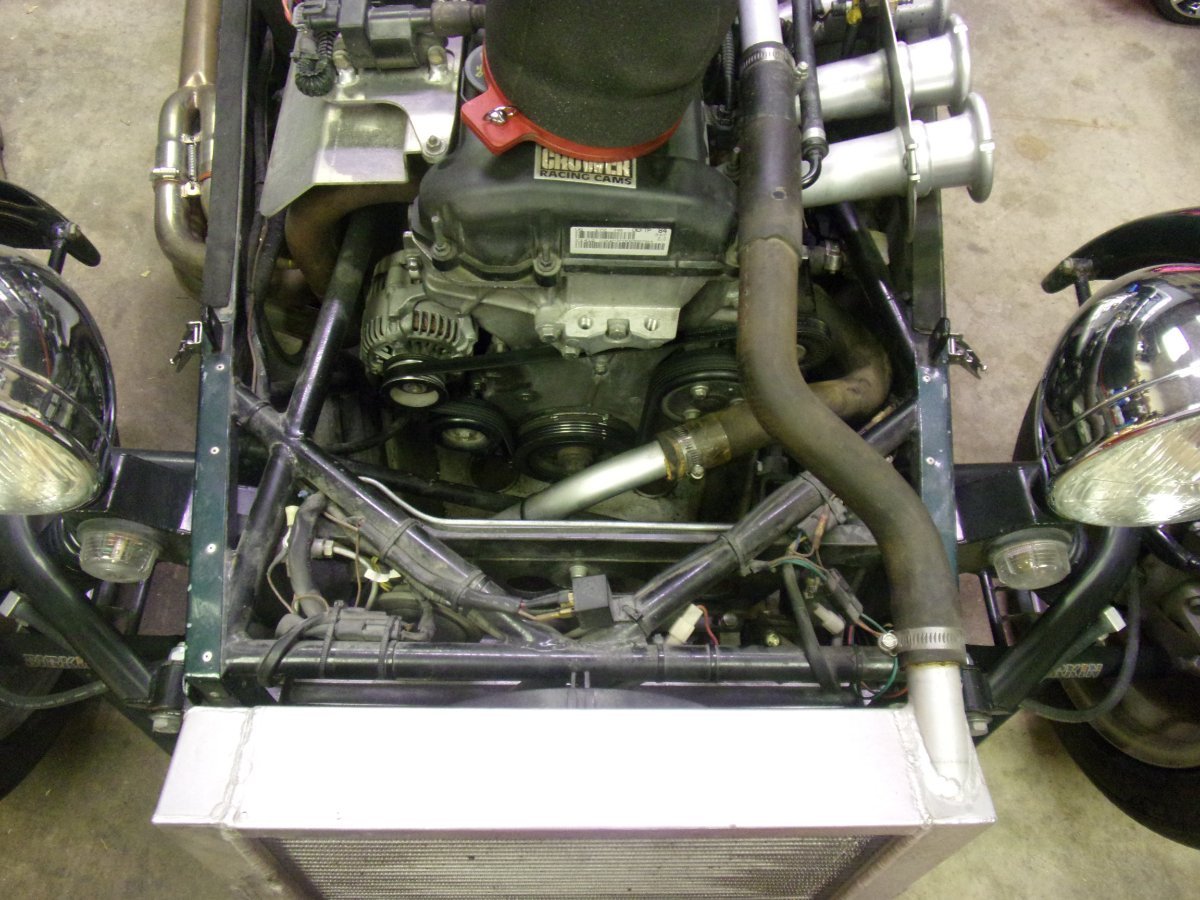
Thanks for the replies everyone. My follow-up comments and questions (in bold) are below. Confirmed that Motorad 512-185 is the part number. It's a 180 degree thermostat. That's why I was checking the upper/lower radiator hoses while letting the car warm up after installing the new thermostat. My concern is the upper/lower hoses and radiator itself were not heating up until much hotter than expected. The fact that the fan kicked on before it appeared any coolant was flowing to the radiator was a big red flag, and having confirmed it was a 180 F thermostat I installed, coolant should have been flowing well before 195-ish degrees. I'm familiar with burping cooling systems, but not with the 7. This whole process occurred while I was attempting to burp it, but as the expansion tank and only entry to the system is behind the engine, I had the car flat on the ground and could very well not have burped it properly. Do you think a big enough air pocket could restrict the coolant from flowing to the radiator? Do I need to raise the back of the car to burp it properly? This is the path I want to avoid if there is an easier fix, but I recognize that I might need to just properly flush the system to ensure everything is cleaned out. I replaced the radiator in my XJ Cherokee and flushed that system. Made an awfully big mess in the garage... I've got a ton of standard universal green coolant laying around from that job, so anyone see any concern in switching to universal green coolant instead of Ford-specific G-05 gold if I thoroughly flush the system? The highlighted part voices my concerns exactly. It just doesn't behave like I think it should. The Birkin was original with the Duratec. Here are some pictures: The mess of hoses. Water line. Front view. Side view. I can make a drawing of the system and post it hear and also compare it to the drawings shown in the thread you posted, but you can see the expansion tank mounted to the firewall. The heater and expansion tank run to the manifold just to the right (aft) of the valve cover, and the water line between the valve cover and the air filter runs to the upper radiator port. Lower radiator hose crosses in front of the engine to attach to the thermostat. That means the system is flowing "backwards", pushing hot coolant up through the radiator. Looking through the other thread, this seems to be the typical routing? Good suggestions. I'll check the fan direction but didn't see any bleed valves. I've always burped cooling systems by having the front of the car up in the air, funnel in the radiator with extra coolant, letting the engine run at operating temp with heater on until no more bubbles coming up through the funnel. What do I need to do differently for the 7? Like I mentioned, the expansion tank is above the radiator, thus the highest spot in the system, but I had the car flat on the ground. I didn't get to the point of really watching for bubbles because I was distracted by all the odd behavior and rising coolant temps. Thanks, Gregory
-
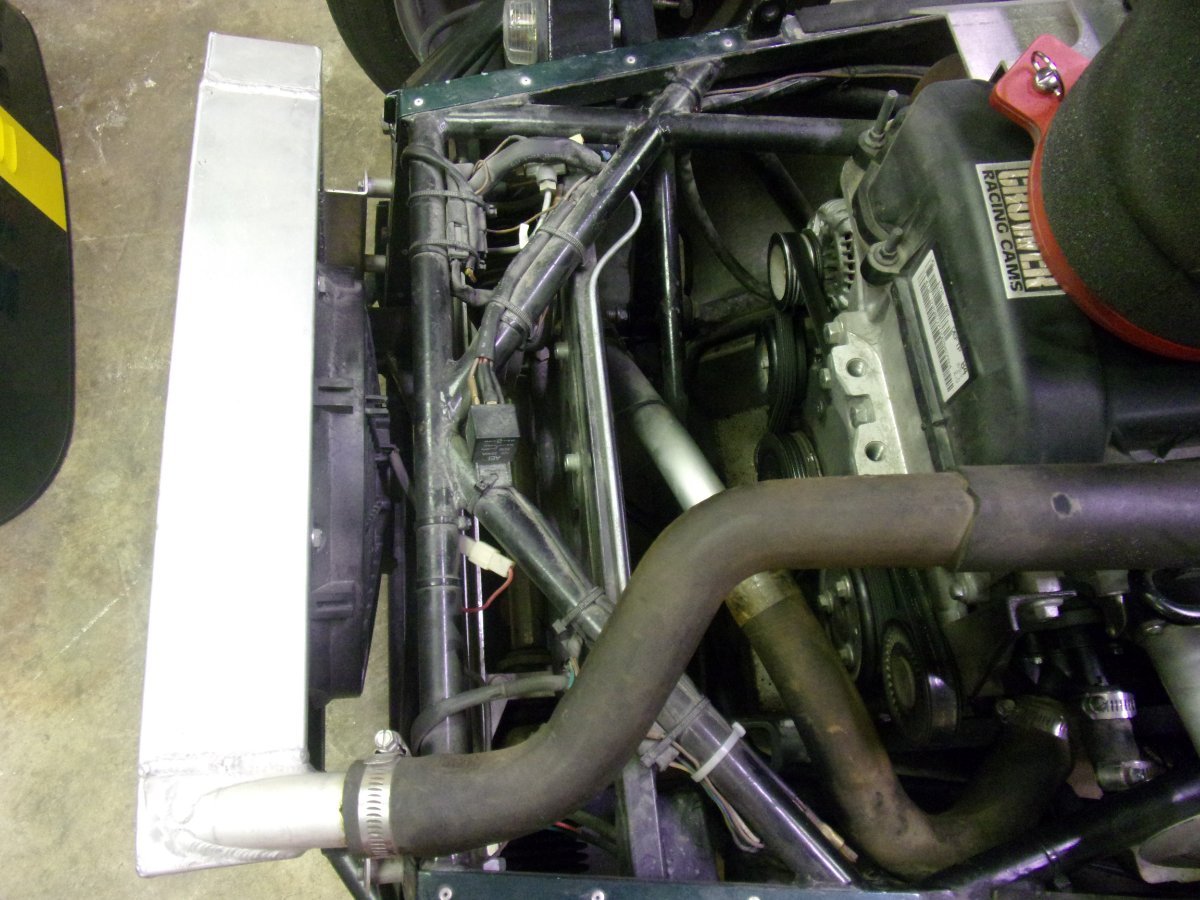
Hi folks, Hoping that those who are more mechanically inclined and more experienced with 7's can help me here. I have a 2009 Birkin with a 2.0L Duratec out of an '07 Focus. Since I've owned it I've noticed that the coolant takes a while coming up to temperature, especially while driving in cooler weather, but then has a difficult time staying within operating temp once hot. For example, driving the car with temps under 180 F, I'll see the temp drop and hover around 150, but once the coolant gets up over 195-ish, it'll continue to get hotter without decent airflow. Thus I figured it was potentially a stuck thermostat, allowing coolant to the radiator and overcooling while cold, but then not flowing enough and undercooling when hot. Getting ready for driving the car this year, I installed a new thermostat/housing, but had some observations today: Coolant didn't appear to be flowing through the thermostat to the radiator until over 195 F coolant temp. Coolant reservoir with the radiator cap is located on the firewall behind the engine (highest point in the system), so I had the car flat on the ground with the cap off and a funnel in the reservoir. Putting the cap on seemed to help get coolant flowing, but can't say for sure. The upper and lower radiator hoses and the radiator itself were all ambient temperature when the radiator fan came on around 190 F. Once over 200 F and coolant obviously (finally!) circulating through the radiator, the temp just continued to climb, while just idling and also when taking the car for a quick drive around the block. I didn't let the coolant get over 220 F. The coolant I drained out of the system appeared orange/gold. I put in Zerex G-05 gold coolant as that is what was standard for the '07 Focus. I feel like what I observed is not ideal, and feel like I have one of the following going on: Perhaps the new thermostat was a dud out of the box? Perhaps I put the wrong coolant in? Perhaps there is a blockage somewhere else in the system that is restricting flow? Perhaps this is all normal behavior and the 7's cooling system just isn't fully adequate. Asking for advice on next steps do diagnose and address the odd behavior. It was very strange that the coolant get fairly hot before the thermostat opened, and even when it did the cooling system as a whole didn't seem to be adequate. Thanks in advance.
-
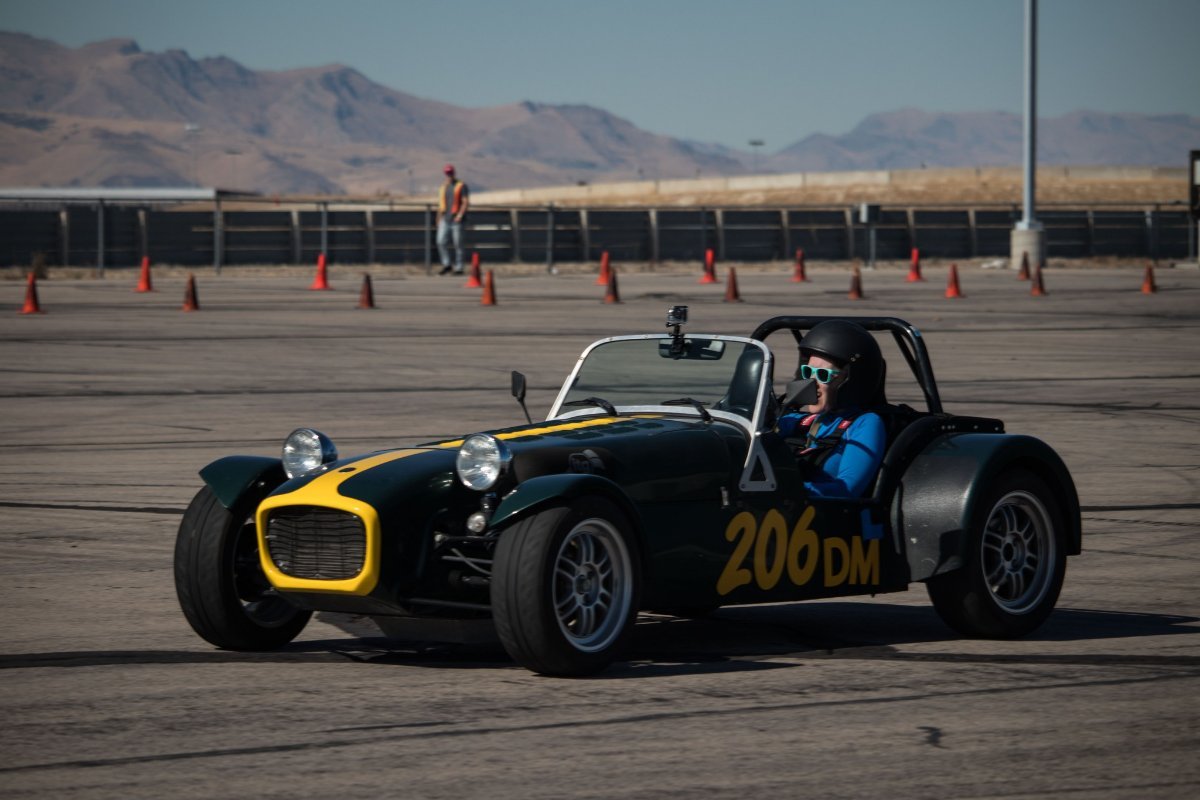
Admittedly not as well as she would like, towards the bottom of the timing sheet instead of the top. We took a bit of hiatus from autocross when we started our family, and she is still getting used to the 7 compared to the Miatas we drove before (this was her first SCCA autocross with it), so we are working on building the speed back in. The emphasis this time out was on having fun and being safe, and without me there in the passenger seat tempting her with "MORE GAS" "BRAKE LATER" "GO FASTER!", she erred on the conservative side. But she can put down some good times. This was her in my D-Prepared Miata back in the day:
-
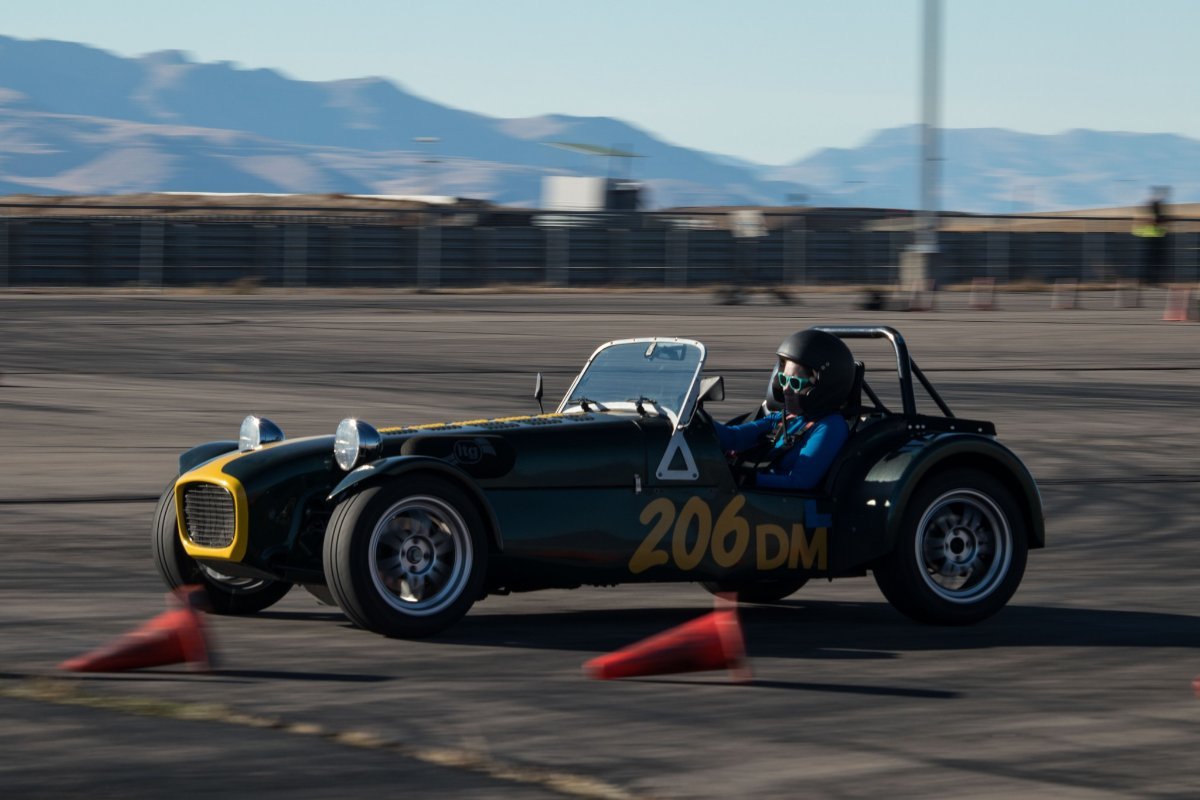
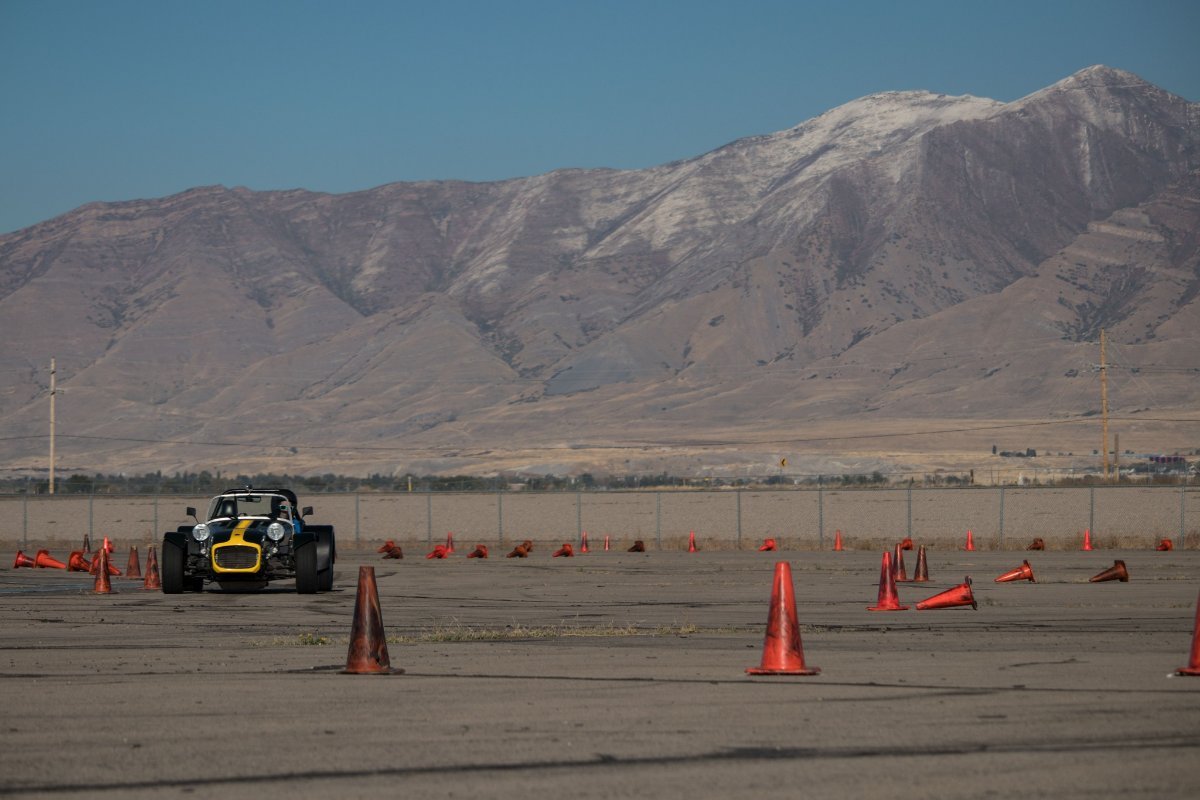
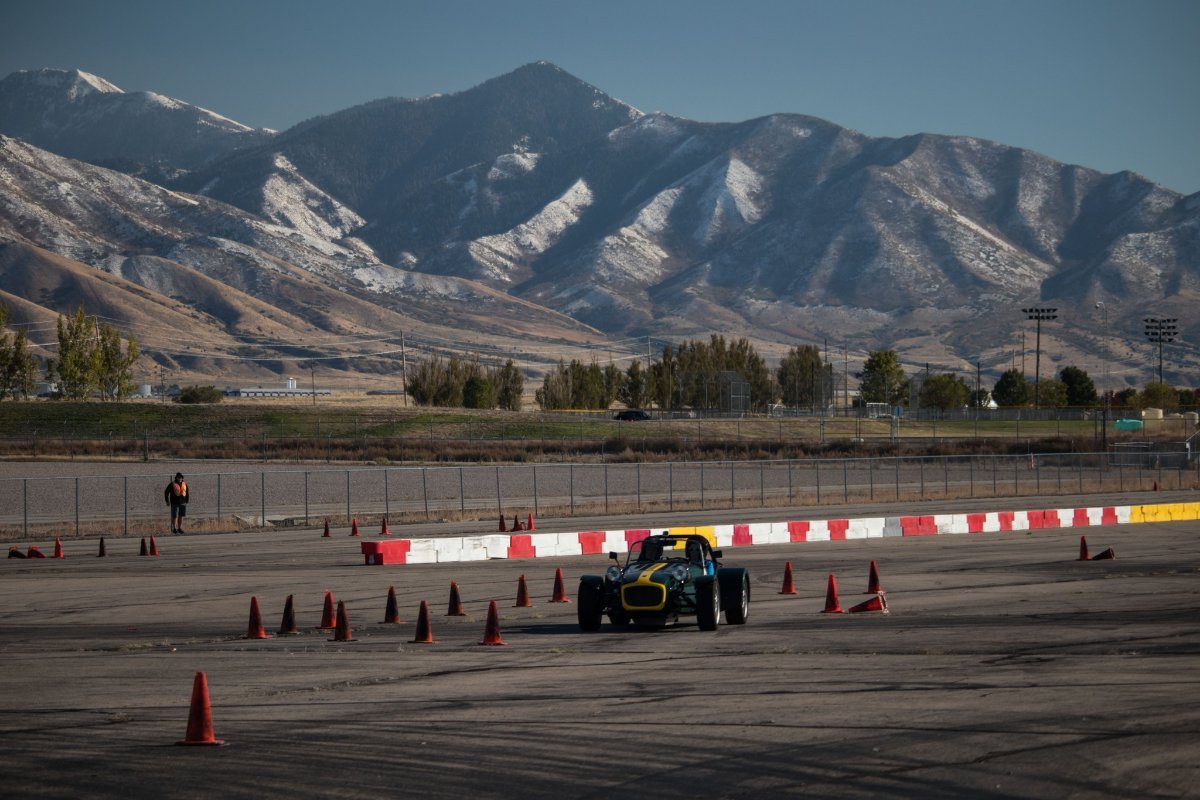
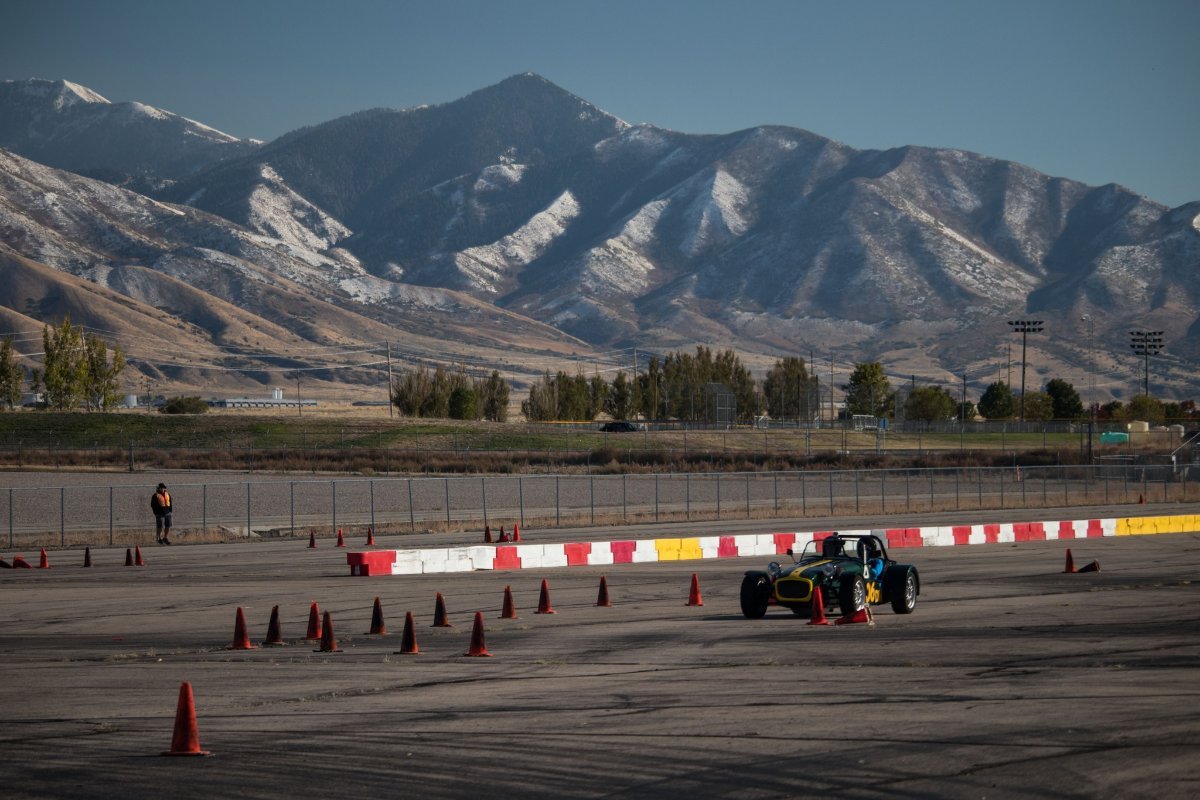
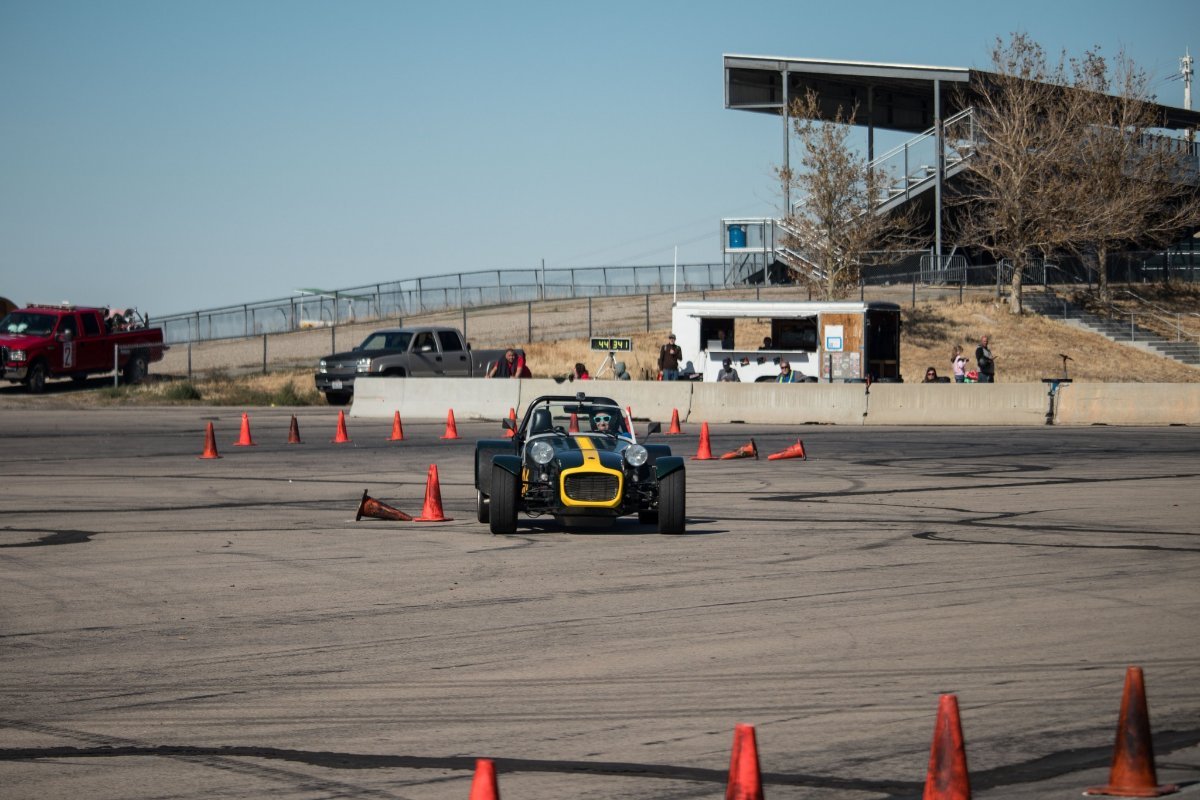
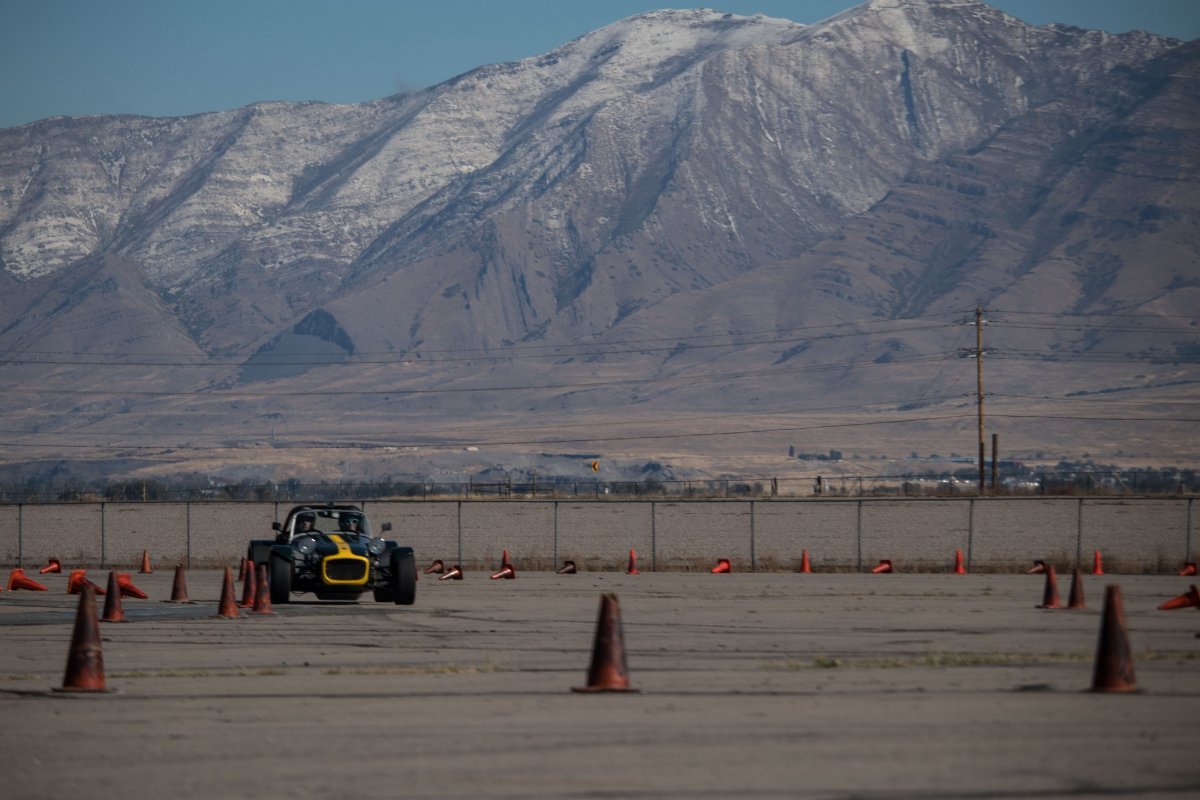
One of the many things I love about my wife is that she participates in the "gotta drive cars fast" thing that I've got going on. I got to spend the day with my two little girls, and my better half got to take the 7 out to Utah Motorsports Campus to participate in the annual Utah SCCA Oktoberfast auto-x. The mountains aren't quite as pretty this time of year, but provide a nice backdrop to the track located near Tooele, Utah.
-
Took Bones to the Wings and Wheels car show/air show at a municipal airport about an hour south of where I live to participate in a non-competitive, showcase-style autocross. There were about 25 drivers from the UT SCCA, and we were offering to any spectator who'd sign a waiver the chance to ride along. There was a bit of showboating, lots of slides, and the course was short and simple, but it was fun. With only 25 drivers in a casual environment, I would say I got somewhere between 30-40 runs on course, 99% of them with someone who has never autocrossed before in the passenger seat. I'm terrible at getting pictures and videos of such things, but luckily my wife recorded a couple runs: The event also include static aircraft and cars on display, air show demonstrations (including some serious pyrotechnics), and a half-mile drag race for the local supercar-owner crowd. I heard some cars were around 190 mph in the half mile!
-
Others have pointed out some good points, but to answer this question, I would say yes, deflectors make the buffeting tolerable. I've had a couple of Miatas and daily drove one for years, and I doubt one could ever get the 7 to be as comfortable wind-wise as a Miata while still keeping the cockpit relatively open. Go with the wind deflectors and if that isn't enough for you add on the half-doors. Beyond that just embrace it as part of the unique experience of driving a 7 :)
-
I just usually wear a full-face helmet if I know I'll be driving more than just around town with a windscreen and factory Birkin wind deflectors on my 7. It's quieter and I barely notice the buffeting, plus I don't care if it looks goofy. I can say that the wind deflectors make a noticeable difference, but not a significant difference. It's still windy with the deflectors.
-
Thanks for the replies @JohnCh, @theDreamer, and @Croc. The consensus is that I was indeed being overly cautious, a little bit of rain won't hurt the car, and in the future I shouldn't be worried about driving it in a rain storm.