
Davemk1
-
Posts
570 -
Joined
-
Good morning - I live in Montana currently and my Westfield is registered and titled in Montana. I'm considering a move to the state of Maine and I wonder what the real world experience has been for others wanting to register their Seven in Maine? Thanks for your input - dave
-
I don't know that tire and I had no luck searching for it online. I asked if it's a radial or bias ply because these two different tire constructions work best with different alignments. Generally speaking a radial tire will work best with more camber (2° to 4°) and less toe than a bias tire. A bias tire needs little camber (about 1°) and works better with more toe due to its inherently higher slip angle. So....VERY generally speaking... - bias tire front... 1° camber and 1/8" toe out rear.... 1° camber and 1/16 - 1/8" toe in - radial front... 2° - 3° camber and 1/16" toe out rear... 1.5° - 2° camber and 1/16" toe in. That is a very rough suggestion and only meant to be a starting place. There are many variables that influence the specs and one of the biggest ones is your style and experience as a driver. You'll want to set an alignment and try it on the autocross course and see how it feels and possible change it over time as you get used to the car and the set up. The confusing part is that there's more than one thing that can make a car behave a certain way. For instance....Sevens can tend toward understeer from mid corner to corner exit and this could be due to not enough toe out in front, too much toe in in the rear, too soft rear shocks, too stiff a front sway bar....etc. It really comes down to experimenting and seeing how it works for you as a driver and you may find that your set up evolves as your skill as a driver does. I hope that helps more than it hurts. Let me know if you have any questions. dave
-
Are the tires radial or bias ply? dave
-
Many years ago I owned an original small chassis Birkin and I needed to make lots of little tweaks to get it to fit me. I'm 6'4" and about 180 lbs. I replaced the stock seat with an aluminum race seat fixed directly to the floor without any adjustment runners. I moved the pedals all the way forward. I fit a small diameter steering wheel. I removed the thick rubber pedal pads and replaced them with skateboard grip to get that extra 1/4" of leg room. And so on... In the end I was able fit but just barely at my height. I think if you are looking at an older Birkin (not the new larger chassis) you can make it work but it will not work right out of the box. If you are looking at a newer car with the larger chassis I think you'd have no trouble getting the fit just right with minimal effort. I currently own a Westfield that has the larger chassis with the dropped floor and I fit very well in it. Everything is maxed out but I fit well and can spend plenty of time in the saddle no problem. dave
-
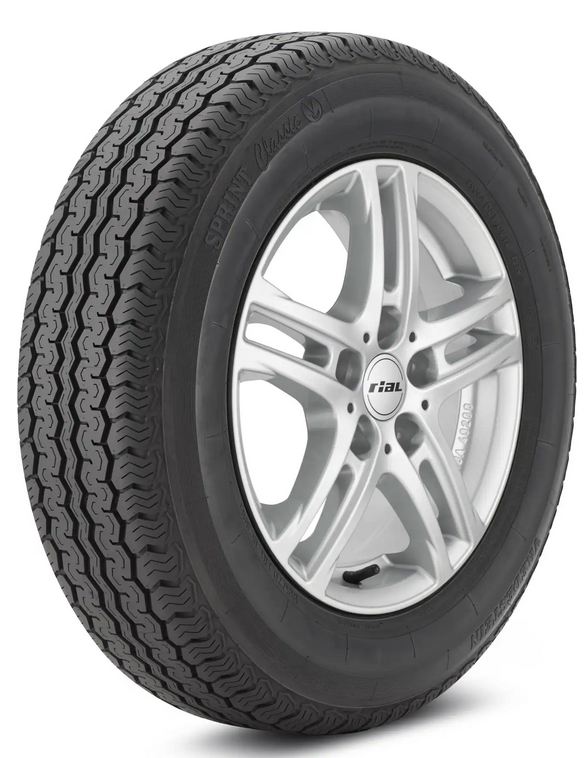
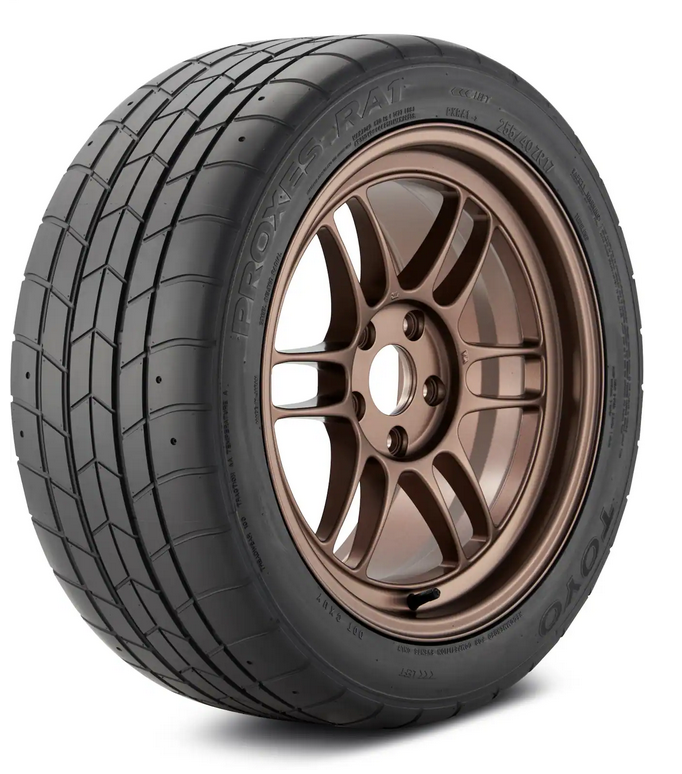
Like many, I'm looking for some new 13" tires for my Seven. I see that Tire Rack has a Vredestein Sprint Classic in my needed 205/60-13 size and I wonder if anyone here has used them. I would be using them in the street only. In the past I've used the Toyo RA1 and liked them a lot. They wear pretty quickly, but this is to be expected as I have a pretty aggressive alignment to work with the bias ply slicks I use for autocross...but they are smooth and the grip is huge. I could see the Vredesteins having less grip and that could be fine on the street...it could even be more fun and a bit playful. I have two concerns about the Vredestein. First is vanity. They have an old school vintage tread pattern and I don't love that. Silly I know but that's a thing for me. Secondly the tread width is listed as being much narrower than the same size Toyo. The Vredestein is listed as having a tread width of 5.5" and the Toyo is 6.9". That's a huge difference in size of footprint and I worry that my fairly high HP car will overwhelm them too easily. Thoughts? dave https://www.tirerack.com/tires/tires.jsp?tireMake=Vredestein&tireModel=Sprint+Classic&partnum=06VR3SCV2&vehicleSearch=false&fromCompare1=yes

-

Help picking a tow vehicle and trailer for my Caterham
Davemk1 replied to savagete2860's topic in General Sevens Discussion
It's something to keep an eye on. Remember that it's where the car sits relative to the trailer axle that is the important thing. Some trailers are build with the axle more forward or back compared to others. dave -
Help picking a tow vehicle and trailer for my Caterham
Davemk1 replied to savagete2860's topic in General Sevens Discussion
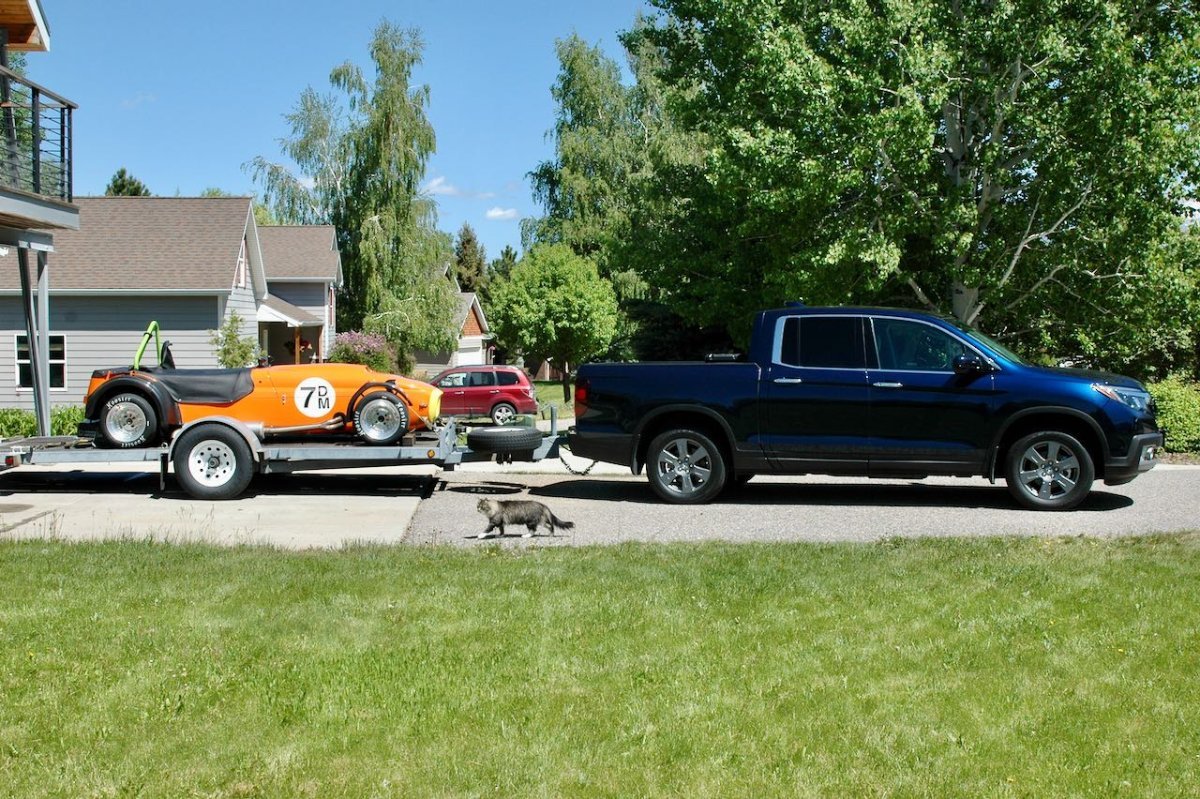
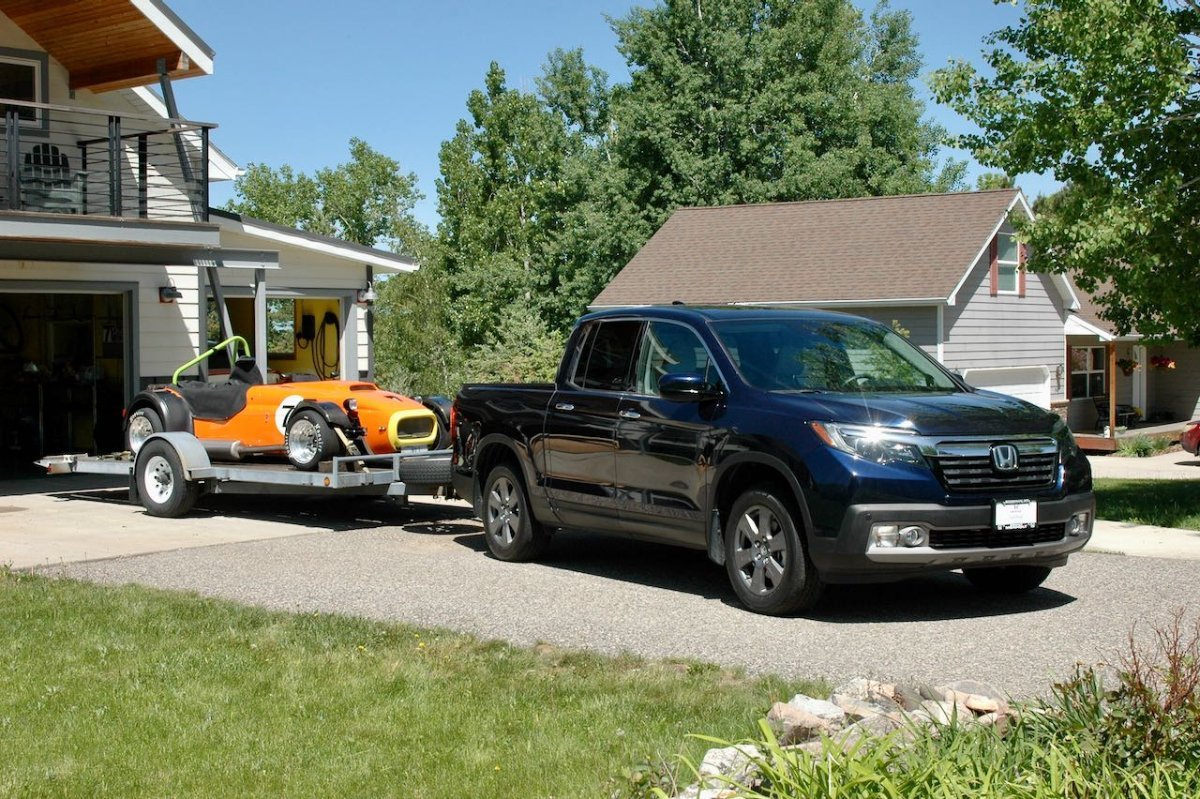
I found that with my tilt bed 14' trailer that I needed to park the car as far forward as possible...and...I mounted my fuel can and spare trailer tire to the nose of the trailer to get the tongue weight at 12%. The weight distribution of a Seven is far enough back that it can be a challenge to get enough tongue weight. This is why I mounted the fuel can and spare tire up front. Some appear to suggest that tongue weight doesn't matter that much since the car and trailer are light. I would push back on this in a big way. If you've ever experienced trailer sway you know it's deadly and nothing to mess with. Even a light car/trailer combo weighs enough to set up sway in a full sized truck. In my experience it is more than worth the time to measure and adjust. I was driving my set up very early one morning before sun rise and I was moving along at about 70 mph when suddenly there was an elk standing in the road. One does not hit an elk and keep moving like it was a white tail deer. An elk weights about 700 lbs. It will for sure total your vehicle at a minimum. I needed to swerve violently to avoid the elk and the truck missed it but the trailer fender hit it and the whole system slid and swayed and then instantly went back into a calm and smooth sway-free roll down the road...as if nothing ever happened. The the tongue weight was not set properly it would not have ended that way. Please be careful to set your tongue weight. It's easy to do and will keep you from having a bad story to tell. dave -
Help picking a tow vehicle and trailer for my Caterham
Davemk1 replied to savagete2860's topic in General Sevens Discussion
Hello - here's what's been working very well for me. I have a single axle, tilt bed steel trailer made by a company called Top Notch trailers in Washington state. The bed is 14' long and the trailer weighs 1150 lbs....the car and trailer package weigh 2350 lbs all together. I tow it with a 2020 Honda Ridgeline and the truck as a rated towing capacity of 5000 lbs. The trailer has its own brakes and they are controlled by an aftermarket brake controller I bought from eTrailer. The truck is wired for a controller so it's a plug and play set up. I tow about 3000 miles a year all around the state of Montana and that means that it goes over major passes on most trips and the truck does a great job pulling the load up and dealing with it coming down large and fast hills. I have the tongue weight set at 12% and the whole set up is super stable and when rolling down the interstate at 70+ mph you could forget the trailer was back there. I get about 19.5 mpg towing down the highway...a little less if it's windy. The truck as all the modern stuff like carplay, heated seats, back-up camera...etc. I've been towing this car on this trailer for the past 11 years. The first ten years I used a 2006 Honda Ridgeline and I recently upgraded to the 2020 model to get the modern stuff. The old truck towed it just as well but the mileage wasn't as good with its 5 speed trans (new truck as 9 speed). I'd estimate that I have about 30,000 miles with this set up and never once felt spooked, never had it wag, never had trouble getting up and over major passes. It's been better than I imagined it would be. It works so well a close friend who tows a Subaru BRZ bought the same set up and he has had the same result even though the car weights so much more. It's worth considering. dave
-
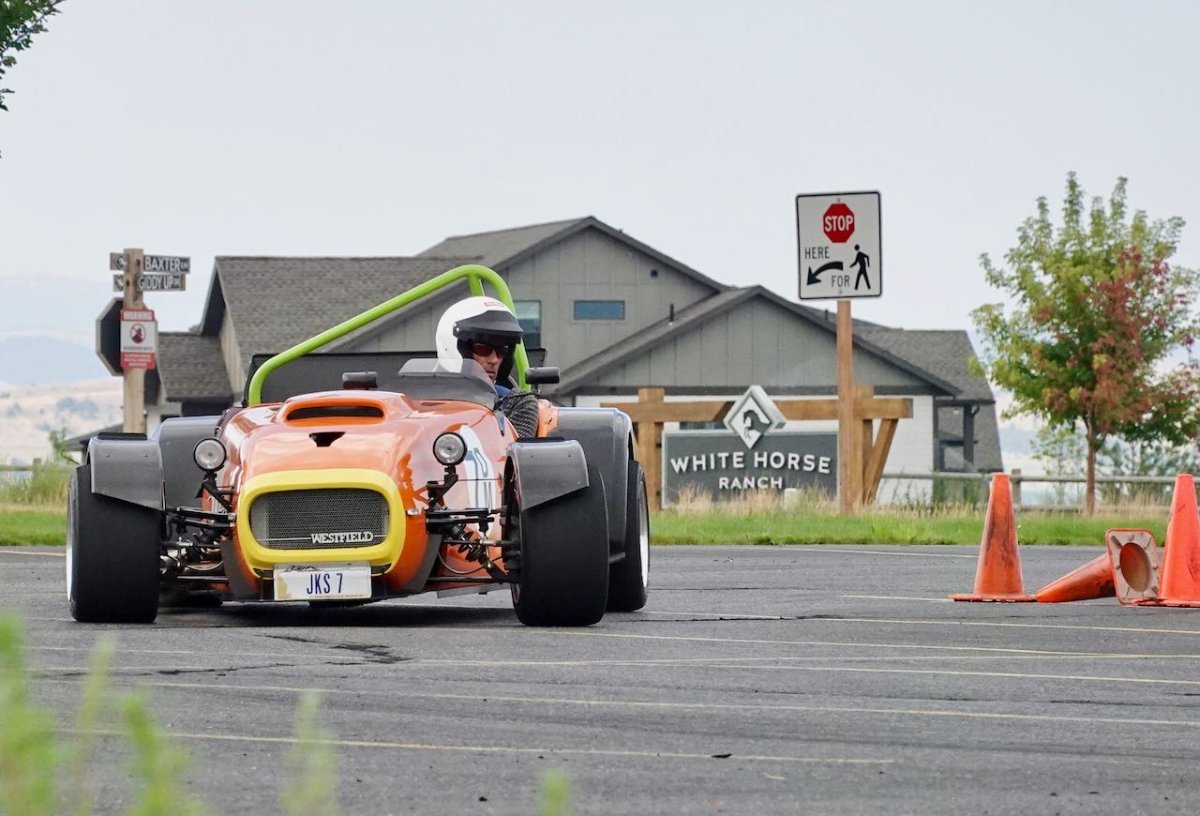
It's been too long since I've shared a photo of my Westfield S2000 in action. This photo was taken at a local autocross by my wonderful wife this past summer. dave
-
I'm offering $100 to anyone who can solve my car's nightmarish issues
Davemk1 replied to Ted7's topic in General Tech
The engine is not running, the clutch pedal is pushed in, the engine starts running and the starter motor never turns? dave -
I'm offering $100 to anyone who can solve my car's nightmarish issues
Davemk1 replied to Ted7's topic in General Tech
I'm sorry to beat this dead horse but I want to be sure I fully understand. The engine will be running and then it will die so that there is no crank rotation at all. It will be completely still. Then you push in the clutch pedal and the starter activates and the engine starts running...and this without your touching the key in the ignition? Is that right? dave -
I'm always amazed at how many exotic cars I see for sale online that have Montana plates and just didn't understand why that was. Could it be that there were so many rich people here that they own so many exotics? The population of the entire state is just over 1,000,000 people so that seemed unlikely. Finally I got curious enough to google it and then it all made sense. Montana has zero sales tax so if you buy a $500,000 car you don't pay any tax at all. If the car is over a certain age you can get "permanent" plates and pay for registration once and you're done. Lastly there is no vehicle inspection or emissions testing here so you can register and drive most anything on the roads here. The only thing someone from other any other state needs is to have is a legal presence in Montana and that's as simple as having a LLC here and a post office box. It's such a big business that there are companies that specialize in setting up LLC's and getting PO boxes for non-residents and then arranging the purchase on behalf of the buyer. It saves the buyer a ton of money and allows them to drive most anything, anywhere in the US, without it meeting any regulations whatsoever. After building my Westfield I went to the Montana DMV where I live to get a title and I wasn't asked for any officially documents aside from paperwork from Westfield showing the VIN and the car's weight. They didn't have the name "Westfield" in their database so they called it a "Westfalia" and then at the same time issued a spelling correction to get the name Westfield. So apparently I have the only Westfield registered with the state. Interesting stuff. dave
-
95°....not even close. I think we'll see 75° this coming week and that will be nice. Montana is worth visiting...have you ever been here? dave
-
Photo of my Westfield S2000 taken last fall for the Westfield Club calendar. This was taken near my home at the north end of the Bridger mountains, just north of Bozeman, MT. dave
-
Flat wound housing is good but it's not the same as compressionless...True compressionless is different in that the housing is not made up of a circular wound wide but instead it's made of linear wires that run axially. This makes a huge difference in both bike brakes and car throttles. Both will work well but the axial stuff is the real deal. And of course the housing is teflon lined and it feels virtually frictionless. I've been using it in cars for a very long time and as long you don't have the housing pressed against the exhaust you should be fine. Give it a inch or two of space and it will last nearly forever. Just my 2 cents as a bike guy who's worked in the bike biz for decades. dave