
Pokey
-
Posts
438 -
Joined
Content Type
Profiles
Forums
Store
Articles
Gallery
Events
Library
Everything posted by Pokey
-
With the lamda sensor connected does it run well at higher engine speeds? If so it sure sounds like the lamda sensor. Interesting that Caterham sent you a new ECM. They must have thought that they installed the wrong map. How are you reading the codes?
-
That intake and your custom headers really make a conversation piece!
-
Never mind. I cleaned the #4 plug and put the plugs back in the order they came out but swapped the #1 and #4 coils. Started and still rough. Unplugged the lamda sensor and idle was all over the place. Plugged the lamda back in and idle calmed down and seemed close. Adjusted the idle set screw a bit more and now it idles smoothly. Glad whatever the problem was is gone, but am not a fan of mysterious self-healing problems. What is the correct idle speed on these Duratec's anyway? At 900 RPM it lopes a bit and at 1200 it is smooth but seems to be too fast to my ear. Last night I was researching how to pull error codes and found the SBD MBE-MAP-KIT-3-CAN kit. Don't really need to go to this extent to get the idle set, but maybe handy to have?
-
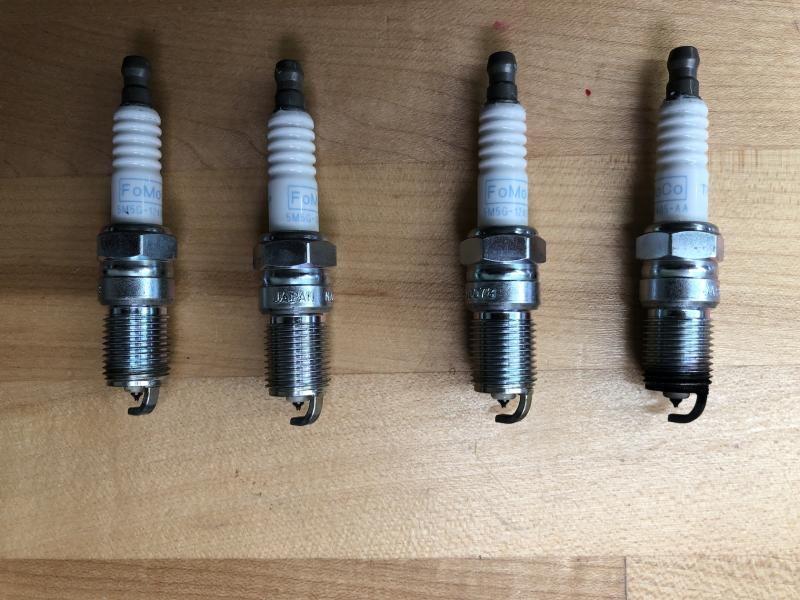
While I await the fuel line retaining clip from England, I went ahead and used some safety wire to prevent the fuel pressure from backing out the fuel line from the sender and tried firing the car again yesterday. It eventually fired but ran rough and wouldn't idle. The idle issue was solved when I realized the idle set screw was missing, but it still ran rough. I also noticed that the exhaust header from the #4 cylinder seemed hot relative to the other cylinders so pulled the plugs expecting to see #4 lean and the others rich. Instead the opposite. Anyone have any ideas?

-
Happy to share, but Croc would know better so torque on the ground like he said. Croc and a host of others have been helping me with my build, and I've also found a lot of information on lotus7.club. There are a number of personal build blogs that are good resources too, if for nothing else then pictures. Some of the advice in those blogs is, in my opinion, iffy though so be wary.
-
Thanks Jay, appreciate the help.
-
Aha! Thanks Jay. I thought the rocker switch was off/low/high but I see now that what I thought was low is actually the running lights. Would you know whether the front wing lights should be on with the headlights when the rocker is in the middle (running lights) position? If not then everything is working as it should.
-
The loom had connectors for the horn, and the connectors are female not male, but I suspect that you are right and they have something to do with a particular horn configuration that I don't have.
-
Common wisdom is you can torque with the car not on the ground, but use a jack to move each wishbone into a position parallel to the lower chassis rails that way when the car is on the ground the bushings aren't under tension.
-
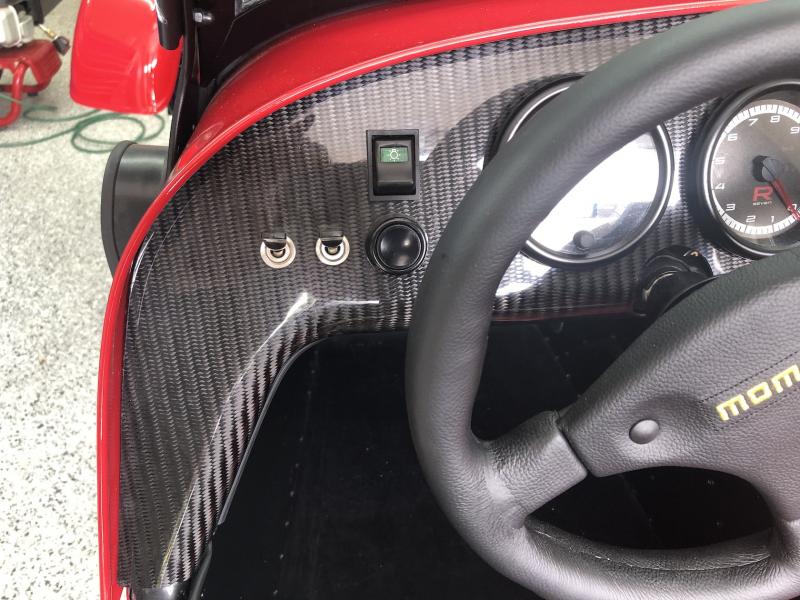
Yes, I'm just full of questions, this one is related to the dash switches. I've got the front lights completely wired but can't figure out how to turn on the running lights. Headlights work, both dim and bright, and the indicator pods and wing lights flash as they should, but I can't trigger the wing lights to come on as running lights which I'm assuming they should. This leads me to what is probably a related question, what is the toggle switch that sits immediately left of the horn button?
-
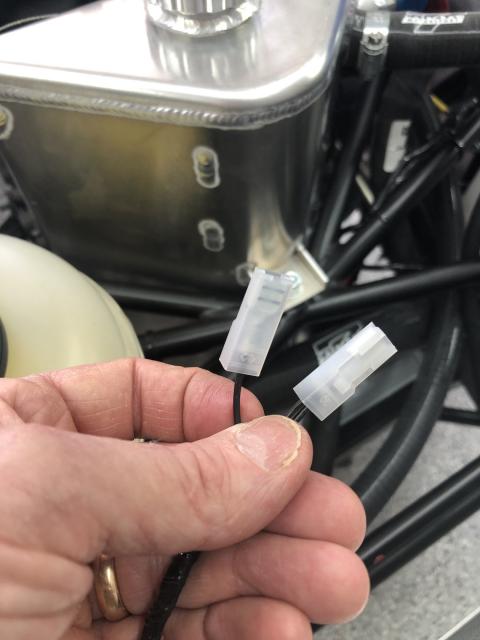
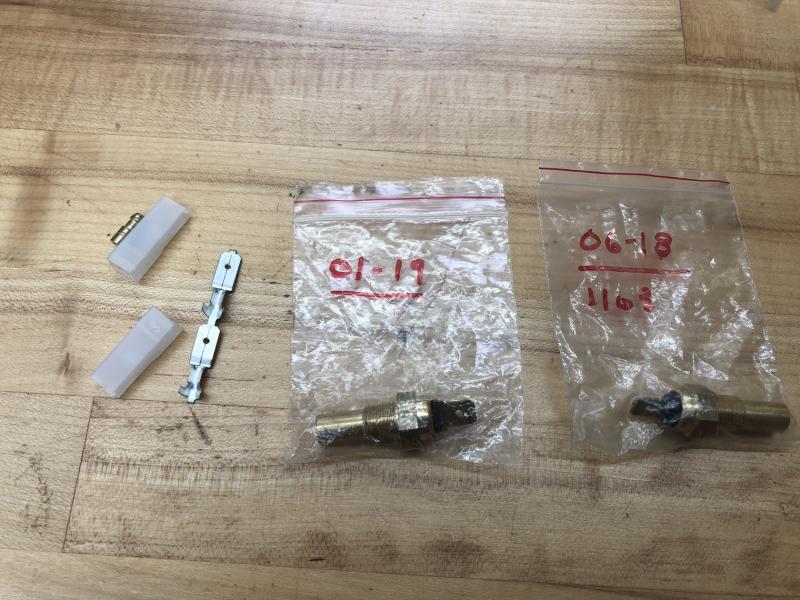
Does anyone know what this pair hanging off off the harness at the front of the engine bay is for? My initial thought was oil temperature sensor as there is bunghole in the sump tank for a sensor, but from what I can find searching the harness does not come with wiring for the sensor from the factory. But if it is the sensor why a pair? Is one side for ground? And as a hint or a distraction, I have matching spade connectors in the lighting kit and received two sensors with different stampings (which I've written in red on the bags). Presumably one of these sensor is for the sump tank, but which one and what is the other one for? And, yes, I've already got the water temperature sensor installed in the submarine.
-
Kind of hard to miss... https://www.sevensandclassics.com/showroom/caterham-7-jpe/#image-11
-
Awesome! Cracking open the largest crate was like unwrapping a big 'ol gift. You know what is in it but knowing and seeing are two different things.
-
I've never seen a fuse box installed and the manual is a bit lacking with regard to positioning so it took me a while on my back with my head in the foot well to figure out something couldn't be right. I'm sure that I would have figured it out quicker but all of the blood from my lower extremities had settled in my wee cranium space. I really, really, hope I don't have to do any under-the-dash troubleshooting like you experienced....
-
Have you run the Toyo's before? Just curious as to how the compare to the Avon's. Tire Rack gives them a good wet rating, something that comes in handy here in the PNW.
-
The bell housing is something that I hadn't considered when ordering the kit with the dry sump. It dangles down there like the lower lip of an open mouth protected only by a wedge. I imagine that there is some gain in clearance compared to having a pan installed but probably not that much.
-
I ordered protective film from the outfit in the UK that kayentaskier recommended that comes pre-cut. For the rear wing they offer a version that goes around the stone guard or provides complete coverage. I opted for the latter but will probably cut out the section that the stone guard would otherwise cover for use on the stone guard itself. And, of course, because shipping from the UK was going to be the same amount regardless of how much film purchased, I would up buying the pieces for the leading edge of the front wings, where the doors rub when open, under the fuel filler for where the cap dangles when undone, etc., etc.
-
Argh! Caterham sent me a fuse box cover for a RHD car. I spent 30 minutes futzing around trying to figure out how to fit it before thinking to check the packaging, and sure enough, RHD.
-
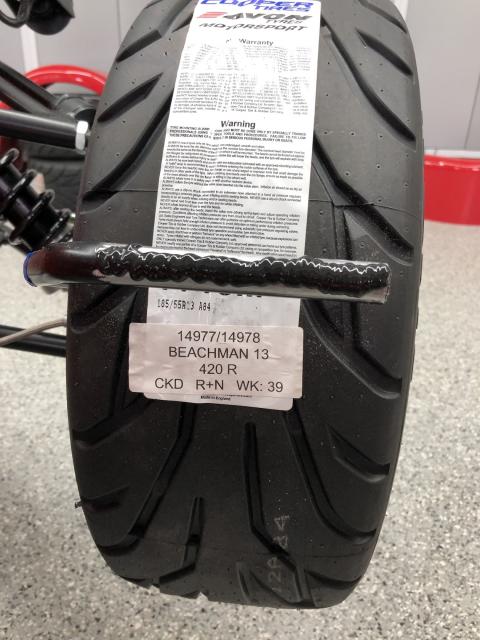
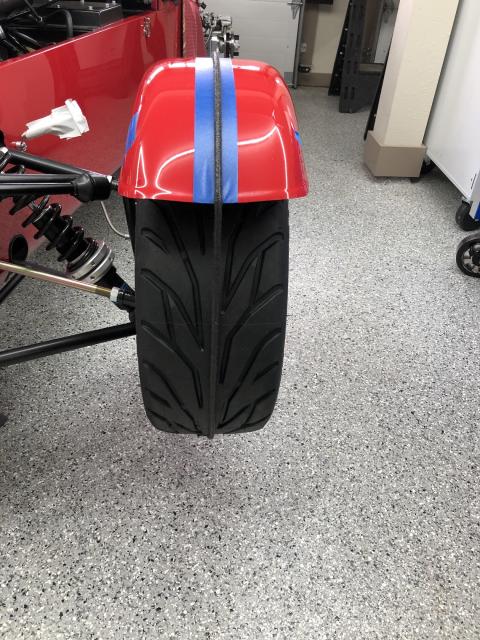
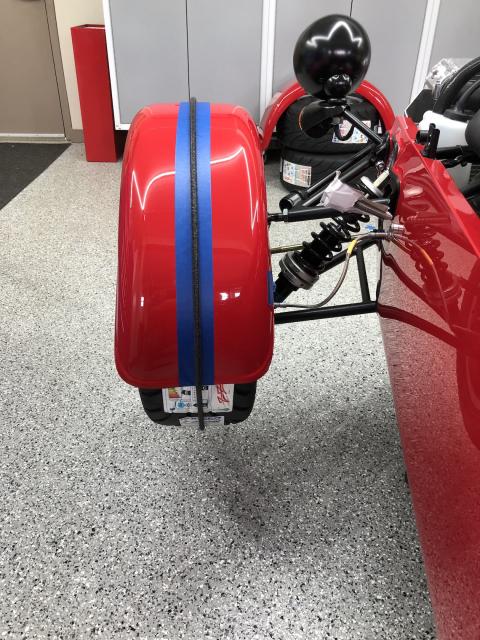
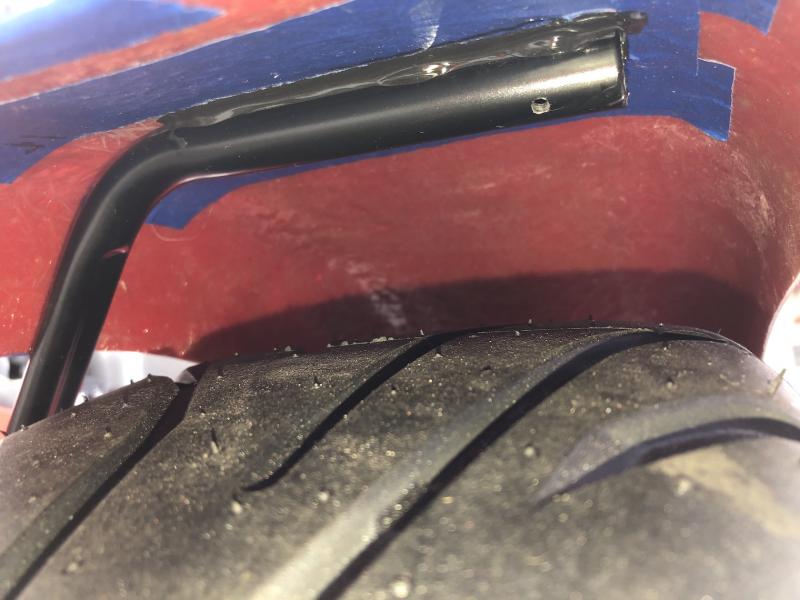
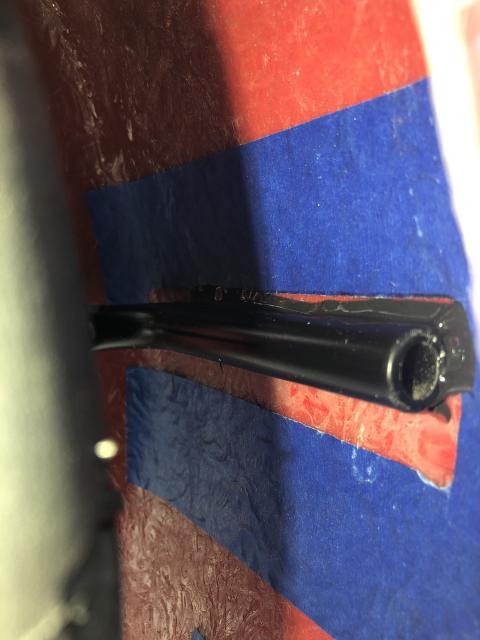
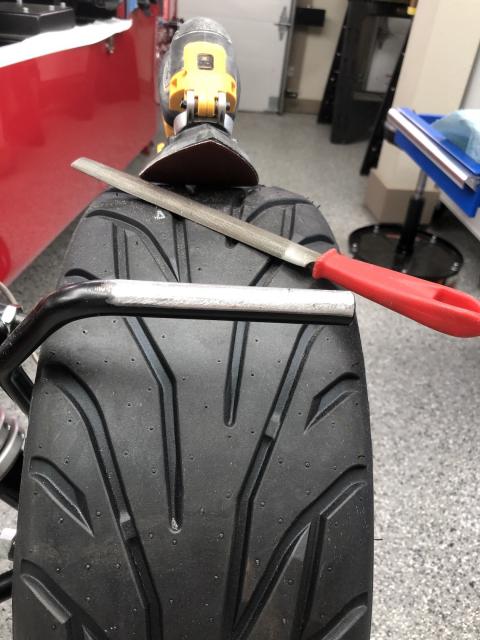
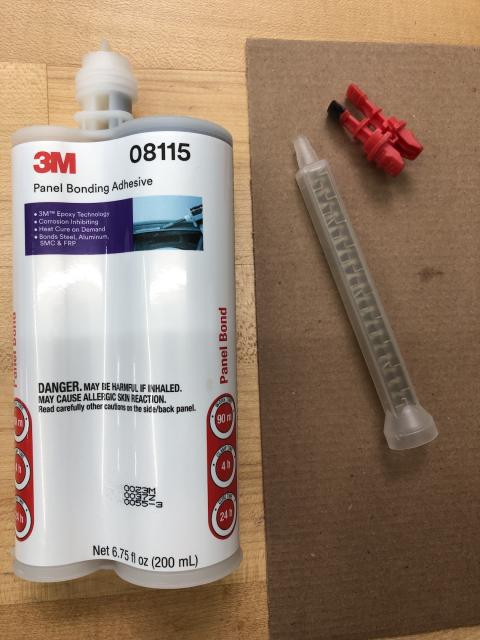
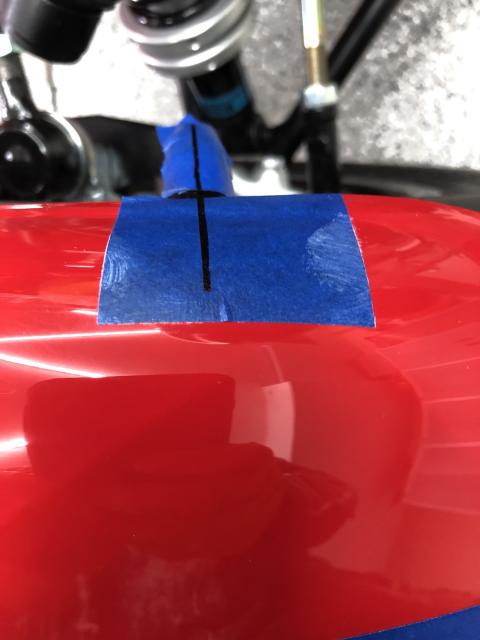
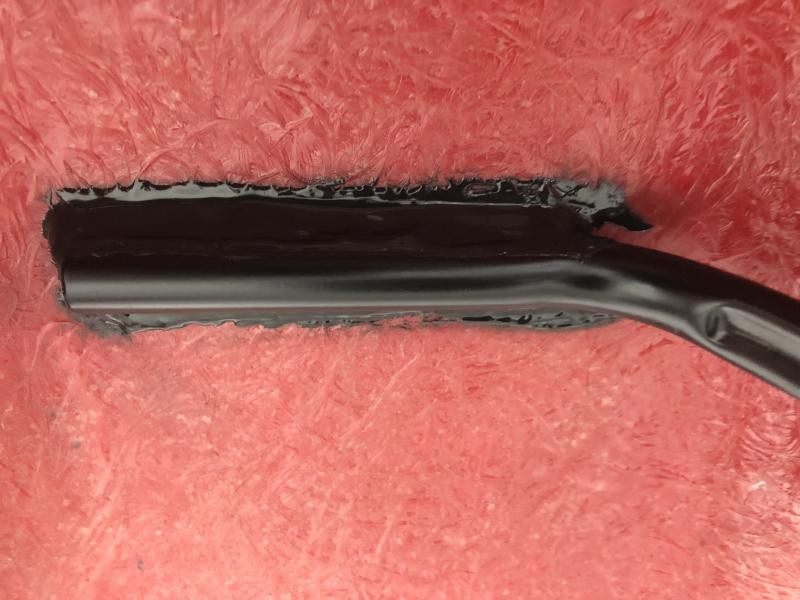
All of you old pros can ignore this post, but for us present-day and those future newbies out there - this one is for you. Caterham has us glueing the front wings to the wing stays. I'll be frank, when I first read this I thought it asinine, and had it in my mind that I would figure out a better solution. Fast forward several weeks, too many hours of reading opinions and researching this and that and here I sit on the couch waiting for the adhesive to set. I had it in my mind that the job would be frustrating and the results subpar but so far so good. So if you are of the same mindset, wondering how this job might turn out, I'll share with you what I've done and the final result once reached. First of all I measured, marked, measured, marked and measured and marked until I was completely confident that I knew where the wing would sit on the stay. Then I removed the coating from the stay where contact would be made with the wing and either side so that 150 degrees or so of bare metal showed, followed by a course file to abrade the bare metal to create more surface area for the adhesive. While I can't tell you what the best adhesive to use might be, what I can say is I used 3M 08115 panel bond. Research it yourself if you are interested, but there are a lot of options and even more opinions on this topic. I'll pick up there with the photos. First the adhesive, mixing nozzle and gun. Measure and mark. This is the hardest part of the job in my opinion. We are dealing with three dimensions, so mark aligned with the stays as if you are looking down the barrel of a rifle. I used a plumb bob and level to measure from the stay to the front of the wing, and visually centered on the tire. Clean the coating off of the stay and remove the gloss from the wing. Next I laid down a bead of adhesive to provide complete contact coverage but not so much as to be unruly. My intent is to go back a second and maybe even a third time to build up adhesive along either side of the stay. And then I smoothed the bead down for the purpose of getting a uniform amount along the entire contact area. I couldn't come up with a better way to create a clamping force than what Caterham has in the build manual other than I opted to use a bungee cord rather than tape. I believe this was a good decision as the bungee cord provides ample force and was easy to get around the wing and tire without the wing moving around, but given I haven't tried doing the same with tape perhaps the method I chose was actually harder. Word of caution here. My initial thoughts were to find a way to clamp without having the wheels on, but you really do need the tire to align on center as there are no other reference points to use. And one more round of measuring to make sure the two sides are symmetric. Now I wait for the adhesive to cure before building up more on either side of the stays. Turns out there wasn't really a need for more adhesive, but since I already had a cartridge open I went ahead and smoothed a new bead down on either side of each stay and called it good.
-
Gracias
-
I'm not thrilled with the esthetics, no where near as bitchin' as the Yosemite Sam flaps I had on the rear of my '69 Chevelle in High School. Wemtd with his clear lexan bling seems to have found a balance between function and rock chips. If I go with front flaps I'll do something similar.
-
So far everyone with an opinion has favored having front flaps. Any detractors out there that wouldn't want to see a newbie MacGyver flaps on a brand new 420?
-
That would certainly protect the wing. I've settled on the use of the stone guards with the addition of protective film for the bits not covered. Hindsight being what it is, I would have opted for carbon like you did.
-
Can't recall where I read something about front flaps causing rocks to eject over the bonnet (note the effort I'm making here by not calling it a hood) and into the windscreen. The takeaway is the flap creates a trap for the rocks such that rather than follow a predictable trajectory (which appears to be to the rear wing) they go places unexpected. Don't suppose anyone with flaps here agrees with that hypothesis? The folks with Premier Paint Guard were quick to respond to my questions and will ship to the US for around 35£. I'm going to order up the rear wings and the nosecone at a minimum. I thought about paying someone to do this work but a bit of looking has me thinking it would be expensive, as in a few hundred dollars expensive, and I'm not likely going to save money by buying in bulk and cutting pieces myself. Still need to find that fuel line retaining clip. What I ordered from Dorman didn't work and I'm having a heck of a time finding a Ford part number. Guess it is time to email Bruce.
-
I had no idea the rear wings took such abuse. With the body red I opted for red wings too as I didn't like the color contrast with the carbon fiber wings, but I can see now see why carbon fiber is a good choice.