Marek
-
Posts
141 -
Joined
Content Type
Profiles
Forums
Store
Articles
Gallery
Events
Library
Everything posted by Marek
-
Yes, the common advice is to use a high-ZDDP oil in your Busso and Nord engined Alfas.
-
Two oils widely recommended when looking for high zinc content are Shell Rotella T6 for a synthetic oil and Valvoline VR1 Racing for a mineral oil. Both are easy to find. Others are available and finding them is a matter of finding spec sheets for the oil. Motul has excellent options for example, but not so readily available as the Shell or Valvoline. While I've long had the opinion that Mobil 1 is never the wrong oil, I believe they have reduced the zinc content in recent years and I have stopped using it for my pre-90s cars. Zinc content is a modern topic for classic and vintage cars as late model oil specifications for gasoline engines have reduced the zinc content for reasons I believe are related to change in modern valvetrain designs needed to meet current emissions or mileage expectations. That all of my 80s engines are known to prefer higher zinc has me always on the lookout for available options. For years Shell Rotella T6 was marketed as a 'multi-use' oil suitable for gasoline or diesel, but a couple of years ago they dropped the gasoline recommendation but the zinc and phosphorus content on the spec sheet remained unchanged. The suspicion is the higher zinc required for the diesel specification is too high for some of the latest Long Life oil specifications. I (and many others) still use it. Oil choices have the aura of witchcraft - not because they are complicated but because consistent information can be hard to find.
-
This seems like a situational problem to me as well. In the past ~6 weeks I've had shipments from The Netherlands, Germany, and Italy via UPS and DHL and from shippers accustomed to shipping to the US. One over the de minimis and the others below. All have been been quick and on time. As far as I can tell we aren't yet experiencing any significant shipping disruptions.
-
The nose is a clever take on the styling possibilities for a Seven by borrowing from decades predating the Seven. I see Healey Silverstone, Allard, and early 30s Ford Tudor hotrod.
- 1 reply
-
- 1
-

-
Apologies for not posting the link.... https://www.odysseybattery.com/wp-content/uploads/sites/2/odyssey-installation-operation-and-maintenance-manual.pdf The excerpt above is on page 10.
-
While the Odyssey is an AGM, not all AGMs are alike and Odyssey says their TPPL batteries require a specific charging profile. From the Odyssey manual: In order to recharge a battery that has been discharged, it is best to use an automatic charger with an AGM setting that has the appropriate charge voltage and current per recommendations. For optimum charging, the current output should at least 40% of the battery’s C10 rating. This means a battery that has a 10-hour rating of 100 amp hours should be charged with 40 amps. Charge current should never be less than 10% of the battery’s C10 rating. Voltages higher than 15.0 volts will cause irreversible damage to the battery. Please refer to Figure 2 below for a graphical representation of the recommended charge profile for ODYSSEY AGM2 batteries used in non-starting applications The NOCO chargers I tried would not provide the 14.7 volts. The battery would charge, but not within the Odyssey specs.

-
This thread helped me address a problem I did not realize I had; as so often happens on this forum. It convinced me to add lightness. My Seven came with a heater, but not connected and the fan does not work. I did intended to fix it eventually. But I've had to remove the cowl for other reasons and the heater is now out in the open just staring at me. This thread convinced me that removal is the obvious fix. In cool weather my lower body is never uncomfortable. And with a barchetta-height windshield, no heater is going to affect my upper body.
-
Yes, get a CTEK or Schauer; the preferred options on Odyssey's approved list of chargers. Both will use the multi-step charging profile recommended by the manufacturers of these batteries.
-
Roll bar padding for the street and Half Hood quandary
Marek replied to Reiver's topic in General Sevens Discussion
... -
Roll bar padding for the street and Half Hood quandary
Marek replied to Reiver's topic in General Sevens Discussion
Look for SFI "dual durometer" padding. It has inner and outer sections where the outer is less dense. Pegasus lists it as, "Dual Durometer SFI 45.1 Roll Bar Padding" -
Another simple option for turning plates (to make the front wheels turn easily) is a square of linoleum (or other tile) lubricated with a spray bottle of soapy water.
-
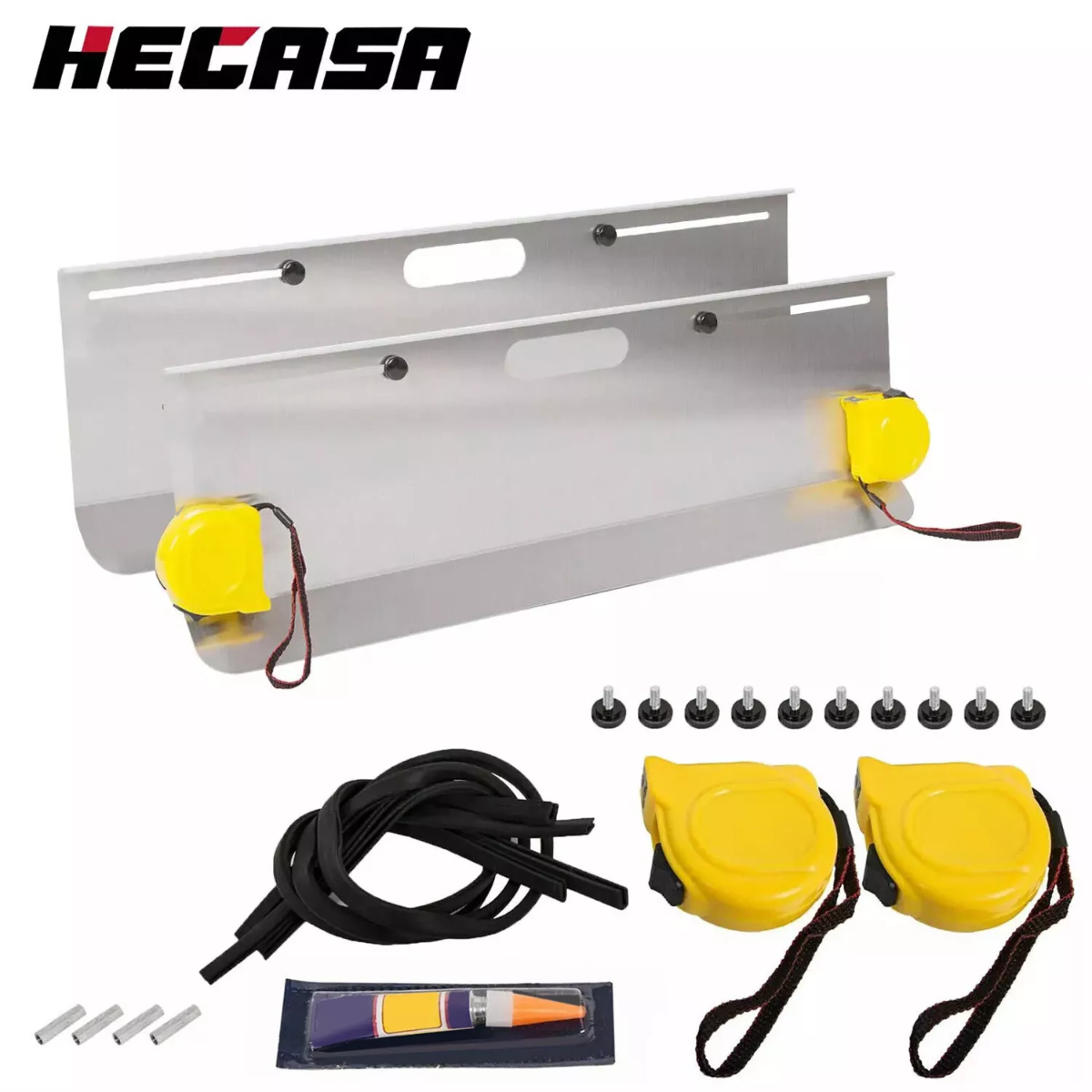
I have this exact one. It measured out square, flat, and straight and has been repeatable and accurate for me. If ordering one, I would check it before relying on it. Now stringing a car or using plates, regardless of the tools you use, does depend more on the attention to detail of the user than an automated rack. My own opinion is the reviews are probably more a comment on the users and their cars than the plates. I've been stringing cars under various professional conditions for a long time, so my confidence might be higher than for some; but the technique is simple to learn. Most importantly, adjust the tips on the plates such that the plate is square to the wheel and they don't move between measurements. Make sure your measurements are repeatable.
-
One easy and accurate option is to align your Seven with a basic set of plates and tapes. For $35 you can find something like: https://www.ebay.com/itm/114130836633
-
The Regular Summary of Classified Ads of Se7ens Found For Sale
Marek replied to Croc's topic in Cars For Sale
A Seven with a rotary, but I am confident not a Rotus - the front suspension is outboard and the nose and front bodywork are all wrong. Note the Mazda Cosmos sitting behind it. -
@Reiver I've read the one notable downside of shipping containers for car storage is they can be quite hot and retain the heat. What is your experience? Does the pole barn help or solve it?
-
If I suspect coolants have been mixed, what is the advice on effective flushing of the complete system? A good flush is on my winter list. The coolant is off color and cooling efficiency has not been good with this car. So best to reset and start from a known place.
-
All-white harnesses have become common in professional motorsports. They are often labeled with colored bands according to the EIA color code. When built to a high and consistent standard, they are easy to work with. I have also seen harnesses use white and grey only; where one denoted the low current/higher gauge leads and the other the higher current/lower gauge leads.
-
The sources are much appreciated. I especially like your modular design. I am hesitant to over engineer the electrics in my car and going modular would be a good way to modernize yet keep maintenance within reach of a future owner. The Cartek is very simple, highly reliable, and very affordable. I understand the attraction. I've looked at the AiM, Motec, Blink Marine, and MicroPDM PDMs as well. Motec is always a great choice. But with a MicroPDM I could easily afford to carry a spare. Tough choices. The integrated logging of the AiM boxes is interesting as I would like to look at improving the engine and charge cooling in this car and logging would be a big help.
-
Thanks, Dave, for starting this thread. I am just now sourcing materials for a similar project. Could you share sources? My own experience was a 6 year career detour into professional sportscar racing. I started in data engineering and driver coaching and it later evolved into all manner of car electronics and harnessing. I still have my Daniels crimpers and other tools, but have found my parts sources are out of date. Recently, I've been using prowireusa.com as well as milspecwiring.com. I see you chose CarTek PDMs - I am curious why they were your preference. I don't see a fuse or breaker box in your pictures. What route did you choose for circuit protection? For anyone looking for a good background read, I recommend https://www.rbracing-rsr.com/wiring_ecu.html.
-
The 85.5-91 Porsche 944 has all the same advantages at a much lower cost and better supply of used spares (look on FBMP for your local guy with a hoard behind the barn). I daily'ed a 944 from 2003-2016 and my son now daily drives the car.
-
Defenders and earlier G-Wagens are both excellent road-going tractors.
-
Option 3 is to not expect to rely upon OEM. Electrical systems in particular are well suited for modern replacements. Aftermarket PDMs have become quite sophisticated and ECUs options are plentiful. Of course this does assume we have a supply of shops with the needed skills. The odometer question for aftermarket dashes and ECUs deserves more investigation. Agreed the specific legality is often dismissed. But I recall there are conditions to replace a dash and satisfy the law. For example, 2021 updates to the Motor Vehicle Information and Cost Savings Act added flexibility to odometer rules for cars over 20 years old.
-
Performance Shock in Sonoma, CA. I have to believe there are small operations around with the knowledge and skill.
-
I am looking for someone able to rebuild 80 Series Konis. It seems most of the places providing the service in the US have closed in recent years, including the Koni Service Center. The lone remaining service is quite pricey. Barring that, any idea how to lay my hands on specifications (and, ideally, parts)? These won't be more difficult than the Penskes and MTB dampers I've done in the past.
-
It was the '20 years' of the original post that I latched onto. There are a long list of vehicles which can remain mechanically reliable over decades. It is plastics and electronics which are unknown. Every shop seems to have stories about customers with failed modules (usually body controllers) which they can't justify or can not find the part to fix. And so the customer lives with warning lights and disabled features. The push to reduce weight has increased the use of plastics in engines - which don't have the same long term durability and will over time become fragile. While manufactures seem content to supply mechanical parts for many years past the end of production, it seems not so for electronics in particular.