Marek
-
Posts
159 -
Joined
Content Type
Profiles
Forums
Store
Articles
Gallery
Events
Library
Everything posted by Marek
-
Pin 4 on a YWB 100970 is rated for either 20A or 30A continuous. Why did it overheat? Assuming it is fused correctly, maybe sanity check the wire gauge to the connector and check for corrosion or a repair or splice in that circuit. If you can't identify the cause, add an inline fuse on the lead to pin 4 as a safety. Not elegant, but if the problem reoccurs, a new fuse will have you running rather than replacing the relay yet again.
-
Another recommendation for KTR. The only other shop in the area I can recommend with confidence is Boston Sportscar in Weston. For both KTR and Boston Sportscar, the work you describe will be routine. Whereas for most shops it risks stretching their familiar skills and comfort zone (despite being a fairly easy job).
-
I've only used screens. I've had mild motion sickness sailing. But after the first day, I am fine. That resistance has yet to kick in on the sim.
-
While they have improved massively, there is still a big gap. In just the last month I've had the privilege of spending time on a friends new 3 degree of freedom mid-5 figure rig and it is a clear step above other motion rigs I've used. We've been driving only Miatas and 991.1 GT3s (as those are track cars we know) and only on tracks that we know. In iRacing the cars do not represent the specific character of the actual cars. They have the general characteristics, but, for example, put me blind into a 911 and I can tell you it is a Porsche from the feel of the steering. The sim does not have that level of tactile subtlety. The real disappointment is Simulator Sickness has not improved. This has always been a problem for me and if anything, this new rig is worse. We spoke with an engineer who specializes in sim tuning and he assures me the sensory conflict causing the problem can be tuned out. So maybe the latest consumer sim hardware is much closer to professional gear, but I think it still takes professional expertise to make it work well.
-
We have CTEK and Schauer; a very good CTEK alternative which are also recommended by Odyssey and are sometimes cheaper. At last check, Odyssey does not recommend NOCO. As I recall, it had to do with NOCO not providing the full 14.7v specified for the Absorption phase of the charging cycle. Their manual goes into detail: https://www.odysseybattery.com/wp-content/uploads/sites/2/odyssey-installation-operation-and-maintenance-manual.pdf
-
A knife, once dull, is no longer a useful tool. It becomes just an implement for randomly hurting yourself.
-
What is the largest Seven? I believe a Rotus is 1124mm x 3660mm x 1665mm (HLW). Basically a SV with an extra foot of length and a smidge at the hips. But parked side-by-side, the differences seem greater. My suspicion is the somewhat squarer body (especially the nose) exaggerates the difference.
-
Do you have a half hood for your Caterham?
Marek replied to Saudio's topic in General Sevens Discussion
Anyone with Stormcap experience? I've toyed with a custom spec'ed Stormcap as a more useful car cover for my Rotus with a speedster windshield. -
Rotus might be unique in the use of a rocker arm front suspension and in theory it should be an advantage. But Caterham never went down that road and others on this forum have commented that they are not fans. Any comment @Croc, Slingshot, or Mazda? (or others?)
-
Well summarized. I too visited the factory, but was too young to serious consider buying one at that time have only a set of original literature. I've been in contact with a former long-term employee who may have fixtures, molds, and documentation and have considered visiting them to make note of what is available. Feel free to encourage me (I have family in the area.).
-
For those of us for which winters are serious and not a source or drama, mild conditions can be unsettling. Good to hear condition have returned to something more reasonable and familiar.
-
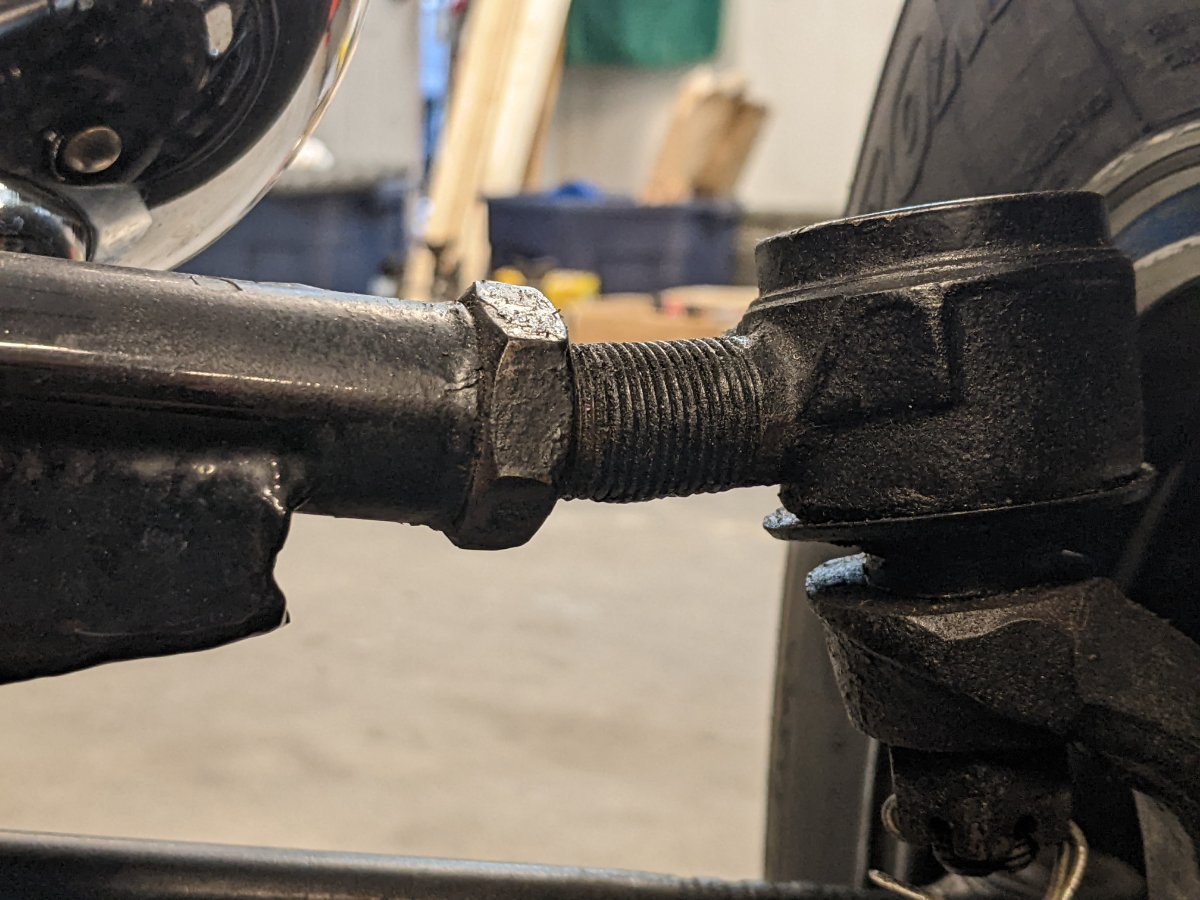
McMaster-Carr carries coupling nuts in 3/4"-16; though also not cheap. The real answer here is longer rocker arms to reduce the number of exposed threads. I'd like to give the factory the benefit of the doubt by saying the exposed shaft is intended to make the balljoint sacrificial in a shunt, but that seems optimistic for an early 80s application.
-
A shot of the hood louvers from the factory. I have no reason to believe this was a standard fitment and could be unique to this car. There is an air-air intercooler below the rear most louver section and the car does struggle to stay cool under sustained boost.

-
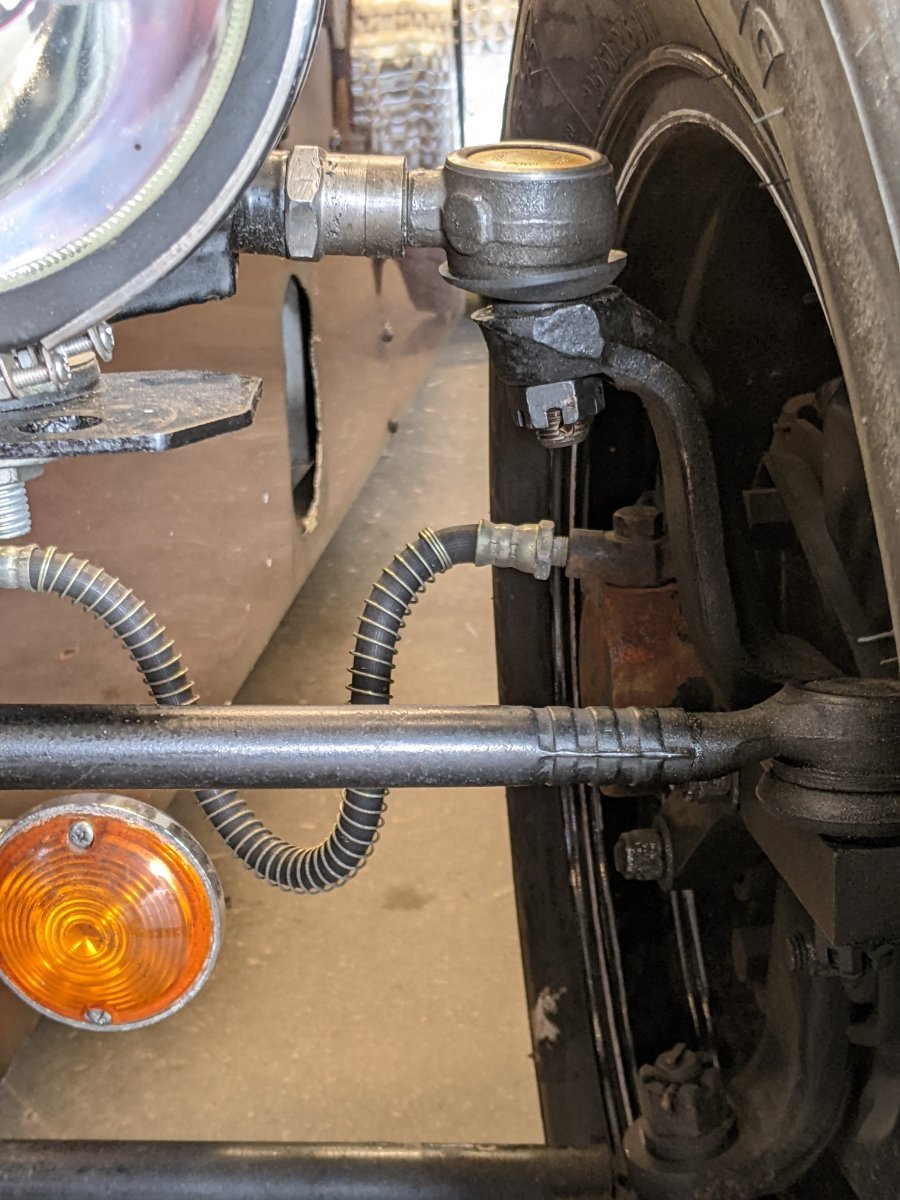
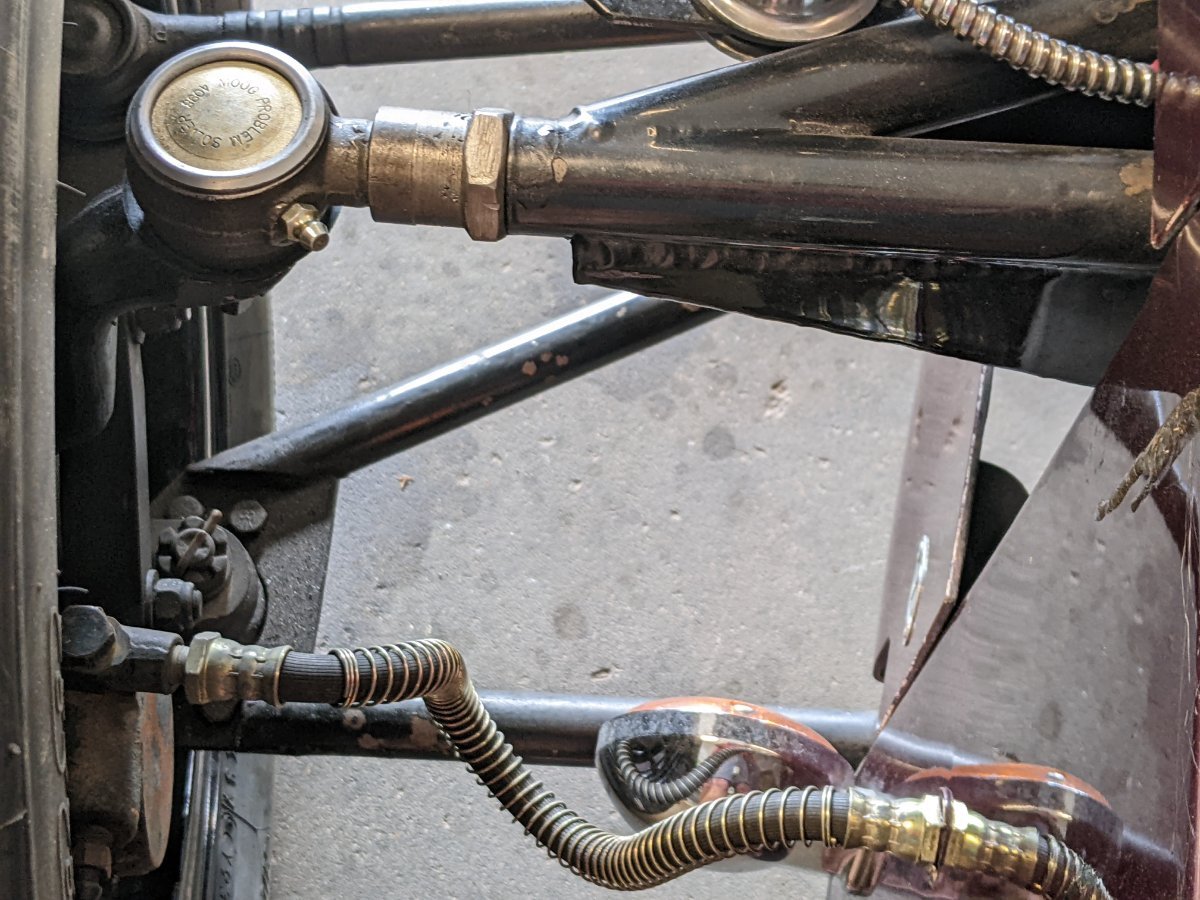
The aforementioned balljoint sleeves. They are the handiwork of the previous owner. The pictured balljoints are "Moog Problem Solver"s. I can imagine the Problem Solver or your F150 ball joints are sufficient on their own. Here you see the original ball joints and the problem they suffer. (Note that the nut in the second picture was later correctly wired!)
-
Welcome back! I don't think I've seen one of these with louvers on the side of the bonnet or that close to the cowling. What is the engine in the car?
-
Applying Aerodynamics to Lotus Seven-Shaped Objects
Marek replied to CBuff's topic in General Sevens Discussion
Tough to overemphasize @Croc's comment on the implications of aero to driving style. In my time engineering for semi-pro and pro teams, this was probably the toughest hurdle for drivers to develop through. The old driver mantra for aero is, "The faster you go, the faster you CAN go.". That takes a leap of confidence made even more difficult by the fact that grip from aero load is neither constant or even linear to speed. And then getting your head around it for a low aero car does not mean easy success with a high aero car. There were frequent examples of drivers making the move from FF to FF2000 or S2000 (wingless to wings) but then really struggling when moving to high aero cars. -
Yes, a NSU Ro80. In the end I contracted with Gartho Logistics to transport the car. Now just waiting for some snow to be moved so the truck can get to the car.
-
Ditto on that advice. I shipped a car from the northeast to the midwest last fall and started with a Uship quote. Stopping the spam has been whack-a-mole. For that transport I used Gartho Logisitics and would use them again. I'll report back on what we learn this time. As others have commented, the trailer is the easy part and it is the truck which is the hurdle.
-
1000 miles. Akron, OH area to north of Wichita, KS.
-
Are there secrets to renting a truck and trailer one way to bring your new found, non-running, car home? Few companies appear to rent trucks for towing and most want to give you a moving truck. We only need to trailer the non-running car. The moving van is an option as is paying a carrier. But my son is trying to keep down the transport cost as a percentage of acquiring the project (which is not a Seven).
-
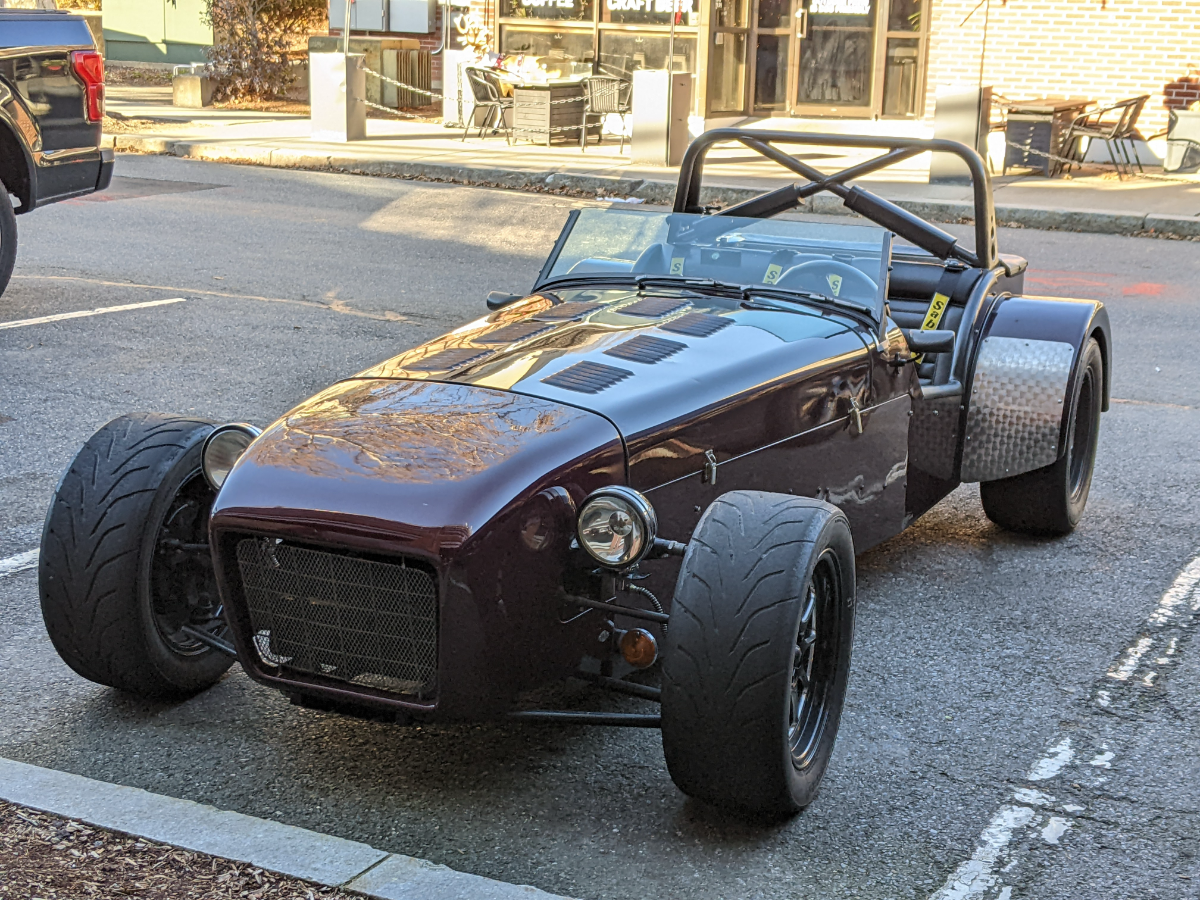
Mine is just a "Seven". Or when I am referring to it, "the Seven". If anyone searches on "Seven car" they will reliably find all sorts of good information. If they persist, I will add, "The car was built by a US company in Maryland called 'Rotus' and has Mazda rotary engine. It is similar to a Caterham or Lotus 7.". At that point, most of the conversations turn to rotary engines. (Fact: 82% of car guys under 36 are star struck by rotary engines.) The Rotus name is simultaneously confusing, marginal, and too clever; so I don't dwell on it.
-
Mountain Detective, S3 Ep3: At 25 minutes in, the protagonist arrives at a villa where outside is parked a red Seven. A couple walk up, gets in, you hear it start, and they drive off. https://www.imdb.com/title/tt15085688/ https://www.pbs.org/video/cold-case-eecifw/
-
From my years in direct-drive karts, I can tell you they only turn by unloading the inside rear wheel. The rear grip is high enough to over-power the front, causing the kart to push. But the engines are rarely at a rev range where there is enough on-demand torque to rotate the kart with the loud pedal. If you don't unload the inside rear, you will scrub the fronts into the corner and find yourself braking far sooner than everyone lapping faster than you. Doing this successfully requires both a setup and line as @Croc suggests. I have never attempted this on a conventionally sprung vehicle. I'd expect doing it consistently in differing corners would be very difficult.
-
Others will have better insight into mileage. My Seven came with a set of 888R and I replaced them based on age (and a decision to reduce the front tire width). Based on experience with the 888R on other cars, the aged ones on the Seven were well past their best days. I gather this is common on Sevens that aren't tracked - to replace on age rather than wear. @wdb makes a good point on aesthetics. My Seven has a more modern look than most and the Toyos do not look out of place. I don't think they would look as good on a more classic Seven.
-
Tires are always a very personal choice, and so I can only share my own experience.... I am on the second set of 888R on my Seven in dry, damp, and light rain. The grip has always been predictable. Be careful when they are cold and when the road is wet. But once they are warm, you are fine. Do note the Load Rating. I believe all 888R are XL, which is well above what any Seven needs. And so you will want to run low pressures. Ideally, probably lower than you think.