
Vovchandr
-
Posts
3,072 -
Joined
Content Type
Profiles
Forums
Store
Articles
Gallery
Events
Library
Everything posted by Vovchandr
-
Before you get too crazy consider this https://shop.oakmeremotorgroup.co.uk/product/footbox-cold-air-inlet?fbclid=IwAR3W4u0zMq701l68i9iMgwTnQNml1jsV4xL7bxFbFQqIKBbKpq5UwZFsFqU Wrapping headers certainly helps keeps the temps down. There is also reflective material you can put on the footwell in the engine bay to help reflect some heat off too
-
Out of curiosity, how do you guys control your manual ones? For me at startup the Accusump starts dumping oil as soon as I turn the key and oils up the head/cylinders I believe. As the engine starts up it gets repressurized and stays at pressure throughout until shut off. Then it maintains until started again That's if I leave it "on". If I leave it off or turn it off, it dumps the pressure and the car acts as if it's not there, with a little bit more fluid total. Also how much extra oil do you guys add to the capacity to account for accusump? Between shallow oil pan, accusump, remote oil filter and oil cooler in the front I have a LOT of extra lines and volume to account for and I'm never sure what the right amount is. Dip stick isn't accurate due to the shallow pan.
-
I have the Accusump with electric switch. I can't say that it's problem free but it's also not a complicated piece of engineering. I never had a problem with the switch or valve itself but rather the complexity of more connections and doing the preventive maint. on the sump itself. I think right now it reads too high pressure wise and has a small leak at a connection to the valve. It's a small electrical switch and a valve. I think over the past few decades basic switches have proven their reliability overall. If there were an extremely troublesome area we'd still have crank windows in cars instead of having them more and more electrified.
-
Small victory today I didn't see anyway to fit impact into the chassis directly so had to use extension and swivel adapter which im sure diminished the power. In the end, placed into gear all worked out

-
Todays moment of idiocy goes to me. Tried to get the crank pulley off with the impact. It was spinning the motor and not coming off. Trying to be clever and not wanting the engine to spin dry I poured oil onto each one of the cylinders so they don't spin dry against the walls during the process. Went back to trying to get the crank off and it spun the motor as expected until cylinders reached TDC and spilled the oil over into the galleys next to them. Looks like I'm definitely going to be in need of coolant flushing when I'm done with all this one way or another. Edit: After thinking about it, I'm just going to leave it in gear to stop from spinning and try again.
-
@CarlB thank you for a comprehensive guide. It's a lot to take in, I'll break it into paragraphs and follow it along. I looked at the imprint rings in the head from the head gasket and didn't see any tell tale signs. Not sure if it matters at this point in time either way. I'll tape the cylinders off & scrape the top and use those cleaning brush wheels from video to clean it up well. I'll get a good straight edge to test the top and good brushes to run into passages. There are plenty of crusty chunks that are coming off all around. I'll only use coolant from now on and avoid water. Machine shop has the head now under guidance of my experienced friend who's done a million of these. I have the tool and will use it to set TDC but I'm likely going to 0 out the cams, matching to each other, put everything back together and hope it starts as is and runs good enough to get it to a tuner. ~3% chance it will run better than ever and timing was off and head gasket fix resolved everything. Zetecs are not interference engines so I'm not sure the value of checking clearance of pistons to valves. Thanks for the advice/guidance.
-
So didn't expect to find my exhaust on the ground. Muffler boppin randomly failed
-
I appreciate the candor but I think this is where I draw the line on my risk/reward decision making. Unless the car cannot function being put back with the block/coolant passages as is, it is going back together without engine coming out. This is for an array of reasons, some of which include needing a resolution for higher hierarchy severe issues of cams being out of alignment and needing a tune and the car falling flat on it's face after acceleration while on decel. The latter has become drastic and quite concerning last time I operated. Once these two issues can be considered closed, I can address the rust issues, which I personally think can be mitigated in their severity or fully addressed this winter. I am listening to all opinions none-the less. My main consultant on these matters is on vacation this week and has not chimed in yet. If the engine has to come out, I can pretty much guarantee not making it to NJMP this year. While I understand my desires for a track day don't overrule facts of the engine situation, the event in itself is an opportunity cost which I value pretty heavily in pros/cons of decision making.
-
Yep 2/3/4 only. @Croc haven't given cleaning and the passages much thought. Most people just seem to clean the top and then change the oil/coolant soon after? New water pump is on the way. Do you mean investigate to see whether it's worth putting back or investigate as to what could have caused the issue to begin with? Watched this video. I just got the same brushes delivered, will likely follow in his steps I'll take any contrary advice if anybody has some to offer
-
I believe you mean the intake side? The little browning on 2-3 & 4. I haven't done anything with the head. Plan is to give it to a shop and let them figure it out. Pressure test it, clean it, level it etc. There isn't much I can do with it on my own. I glanced at the springs and they did all appear to be intact from what I could see.
-
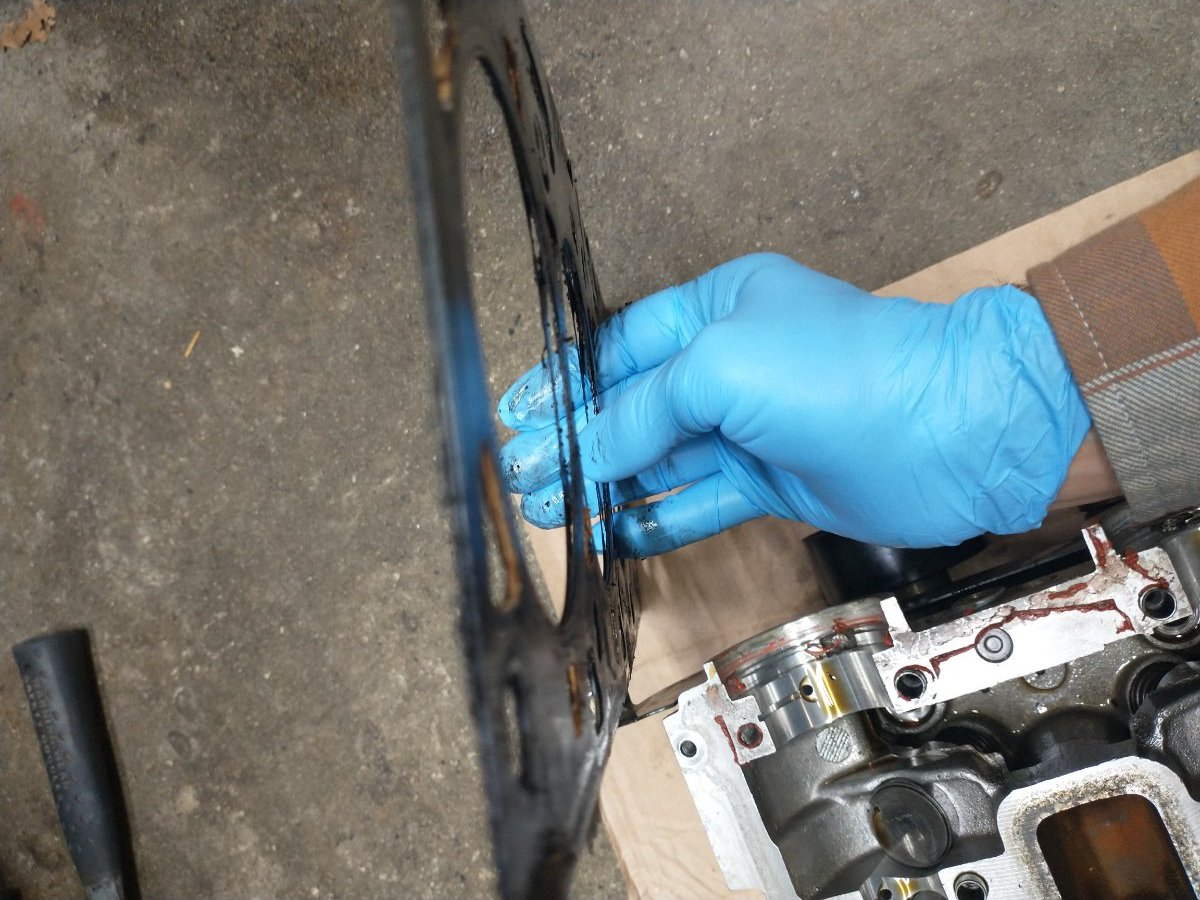
Hard to tell if it's an artifact of removal or a broken state but the layers of the gasket aren't held well together and are "flaking/delaminating" from each other with relative ease
-
-
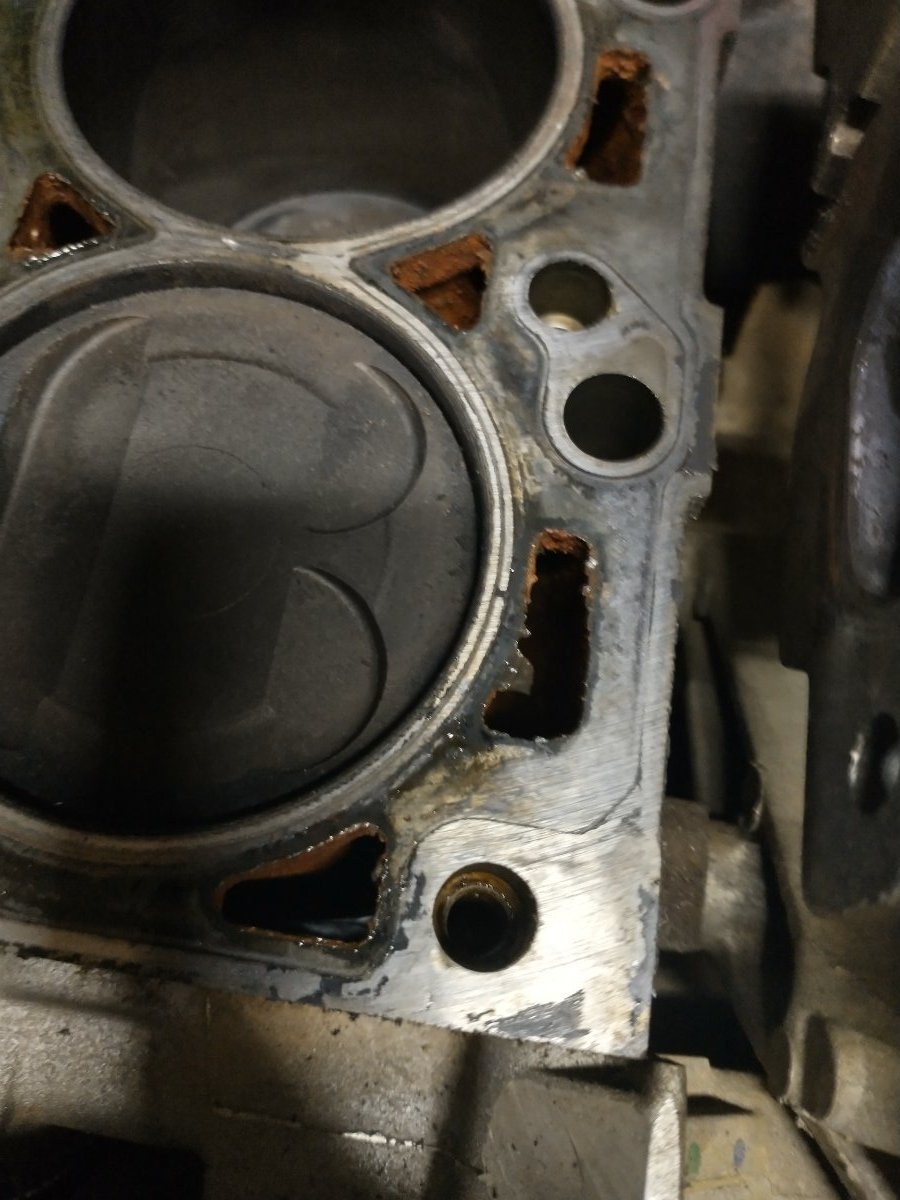
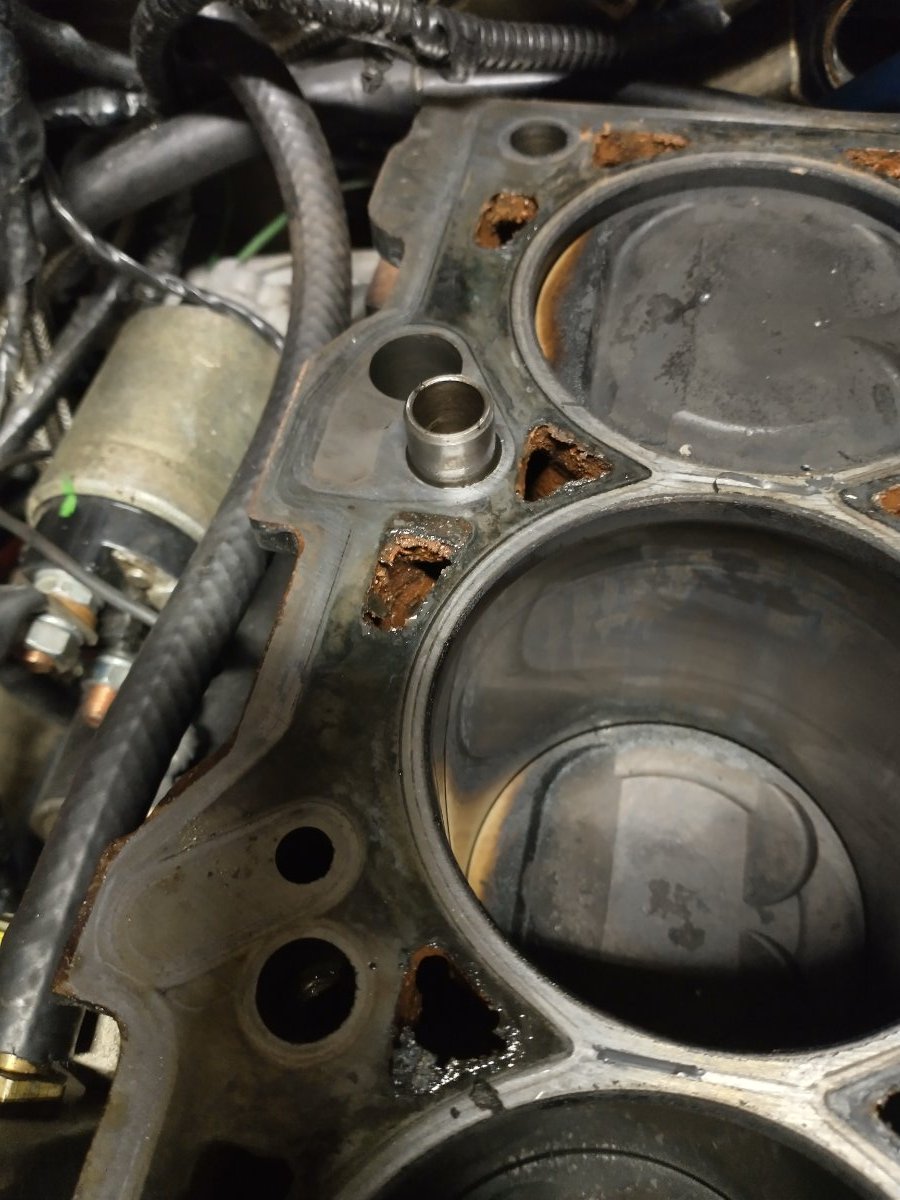
It doesn't look pretty but no obvious breaches
-
All 4 cylinders look pretty matching now Head looks normal?
-
No smoking gun anywhere
-
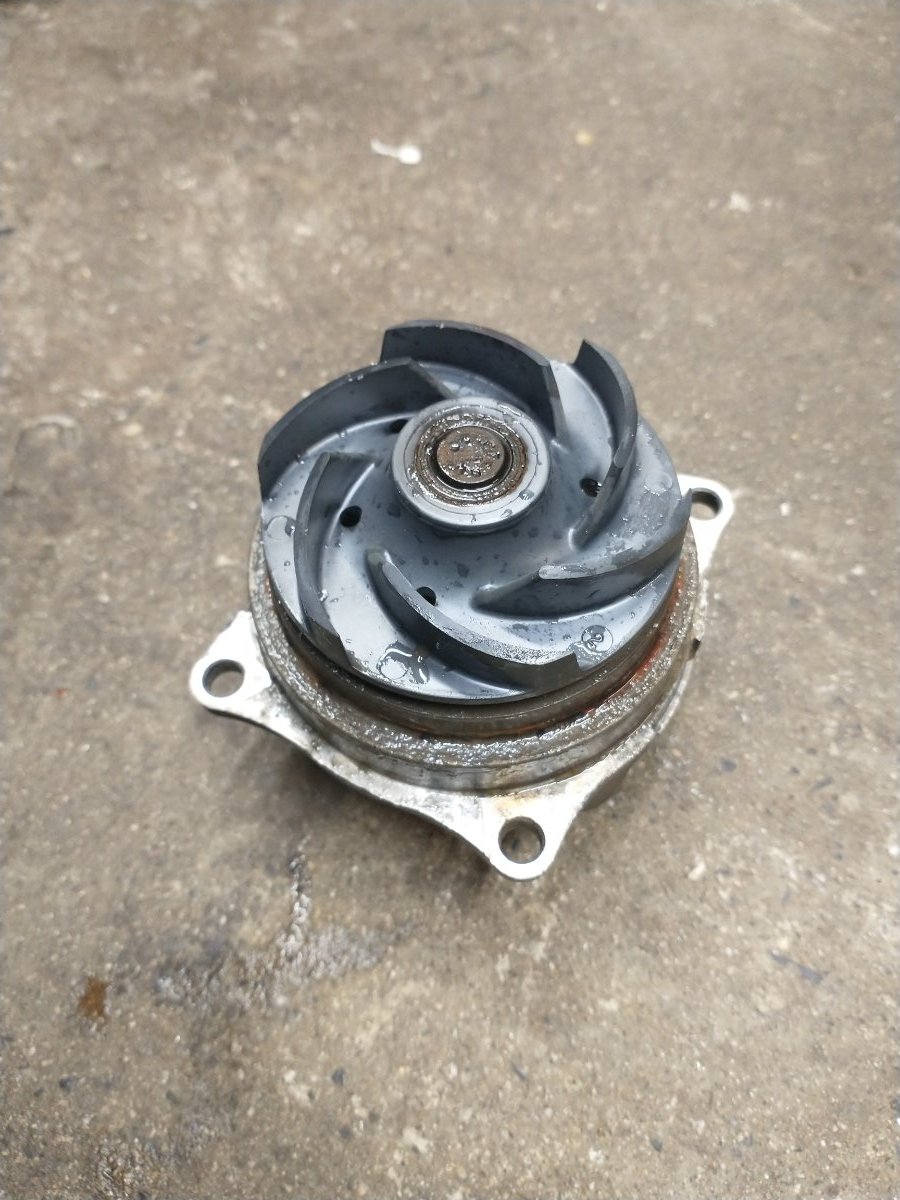
Dug into it after work today and got the head off. Water pump is in one piece. Maybe a little hard to spin if I have to be critical of it There are little gelatin like pieces all over. Any ideas?
-
How it started How it's going
-
Driven like that for the past year! (While troubleshooting the throttle issues, had the cable exposed) it gets toasty! Still doesn't help support passenger and doesn't directly help with hand heat...
-
I appreciate the feedback but heater stays. It's one of my favorite features especially when compared to the bike. Between S.O. wanting to stay warm and me being caught in some very cold temperatures with the aero screen only, heater is an essential feature for me. If redline rail is not compatible, then it's a non option for me. In meantime looks like I'm pending either piecing together 2 pieces to achieve the bend, or finding one big silicone hose that would replicate it, or even just a regular hose instead. Options still pending.
-
Don't tempt me! Heater is a life saver taking the car out in the later months of the year in NY.
-
James May has started his own Gin line. It piqued my interest but it's only available to UK pre-orders. Time isn't of the essence but if somebody can facilitate this order I'll gladly compensate accordingly... https://www.jamesgin.com/ Bonus points if you can get me some "bee juice" from Jeremy's farm
-
 https://www.motorbiscuit.com/lotus-seven-vs-the-locost-seven/ The Lotus Seven Sports Car vs the Locost Seven Kit Car by Taylor Martin on July 22, 2021 One is a thoroughbred British racer, the other is a cheap kit car, but they’re both geared towards the hands-on car enthusiast. And they’re both the pinnacle of lightweight sports cars. Though depending on which you choose to build, one may end up being simpler, and cheaper, than the other. Let’s dive into the key differences between the Lotus and its cheap cousin the Locost. Lotus Seven Kit Car | Daniel Pier/NurPhoto via Getty Images The Lotus Seven’s lightweight legacy Lotus originally built the Seven with one thing in mind: simplicity. The technologies used were established and easily replicated. When first introduced as a kit car, the Lotus Seven swept hands-on enthusiasts off their feet. Based heavily around the Ford Cortina, particularly with the transmission, the Lotus was not only fun to build, but cost-effective. In 70s Britain, taxes were put on people buying new cars, so Lotus offered the Seven as a kit car. It reduced the costs of assembly as well, which had many tinkerers tickled pink. The Series 1 Lotus Seven weighed around 1,100 lbs, which meant it didn’t need a hefty engine. That’s why it only featured a 40 horsepower Ford 100E engine. But most of the Lotus Sevens have been built by now, and according to Hemmings, they average cost is around $30,000 to $40,000. And while you can put together your own Caterham Seven, today’s version of the Lotus Seven, that’ll still run you $37,000 (for the base model). In other words, it’s not the budget option it used to be. That’s where the Locost comes in The Locost Seven “kit car” is the budget friendly option Locost Seven Kit Car | Cars and Bids The one thing you need to know about Locost cars is that no two are the same. In fact, there’s no such thing as a “Locost” brand, it’s just a clever name for cheap Lotus replicas. But unlike Lotus, who sent the parts and pieces needed to assemble the car. It’s your job as the builder to source your Locost parts, from chassis to engine. In that sense, it’s not even a kit car, but it’s certainly cheap. And how it’s pieced together is entirely up to you (and your budget). To put yours together, you’ll first need a ton of knowledge on how to weld, fabricate, and machine a car from start to finish. Or you’ll need a lot of friends, each of which specializes in some aspect of the process. On top of that, you’ll want to pick up the book “Build Your Own Sports Car for as Little as £250 and Race It!” This is your bible, the comprehensive guide to every piece of building a Locost. But there’s one problem for us Americans: the eagle-eyed reader will notice the title is in pounds, not dollars. That’s because this book is geared towards British consumers (as is the sports car it’s based on). Another issue on top of that, the suggested parts come from Ford Cortinas and Escorts. Those can be found in most British Junkyards, but they’re nonexistent in the states. Thankfully, there’s LocostUSA, a site dedicated to American Locost builders. So the two are vastly different: one will cost tens of thousands of dollars, the other might cost a couple grand. But there’s no denying that both are excellent lightweight performance cars. Both are terrific track day cars. Lotus Seven Kit Car | Michael Cole/Corbis via Getty Images As long as you keep the weight low on your Locost, it’ll be able to hang with the lower model Lotuses. And while there’s no telling just how fast your Locost would be, we can give a few ballpark estimates. For starters, the horsepower of most Locosts is in the double digits. Sounds pathetic, but with a chassis and body as simple as the Lotus, you really don’t need much power. 0-60 in the base model Caterham 7 on sale now is five seconds. Meanwhile, Car and Driver took a couple of Locosts for a spin, some of them beating out that 5 second time. And because of their low profile and weight, both the Lotus and the Locost Seven will handle like sports cars. Granted, one of them is a proper sports car and one’s homemade, but they’re both sure to make you smile
 -
https://www.motorbiscuit.com/lotus-caterham-seven/ From Lotus to Caterham: Why the Seven Is One of the Best Driver’s Cars Ever by James Derek Sapienza on December 4, 2016 2016 Caterham 7 Lineup | Caterham Cars Today, we have a small but vital segment of open air, semi-open wheel, hell for leather sports cars. These models gleefully occupy the space between motorcycles and cars, often drawing the ire of safety groups and government regulators, and undying love from drivers. They’re not high-displacement bruisers like Shelby Cobra continuation roadsters, or powerful science experiments for the ultra-wealthy like the Bugatti Chiron, but they’re about as close as you can get to Hunter S. Thompson’s description of “the edge” without being on a bike. These cars eschew everything that isn’t essential — including things like airbags, traction control, and even bodies in the pursuit of speed. So what you’re left with is a flyweight machine that’s able to go as fast as its driver’s skill can handle. This rarefied bunch includes the Ariel Atom, Polaris Slingshot trike, Morgan Three-Wheeler, and the grandaddy of them all, the Caterham 7. Caterham 7 | Caterham When we’re talking lightness in the pursuit of speed, British sports car builder Lotus is almost always involved, and it’s no different here. Because while Caterham has been building the 7 since 1973, for 15 years before that, it was designed and built by Lotus, and sold as the Seven. So for nearly 60 years, whether assembled in Hethel, Crawley, or in garages around the world as a kit car, the 7 has been in continuous production — an astonishing feat for any automaker. And today, it’s just as vital as its ever been. 1962 Lotus Seven S2 | Caterham Cars The roots of the Seven actually predate Lotus. In 1948, Colin Chapman graduated from engineering school and built his first car, a wood and aluminum trials racer based on an old Austin Seven, the affordable compact that served as the Model T of England. Trialing, a type of off-road uphill racing, was reaching the height of its popularity, and Chapman’s car made something of a splash. A second Austin-based car followed suit in 1949, and by 1952, Lotus Cars, Ltd. was in business. But while the company quickly turned its attention to formula one and grand prix cars, Chapman never quite forgot his trialing roots. The Lotus Mk. IV through Mk. VI were improvements on the first few cars, only now, they incorporated more of Lotus’s proprietary engineering. Throughout the mid ’50s, Chapman kept tinkering with a spare Mk. VI chassis until he believed he found the perfect expression of the Lotus philosophy. Lotus Seven S2 | Caterham Cars Thanks to its work focusing on racing, Lotus began to develop an outlook that set it apart from other manufacturers. At a time when raw power was thought of as a solution to most problems, Chapman wisely understood that tiny Lotus didn’t have the resources to design big, advanced straight-sixes like Jaguar or Mercedes-Benz. Instead, it relied on cutting-edge engineering to keep its cars as nimble and focused as possible. “Simplify, then add lightness” became Chapman’s mantra to his engineers, and they followed it almost fanatically. In 1957, it reached its ultimate expression in a new car, the Mark VII, or Lotus Seven. But there’s another wrinkle to the Seven’s story: Britain was still emerging from postwar austerity, and luxuries like new cars came with a 25% tax, something that hurt the sales of small automakers like Lotus. So Chapman felt that if he sold the Seven as a kit car, it would circumvent the tax laws. It worked, and within a few years, Lotus became a presence at races all over the world. Lotus Seven S4 | Caterham Cars The Seven had a lot in common with a trials car — long, narrow hood, tucked-in tail, bicycle-style fenders, two seats, and absurdly light weight — but it was built for the road. The thin, angular aluminum bodywork covered a rigid tubular space frame. Power came from a Ford inline-four that only made 40 horsepower, but thanks to its astonishingly low center of gravity (top of the windshield was only 3 feet of the ground), near 50/50 center of gravity, and wheels on all four corners, it could out-handle just about anything else on the road. The S2 car appeared in 1960 with a simplified frame, and the even more performance-oriented Super Seven appeared with its Cosworth-tuned Ford four in ’61. In 1968, the more powerful S3 bowed with a larger Ford mill, but it was quickly replaced with the S4 in early 1970. That car was larger with a bigger engine and fiberglass body parts to supplement the costlier aluminum panels. Caterham 7 | Caterham Cars By 1973, Lotus had sold over 2,500 Sevens around the world, and they were raced, hot rodded, and driven in anger all around the world. But Chapman wanted the company to shift away from kit cars and move upmarket to focus on exclusive sports cars and racing. What’s more, England’s entry into the EEC, the closing of the kit car tax loophole, and the institution of the VAT, all pointed to the end of the Seven. Luckily, it quickly found a savior. Caterham 7 | Caterham Cars Since the 1960s, Caterham Cars had been a major Lotus dealer, and it didn’t want to lose business once the affordable Seven disappeared. So it bought the rights to build the car, and in 1973 began selling S4 cars. But these larger, fiberglass heavy cars weren’t as popular as earlier aluminum-based models, so in 1974, it launched an updated S3 model, and it’s been the basis of virtually every 7 since. Over the past 43 years, Caterham followed in Lotus’s footsteps by largely using Ford four-cylinder engines. But as engines have become more powerful, it’s begun to diversify. The early 1990s saw the use of engines from MG Rover, GM/Vauxhall, and today, even Suzuki. Most engines, however still come from The Blue Oval. 2016 Caterham 7 | Caterham Cars Today, the Seven still lacks even the most basic creature comforts, and you can have performance as close to Chapman’s ’50s design or a modern supercar as you’d like. The base 160 model uses a 660cc Suzuki turbo three for a top speed of around 100, and a zero to 60 time of just under seven seconds. The top dog 620R doesn’t look all that different, but it will rocket you from zero to 60 in 2.9 seconds and top out at 155 miles per hour, thanks to a supercharged Ford Duratec four. Curb weight: 1,200 pounds. In the automotive world, it’s virtually impossible to achieve perfection, but for thousands of drivers around the world, the Seven is, was, and always will be as good as it gets. Its ’50s-era design (itself a throwback to 1930s trial cars), lack of creature comforts, and otherworldly handling combine to deliver one of the greatest driving experiences in the world. Seven decades of automotive evolution have done a lot for us, but at the end of the day, Chapman’s basic principles have kept the Seven a vibrant driver’s car, and it’s still inspiring groups of true believers to build cars that follow in its footsteps.
-
-
2021 Annual USA7s Event with NJMP Drivers Club - September 19/20
Vovchandr replied to Croc's topic in National Events
Bump Time to earmark more hours on the car in the following weeks