
EdWills
-
Posts
275 -
Joined
Content Type
Profiles
Forums
Store
Articles
Gallery
Events
Library
Everything posted by EdWills
-
Hi. I just posted on this forum after checking Lotus Seven technical information on-line, and found that a number of years ago (2014 in one case) there seems to have been a few Lotus Seven owners who detailed facts about their cars, provided Lotus serial numbers (V.I.N.s) and made general inquiries about parts etc. I do not see any posts from them in the last few years. Have these cars been sold, or is there still a following on USA7s for Lotus manufactured cars, or have the more popular Caterham productions (and other similar makes) taken over? Just curious. Thanks, W.
-
I have been installing body panels on my chassis, and had to drill 2 holes through the flat panel (that the scuttle slots into) for the handbrake. The Arch built chassis already had the welded sleeves in place, and I have new bolts for the handle and ratchet mechanism. I did some checking on-line regarding the handbrake, and found that in the past, Lotus Seven owners on this forum - as well as Lotus and Caterham Seven Club U.K. members, had inquired regarding the origin of the handbrake. Weale, in his book notes: "The handbrake lever itself, with its angled stem, is one of the few early Lotus parts used on the present day Seven. Intended for mass production use, it is supplied in "straight form" and has to be dismantled and bent to shape" etc......... I discovered through another source that it was a mass produced handbrake for U.K. trucks and vans (small trucks apparently?) - manufacturer unknown, and purchased in sufficient quantities by Lotus, similar to many of their other parts for the Seven and other Lotus cars. This follows on with examples such as the rear lights that were originally manufactured for the trailer industry (Thorpe or Wingard), as well as parts from major manufacturers such as Standard Triumph, Ford, BMC, Lucas, etc., etc. It made sense to purchase as much as they could from companies that already had the necessary parts that could be modified for their purpose, or already fitted the cars being produced, rather than starting from scratch by manufacturing in-house. The handbrake on my 1969 Series 3 was not functioning at all when I purchased the car, and I had to dismantle it to see why it was not working properly. It was quite difficult to reassemble it with the curved rod that didn't want to go back into place around the curved neck of the handle. I believe that the newer (Caterham?) sourced handbrake levers have a rubber thumb press to operate the brake lever, but mine has a turned aluminium thumb press that wouldn't have been cheap (even at the time) to mass produce. I wouldn't recommend disassembly of the unit if you don't have to. W
-
Pegasus still offers shipping by USPS into Canada (and the U.S.), and both the USPS service and Canada Post have never given me any trouble with deliveries. If the item requires duty here in Canada, Canada Post works out the value, sends a note to your address, then you pick the item up at the post office where you pay for their service (currently $9.00 plus the duty/taxes), or they sometimes do the transaction at your door (if the postal worker has time). If it doesn't require duty or taxes (similar to the previous U.S. de minimus system) it's left in your securely locked roadside post box. I do realize that this method means that you are not in a hurry for the part(s). DHL has always been good when I am in need of an item quickly from the U.K. I attempted to take in a neighbour's parcel (at her request - she had gone out) that had just been dropped off by a courier driver, and he told me "That's theft!". I told him in that case, be my witness in court. He thought about it for a second, then drove off. "They say the darkest hour is just before dawn. So if you're going to steal your neighbours newspaper, that's the time to do it."
-
@MV8. I just received a reply from Alex Miller who wrote the papers, and he felt that the Burton distributor set-up would not work with the vintage Smiths tach. He is experimenting with a points system using a 'MSD5' ignition for the benefit of his members. The Burton dist. kit is probably using the 25D Lucas distributor with side entry cap, with the Bosch coil. Holden Vintage U.K. also sell this same model of Lucas 25D distributor labelled as a 'Competition Distributor for tuned Ford Crossflow engines'. It is described as: 'A non-vacuum distributor which suits most tuned crossflow Ford engines using camshafts such as A2, BCF1, Piper HR270-285 and Kent 'Fireball' 234-244 in conjunction with side-draught carbs. This distributor is fitted with a side entry cap for clearance' My notes: It is fitted with points and condenser. It does not come with a clamp or coil which have to be purchased separately. Holden also sell Lucas coils. Lucas has received a bad name in the past - particularly with Lotus owners claiming poor quality and reliability, but maybe these new Lucas productions are an improvement? I searched the web for a side entry Ford Fomoco/Motorcraft dist. cap, found one listed on ebay, but it was incorrectly listed as it was a top entry for a Pinto. Incidentally, the much sought after Bosch dist. for the Ford Crossflow engine (desirable for FF and used on the 1-2-3 system), apparently came from the European Ford Capri 1600 model. A web forum with a note from a former Bosch importer advised that he could never obtain any, and they are long out of production. I see that Ivey Engines show the 1-2-3 system on their web site, but as @7Westfield advises, this set-up is not legal with FF so they must be making it available for other road/racing activities. EW.
-
Thank you MV8. This is the set-up that I purchased from Burton U.K. some time ago. It came with the Bosch coil. Being an electronic system, this is why I wondered about using it with the aging Smiths tach. Thanks again. EW
-
Thank you very much @MV8 and @7Westfield. My bad on the 2 counts. I had been reading the FF engine prep. book by Jake Lamont/Tom Andresen, and back then, only points were permitted.. Obviously FF has had to change with the times a tad, and I missed the boat. Also, apologies for 'Mopar' instead of Motorcraft. Senior moment and not sure why that crept in? Messrs. Lamont and Andresen recommended removing the vac advance on the Motorcraft distributor for FF use, and welding the point plates together (also on the Bosch), but I take your advice regarding the necessary idle on a road car. Both authors also recommended the ACCEL heavy duty points, but noted that wear on the rubbing block can be excessive but specifically in FF racing of course. Do you know if Ford/Autolite/Motorcraft produce a suitable side entry distributor cap, as available for the Lucas and Bosch? I think it would help with clearance underneath Weber carbs? I haven't researched it, but sometimes other Ford models are used to provide parts for the Crossflow. I really appreciate the advice, and may just stick with the Ford set-up, as after all, the car came equipped with this equipment, and it's not going to be anywhere near a modern Caterham version. Points were o.k. for the car way back when and will be fine now. I managed to buy a few sets of points and capacitors from a fellow in my city that sold his car, but the buyer didn't want many of the spare parts for unknown reasons. Anyway, thanks a bunch for the advice, and I will keep on with the rebuild. Cheers. W.
-
Hi MV8. Thank you. The article is from the Triumph Owners' Club of New Zealand (Christchurch) and has been written by Alex Miller. There are 5 downloads pertaining to the Smiths tachometers along with a guide to other Smiths instruments. see: https://triumphclub.co.nz He has titled the papers "A Gentleman's Guide to Smiths Tachometers" and also "A Gentleman's Guide to Classic Smiths Automotive Gauges". A ton of detail is provided with diagrams and identification of the various instruments Smiths produced for car manufacturers (OEM) and also for aftermarket use circa 1960s to 1970s. Cheers W.
-
My Lotus Seven Series 3 is fitted with an original working Smiths electronic tachometer and is in the RVI series 1003/00. I found an excellent web site from New Zealand where the author describes this model of tach and also the RVC type manufactured by Smiths. In the article, the author notes that the RVI tach can only be used with points in the distributor, not electronic ignition (another site noted not without modifying the tach internals - which is expensive - using a kit from the U.K.). Not having had any experience of electronic ignition, would a Lucas distributor that has been converted to pointless operation still be considered 'electronic' and prohibit the use of the tach that I have? I have a Lucas pointless distributor and a Bosch Blue Coil set originally from Burton U.K., but I have not installed them yet. I am rewiring the connections to the tach (external wiring) and have the wiring diagram for the correct connections (+12v power, negative earth/ground, connection to the coil etc.). I also have 2 original good condition Ford Mopar distributors fitted with points and with extra spares for both. I may end up using one of these sans advance mechanism. I read that Formula Ford rules require distributors with points, and the series runs very well using these apparently (Bosch/Mopar/possibly Lucas), but with constant attention given to wear on the points and adjustment of the timing. Any electronic whizzes (digital or analog) on the forum with sage advice please? W.
-
Anybody know what glue holds the Caterham side mirrors in place?
EdWills replied to pickles's topic in General Tech
It is possible that hot glue from a glue gun has been used due to the 'string' across the plastic surface. If the glass is not attached quick enough and the glue is left to cool, the holding strength is diminished. Hot glue looks like the above, and don't touch it when it is hot, as it does cause painful burns. It can be removed easily with isopropyl alcohol (an original fix from the great Norm Abrams on the PBS programme 'This Old House'). W You can pick your friends and you can pick your nose, but you can't pick your friends' nose! -
Right on Scott. In an interview posted on YouTube (as well as interviews for magazines), Colin Chapman notes that the Seven was a 'bread and butter line', which allowed Lotus (and of course Chapman) to venture into Formula 1 and other racing categories. Lotus lost money on the Elite Type 14, cut down build expenses on the Seven Series 2 by removing metal, but gained a profit when they went to DIY kit construction for the Seven. It became a reliable source of income for lotus. Chapman had started out with trials cars for his first builds based on Austin 7 parts, so it shows that he was always interested in motor sports from the get go. With his aeronautical background plus those of his original associates, his fondness for lightness was apparent from the very beginning. Fitting a Lotus twin cam engine, the Seven chassis frame had to be beefed up to take the power, but the Standard Triumph rear axle was still the weak spot for the car. Unfortunately for the Series 3, a stronger axle was incorporated, but the chassis frame remained the same as the Series 2 with which it was almost identical, and suffered the same frame failures. On SimpleSevens.org, John D. has an article from Mac McIntosh (Lotus 11 designer) who breaks down the problems with the Seven chassis weaknesses. The Seven Series 4 was no stronger than the Series 2 and 3, and the fibreglass body took the brunt of the failures and hid rust prone areas that were not accessible or noticeable. Caterham of course corrected all this on their Series 3, but it is a whole different car from the original Lotus model (and dare I say it, a whole lot better?) W.
-
Hi @hahuang65 Just watched a few of your YouTube videos. You keep your garage very clean and orderly for the build. Any chance you can lower the camera (for a close up) when you take the engine out to investigate the fluid leak and show us what happened? Cheers Harold. W.
-
Lotus Seven and some Caterham 7s fitted with the cast Track Control Arm
EdWills replied to EdWills's topic in General Tech
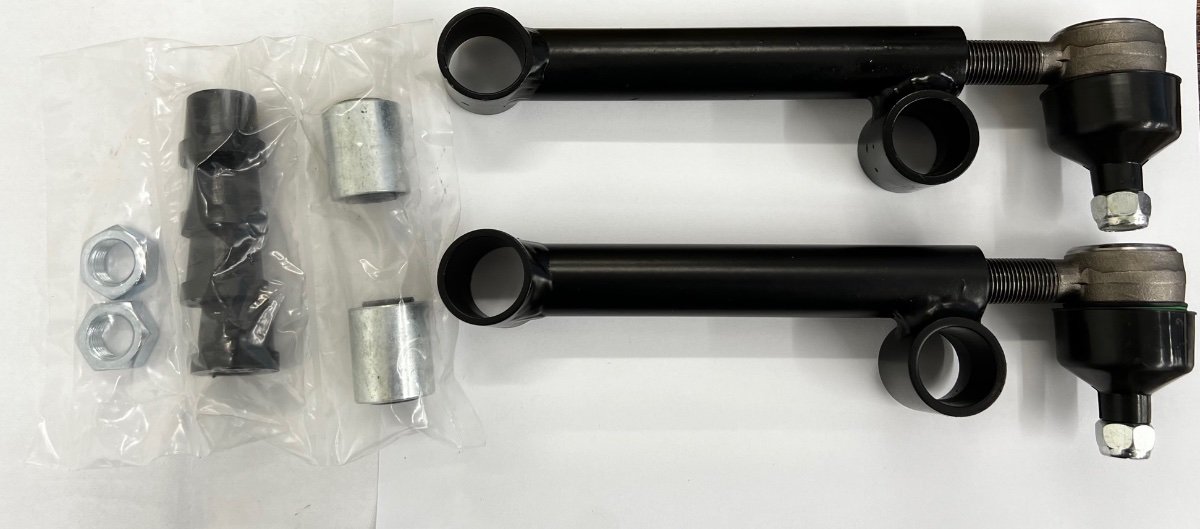
A company in the U.K. producing parts for the Lotus Elite type 14, (enquiries@mk14components.com part #FS02) has just finished machining a batch of reconditioned track arms for some of their customers on an exchange basis. As suggested by MV8, they machine out the old ball joint, but replace it with a new removable ball joint assembly that can be changed for future repair. However, they advise that this process is very expensive, and they have been losing money by doing this. They are considering remanufacturing the cast part themselves, but prices will rise. Right now, they charge 375.00 U.K. Pounds Sterling (without tax) on an exchange basis for a pair of reconditioned arms. Regarding @7Westfield's accurate assessment (thumbs up to you), they are producing arms as shown in this attachment. They feel that it will be aesthetically o.k. for an Elite, as the bodywork covers the front suspension, but on full view for a Seven if authenticity is not a problem. Also, cheers MV8 for the diagram. W
-
Lotus Seven and some Caterham 7s fitted with the cast Track Control Arm
EdWills replied to EdWills's topic in General Tech
Hi MV8. Brilliant idea to renew the ball joint. Didn't think of that, but it would work. It would make a sound unit that could be renewed as necessary. W -
Lotus Seven and some Caterham 7s fitted with the cast Track Control Arm
EdWills replied to EdWills's topic in General Tech
Hi Joe. Hopefully someone on this forum will grab them before too long, if not, perhaps try another Lotus forum. I understand that the Lotus Elite type 14 owners have a dedicated site that can be reached at http://EWROwners@comcast.net W -
What is a suggested replacement when the ball joint in the cast track control/top arm/top link (all names used by Lotus for the same part in the Series 2 manual) wear out? The same goes for owners of the 1000+ Lotus Type 14 Elites, which used the same track arm. On the Mk.12/Type 12 racing car, Lotus modified the Ford tubular lower track arm from the 100E and Consul by cutting off the end and welding in a threaded sleeve to take an adjustable ball joint. Ford then produced a cast part for the 100E/Consul, so Lotus produced their own cast top arm for the Elite Type 14 and the Seven (Tony Weale advises that this part is one of the few original parts for the Seven from 1957 and his book details the above). I checked on-line with the Lotus Elite 14 forums, but no one mentioned the part. A company in the U.K. somehow manages to replace the ball joint inside the original housing, but they only do this once a year according to their site. Lee Chapman used to carry this item, but no longer on the web site, same as Tony Ingram, and others (Bean, Caterham, Kelvedon Motors U.K.). Recently on ebay.com, a pair of very used Lotus Super 7 top links was selling for $445.00 U.S. or $613.00 Canadian. The rubber gaiter or sleeve was missing from the ball joint, and the arms looked rusty and well worn. The item sold with an offer, but the sale price is not known. What will owners of Sevens/7s do when the ball joints in these arms wear out and become a possible driving hazard? Perhaps the purchaser of the used arms has a plan to go back to the drawing board and manufacture some tubular replacements? It could make sense if the arms are well made. There is not much space between the ball joint and the opening that allows the anti-roll bar to fit inside with the rubber bushings, so any threaded ball joint would only have so much thread to allow adjustment, or to be welded/brazed inside the extended tubing. Food for thought? W.
-
Very, Very N Very, Very, Nice. I'm Lotus British Racing Green with envy. Great job, and so clean! W
-
Hi @tgentry. Always good to source locally/in country if possible, but if you need the entire bonnet catch in the future, Holden.co.uk carry the exact model you have number SD/060.060. I have an old catalogue/catalog and it shows it as 'lockable over centre clip chrome plated'. I remember on another U.K. Lotus Seven forum where a contributor asked about these clips. Lotus, like other manufacturers of the time, would source parts for their early cars from various companies. The bonnet catches on my 1969 Lotus Seven Series 3 are the exact same type as my father had on an old tool box he used at his workplace. They were a common latch in the day. The one you have can be padlocked, but the ones I have cannot. If you just need the top clip, then Pegasus has come through yet again. Cheers W.
-
@perrysdad. Message left for you last night. W
-
Where can I get these, and what are they called?
EdWills replied to hahuang65's topic in General Tech
The bushings I have are mild steel. I will check to see if I have anything close. W. -
Hi. I agree with your findings regarding the pin.. Sometimes the mandrel stays in the nose and the next rivet is required to push it through to be ejected either into the mandrel receptacle or on the ground. I also have a brand new/unused U.S.M./Stanley PRG540 air hydraulic (now out of production, manufactured in the U.S. and the last one in stock at my local compressor spares company). A fantastic piece of machinery, but an aging compressor bit the dust, so I deferred to the Milwaukee. The PRG540 will handle stainless rivets up to 1/4" with a hefty pull as demonstrated by the shop manager where I purchased it from. W.
-
Where can I get these, and what are they called?
EdWills replied to hahuang65's topic in General Tech
I have a number of bushes originally from Arch and also Xtra Special Sevens that are spare. Mine are in Imperial measurement, but if you can send me the o.d. and i.d plus length , I can determine if 3 of these will do for you. W -
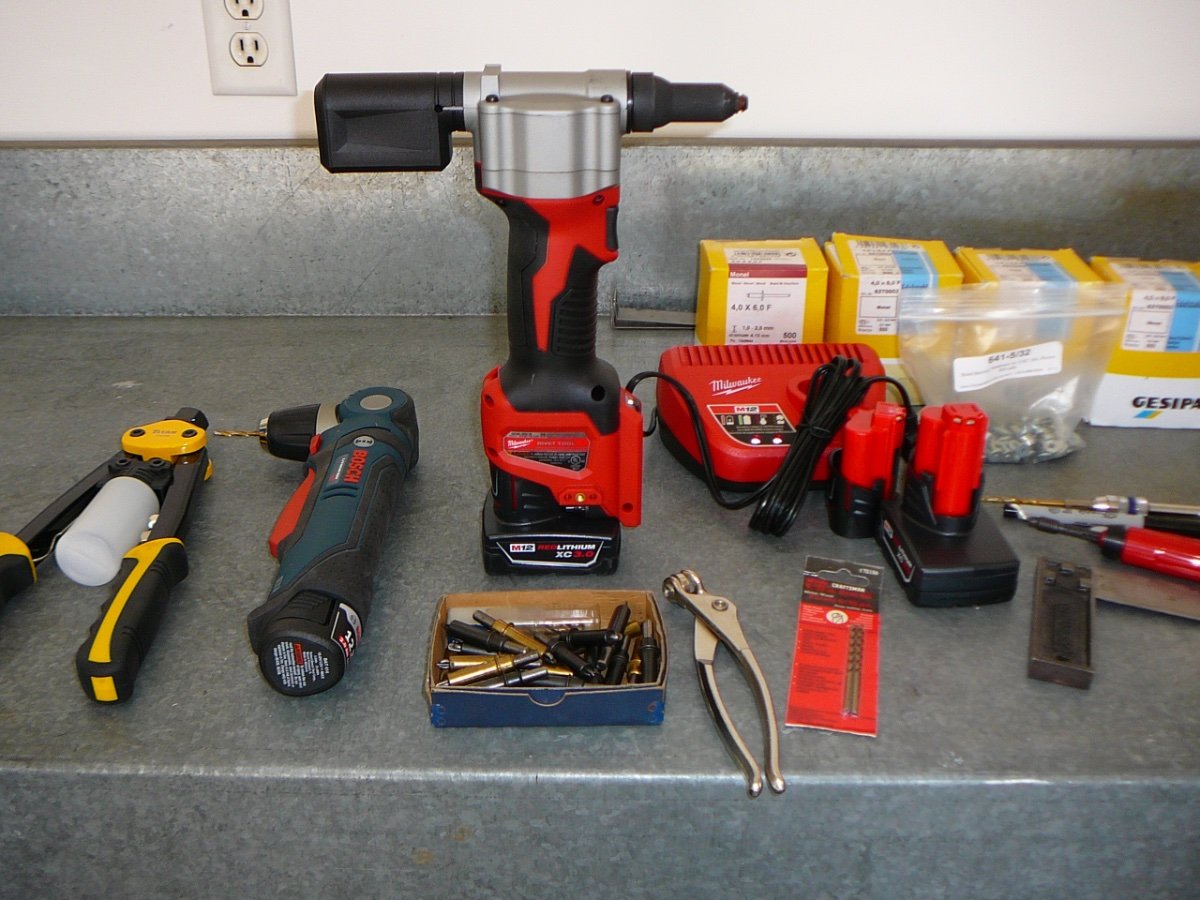
Needing to reattach some aluminium panels to my chassis, I checked some on-line videos and a popular alternative for riveting (than air/hydraulic) was the Milwaukee M12 electric riveter, which is designed to pull up to 3/16" stainless steel rivets. My local Home Depot showed that the riveter tool was on sale (no battery or charger), plus a reduced price pair of 3 amp/h batteries, and a reduced price 2 amp/h battery with charger. The entire package was sold as separate items that you could add or delete, and was very reasonable. The M12 will easily pull 5/32" Monel rivets, and also the quoted stainless steel. I had obtained my Gesipa rivets from a U.K. rivet company 2 years ago,, but Gesipa does not show Monel in their latest catalogue. The rivets I have use stainless steel 'nails' and make a good job, as the nail pulls almost flush with the head of the rivet making them more or less structural depending on the material thicknesses being joined.. Three different lengths covers all the thicknesses of ally that Lotus/Caterham/Arch use along with the 18 gauge mild steel chassis frame. Caterham/Arch used aluminium rivets on some of their frames and body parts almost entirely, but Tony Weale in his book only mentions Monel for the rivets on both Lotus and Caterham frames. Gesipa (of Germany) does manufacture an electric riveter, but it is quite expensive. Gesipa does have a U.S. distribution centre and they offer good advice. Home Depot offer a 90 day full refund/replacement if the tool or accessories fail within this time period. The batteries are also compatible with the Milwaukee extensive line of electric hand tools. Removing the 'nail catcher' allows the riveter to get into most small spaces on a Seven chassis. If using this tool in the garage where vehicles are parked or are planned to be parked, make sure that you recover all of the nails before parking - if the 'catcher' is not used, as the riveting action does tend to gently fire them out of the back of the tool. Safety glasses are also essential if you don't want one in the eye! The tool is about the same weight as an air/hydraulic riveter. It is working great so far.
-
Well, there is a proper way to do it, and then there is your method I guess. What would be wrong in slightly undoing all of the bolts that hold the diff, and then perhaps using a dowel pin or a bolt with no thread and rounded off at the end, or possibly the non pointed end of a correct size drill bit, using them to align all of the holes. Then with the correct sized bolt, slide the bolt in displacing the dowel pin(s)? When the chassis frame is built, there is no guarantee that the welder snugs up the jig tight enough, or perhaps moves the frame pieces slightly? Presumably the bolts were correctly installed in the first place, so why use brute force to replace them? W. 'Before you criticize someone, you should walk a mile in their shoes. That way, when you do criticize them, you're a mile away and you have their shoes'.
-
John, Not the greatest photos, but if you need anymore info, just drop a line. The strip is probably 28+ inches long. Not sure if Fanny's Fabrics sells it though!! I am curious about what other application it would be originally used for? W.
-
Hi John. Pics from my top