
EdWills
-
Posts
275 -
Joined
Content Type
Profiles
Forums
Store
Articles
Gallery
Events
Library
Everything posted by EdWills
-
Hi Scott. No, it's a Lotus casting. Same diff. as fitted to the Lotus Elan with Lotus Formula Ford uprights. W
-
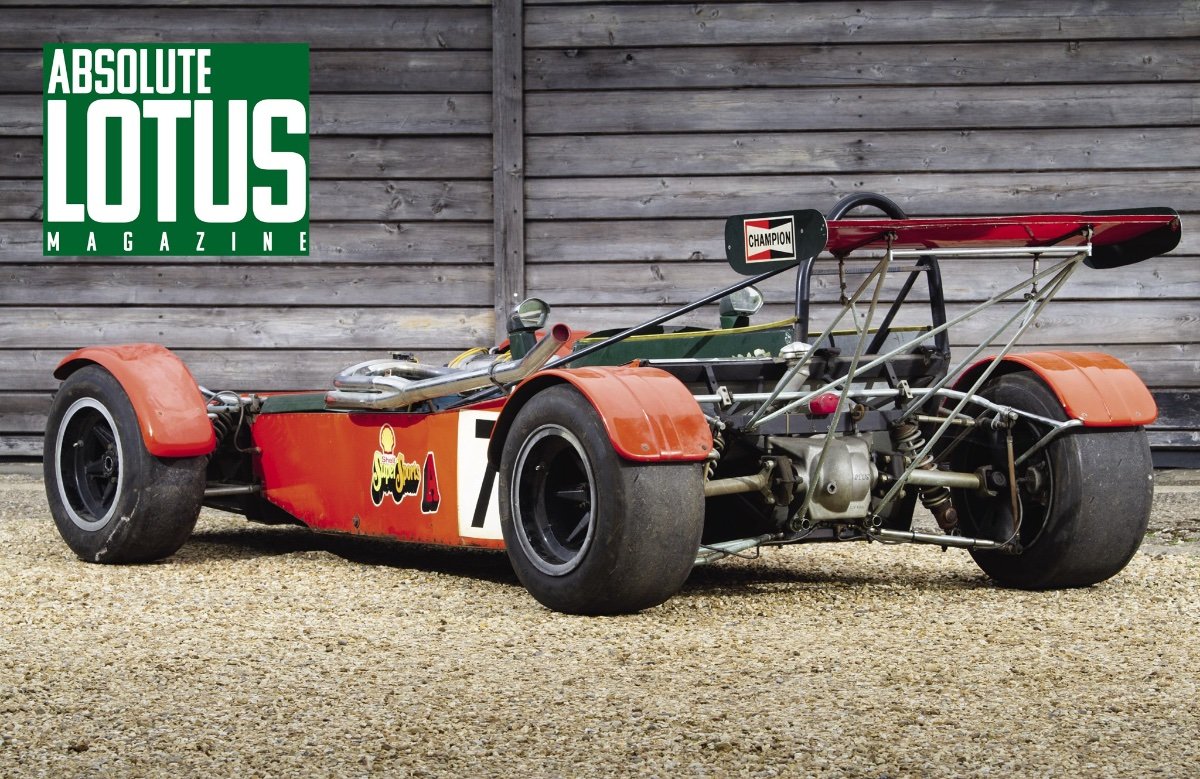
Hi Carz.. Great info. - thank you. I am guessing that Colin Chapman would not appreciate Steele Bro. messing about with a car that Lotus had authorized for construction (the Series 4/IV model only) by this company (although Steelbro did manage to slot in a Lotus 907 engine in some of the cars). The only other Seven/7 to be authorized and constructed away from the Lotus factory was the Argentine Seven (Series 3 model). This used Fiat engine and transmission parts, but not very many constructed. Some time ago, I contacted the New Zealand Lotus Seven Club, and they may still hold the molds and jigs for the Steelbro 7 Series IV. When Caterham bought the rights to the Seven from Lotus, Caterham commenced construction of the Series 4 until some of the specialized parts started to run out with outside contracted manufacturers deciding that small build numbers were unprofitable for them. That is when Messrs. Nearn and Wakefield decided to resurrect the Series 3. Last incarnation of the 7X. It is featured in the magazine shown in the photo. The Series 3 rear end had been removed from the car and a later rear wing added. There are more photos of the original 7X on the Lotus Seven Register by John Watson and also at anglocanadianlotus7.ca The 7X was based on the Series 4 chassis with ally panels and some fibreglass as per the Series 3. W.

-
Just a P.S. Forgot to add, that in my opinion only, this is what Lotus should have done with the Series 4. Not so much fibreglass, and aluminium and frame from the Series 3 with the Series 3 SS additional tubing for strength. This would then follow on from the 7X in appearance (although the 7X was heavily modified over the few years that it raced due to less than optimal frame design strength). The one-off Series 4 Clubman used the Series 4 frame and some of the bodywork, but retained aluminium for the side panels the same as the car shown above. Would also note that the aluminium body work on this car - around the dash - looks very well done. If I was in the market for another Seven, this would be right up there on my wish list. Cheers W.
-
Admin note: this thread was split from the following for sale thread. https://usa7s.net/ips/topic/15452-1979-lotus-super-seven-mk4-twincam-steelbro-nz/ Although interesting information, it is more appropriate for a dedicated thread in the General section than it is within someone's for sale advertisement. A Series 3 and Series 4 Hybrid? Back end looks Series 3, front end Series 4. This is similar to the combination of chassis parts used on the Lotus 7X Clubman race car. Never seen one advertised like this before, and no pictures of Steele Brothers producing a car like this using alumimium for the body panels. Would be curious to see the chassis frame work. Interesting! W
-
Hi Dreamer. Very good news about the repairs. Earl really sounds as if he has a handle on your Caterham repair. Sorry, but I haven't seen the article on your car. I tend to lean more towards Lotus Seven information in order to learn more about the owners and repairs/parts to these cars. There is another Lotus Seven forum that I belong to, but you cannot post photos or diagrams on the site unfortunately. Also Simple Sevens has been a great resource for me, along with all of the information provided by John Watson in the U.K. on the Seven. The Caterham cars have seen so many changes to their frame construction plus engine/transmission/suspension arrangements, that it makes a Lotus designed Seven (any of the Series), seem so much simpler and much more basic, which of course, it is. Parts for the Lotus Sevens are also becoming harder to find these days. Cheers for the updates. W.
-
Hi Dreamer. If you can, try scraping the paint away from a couple of the welds to see if it is an Arch gas flux bronze welded chassis, or perhaps a mig welded chassis from Caterham (Cages or Caterham factory?). If it is gas flux braze welded, no tig or mig should be allowed near the bronze welded joints if possible. Heat can be applied carefully with an oxy/acetylene torch to straighten tubes as necessary, but the body shop tech should be advised regarding the chassis tube joining method. I have seen a couple of good body shop videos (one from a Nissan tech in Japan) who did wonders with a damaged Nissan car. It is amazing how body shops can restore bent metal back to shape and make it as good or stronger than the car came from the factory. If the car needs to be stripped, can you store the engine, transmission, fuel tank etc. at your place to save on any storage charges and prevent possible theft? Good luck. W
-
Error
-
I'm probably preaching to the converted, but don't sign anything until you've thoroughly checked everything on the car, and you are satisfied that everything possible has been calculated regarding parts and labour to fully repair the car back to normal. Not sure if Ontario has a no fault insurance arrangement, but where I live, this is happening. You could replace the damaged panel with a new one that is re-riveted up to the first rear upright beside the cockpit rather than replacing the entire side panel (which would of course require a major strip-down). As you know, the panels are not structural on the front of the car, and the old rivets can be removed with the car raised up so that you can drill them out easier. The replacement panel can be Tig welded on to the original panel towards the rear. Not sure if your car has a rear front wing stay, but if so, this would hide the join. Or get the replacement panel sprayed the same colour to match the original paint on the car, attach it to the frame and use a sealant to join the new panel onto the original. Again, the seam will not be too noticeable under the front wing even without the rear wing stay. Check the rack inner ball joint on that side to see if it took a hit as often 'curbing' or a hit such as you have experienced, can easily bend the inner ball joint where it joins the rack (the 'neck' on the inner joint can be quite narrow on some racks and bends easily). Caterham should be able to provide all the parts, or perhaps Arch if the car chassis was assembled by them? Courier costs/duty/taxes should also be calculated of course (from the U.K.). If this is all too obvious, my apologies, but after the stress of the incident has passed, figuring out what to do afterwards can be more stressful (I know as I went through it years ago). Do you take a payout or get the car fixed (if insurance is willing to allow this)? If the insurance company writes it off, do you buy it back and then try to fix it, or just take the money and buy a new one at a much higher cost? If you have replacement cost insurance, so much the better, but some insurance companies may not offer this. Good luck, and really glad to hear that you and your wife were not injured. Best, W.
-
I never realized that Caterham went to the extra length of rolling the ends of the water pipes, but it does provide a better method of sealing of course. Lotus merely used pipe without any rolled ends (cheaper to produce) and relied on the wire clips to hold the rubber hose on to the pipe. I still have the original 1968 metal piping, some rust build-up evident inside, but heavy gauge mild steel and no leaks or weak spots. I think that Mick Jagger has rolled, raised lips, but not sure if they are at both ends? W
-
A beautiful rebuild of your Seven. Genuine Unirad chassis with correct graphite paint colour (or powder coat?). It looks fantastic. W
-
Hey Scott. I think it just harks back to the Seven being driven in the U.K. where it seems to rain all the time, and the dampness just soaks into your bones! The old Smiths' heater probably just warmed the feet and knees of the driver and passenger. Lotus included a template in the Series 2 manual to show where the necessary holes needed to be cut to fit the heater, possibly indicating that it was not always included in a kit or factory assembled car? Many of the Series 3 Lotus Sevens imported into Canada (that I have viewed), didn't come with a heater, as driving a Seven in the middle of winter here wasn't the brightest of ideas. We don't get a lot (or any?) sports car owners driving their cars in winter here because of: a) bad road conditions (ice, pot holes), plus other drivers new to our province not bothering to fit snow tires and not used to snowy conditions. b) rock chips from passing cars, as our city loves to dump as much gravel on the roads as possible (thankfully spring clean-up starting now). The worst heater I had was fitted in my 1963 VW Beetle. The glow plug would forever foul up, and the only heat for the windshield was from the engine heat being vented through the car. A scraper was a necessity to scrape the ice from the inside of the windshield. I agree with 11Budlite that a motorcycle jacket is a good idea. In the U.K. the Belstaff m/c jackets and pants were oiled cotton, and pretty much waterproof. I used my set year round as they also kept the cold wind out. Cheers. W.
-
Hi Scott and MV8. According to the Jake Lamont/Tom Andresen book on how to build and maintain a competitive (yet legal) Formula Ford engine, (page 75 in your song sheet Scott), the FF rules in the U.S. allowed the Holley 5200 to be used in place of the 32/36 DGV. The Holley 5200 was 'basically a licensed copy of the Weber unit'. As you probably know, the Weber carbs are mostly manufactured in Spain these days. Not sure if Ferrari owners still insist on the originals from Italy though? W.
-
Hi Scott. You may have checked already, but on Amazon there is 'Weber Redline' (U.S.), listing a new 32/36 DFEV carb, or try Pierce Manifolds U.S. for the same type. The DFEV is the opposite throttle orientation to the DGV series of downdraught carbs, but is in the same orientation as the 32DFM that Ford and Lotus used on the 1600 Crossflow engine. The 'E' is of course electric choke, but a couple of sites on the web offer a fairly cheap conversion for manual choke operation. Lotus and Ford used a manual choke to operate the 32DFM (which was cast for manual operation). I purchased a kit on th' e bay' (Chinese manufacture, free postage, came out of Eastern Canada - go figure - must have a rep there!), and I can advise which is the correct kit to order (actually for a 38/38 Fiat Weber carb if memory serves as it is the same orientation as the DFV, but I will check). Do not go for the DGV manual choke kit (as I originally did - as one site noted it was o.k. for a DFEV - not), as it works the wrong way for the DFV choke cable set-up to operate the choke correctly. I beefed up the Chinese choke control (try saying that fast a few times), with a brass bush which I can send you gratis as I have a few. It makes the choke operate more smoothly and takes out the minor slack in the mechanism. You can carefully take the electric mechanism off (Peter Wallage shows how in his 'Ford's Kent Crossflow Engine' book, or I can photocopy and send the pics to you (with Credit to Peter and Valerie Wallage and Haynes Publications). I did purchase a couple of spare lock tabs for the carb from Pegasus, as the flimsy one on the carb may break when removing it. The Weber throttle lever may have to be removed as Lotus used a lever from their Type 51 Formula Ford car for the throttle (along with a pre-formed Lotus 51 alloy bracket). Ivey Engines (or Pegasus, or any FF tuner) can tune these carbs to your choice of tune. Note: I wish we had an Ivey type of machine shop in my location, but they have all retired - which is good for them, not so good for me! W
-
Suitable Tires for Lotus Seven 13" 5-1/2J Steel Wheels
EdWills replied to EdWills's topic in Wheels and Tires
Hi John. Correct. Longstone has quite a good assortment of tires, and the price for the Pirellis and tubes seems reasonable considering other alternatives. Not sure what the cost of courier is yet, and the pound is creeping up against the Canadian dollar. I don't mind trying the Goodrich tires, as I have always heard good things from owners specifically regarding their snow/mud winter tires. Naturally being of a softer compound, they will wear faster than all season tires, but for the probable better grip (and driving a Seven in Alberta is maybe a 6 month option only - @jbcollier may have a better take on this?) they may be worth it. Just a bit of useless information, but the government in British Columbia, Canada, ran winter tires all year round on the government vehicles (possibly in the mountainous areas mainly?) replacing them in the fall - if they were at minimum tread allowance - with new ones. They reckoned it was cheaper than buying 2 sets - all seasons plus winters, and having to either change them on to the same rims, or storing each set on their own rims when not in use. And more useless info. In Alberta, there is nothing in the Highway Traffic Act to mandate when studded tires have to be removed, or when they are allowed to be fitted to a vehicle. Not many drivers here fit studded or winter tires, and this may account for the number of collisions we experience in the winter. Even some car rental companies charge more per day to rent a vehicle with winters only fitted. Winters plus studs do work better than all seasons in our climate, and I use them faithfully, removing them in April normally.. W. -
Suitable Tires for Lotus Seven 13" 5-1/2J Steel Wheels
EdWills replied to EdWills's topic in Wheels and Tires
Thanks all for the responses so far. I watched some Ytube videos from a forum member on usa7s who is rebuilding his Lotus Seven Series 4, and he wrote to me and suggested Vredestein? tires. I checked their site, but could not find the ones he suggested. Another Series 4 owner originally selling his car on Simple Sevens, suggested BF Goodrich mud and snow tires. Cheers Scott, I really like the look of the Dunlops (for FF), but I understand that these are cross-ply tires, and someone suggested in another forum that these would not be best for roadwork? I am looking at the Pirellis, and a set of 5 from the U.K.- with inner tubes - would suit my purposes. Could not find a dealer in Canada selling 13 inch size when I last checked. I am guessing that 13" tire size is now rather old hat and becoming rarer? Older Miatas possibly used this size, and of course a wide range of Brit cars used them. Thank you MV8 for confirming the 175 size. W. -
Perhaps specifically for Lotus Seven owners on this forum regarding cars fitted with 13 inch rims. What are your preferred tire manufacturers using 175-70 R13 or 165-70 R13 profile? Or, as some Lotus Seven owners (and possibly as Lotus themselves originally advised as a possibility for the Series 3), using 185-70 R13 as an alternative option to 165s on the 5-1/2 J Cortina steel rim. Also, a tire (tyre) company in the U.K. that sells tires mainly for sports cars, advises to use Michelin inner tubes inside the Pirellis, Michelins and others that they carry. The previous owner of my car (in Canada) used inner tubes with the Pirelli Cinturatos, and neither of us experienced any problems - especially him - when he was racing and slaloming the car. He installed 185-70 R13s on the 5-1/2 J Cortina steel rims, but I wonder - for road use - if 175s would be a better compromise? Any thoughts and advice is much appreciated. W
-
'Tis the (upgrade) season! What are you doing?
EdWills replied to JohnCh's topic in General Sevens Discussion
Hi @JohnCh. Apologies. I should have realized that a new thread should be used - my bad. I will repost in a new thread. W. -
'Tis the (upgrade) season! What are you doing?
EdWills replied to JohnCh's topic in General Sevens Discussion
Great forum idea with excellent advice. Also a great idea from MV8 re: dry graphite. Locksmiths use dry graphite to lubricate locking mechanisms (such as keyways, padlocks etc.) - never oil, as any kind of oil or lubricating fluid (grease, silicone) will just attract dirt and jamb up the mechanism. You can obtain grey graphite or use white 'talc-like' lock lube if the grey looks too messy in the engine bay. Possibly locksmiths will sell these to you, or perhaps any NAPA type shop? Cheers, W. -
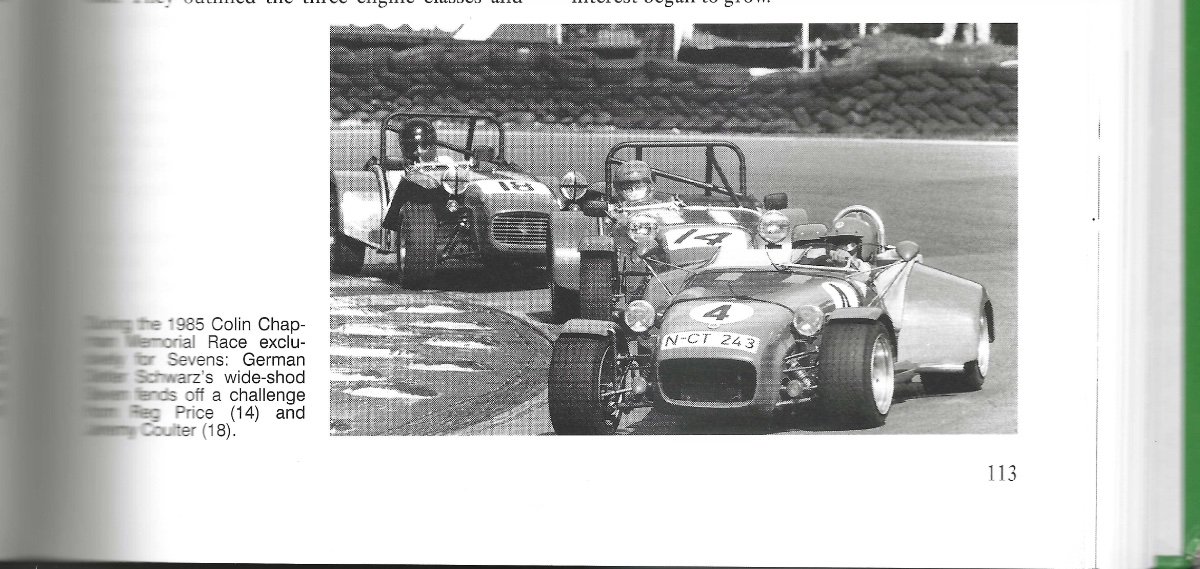
I only mentioned the possibility that the "9 inch" referred to the size of the rear brakes, as I never considered that someone would attempt to fit a very wide rear end to a Lotus or Caterham Seven. On so many occasions (including by my better half), there is always someone to prove me wrong! The Ford 9 inch rear axle is apparently up there in quality, build and desirability. It was used from 1957 to 1986 on Ford passenger cars and trucks. Jegs.com notes that it is 57.25 inches to 68 inches wide (doesn't mention if this is from flange to flange?), and only a few axles in the range could be shortened (these were mostly early 1970s axles as many later axle shafts had tapered ends). 1973 and later had 5 on 5 bolt circle (which the car pictured at the beginning of this post doesn't have). I found the attached photo in the Chris Rees book "Caterham Sevens" showing how wrong I can be. Graham Arnold, who was Sales Manager of Lotus, also published a book on the Lotus range of cars. In a similar vein, he published a photo of a Lotus Elan sporting very wide rear wheel arches and wide rear track, noting on the caption for the photo - "Please Don't".
-
I realize that the "Ford 9 inch" diff/axle assembly is a strong and robust unit used in Mustangs and the like, but coincidentally the final batches of rear axles that Caterham sourced from the Ford Mk. 2 RS2000 Escort series of rear wheel drive cars had 9 inch diameter rear brakes as opposed to the 8 inch (by 1-1/2" wide) on the original Escort axles that Lotus used on the few 2-1/2s and all of the Series 3 cars (the Series 4 also had 9 inch rear drum brakes). The 4-1/4 pitch for the wheel studs stayed the same as previous, but the Caterham cars now had 9 inch front discs and 9 inch rear drums.
-
Hi Scott. According to Tony Weale in his book "Lotus Seven". the first Marina/Ital axle. (81 spec.) was fitted to chassis 4002 TC R M in 1980. The first Mk 1 RS1600 axle was fitted in 1977 to 3601 TC R S, and the first Mk. 2 RS 1600 axle also in 1977. Weale adds the info in the indices section on page 236. Author Chris Rees also confirms 1980 for the Marina/Ital but has different dates for the Escort series (1975 and 1978). First long cockpit Weale advises 1981, Rees advises 1982. The V.I.N/serial numbers on the cars correspond with both authors, but the dates are off. Cheers, W.
-
Hi Both. Yes, that was what I was attempting to add (the correct web address that is!) - thank you. I guess the only part that appealed to me was the author's information on shocks and springs, and some of his calculations. Agreed it is more for track than road, and he did go heavier on his springs as suggested by Caterham and Redline for racing purposes. I should have specified his information only on the road spring poundages, as it agreed with others who had measured them. Cheers, W.
-
Hi Pethier - thank you. Yes I found it a tad difficult to find what I was looking for on the site once I found it again. The main point of the article I found was that the writer advised that the spring rates on original Lotus Seven Series 2 and 3s, was 105 lbs. for the front springs and 75 lbs. for the rears. As MV8 notes, this is about as small and light as you can get. Bearing in mind however that the Seven - as originally designed and built - was much lighter (1000 lbs plus or minus?) than the current Caterham cars of course. When Lotus built the one-off Seven S show car, the weight was increased quite dramatically, and the twin-cam cars were just as heavy. DSK advised that for a Lotus Seven twin-cam, spring rates should have been increased by 10% on the front from original, although they quoted that the front springs on a standard Seven were about 85 lbs. Mick Lincoln of the original Redline Components, advised that the rates were 105 lbs F, 75 lbs. rear. I have a chart sent to me by a gentleman who was originally on this forum, listing sizes and spring rates for the Seven Series 1 and 2 (plus the Lotus 11 Series 1 and 2). It seems that rates varied quite a bit during the years of manufacture of these cars and the way the cars were used. W.
-
Try 'Lotus Seven Eugene', then on the opening page click on 'modifications'. The car owner provides info on the work he did on the new car after a bad crash to the first one. I should have done my homework before just placing a web address on this forum. Duh! W
-
Apologies. Please see my reply to MV8 above. W