
oilteq
-
Posts
169 -
Joined
Content Type
Profiles
Forums
Store
Articles
Gallery
Events
Library
Everything posted by oilteq
-
But if you really want a fast track car, you need a 1974 Dodge Challenger. http://grassrootsmotorsports.com/media/img/utcc/2010_UTCC_Final.pdf What???
-
I think the dominant se7en in the UK must be Robin Hood, based on sales. Things have probably changed with the recession, but they used to sell 700 cars per year. I think Caterham's capacity is 500 cars per year.
-
new guy to the forum with some ?s
oilteq replied to bluebirkin01's topic in General Sevens Discussion
Wayne There may be some help on the birkinowners yahoo group. There is a photo album on the site labeled "frame repair" from July. Perhaps the guy that made the album can provide some information, and I think there was other repair experience within the group. I am not trying to take anything away from this excellent forum, but wanted to point you to an additional resource if you were not already aware of it. Blaine -
Jim You are right—I missed it entirely. I am glad I asked for clarification, and thank you for the response. We agree in that I do not want ethanol (or anything else) rammed down my throat, and I have driven only 4-cylinder vehicles since 1985. My favorites were an Elise and two Birkins. Blaine
-
Jim This is probably obvious to everyone else, but I still do not know why ethanol fuel is so important to you. You are apparently willing to make significant life-style sacrifices, but how will it make your life better? Blaine
-
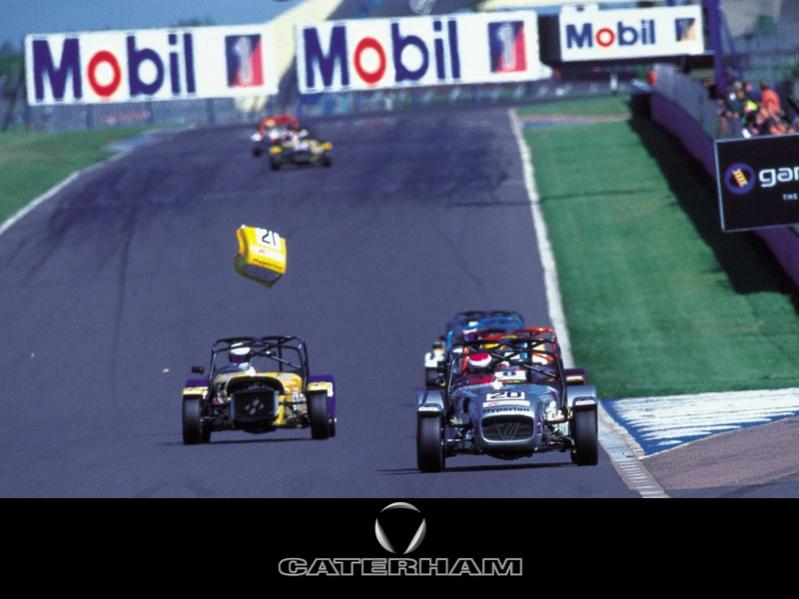
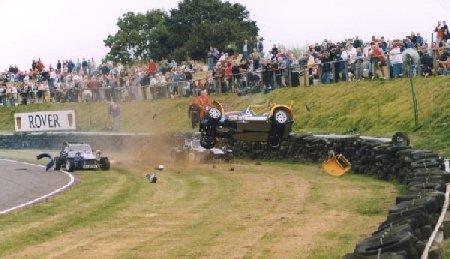
Tom Your picture and the one following it are not in the same league with the others for damage, but I still find them interesting because they caught the image while the body part was still in the air. Blaine
-
**

-
Jim I looked back over my comments, and I do not see where I offered an opinion or suggested a direction we should take in regard to ethanol use. I said it is hard to justify on an economic basis, but the need for subsidies and mandates validate that fact. I said ethanol use will continue to be an issue, and offered an article published today as evidence. Okay, I did imply that the government is ineffective at implementing a change to non-crop ethanol, but you obviously agree. So, I am not sure why your post was directed at me when I have not taken either side of the issue. Now I am curious about why you think pursuing ethanol as fuel is necessary? Your post suggests how, but not why. Blaine
-
There is a plan to get us away from crop based alcohol, and by coincidence, it came up in one of my weekly newsletters today. See if this instills you with confidence that a solution is on the way. http://oilspot2.dtnenergy.com/e_article002323500.cfm?x=bkwwT2M,b1lpRrlw,w
-
It is really hard to justify E10 on an economic basis (it does not save energy), it can cause damage to elastomers in older (pre-1990) engines, and it can damage high performance engines without sophisticated electronics. However, E10 is benign in modern passenger cars. We have had it in Iowa for more than 30 years, and I use it every day in my daily driver—not because it is better, but because it is cheaper at the pump with the tax games played here. I do not think the lack of a federal subsidy will have much impact on the use of ethanol for fuel. Several states have mandated the use of E10, regardless of its cost, and others have proposed legislation. It is required in “non attainment areas” where CO levels are too high. The EPA issued a partial waiver for E15 last year, although most car warranties did not. Even if it is not subsidized, the Renewable Fuels Standard passed during the previous administration means the growth of etahnol in gasoline will continue to be an issue. Blaine
-
WestTexasS2K The best motor oil? Cen-Pe-Co Racing Oil, but I may be a bit biased since I formulated it. There are other adequate motor oils for mild to extreme racing engines, and new products are being added all the time. I read two press releases about new engine oils for racing or flat-tappet engines within the past month (one from Shell’s Quaker State). They seem a little late to the party considering I started warning about reduced ZDDP in March 2005. Anyway, the engines at risk of premature wear have a sliding interface between the cam and lifter. High RPM, aggressive grinds, and higher valve spring pressures all increase load, and therefore the risk. Break-in, until the parts wear in, is the most critical. I like diesel engine oils for most engines. API CJ-4 specifications include an engine test in the Cummins ISX, which has a sliding cam. They have higher ZDDP levels than passenger car oils (typically 1200 ppm zinc), plus the detergents also act as rust inhibitors. For hard core racing engines, I like to see dedicated racing oils with higher levels of ZDDP—1600 ppm zinc (.016%) or more. Blaine
-
A potential risk of ethanol fuel blends not mentioned thus far is knock or detonation. One of the reasons E10 has been mandated in non-attainment areas is that O2 is attached to the molecules, so engines produce less CO emissions, but more CO2 emissions. In other words it enleans the mixture if your ECU is not compensating. The biggest risk is high performance engines that are set on kill, and do not have compensating electronics. Many high-end chain saws have suffered an early death when state legislatures mandated E10. My advice is to tune your engine to whatever fuel you intend to run, and then stay with it. The chain saw guys that had their carburetors adjusted when E10 came out are still running them. Phase separation is caused by water contamination, not age, and I do not think there is much risk in a typical vehicle. The biggest risk here is a tank or container vented to atmosphere, and then when there is a temperature drop. As mentioned in earlier posts, ethanol will suspend a lot of water. Warm ethanol suspends a lot more water than cold ethanol. So, if your fuel is near its saturation point when it is warm, and then the temperature drops 50 degrees, phase separation can occur. Although many fuel additives claim to stop phase separation, they do not make a significant difference. Think about it—E10 is 10% water suspending additive; like 10 bottles of Heet in a 10-gallon tank. If you have so much water that 10% ethanol will not suspend it, 1% more water-suspending additive (ethanol, methanol, or some type of glycol ether) is unlikely to fix your problem. Gasoline additives can be beneficial in cleaning, inhibiting oxidation during storage, and preventing corrosive wear, but claims about stopping phase separation should be questioned. Speaking of cleaning, ethanol is high in solvency and can clean deposits off the bottom of you tank, or the gas station’s tank. However, that does not mean it will clean injector deposits or intake valve deposits. In fact, E10 will form more injector deposits and intake valve deposits than the base gasoline by itself or E100. Detergent additives are needed to control these deposits. Ecarte56, I enjoyed your post. I think your fuel guru’s last name is spelled Ruhland. I met him over 20 years ago when he worked for Lubrizol, and I hold him in high regard. Blaine
-
Do you have a big red start button :)
oilteq replied to KiwiBirkin's topic in General Sevens Discussion
My Birkin was a few years ago, but if my memory is right the switch / lock assembly is like a collar around the steering column. I removed it and ground away some material so it could be rotated up as high as possible without the key fouling the dash. That way I did not bump my knee on the switch each time I got in. I had a big red button on my Elise. I had to turn the key in the switch anyway, so I never really understood the advantage. I like the idea of replacing the key with a button, as I like to keep things simple. -
Mondo The 3 or 4 messages before mine had not come up when I made my post. Seeing that things had calmed down, I probably would have withheld it, as I am not uncooperative. A temper tantrum would not have erupted from Gert or me. We can look at it as engineers (at least he is a real one), and we can identify the same problem. We just disagree on how to fix it; but yes, there are other forums for that. I think we can all agree that Gert has a really cool car with many significant upgrades, and one of the shiniest aluminum bodies anywhere. Blaine
-
-
ultralite S2K, other wisdom for lurker
oilteq replied to kennyrayandersen's topic in General Sevens Discussion
Kenny Be careful of Chuck. He is in a colony of guys infected with "upgradeitus." To say Chuck's condition is contagious is an understatement. It is more like he is the Midwest Distributor. Approach with caution. On the other hand, his racecar is very cool. Since size matters, notice that his XR7 (second from the left) appears to be about half the size of the other Ultralights in the attached image. Blaine
-
Synthetic oils are generally more resistant to oxidation (break down) than mineral oils. They do not necessarily withstand more heat, but they withstand high temperatures longer. Starting at about 150 F,. any oil's oxidative life is cut in half by an 18 degree increase in temperature. So, any oil's oxidative life is 4 times longer at 200 than at 236. I know a couple of stock car racers that will run 280 degree oil temperatures on what they call a "power track" with a mineral oil with no ill effects. Obviously they are not interested in extended drain intervals. The thing to be aware of is that any oil will drop the equivalent of a viscosity grade with a 20 degree increase in temperature, which is why the stock car guys mentioned above use SAE 50. Blaine
-
I recommend oils meeting API CJ-4/SM specifications, which is primarily designed for diesel engines (the CJ-4 part), but also meets the requirements of gasoline engines (the SM part). The problem is that phosphate has been limited to 800 ppm in passenger car oils for the past few years to prolong cat life. The phosphorus goes in as a zinc phosphate (ZDDP), which is your anti-wear additive. Diesel oils permit 1200 ppm phosphorus, which is why I prefer them. Anti-wear levels are not as big a deal in roller cam engines, but the DOHC engines most of us use have the cam sliding on the lifters. Performance cams, stiffer valve springs, and high rpm all increase valve train load and the need for more anti-wear additive. Not convinced? Google “zinc cam failure.” Stay off the forums, but look for tech bulletins and manufacturer’s sites. Oils meeting CJ-4/SM are available in SAE 15W-40, 10W-30 (in northern climates), and synthetic 5W-40. If you go for the 15W-40, be patient with warm-up. Blaine
-
ultralite S2K, other wisdom for lurker
oilteq replied to kennyrayandersen's topic in General Sevens Discussion
I think that is a good choice of action. Brian and Dick are both fine people, and I would not hesitate to deal with either of them. I think you can buy either car at any stage of completion from a bare frame to turn-key. A rolling chasis where you just install the drivetrain and tune the entire car may fit your desire to create and your time constraints. I think you will find parts are available in the U.S. for either car. The Birkin uses a Ford Zetec or Duratec engine, found in the Focus. You may want to check out Birkin's support group http://autos.groups.yahoo.com/group/birkinowners Whether you prefer size small or extra small, either is much more fun than any production car I have driven. -
ultralite S2K, other wisdom for lurker
oilteq replied to kennyrayandersen's topic in General Sevens Discussion
Attached is a picture of a Birkin and an S2K. Some people look at this image and are immediately drawn to one or the other, perhaps depending on that person’s size. There was a guy of average size that went into the Birkin shop that was here a few years back, but he bought a Superformance because it was slightly larger. I think his daily driver was an SUV. Later, this larger than average guy went in, sat down in a Birkin, and said, “This ain’t bad.” The shop owner was a bit surprised until he found out the guy owned a classic Mini. Try a couple cars on for size and see what fits you best.
-
I was flipping channels last night and ran across one of the sport programs, “Lets Make Fun of People Getting Hurt.” There was a horrific crash of a racing Se7en. I found it on YouTube here YouTube - Caterham crash Blaine
-
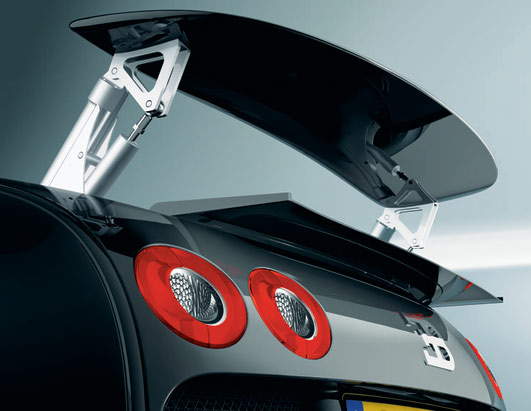
If a wing is what we Yanks call a fender, what do you call this?
-
I have been a responsible citizen, and my daily drivers have averaged over 30 mpg since the late 1980s. Therefore, I am going to be screwed, and my tax dollars are going to benefit someone who chose a gas hog. I have become very angry at a government (regardless of which party is in power) that punishes responsibility and rewards irresponsibility. Blaine
-
Keep in mind that a 10W-60 is SAE 60 at 212 degrees F. Assuming 10W-40 was recommended for the crossflow, if you are running 40 degrees higher than normal, a somethingW-60 makes sense. Otherwise, it sounds a little thick to me. To put the ZDDP level in perspective, a typical diesel engine oil will have about 1200 ppm zinc (the Z in ZDDP) and 1100 ppm phosphorus (the P in ZDDP), as does Castrol GPS 20W-50. Blaine
-
Bob I had a TPS that did not work, and another that worked intermittently on Jenevy throttles. I bought them from Woody, so I assume they were Colvern. In playing with the second one, I discovered that screwing it in place created a lateral force. I fitted a couple of tiny washers in behind the TPS to relieve the miniscule amount of stress, and it cured the problem. Blaine



1.jpg.1a74e71ba1f5116c35436c78dc13be20.jpg)