
oilteq
-
Posts
169 -
Joined
Content Type
Profiles
Forums
Store
Articles
Gallery
Events
Library
Everything posted by oilteq
-
Caterham maintenance recommendations
oilteq replied to Lancefitzgiben's topic in General Sevens Discussion
Tim I do not like compromising. The first one is anti-wear vs emissions equipment. When I saw the compression ratio and the hp, I incorrectly assumed there was no emissions equipment to worry about. Then I decided to go to the Caterham site and was surprised that it meets European emissions standards. How did they squeeze all that power out of a 2.0 liter NA engine and still meet emissions? Anyway, as I mentioned earlier, phosphorus is limited in passenger car oils to prolong the life of the cat. So I am not going to tell you to ignore the manufacturers recommendation, particularly if there is a warranty involved. On the other hand, if your engine does not consume oil between changes, not much phosphorus will make it back to the cat. The next compromise is 5W-50. That is a stretch, and it requires a lot of polymer (the plastic dissolved in oil to give it multi-grade capability). Polymer has a tendency to shear, so you put in a cheap 10W-40 and it drops to a 10W-30 within 200 miles. Ford recommends 5W-50 in one of its super Mustang engines. I received an oil analysis report that showed it had sheared to near the bottom of the SAE 40 range, not much thicker than a 30. I jumped on a couple of Mustang forums, and that appears to be normal. I prefer less of a stretch, such as 15W-40. 20W-50 would be good for a track car, but be patient at startup. If you decide to stay with Caterham’s recommendations, Google API SN 5W-50 and you will get several hits in brands you recognize. If you want more protection for your cams (screw the cat!), Google high zinc 5W-50, or whatever viscosity grade you want. A diesel engine oil will have roughly 50% more zinc than a passenger car oil and may be a good choice. If you want to go that route Google API CJ-4/SN 15W-40 or API CJ-4/SN 5W-40. Sorry for the long post. I know you wanted a simple answer, but when I saw the emissions equipment it became more complicated. A compromise we can all agree on is to give up comfort for performance. It is why I own a se7en. Blaine -
Caterham maintenance recommendations
oilteq replied to Lancefitzgiben's topic in General Sevens Discussion
Tim The first website to come up for me was here https://www.amsoil.com/lit/databulletins/g2880.pdf. It says the signature 5W-30 meets API SN, which limits phosphorus to 800 ppm. So zinc is not going to be higher than 900 ppm or so. I recommend higher. Zinc phosphate is what protects the cam, timing chain, and other areas where metal to metal contact occurs. If you have a racing cam, it increases the load between the cam and cam bucket. Even high rpm increases the load as the cam ramps up the valve faster. I have talked with people with stock cars, British cars, muscle cars, and classic cars that had worn a couple or their cam lobes down. In each case, they had a sliding interface between the cam and lifter, and they were using a modern passenger car oil. A Diesel engine oil or racing oil would have prevented the problem. Blaine -
Caterham maintenance recommendations
oilteq replied to Lancefitzgiben's topic in General Sevens Discussion
API SN and any motor oil displaying a starburst should be avoided. Car manufacturers limited the amount of phosphorus to 800 ppm to protect the catalytic converter. Although phosphorus is limited, the marketplace recognizes zinc or ZDDP as the deficient additive. Google zinc and cam failure, and see how many hits you get. I prefer mineral oils, but regardless, look for extra zinc. A typical Diesel engine oil will have around 1200 ppm zinc, and a typical racing oil should have 1500 ppm or more. I like to cut the can off the filter and look at the pleats after draining oil. Some metal particles are normal in the first drain, but I have never seen any in a healthy engine after that. Blaine -
This was in one of my weekly email news letters this morning announcing Millers Oils as the official sponsor of Caterham Motorsports http://www.millersoils.co.uk/automotive/Caterham.asp It appears to be last year's news, but I received it just this morning. Blaine
-
There were particles in the filter, so decided to overhaul the engine. I found the crank timing was off, which was later confirmed by the marks on the pistons where they had collided with the intake valves. I assume that if TDC is 18 degrees from where the ECU thinks it is, it contributed to the tuning difficulties. I doubt that the oil pan baffling was the cause of the oil pressure issue. The O-ring between the oil pan and engine had apparently slipped out of position. A picture was posted here http://usa7s.com/vb/showthread.php?t=9172&page=2 The holes line up, but it looks like the O-ring was in the wrong place. I assume that would cause the engine to suck air in with the oil, which would help explain those particles in the filter and KitKat’s loss of oil pressure. Kitcat, it may not be your driving. The front dampers are too short. When set at Birkin’s recommended height, they give only about ¼” of rebound. I do not know what “tank slapping” is, but when you are hard into a corner, if the inside front damper hits its extension limit, I assume it would create a handling issue.
-
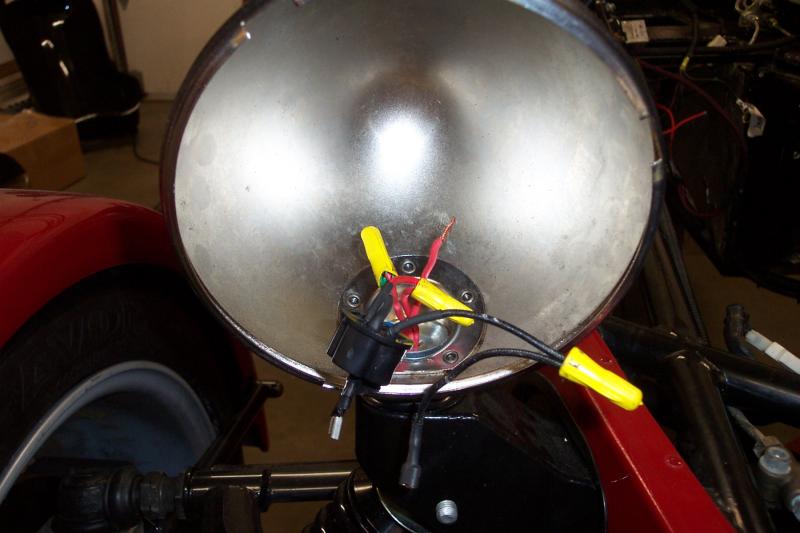
I bought Kitcat’s Birkin. Before I pile on, I want to emphasize the importance of the builder and mechanic (whether it is you or a professional). I think the Birkin chassis is excellent, but it is no better than the guy who assembles it. I have seen a locost that looked fantastic, and a Caterham that looked dangerous. The difference was the quality of the guys putting them together. I cannot point fingers at who to blame, because I am the 3rd owner and do not know who did what. Like KitKat said, a couple of the suspension bolts and one of the motor mount bolts were finger tight. I bought the car knowing the clutch was slipping. It was because the spacing was too tight, so the clutch did not fully release. The spacer ring that goes between the engine and transmission bell was missing, making the problem worse. A bolt that holds a rear plate that ties the back of the frame together was broken off. In drilling and retapping, there was an obstruction of some type near the bottom of the threads. My theory is that it caused the bolt to snap off before it clamped, and the builder or mechanic did not think it was worth fixing. Then there were repairs when electrical circuits failed. It was apparently easier to bypass the existing wiring with additional wiring than to identify and fix the problem. Wire nuts in a headlamp speak for the quality of workmanship that went into the electrical repairs.

-
You need hardened valve seats. In my opinion, there are no lead substitutes. I have a copy of the EPA / USDA joint study done in the late ‘80s with the intention of showing lead was no longer necessary. They failed. As I recall, the best results came from a sodium additive manufactured by the Lubrizol Corporation. When used at 4 times the recommended rate in a 454 test engine, the valve seat recession remained within specifications. Then I read an article in an RV magazine saying yes, it was within spec, but it had enough recession that it needed a valve adjustment, and that generally took over 100,000 miles in an RV on leaded gasoline. So lead and the wide nozzle system was not banned for several more years, but it dried up in the marketplace. As far as I know lead is still legal in the after-market as an additive. If anyone knows of a tetraethyl lead additive that is still available, please let me know. The last manufacturer I know of was Kemco, in Utah and they did not survive the great recession. Blaine
-
It seems we care a lot more about the Lotus logo than Proton. We also appear to care more about the Lotus 7 than any of the logo’s owners since 1973.
-
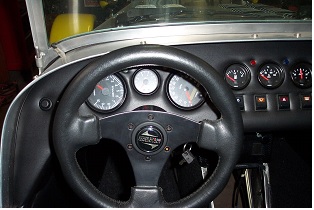
I have the regular Birkin layout, but I could not easily see the important parts of the speedometer and tach. So, I swapped their positions and twisted them so I could see redline and speeds up to 80 MPH without playing peek-a-boo with the steering wheel.
-
"Lotus" just looks good on carbon fiber.
-
If we let just anybody uses the logo, it will lose its integrity. The next thing you know some Malaysian car company will want to use the Lotus logo.
-
Finally, a beer for Porsche drivers...
oilteq replied to rikker's topic in General Sevens Discussion
I suspect home brew is preferred by locost owners. -
There were a couple of references to oil analysis, which may be of limited value. Oil analysis involves burning the sample and reading the light frequencies off the flame to determine which metals at what concentrations. The metal particles have to vaporize when burned to show up in the report, which typically happens with particles 5 microns and smaller. I have seen a sample from a failed engine where you could see metal particles floating in the sample, but the analysis said everything is normal. Something broke all at once, and did not create normal small progressive-wear particles. Oil starvation would probably create larger than normal wear particles that would not show up in a routine oil analysis. High lead levels in an oil analysis would indicate a problem, but normal lead levels does not mean you are in the clear. I recommend cutting the can off of your oil filter and examining the media for particles. A saw makes a mess, but you can buy a filter cutter that works like a pipe cutter, or just clamp the filter in a vise and cut the can off with a hammer and chisel. Any visible metal is abnormal. I am certainly not trying to leave the impression that oil analysis is worthless, but it is more appropriate for normal progressive wear. A thousand miles from now it could tell you if your wear rate is normal, or if perhaps the starvation caused damage that is producing accelerated wear. Keep us posted.
-
I purchased a used Birkin last June, knowing the clutch needed to be replaced. It is a good car that was very poorly assembled, and subsequent repairs involved shortcuts. Starting with a Birkin roller would not have taken any longer than disassembling and reassembling my current car, but it would have cost more. I should have it done this spring.
-
xcarguy I agree with your evaluation, and I think the discussion may be useful. I do not agree with MSD when they correlate vapor lock and octane. 120 octane avgas is likely to have a lower vapor pressure than 87 octane gasoline at your local gas station. Vapor lock was a fairly common problem 25 years ago. At that time refiners would blend in as much benzene as the vapor pressure regs would allow to increase octane for premium grades. So, at least back then, premium octane gas was likely to be (but not necessarily) more prone to vapor lock than regular grades.
-
In short, vapor lock occurs when fuel (in the fuel line, as per this discussion) is heated to such a temperature that the fuel actually begins to vaporize in the line. When this happens, the 'in line' fuel becomes uncontrollable by the fuel pump, injectors (FI) or a combination thereof. I agree with this definition, but I have only heard of the problem with carbureted systems. I do not see vapor pressure exceeding the 50 psi, or whatever, of typical injection systems.
-
I know the fluid side. Ethanol increases vapor pressure, so avoid E10 if it is possible in your state. In northern states, the EPA allows higher vapor pressure in the winter for easier starting. That is one of the reasons your fuel mileage drops in winter. Higher vapor pressure winter fuel and warm weather are more likely to produce vapor lock. Worst case scenario is a warm day early in the spring when you still have winter fuel in the tank. I think avgas is generally a narrower cut with lower vapor pressure, and therefore less prone to vapor lock.
-
Yes, and I may use a rubber washer instead of an O-ring.
-
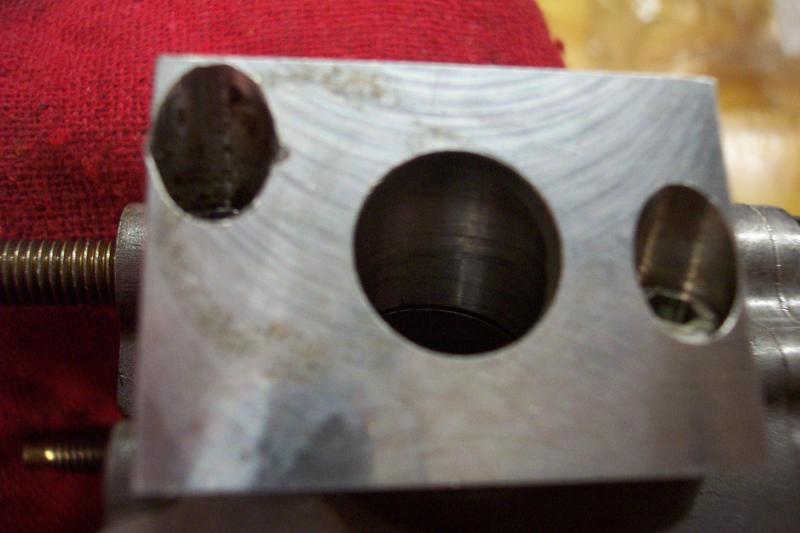
It does not make sense to me that a Zetec engine functions just fine with a wide open ARE oil pan, but the Duratec engine starves during cornering and braking in the same car with a well baffled Raceline oil pan. Regardless, I think your engine was experiencing a different problem. The Raceline oil pan has a built-in pickup pipe that stays in the pan, rather than attaching to the oil pump. There is a wedge-shaped aluminum block that bolts to the oil pump and seals against an O-ring on the oil pan. Take a look at the attached picture, and notice that the mark left by the O-ring indicates it was not properly aligned on the pump inlet (the big hole in the middle). The pump probably cavitated and drew air around the bolt hole every time you wound it up. There is no means of adjusting the position of the oil pump, wedge-shaped block, O-ring fitting the goes in the oil pan, or the oil pan. I sent an email to Raceline a week ago, and then again over the weekend, asking for advise. I am sure they will respond soon. Of course, a dry sump would fix the problem. If the parts aligned properly to eliminate sucking air, a sump accumulator would be a cheaper alternative.
-
For
-
I had a custom size ITG filter made several years ago to accommodate long horns. Although it was made in England, I delt with their importer in CA. Neither the lead time nor the price was excessive. I was happy with the transaction and the filter. Blaine
-
Sorry about my slow response, but I have been working on my car. I should also be writing a build diary, but that takes time away from actually completing the car. Anyway, I plan to connect the laptop to my ECU and log data, including AFR. Then I can change settings based on the data log, rather than trying to tune on the fly. After I am done tuning and the ECU is running in closed loop to maintain AFR, I still want the AFR gauge. Sometimes I wear a belt and suspenders, just to be sure, but the gauge may warn me if my AFR is getting out of shape for some reason. I know I really do not need it, and I really do not need an oil pressure gauge. But since I am far from factory original and I am tuning it myself, I will feel more comfortable with both an AFR gauge and an oil pressure gauge. Again, I appreciate everyone's input on the topic. Blaine
-
Thanks for the input. I think I will go ahead with the gauge. I would not use it for tuning, and would not consider it protection. However, it may give me a warning in much the same way as an oil pressure gauge or temperature gauge. Perhaps it can tell me if my AFR is getting out of shape and I need to retune. By the way, what is an FJO sensor? Blaine
-
I am doing some rewiring, and I am considering an AFR gauge. Does anyone have experience with one? Do the numbers jump around too much, making it worthless? Is it more sensitive than ears? In other words, does it start showing lean numbers before the engine starts pinging and knocking? Can it alert me to a developing problem? I have a naturally aspirated Duratec and live in the Midwest, where altitude changes are not a concern. I have a Haltech ECU and I will probably not use a MAF sensor. I do not care for another gauge, unless it can warn me that something is wrong. Input from those that have an AFR gauge would be greatly appreciated. Blaine
-
It is surprising how many pictures I have seen where the driver's helmet is higher than the roll bar. At my first autocross, the safety guy told me to slouch down in my seat a bit. So if your helmet is higher than the roll bar, does that mean you need a really good helmet, or should you just go for the cheap one since it is only for decoration. Blaine
1.jpg.40fe60dd5e608522e9dbc7dd7fed91b6.jpg)