
bsimon
-
Posts
553 -
Joined
Content Type
Profiles
Forums
Store
Articles
Gallery
Events
Library
Everything posted by bsimon
-
1988, should be the same as 1986. http://usa7s.com/vb/attachment.php?attachmentid=5106&stc=1&d=1371296789 caterham wiring diagram.pdf
-
:party:
-
Steve, The bearing plate gasket may have perished as a result of the loose bolts. Any good transmission shop should be able to disassemble just enough to replace the gasket. I wouldn't let them dig much deeper unless they have experience with manual gearboxes. Give them a copy of the PDF type-9 manual.
-
I'm presenting all the "easy fix" diagnoses I can muster, hoping you won't have to perform major surgery. The speedo connection goes through both sides of the tailshaft housing. The offside has the seal and threaded connection for the cable. The nearside has a freezeplug-type bung pressed into the hole that the speedo driven gear slides into when assembling the gearbox. The "freezeplug" bung does pop out and spew oil on occasion. I drill and safety wire the bung into the case for reassurance.
-
before you tear the gearbox apart, tighten the six bolts that hold the tailshaft housing on (assuming they may be loose). Run the test again. if there is less oil on the ground, it's probably the gasket. If you are lucky, it's the tailshaft housing gasket, if you're unlucky, it's the gasket between the alloy bearing plate and the gearbox itself. That one is a bit more involved to replace as more stuff has to come apart... If testing still produces a great amount of oil, it could be a split bearing plate, busted main case, or busted tailshaft housing. Are you positive the oil is not migrating from the speedo connection or the rear seal that the propshaft yoke runs in? BTW... The standard breather is the round raised pimple in the top cover.
-
Oil will accumulate in the sump with the engine off. The oil runs back through the scavenger stage(s) into the sump finding it's common level with the tank during longer periods of non-use. I'm assuming that you have a distributor gear driven dry sump pump, common to Kent blocks. Since turning the pump manually is not an option, Pull the spark plugs, disconnect the coil, and only use the starter for your diagnosis experiments. This removes the loads that a running engine puts on the bearings when the cylinders fire.
-
Tom, Hylomar Universal Blue
-
Good news! Sounds like you're getting it sorted. That actually is the "front oil seal" of which Brain speaks. There are no other seals in the front of the 'box.
-
Steve, Barring a cracked case, there are 3 paths for gearbox oil to get into the bell housing. The CRB nosecone has a lip seal pressed into it from the bearing side. It may have perished. This one is nasty as it drops the oil directly into the spinning works of the clutch. There is a round gasket between the CRB nosecone and the front of the gearbox. This also may have started leaking. The last path is through the end of the selector shaft. Most bell housings have a blind pit that will contain this leak, however, the pit must be sealed to the front of the gearbox. A bell housing to gearbox gasket is not necessary, but you do need to apply a thin coat of Hylomar (or similar) around the selector shaft pit before assembly. If any of these paths are open, overfilling will exacerbate the situation.
-
I really don't think an alloy head is going to help blow-by. Severe blow-by is usually the product of the rings not sealing the bore. If the valve guides are clapped out there might be some blow-by, but usually not enough to fowl plugs. I'd get the engine leak-down tested to find out where you stand. Do you get oil smoke when getting back on the throttle after down shifts or throttle closed periods? That would be a sign of bad guides. Smoke on constant acceleration is a sign of bad rings/pistons/bores.
-
They should gas 'em and ignite. Night jumping would be spectacular!
-
Hate to be the bearer of bad news... Valves generally don't "stick". The spring stack is way too strong for that to happen. I'd venture a guess that you've got a bent valve stem.
-
Gert, Here's an idea: http://www.webelectricproducts.com/products.htm
-
The dirt floors are classic. No damage to repair if you tore a piece part loose from a chuck. I was really hoping there would be some footage of single point threading a tapered API connection. With all the CNC oil patch lathes used today, I'll bet there are very few people that can still master that art.
-
205-40-16 is a hard size to find. FWIW...The Caterham HPC was originally shod with 205-45-16 Michelin Pileups.
-
I have a better idea. Since your layshaft cluster is set up for the 4 cylinder spindle, rather than modifing the cluster, just replace the spindle with the 4 cylinder version. You would need to have a machine shop turn up a steel bushing with the proper size hole to replace the stub shaft in the front of the case. The new part would look like a cut-off stub shaft with a hole in it. The material specification would not be critical as nothing is turning within the bushing. If the hole in the bushing is made blind, you won't have the problem of having the spindle marching out into the void in the bell housing. Here's the part you need.
-
Good show. Looking through some old files, I found a copy of Classic Ford's article on type 9s. There is a photo of a sleeved 4 cylinder layshaft spinde adapted to fit V6 bearings and layshafts. After seeing that, I believe you could work backwards and bore the layshaft cluster to fit the larger bearing. The surface of the bore needs to be a very high finish to prevent premature wear from the caged rollers. A final ID grind or honing would be necessary. I can send you a copy of the article if you send me a PM.
-
Sounds as though you have a heavy duty gearbox from a 2.8l V6 ford. This gearbox is more commonly found in Caterham applications than the std duty 4 cylinder 'box. There are exceptions depending on what parts individual builders may have sourced for bare Caterham kits. The heavy duty type 9 has a two piece layshaft spindle. The front half bolts to the front of the case with three SHCSs. First gear will be 3.36 not 3.65. The other gear ratios are different as well. It looks as though the Burton kit in the weblink was designed for the standard duty 4 cylinder Ford gearbox. I may be wrong, but the v6 input shaft has a different tooth count than the 4 cylinder input shaft. If so, it won't mesh with the layshaft drive gear on the Burton kit. Even if there is a way of adapting the new layshaft to your case, you had better start counting teeth before spending any time machining parts.
-
Yes they do. A crude analysis of using only the outer harness bolt mounting point proved less than stellar. Spreading the load between both harness bolts made a bit more sense. The chassis harness bosses are threaded straight through as supplied by Arch Motors. The link bracket is bolted up from the bottom. The shock tower mounting is probably ideal since the load vector would be perfectly triangulated out of the corner of the structure. I just didn't want to chop up my panels.
-
http://usa7s.com/vb/attachment.php?attachmentid=4856&stc=1&d=1362664741http://usa7s.com/vb/attachment.php?attachmentid=4857&stc=1&d=1362664920

-
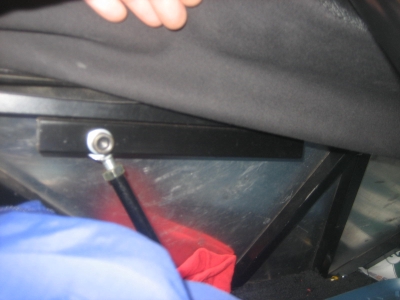
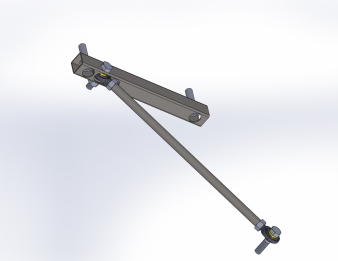
If you are a DIYer, I've got solid models of an adjustable strut assembly that fits the standard Caterham Dedion chassis. I'm sure that by changing the rod lengths it could be adapted to SV/CSR sizes. My assembly uses mounts that span part of the top tube as opposed to cutting into the damper tower like the MOG unit does. The stock Caterham diff assembly is supported in a single plane from the seat back tube structure. They tear out quite easily with big power engines. The struts triangulate the diff windup moments to prevent this. The downside is struts eat up your boot space. They leave insufficient space to stow side curtains in a C3 chassis.
-
Nice bit of kit. It looks as though the revised first gear is splined to the layshaft as opposed to being welded on. It sounds like your car had the 3.65 first gear ratio. You're gonna love having a useful first gear. Check the balk rings while the case is open. Type-N gearboxes wear these rather fast, especially if you don't match revs on the downshift. Check the magnet ring in the sump for broken parts as well. Good luck!
-
The twelve point nut on the end of the lay shaft is ether 36mm or 38mm, I can't recall exactly. An 1-1/2" socket will dink it off without much agricultural evidence. I'm assuming the stuck part is the fifth gear cone/dog hub... There's a circlip retaining the hub on the shaft. Once this is removed, the hub should slide right off. Circlips can sometimes be a bitch to remove. You may have inadvertently buggered the corners of the splines adjacent to the circlip groove. Maybe A bit of metallic trash in the groove? Other than that, I can't think of why it would not slide right off. Are you swapping in a welded up layshaft and first gear from BGH or something more exotic like a Quaife fully splined gearset?
-
I've not see that one before, but Top Gear did a Westfield Deltawing here.
-
1962 Radio Flyer wagon (size 6 Keds powered) 1969 Ranch Wholesale minibike (5HP Briggs) 1973 Datsun 510 (L16) 1959 Mercedes 220S (m180 Type III) 197something Kawasaki 175 dirt bike 1970 Yamaha R5 (350cc) 1969 Mustang Mach 1(428 SCJ & top loader, FE block) 1973 Mustang Coupe (429CJ & top loader, 385 block) (bought wrecked, never got this one running) 1967 Ford Futura station wagon (289 Windsor block & C4, retrofitted a 302w & T10) 1956 Indian Woodsman (500cc, Royal Enfield) 1969 Ford Fairlane 4 door (351 Windsor block & 3 tree, retrofitted a 302w & T10) 1986 Mustang SVO (Turbo Lima block) 1986 Ford F350 Pickup (460ci, 385 block) 1963 Peterbilt 351 (743ci Cummins NHRS275) 1993 Chevrolet Blazer (350 SBC) 1999 Chevrolet Tahoe (350 SBC) 1994 Caterham HPC (GM C20XE)