
Pokey
-
Posts
438 -
Joined
Content Type
Profiles
Forums
Store
Articles
Gallery
Events
Library
Everything posted by Pokey
-
Check your inbox, I sent a message you can respond to yesterday.
-
Hi there. John C. just gave you the ability to message. Feel free to respond to the message I just sent you.
-
JFYI for those who might be interested, I've started advertising the car outside of USA7's for $26K.
-
Faster. I never drove the car with the fast rack, but on a road course I can't image needing anything faster than the normal ratio.
-
That is the minimum weight including driver for the class. I would run more fuel than necessary to avoid coming in under weight. One of the advantages of having a larger fuel cell. I have the original rack but have no idea what the ratio is. For what it is worth, on a road course the current rack seems plenty quick.
-
Thanks @pethier, I've spent a whole lot more on the car for sure!
-
No problem @CarlB, I added the document to the Google Drive folder with the photos.
-
I'm so sorry to those of you that asked for the price. No idea what happened but I missed the posts at the time. My goal is to part with the car this spring, so will sell for $24K here if the buyer makes it simple.
-
Ye gad, you are triggering my own PTSD.
-
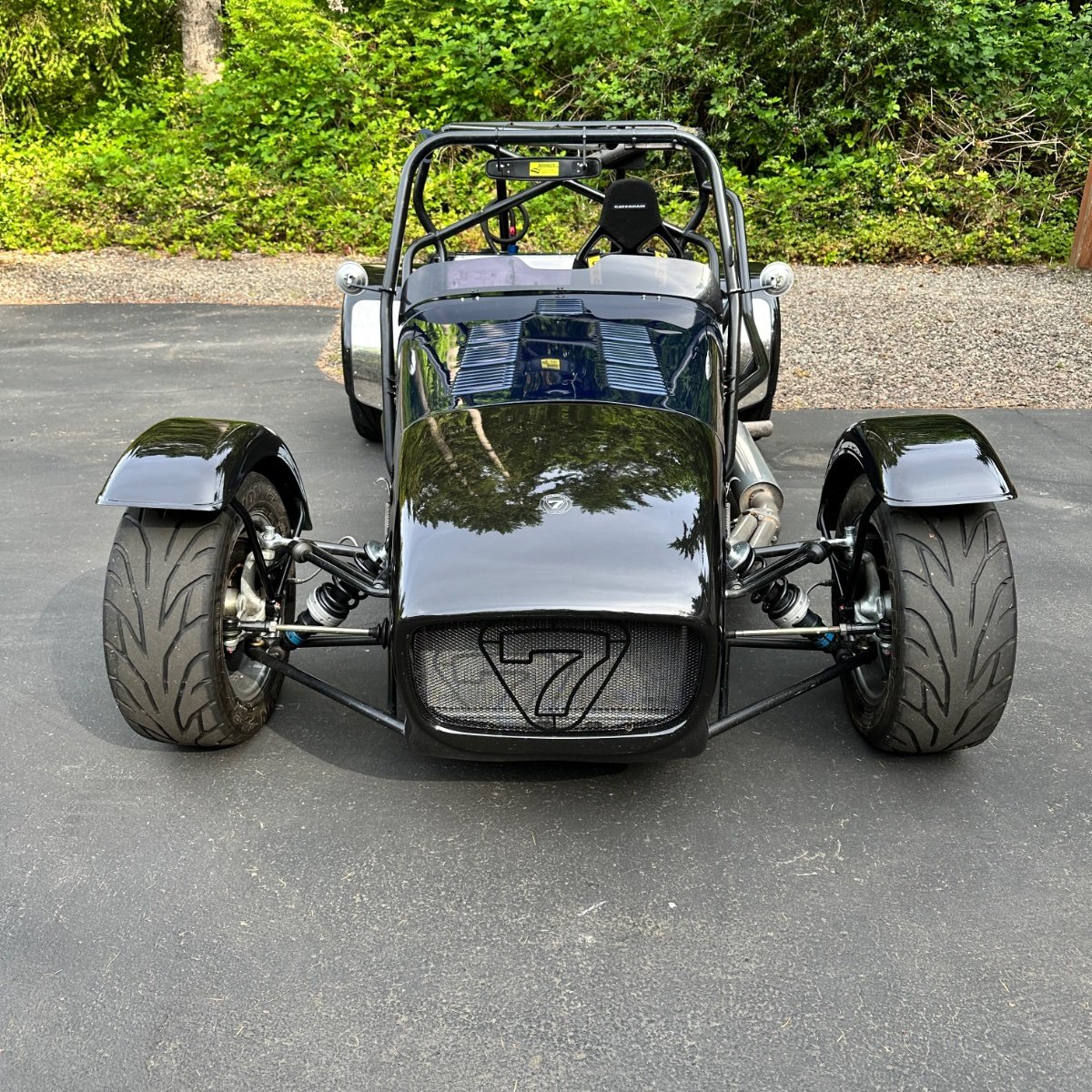
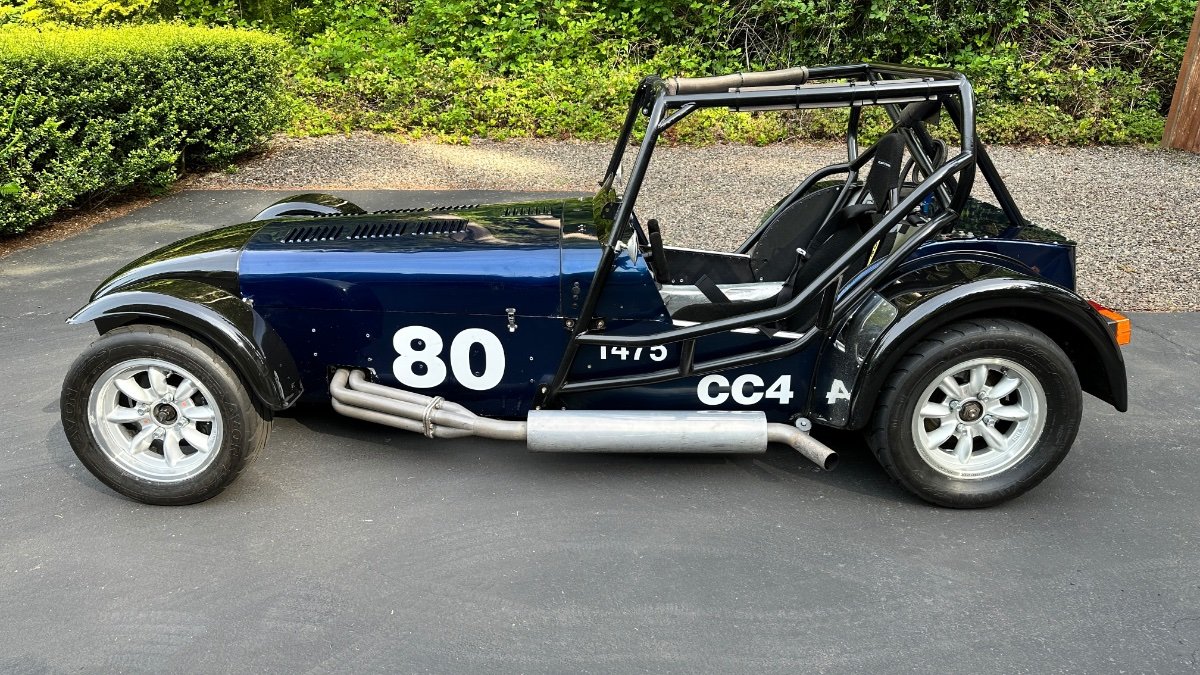
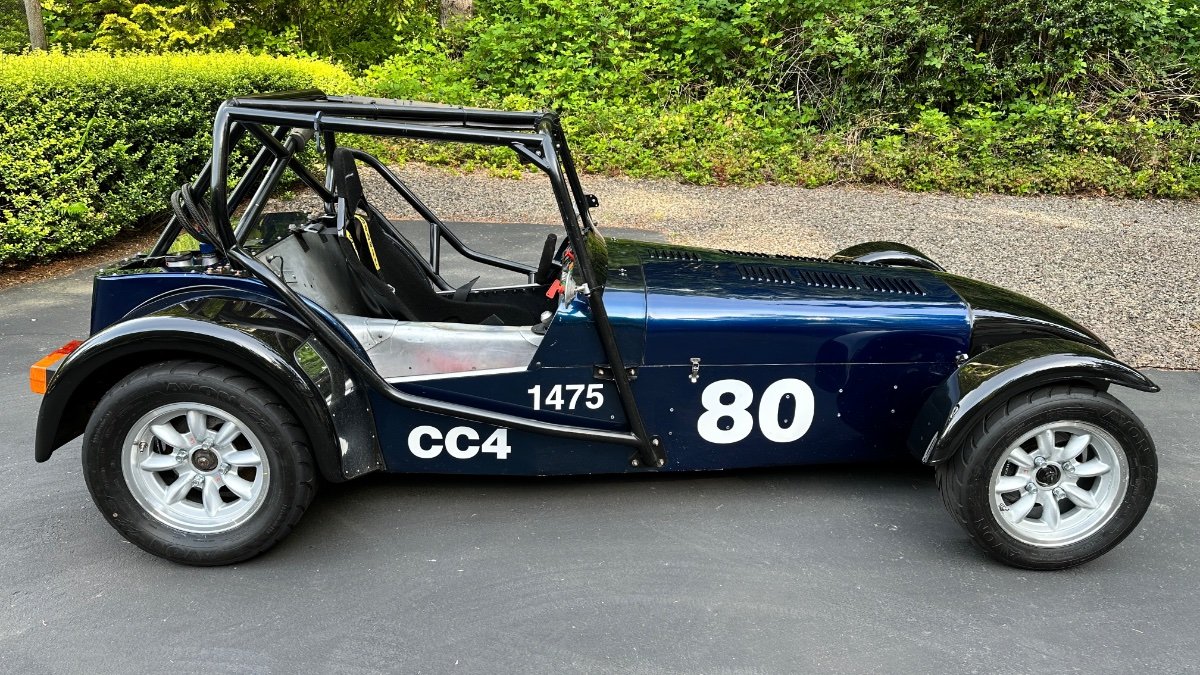
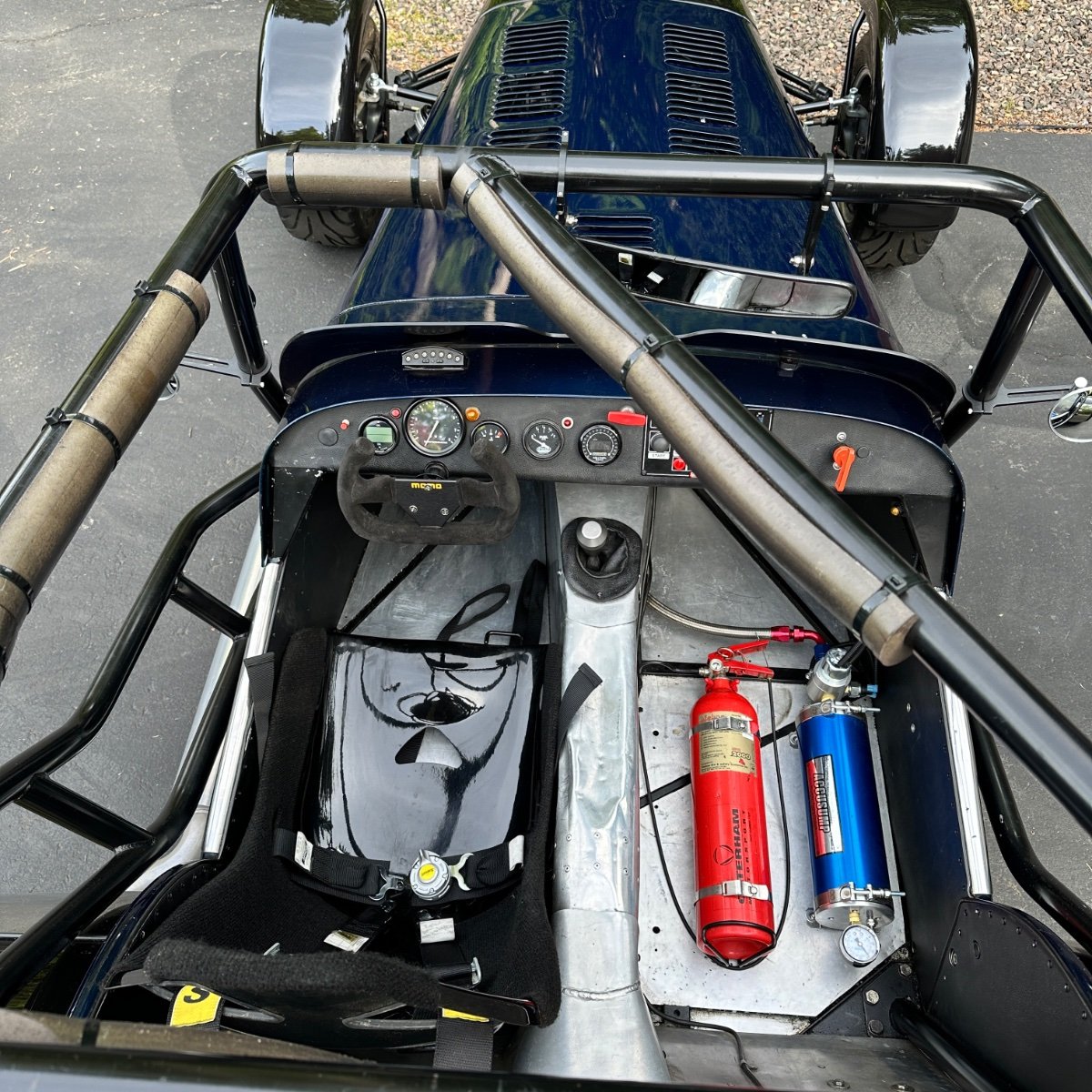
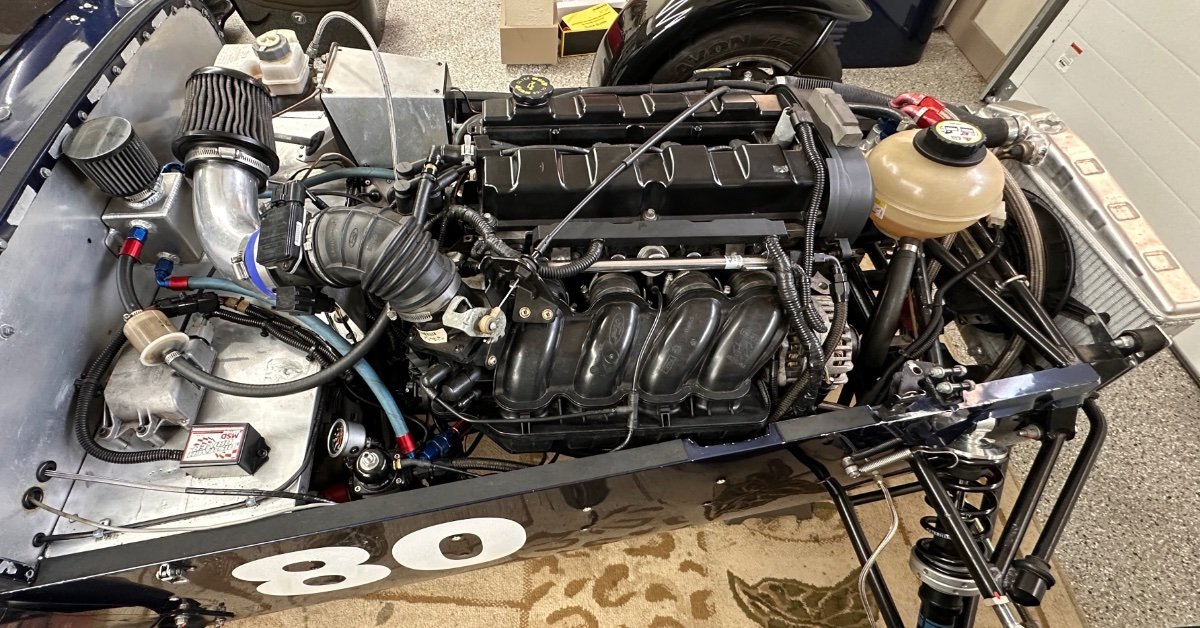
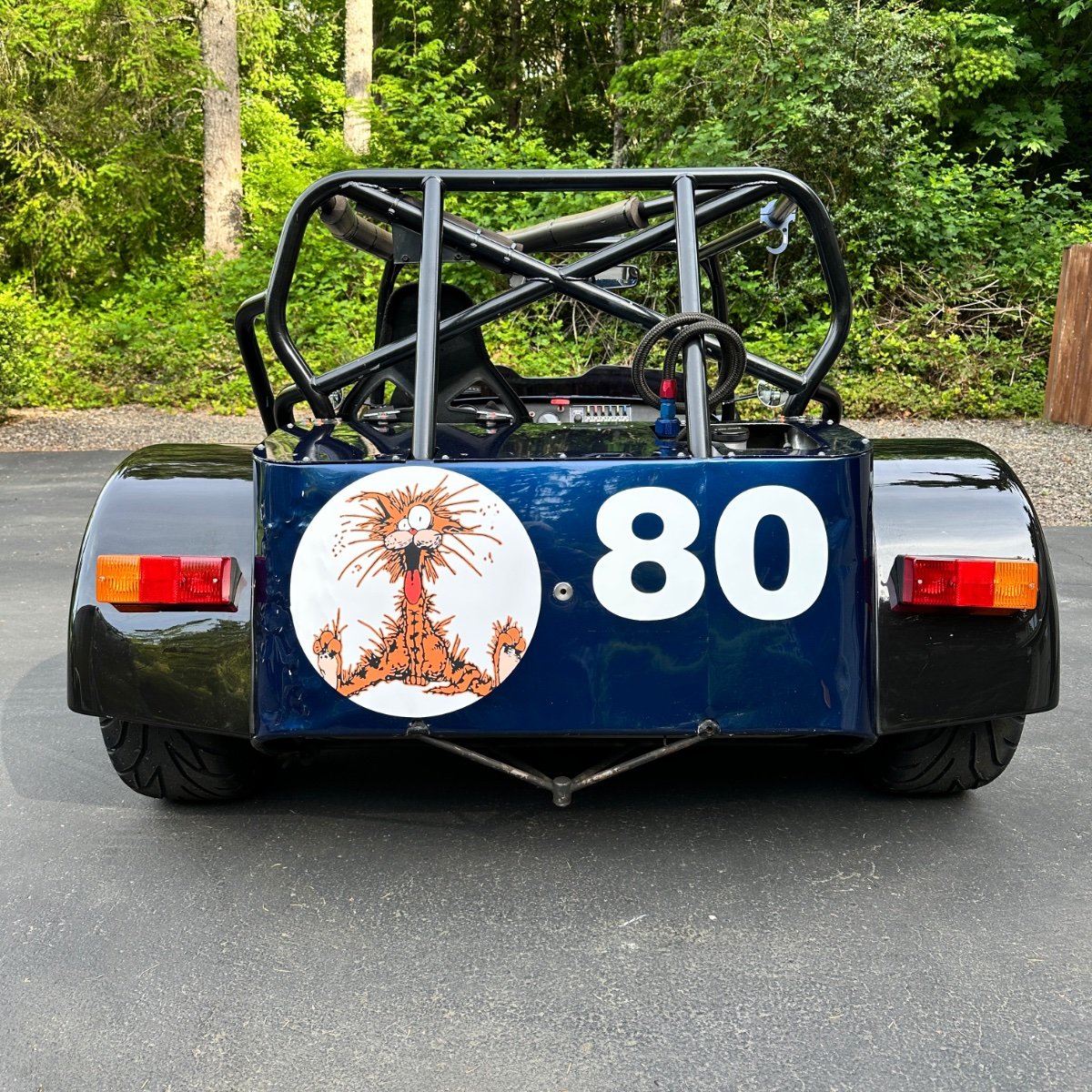
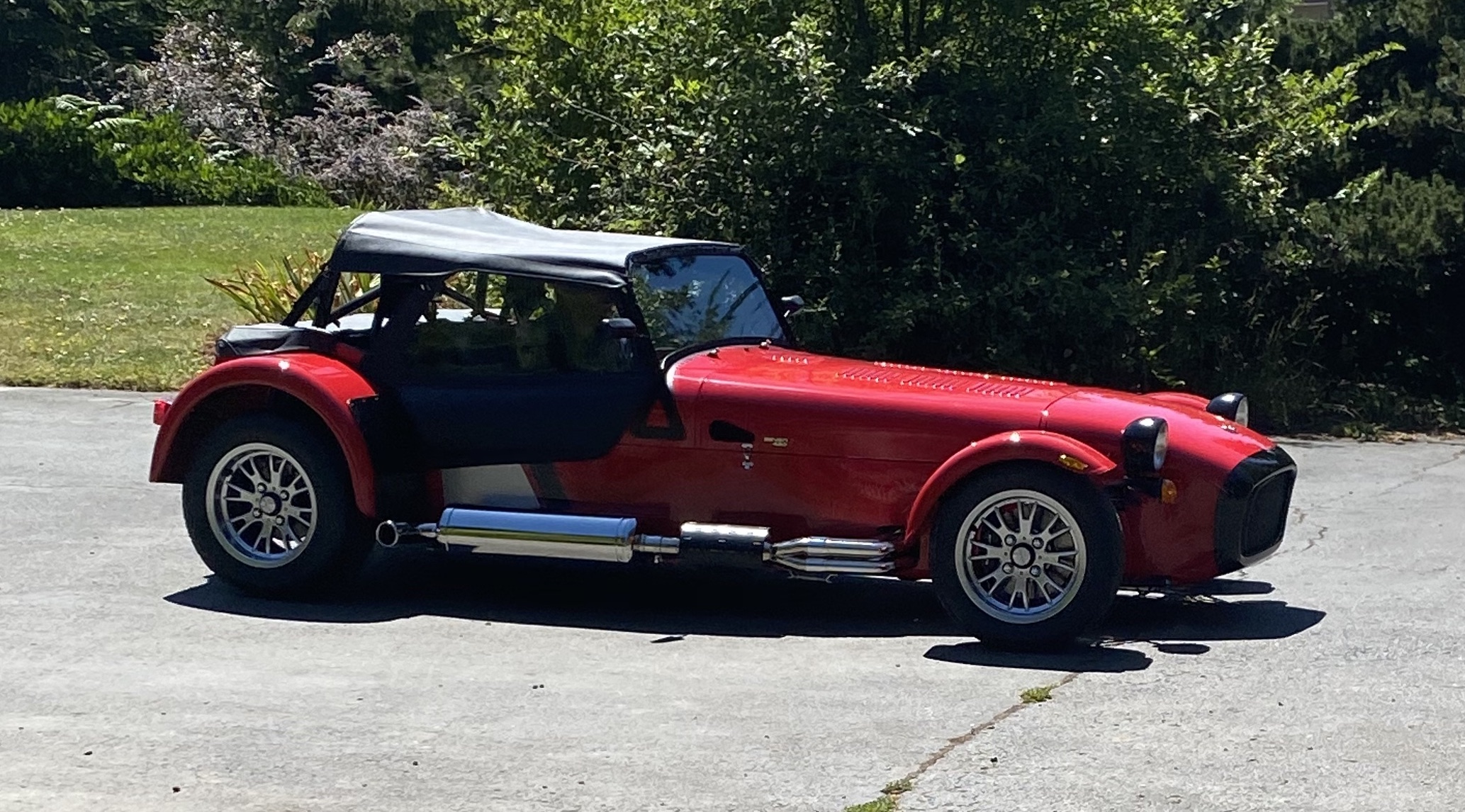
This 2003 Caterham Super 7 race car was imported as an SCCA E-Production model as part of a SCCA homologation program. This program was created in the early 2000’s by Jon Nelson with Caterham USA and Jez Coates with Caterham UK. The number of cars imported under the program is unknown, but several dealers participated, including George Alderman (Delaware), Chip Bond (Virginia) and Jeff Sloan (Texas). This car is thought to have been imported by Alderman’s Delaware dealership. Homologated models were configured with an imperial S3 chassis, 147bhp Zetec, 6-speed Caterham gearbox, limited slip differential, Watts linkage supporting the De Deon rear suspension, 250# front and 215# rear springs with nonadjustable Bilstein dampers, 10-inch AP Racing rear discs, cantilevered slick tires, clamshell front wings, and a fire suppression system. After racing in SCCA the car was acquired by Beachman-McClure Racing for racing in NASA. During this period several changes were made: · The homologated Zetec motor was swapped with a Zetec SVT · The homologated roll cage was replaced with the current tall cage with side intrusion NASCAR style bars · The homologated fuel cell was replaced with a 21-gallon fuel cell for endurance racing · A jack point was brazed to the rear suspension for use with a quick-jack style jack · A brake bias (proportioning) valve was added · The clamshells front wings were replaced with cycle wings · PIAA night race lights were added (since removed but wiring remains) · MOMO quick release hub and “formula” style steering wheel replaced the Caterham setup · The OEM SVT oil pan was replaced with a Raceline wet sump · And an Accusump was added for extra oiling protection The car is best known for placing third overall in the 25 Hours of Thunderhill in 2009 behind two Porsche Cup cars and in front of a third (https://beachman-mcclureracing.blogspot.com). Beachman-McClure Racing sold the car in 2013 to the prior owner before the current owner purchased in 2022. Under the prior owner the fuel bladder and hoses were replaced in 2017, and a short block Zetec SVT engine swap was performed in 2019 (see attached dyno report). The original Zetec SVT engine is included in the sale. In preparation for the 2022 sale the prior owner had Rocky Mountain Caterham go through the car replacing worn and damaged parts: · The 22% “fast” steering rack was replaced with a new 8% rack and rod ends · The A-frame was replaced as the existing A-frame was binding · The front dampers and springs were replaced with new Bilstein dampers and new 250# springs · The rear dampers were replaced with new Bilstein dampers and 215# springs reused · The brake rotors, pads and fluid were replaced · The radiator was replaced as were the coolant hoses · The nosecone, front wings and wing stays, and rear wings were replaced · The Momo containment seat seen in historical pictures was replaced with a Caterham GRP seat (same as used for Caterham Academy racing) · And a new Sabelt six-point harness good until 2028 was installed Rocky Mountain Caterham also set up the suspension, using 2-2-2 for the A-arms and corner weighting (see attached suspension setup sheet). Under current ownership the following noteworthy changes and maintenance were done: · A Quickcar Racing Products ignition panel was added · The Accusump valve was replaced with an electric valve and a cutoff switch added to the ignition panel · A switch was added to the ignition panel for the return-type fuel pump circuit · An older MYLAPS TR2 not requiring a subscription was hardwired to the ignition circuit · Connection points were added for an AiM data logger · The front upper ball joints were replaced with Jack Webb Motorsports heim joints for easy camber adjustment and wing stay removal · The clutch slave cylinder was replaced, and a Caterham clutch pedal stop added · The transmission and differential fluid were replaced · And Avon ZZS tires (dated 2019) mounted to Panasport 13” wheels This Seven was raced by the current owner during the 2022, 2023 and 2024 seasons in the Caterham Cup Class of the ICSCC series, and the ICSCC/Northwest Motorsports Vintage Racing Nostalgic Series. These cars are very light and inexpensive to operate. Brakes and tires can easily last a season, even more if not heavily campaigned. And as can be seen in the picture gallery, it fits comfortably in a 7x14 cargo trailer. Note that this is a race car, it is not street legal and not titled. It also has its share of race patina including wrinkled aluminum skin where Bill the Cat now resides. You can find pictures at: https://drive.google.com/drive/folders/1WislJ68m6ZyRfUvyBhLYggICPjqC_1f1?usp=sharing And videos at: https://youtu.be/tS1MktpApo0 https://youtu.be/9cP40IjVlcE https://youtu.be/umUFj9Twxbo https://youtu.be/rc9OyipTHLc https://youtu.be/U2wJ-8gsa_0 https://youtu.be/br4zSdk5lXA https://youtu.be/jP_GmbI3X9Y

-
Below are some of the things I try to remember. Everyone’s list will be a little different, but I imagine most will include a chair and tire pressure gauge. Have fun! Chair Water Hat Sunblock Sunglasses Visor cleaner Large towel to lie on Paper towels and rags Hand cleaner Oil Tools Floor jack and jack stands Air tank Spare wheels Safety wire Tape Jump box Tire pressure gauge
-
Have you considered splicing to create enough length to make the connections before the transmission is tucked into the tunnel?
-
Help needed from the community to review a future BaT listing
Pokey replied to Pokey's topic in Cars For Sale
Thanks Mike, I've added the bit about the transmission, differential and the Cup cars. No idea how to address the fit though. I'm 5'10" and 165# and fit fine, and other than elbow room don't notice a difference between the S3 and SV presumably because the seats are the same size. I guess my size 11 feet notice too. -
Help needed from the community to review a future BaT listing
Pokey replied to Pokey's topic in Cars For Sale
Really good point @joe7, I should get ahead of the questions as sometimes the BaT peanut gallery gets carried away with speculations. I'll get a picture of the dates stamped on the tires and on the fuel cell. -
Help needed from the community to review a future BaT listing
Pokey replied to Pokey's topic in Cars For Sale
I'm already guilty of taking a video with not so great sound, so good point @Outbound. Classic though, I jabbed the throttle on a hill up to our house and my hat flew off. The video is great but the sound is, well, disappointing. -
Help needed from the community to review a future BaT listing
Pokey replied to Pokey's topic in Cars For Sale
Nice catch @FE07, thanks! -
Help needed from the community to review a future BaT listing
Pokey replied to Pokey's topic in Cars For Sale
Thanks @Croc, I'll take a picture of the gauge on the fire extinguisher and get one of the Accusump's gauge too. I should probably mention in the ad that I raced the car sporadically so it has gone through the annual technical inspection process. -
Help needed from the community to review a future BaT listing
Pokey replied to Pokey's topic in Cars For Sale
Thanks @Kitcat. I'll add the MOMO quick release steering wheel and fire suppression. The fuel pump has a separate switch too rather than operate using the ignition, and there is also a transponder. While it may be possible to license for street use, that would require a title which this car does not have. If I had the Manufacturer Statement of Origin like what Caterham provides now with the kits we import then it could be done in Washington State, but I've no idea what the rules are for other states. In either case, I'm selling as a track/race car only as I really don't like dealing with bureaucracy. -
Help needed from the community to review a future BaT listing
Pokey replied to Pokey's topic in Cars For Sale
Thanks Steve, appreciate the review and response. -
I know some on this forum are familiar with a car I'm preparing to list on BaT as it was owned and tracked by @Kitcat, so I'm hoping to enlist help in making sure what I've written for BaT is accurate and complete. Any comments or suggestions would be greatly appreciated! Here we go: This 2003 Caterham Super 7 race car was imported as an SCCA E-Production model as part of a SCCA homologation program. This program was created in the early 2000’s by Jon Nelson with Caterham USA and Jez Coates with Caterham UK. The number of cars imported under the program is unknown, but several dealers participated, including George Alderman (Delaware), Chip Lamb (Virginia) and Jeff Sloan (Texas). This car is thought to have been imported by Alderman’s Delaware dealership. Homologated models were configured with an imperial S3 chassis, 147bhp Zetec, Watts linkage supporting the De Deon rear suspension, 250# front and 215# rear springs with nonadjustable Bilstein dampers, 10-inch AP Racing rear discs, clamshell front wings, and cantilevered slick tires. After racing in SCCA the car was acquired by Beachman-McClure Racing and modified for NASA racing. During this period several changes were made: · The homologated Zetec motor was swapped with a Zetec SVT · The homologated roll cage was replaced with the current tall cage with side intrusion NASCAR style bars · The homologated fuel cell was replaced with a 21-gallon fuel cell for endurance racing · A jack point was brazed to the rear suspension for use with a quick-jack style jack · A brake bias (proportioning) valve was added · The clamshells front wings were replaced with cycle wings · PIAA night race lights were added (since removed but wiring remains) · The OEM SVT oil pan was replaced with a Raceline wet sump · And an Accusump was added for extra oiling protection The car is best known for placing third overall in the 25 Hours of Thunderhill in 2009 (https://beachman-mcclureracing.blogspot.com). Beachman-McClure Racing sold the car in 2013 to the prior owner before the current owner purchased in 2022. Under the prior owner the fuel bladder and hoses were replaced in 2017, and a short block Zetec SVT engine swap was performed in 2019 (see attached dyno report). The original Zetec SVT engine is included in the sale. In preparation for the 2022 sale the prior owner had Rocky Mountain Caterham go through the car replacing worn and damaged parts: · The 22% “fast” steering rack was replaced with a new 8% rack and rod ends · The A-frame was replaced as the existing A-frame was binding · The front dampers and springs were replaced with new Bilstein dampers and new 250# springs · The rear dampers were replaced with new Bilstein dampers and 215# springs reused · The brake rotors, pads and fluid were replaced · The radiator was replaced as were the coolant hoses · The nosecone, front wings and wing stays, and rear wings were replaced · The Momo containment seat seen in historical pictures was replaced with a Caterham GRP seat (same as used for Caterham Academy racing) · And a new Sabelt six-point harness good until 2028 was installed Rocky Mountain Caterham also set up the suspension, using 2-2-2 for the A-arms and corner weighting (see attached suspension setup sheet). Under current ownership the following noteworthy changes and maintenance were done: · The Accusump valve was replaced with an electric valve and cutoff switch · The front upper ball joints were replaced with Jack Webb Motorsports heim joints for easy camber adjustment and wing stay removal · A Quickcar Racing Products ignition panel was added · The transmission and differential fluid were replaced · The clutch slave cylinder was replaced, and a Caterham clutch pedal stop added · And connection points were added for an AiM data logger
-
Assuming that isn't the solution, I'd try moving the harness around while idling, particularly the connectors that lead to the injectors and the coils. Different car and different symptom, but I chased random and intermittent stumbling that was caused by a bad pin in one of those connectors.
-
Might just be one screw, can't recall, but, yes, make sure it is secure.
-
But is the sensor itself in there nice and tight, or has it backed out a bit?
-
Yes to having a spring clip holding the connector to the sensor, but the sensor itself can start to work itself out. A lack of signal from the crank will cut the ignition and, at least in my car, the fuel. For me the problem arose on the track in fast corners. If that isn't it then I would consider manipulating the harness with the car idling to see if you can trigger a stall.
-
Wild shot in the dark, but you might check to make sure your crank sensor hasn't started backing out.