copy.jpg.dd4bdbb41ccb3ea8a585d1ad217ef61b.jpg)
.jpg.da03509438cc84820b8cf5d64db570ab.jpg)
Austin David
-
Posts
422 -
Joined
-
Last visited
Content Type
Profiles
Forums
Store
Articles
Gallery
Events
Library
Everything posted by Austin David
-
idk what this is. hopefully I can edit later
-
-
From the album: Austins' album
-
From the album: Austins' album
-
.thumb.jpg.885191d302e6c3704c848a8f5ac3a612.jpg)
Photo of your car you took today
Austin David replied to Xhilr8n's topic in General Sevens Discussion
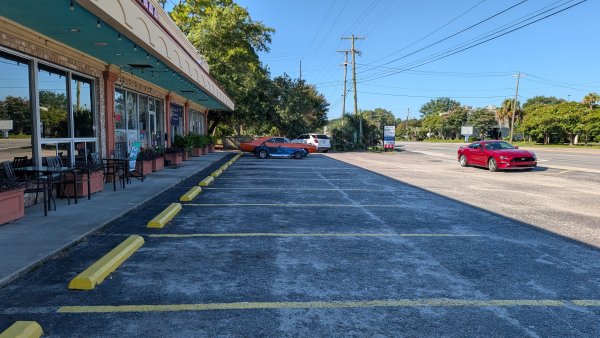
Neighbor and I went to a local car meetup on Sunday, parked in the shade. We saw this hilarious shot after the mustangs cleared out.
-
Duratec (2.0 Caterham): coolant tank, level?
Austin David replied to Austin David's topic in General Tech
I haven't touched the coolant tank since my last update, 1000 miles ago. Not even looking at it. I've been carrying 2L of coolant in case I need it, but temps have been stable and generally doing what I expect. The cap has been replaced, th tank is new (2021 car) and there are no nicks or scratches at the top. My working assumption is that I expect it to rest with coolant in the tank, and I have just been overfilling it. Performance of the cooling system seems fine with at least a thousand miles since I last looked. -
At request of @pethier some pics of the "final" install. The air filter is inverted, I haven't had luck sourcing a black one but it doesn't bother me enough to try harder. Overall it came out perfect at about 5'. If you look closely there's a gap at the bottom aft, where the hood swings out. I could have fixed it with more taper at the back (less cutting), but the #3/4 ITBs are still tucked in a bit so ...
-
My original broke almost immediately; I found the screws and posts, but no lens. I made this and printed in clear PETG, and promptly forgot about it. Still there after 3 years... backup lens.stl
-
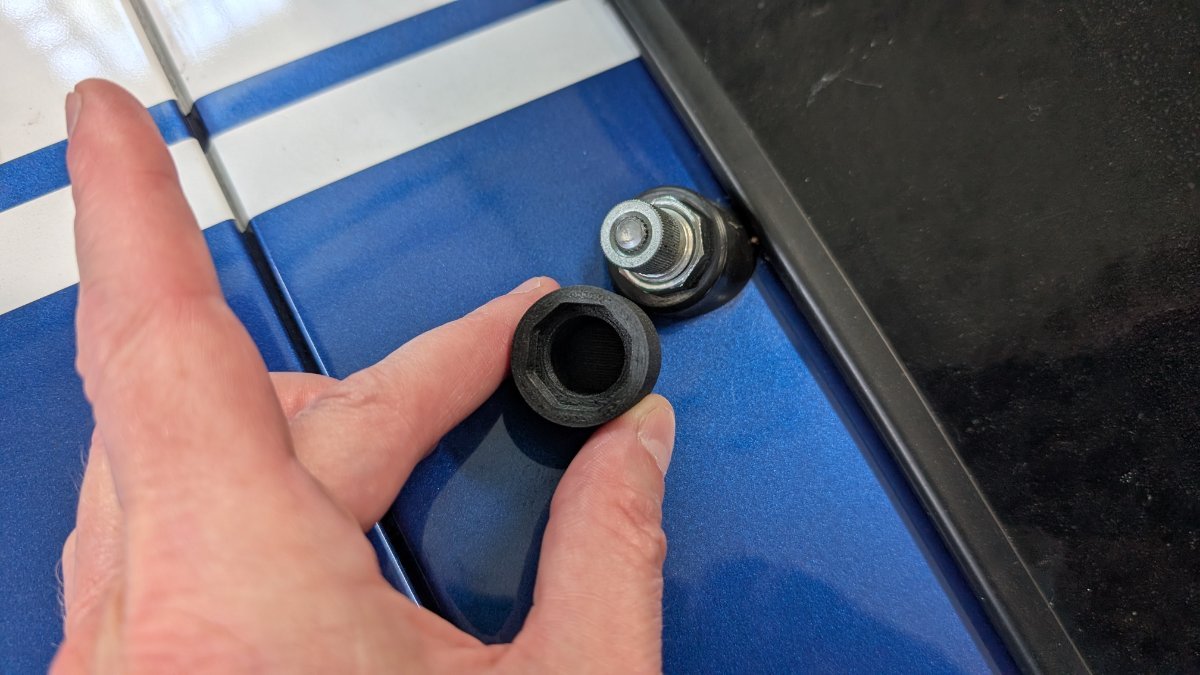
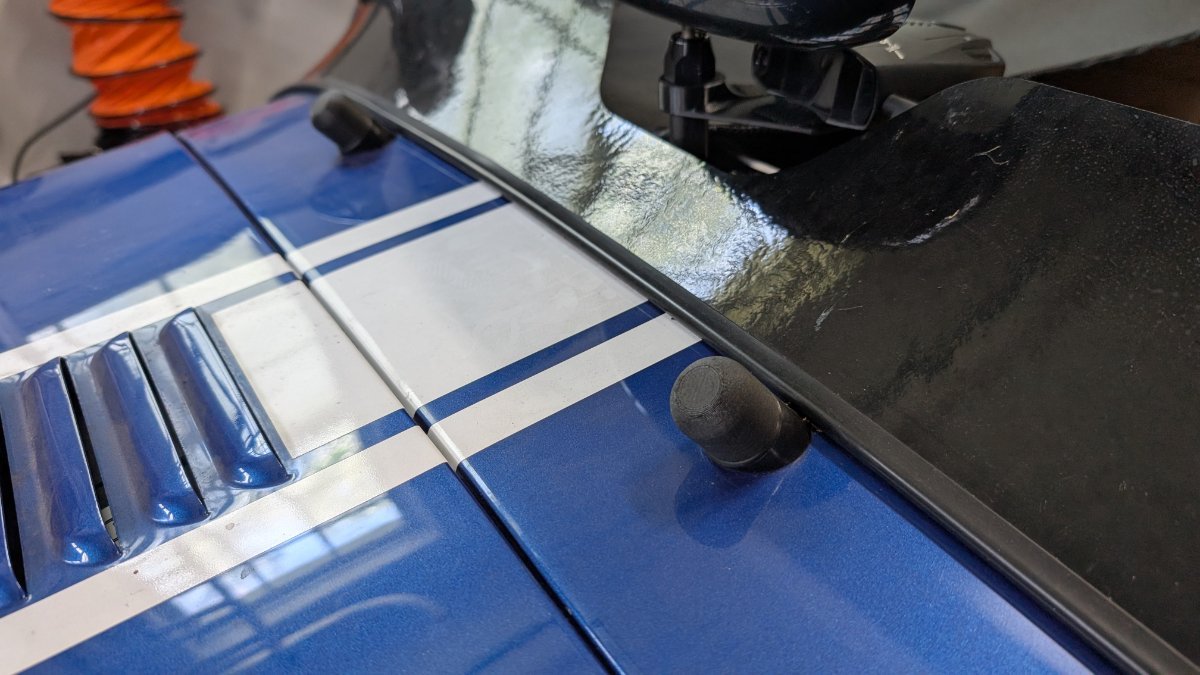
One of my first prints, which I see every day and just forget about: caps for the wiper posts. My windscreen is almost never fitted, so I cover the stumps with little black caps. They fit securely enough, but are just snapped on without any adhesive or fixture; they can lift right off. In 13k miles I haven't lost one. I'm pretty sure these are CF-filled PC, possibly CF-PETG. They have no problems with sun or SC temps. wiper cover (1).stl
- 1 reply
-
- 8
-

-

-
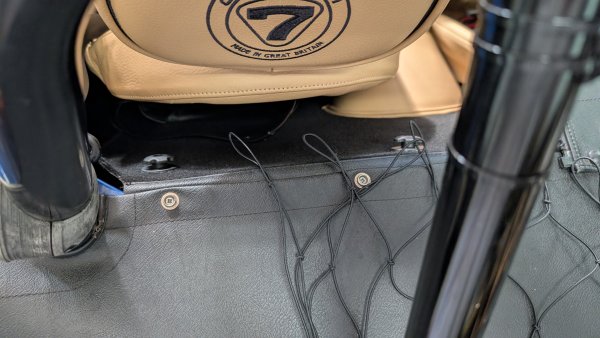
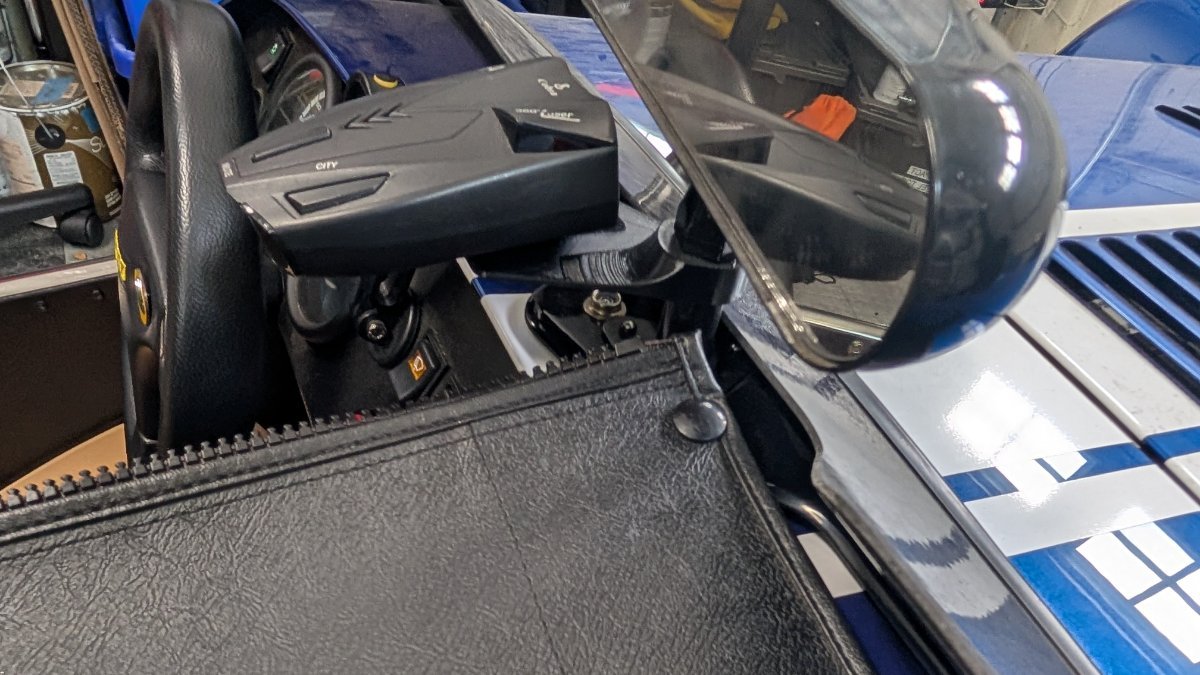
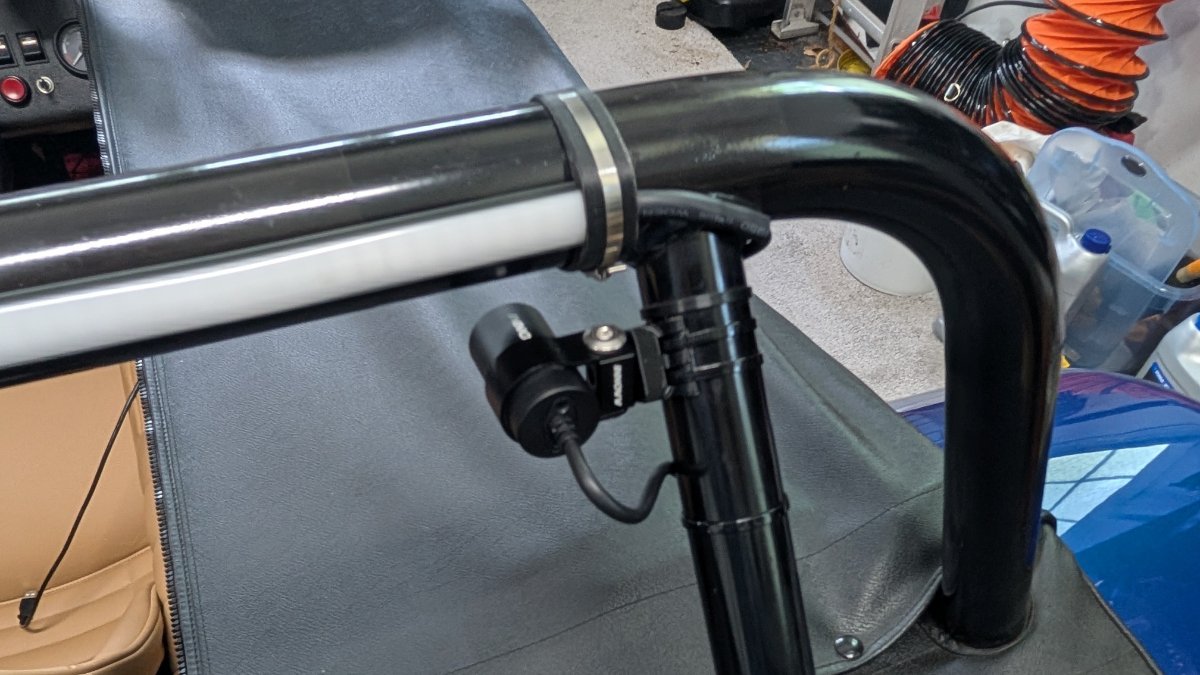
I've got a few under the bonnet; PETG and TPU do OK near the firewall. I'll get some pics when it's open. Yesterday I printed brackets for dashcams on the rollbar. They're working well, secured with VHB tape under the bracket and zip ties slotted in. Also made a little tray for a radar detector, mounted on the aeroscreen mirror post. The detector is secured with Velcro. The mount works well, but I can't really hear or see the signals so it might not be helpful. I've lost track of the other things I've done. Mount for the custom roll at brake light, visible above. There's a riser for the boot floor to accommodate a fuel return, and a bracket to secure my tool kit. Updated o-rings for my gauges. A massive (for me) printed template to drill the ITB backplate. Several fittings around the cooling system to secure hoses. AN6 braces for the new fuel lines through the tunnel...
-
Awesome! My coolant gauge was weird with the connectors. I snugged em up with some pliers and tape. I tried a GoPro recording yesterday to get the intake noise but wind dominates everything. We got rain yesterday afternoon and today down here. I'm dying for a dry-enough spell to get up to the BRP for a day. Thanks for sharing the vids!
-
Sounds like a good run. I'll watch the weather, mostly watching it rain down here in the low country
-
Mine's a driver. The question for me is whether I can get away without weather gear for a few days, or should I fit the windscreen and pack the doors.
-
I'd be game for that. Not retired but I get time off and could swing a weekday or few.
-
Hm. Mine is pretty comfortable as long as I'm moving. It's actually worse with the windscreen and half hood! I do dress as if I'm fishin, with light clothes and sun protection. My summer project is to refit some cooled seats, I'll keep y'all posted :-)
-
@Yoram @UglyFast @mrmustang are around the top-left, I'm around middle-right, and @SENC is charitably on the top-right of SC. What do y'all think about a long Saturday loop on a clear weekend? Looking at a map for a few minutes... - Greenville + Charleston (me) meet earlyish in like Sumter. - Drive from Sumter to Florence - meet up with @SENC in Florence, maybe lunchtime. - Some of the Greenvillians might want to peel off and head back. - Maybe @SENC and I head east to Pawley's or Georgetown - we can split up and head home. I think that's "long day-trip" sized, and about 2+ hours for each leg. Gas stops and not-too-small towns, but also no metro areas and backroadable. Anyone is welcome to join, of course.
-
CANChecked: Digital 2 1/16 CAN + analog gauge
Austin David replied to Austin David's topic in General Tech
I have a ~ 10-years-old OLED gauge in a different convertible, the AEM failsafe, and it definitely does the OLED things of burn-in and not great in direct sunlight. I printed a hood for it, which helps. This one does work a lot better in the sun. TBH the only issues are that it has a refresh rate that lines up with my phone camera's shutter in sunlight so it's hard to take photos of the screen. It's fine at night when the phone shutter is slower. -
2025 Western NC/Upstate SC/TN, let’s go for a drive.
Austin David replied to UglyFast's topic in Southeast
@jimmylukeiiwhat's your approximate schedule? Saturday currently looks best for weather, I think a few more folks are available Sunday -
CANChecked: Digital 2 1/16 CAN + analog gauge
Austin David replied to Austin David's topic in General Tech
I just pushed my car out into the sun to check -- my gauge is definitely readable in daylight / direct sun, but it does live juuuust under the tonneau, which is how I drive 90% of the time. If you or anyone need a 3d printed visor in black rubber, I could run some off LMK. -
CANChecked: Digital 2 1/16 CAN + analog gauge
Austin David replied to Austin David's topic in General Tech
it does! It can flash the screen, or there is an RGB LED at the top (you can see a lil dot). You can set up min/max warnings for each measurement: https://www.canchecked.de/wp-content/uploads/MFD15-Gen2-manual.pdf It also has a shift light function, and if you hook up a speedo it can calculate the gear. -
@UglyFast saw my CANChecked gauge today, so I thought I'd share some details for him and anyone interested. The gauge: https://www.canchecked.de/mfd15-gen2-52mm-can-bus-anzeige/ -- 52mm / 2 1/16" standard gauge, fits right in place of the analog coolant gauge. It has a handful of analog sensor inputs plus a CAN input. Configuration is all via onboard web server -- hold the buttons, connect to a hotspot with your phone or tuning laptop, and click around a simple web page to set up the views, sensors, etc. I wired two analogs in to my external oil temp sensor, and the original inline water temp sensor. I also wired it up to the CAN bus on my new ECU, but I know the MBE for the 360/420 Duratec cars also has CAN going out to the OBD2 port; I assume any of the reasonably modern cars would have similar. The gauge itself is extremely configurable; there are about a dozen screens available, with two buttons to cycle forward/back. Each screen can be one of like 8 types, including a traditional "analog" style, or up to 6 digital readouts, or a few different combinations. Many CAN signals or any of the analog inputs are available in any of the displays. I'm tuning my ITBs, so my current favorite screen shows TPS, RPM, AFR, and the ECU trim. It would be pretty straightforward to JUST use two analog inputs for the coolant and an oil temp sensor, and show them together. Two more wires to get to the CAN bus and you should have access to a lot more signals from the ECU, including the internal coolant sensor and whatever else. To do it again I'd have wired this thing up BEFORE ripping out the factory ECU, so I could get a sense of how it was tuned. Also there's a way to customize the startup screen, so it shows Josh's "COVID edition" for a few seconds after I turn the key.
-
2025 Western NC/Upstate SC/TN, let’s go for a drive.
Austin David replied to UglyFast's topic in Southeast
@SENC I would be willing to have lunch in Wilmington or thereabouts to see your S2. Maybe not THIS weekend, but it's a day-trip for me there and back, and there's basically only "scenic route" between Charleston and Wilmington. -
2025 Western NC/Upstate SC/TN, let’s go for a drive.
Austin David replied to UglyFast's topic in Southeast
Keep me posted! I'd love to get up there for a long day. The timing MIGHT work if the weather is OK and the WAF remains high. -
Duratec (2.0 Caterham): coolant tank, level?
Austin David replied to Austin David's topic in General Tech
FYI I'm still struggling with this. It seems to not leak if I keep the RPMs down below 4-5k. If I'm enjoying it more, it pushes out the top more. I have not tried to do that without the bonnet on, so I'm not sure if somehow all the coolant is overflowing the tank or what. But the volume does appear to be coming out around the cap (the NEW cap), and if I don't refill, it stops happening. Like if the cold level is basicaly "no coolant in tank but definitely in engine", it overflows less or none. So it feels like the expansion tank might be too small, but that seems crazy to me. This persists over very many heat/cool cycles over many miles; I'm over 13k now. it's not a HUGE problem but I do top it up with a few pints, less often than I refill the fuel tank. -
Actually the balance doesn't matter when they're open.
-
2025 Western NC/Upstate SC/TN, let’s go for a drive.
Austin David replied to UglyFast's topic in Southeast
I'm about 4hr of highway from most of that. Probably head up night before, drive around a lil, then back the day after? Seems pretty doable for a nice weekend. I do have weather gear but I very strongly prefer not using it