All Activity
- Past hour
-
I've never been able to use the auto-stop at the fuel pump in my r500. The speed at which I can fill the tank varies from location to location, but its rarely full go. Once I get to about 6gal I'll usually slow it down and listen for when its getting full (I'm usually only putting in around 7gal). I've also noticed the fuel gauge isn't overly accurate. It takes significantly more time to go from 30L to 20L than it does from 10L to 0L. Once I get to 10L I'm starting to look for a place to stop. I don't think I've ever put more than 7.5 gal in. While I also have a 36L tank, I'm not sure if its 1-2 gal of unusable space or if 0L on the gauge actually means another gal or so of fuel left (I don't plan on finding out).
-
I'll just add that I hold the gas pump nozzle upside down when I'm filling my 1990 Caterham to get a better angle... I kinda lean into it with my body weight to keep the vapor-recovery belows thing compressed to prevent auto shut-off (might just be a California thing). It holds about 10 gallons, but most of the time I misjudge and get overflow. The filler neck on my older car might be a differnt shape from the more modern Cats, however. Cheers, -David
- Today
-
So have you ever driven it from "fully full" until empty, or tested the range since a true fill up?
-
 I'm not sure how @Croc will feel about losing top billing
 -
I really need to dedicate a good amount of time to play with the ECU/Map/Settings in the driveway for a test and tune. I'll update that once that happens.
-
I'm saying this. I'm possibly saying this. I only ever filled it to 5 gallons because 1) that's how big my jerry can was on initial fill 2) I thought it was 5 gallon capacity because the pump nozzle would auto-stop anytime I filled around 5 gallons. (I'm now aware of why this happens) Currently, meter reads full, and seems absolutely topped out. I don't see how I could have made a mistake given I was literally out of fuel and kept track of how much I filled up.... but I'm gonna drive around until the meter reads 1/2 and then see how much I can fill up. I'm at 777 miles exactly when I topped the tank off.
-
Something's not adding up. Are you saying from running out of gas to filling the tank until overflowing that it took 5 gallons? Or that the tank only ever took 5 gallons on initial fill after build?
-
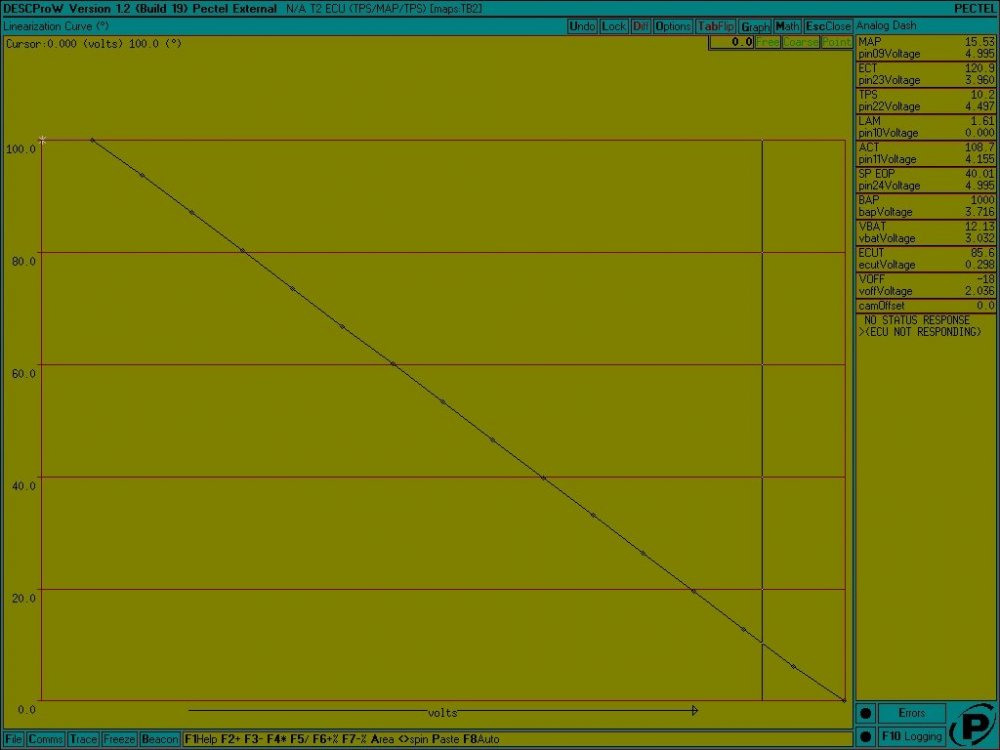
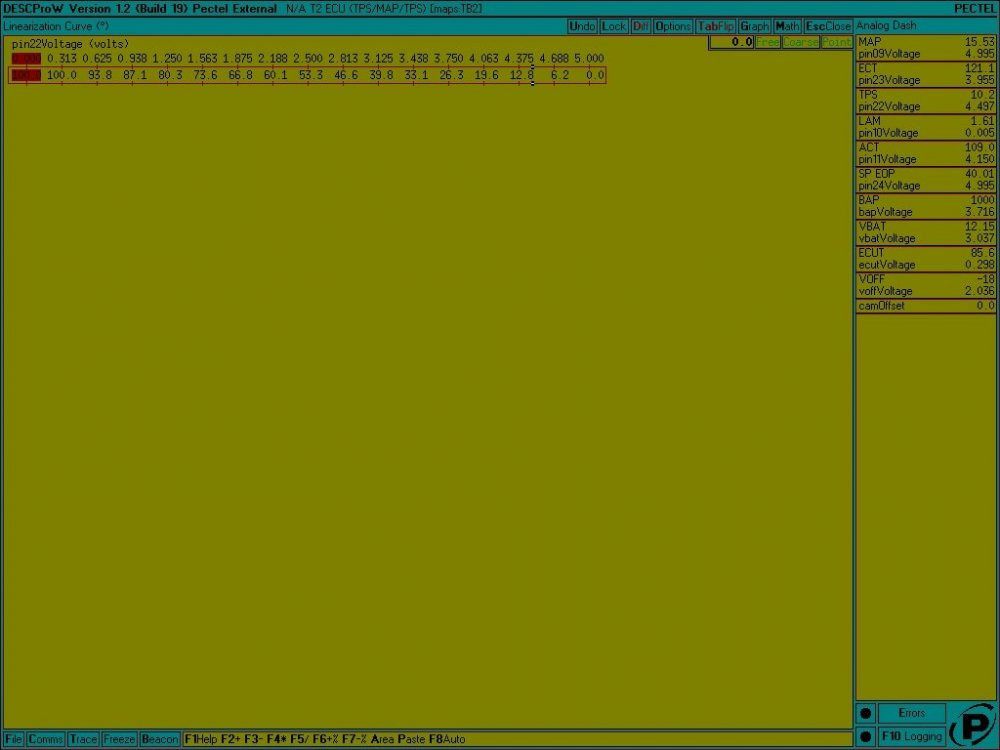
Im not saying that this is the root cause of your issue, but the TPS calibration needs redone. The TPS voltage should typically be between 0.5V and 4.5V. Outside of that range it usually means a sensor or wiring fault. You should set the 0 point to the voltage seen with the engine idling and butterflies at the resting position (4.49V for your case). Similarly for the 100 point and linearly interpolate between the two. Changing this will of course change your fueling. I have seen cars where the TPS voltage changes between drives and that’s an indication of a failing sensor or counterfeit sensor. And regarding an IAC for idle control, I personally find it to be a must for a street car. I run one with my TWM manifold similarly to what you described. The simpler method is using a PWM actuated solenoid, but for this to work the TPS has to read below the threshold set in the map. If you post of pic of the solenoid I can tell you what kind it is.
-
My TPS situation perplexes me. When I bought the car it had an IAC with ITB's with a vacuum rail plugged into all the runners of ITBs going to the IAC. I couldn't figure out how Pectel controls the IAC so I bypassed it. All vacuum lines are plugged and ITB's idle with air sneaking by the butterflies. Here is my TPS data

-
 I have had at least two Lotus cars.
 -
Yep! The MAP sensor is really just there for barometric compensation. A TPS controls the tables. I can share my map that was done on a dyno for my 2.4L. I'll shoot you a PM.
-
bingo
-
Even in the single throttle cars? I would have expected the MBE to be a VE model at least, but nothing wrong with Alpha-N as long as it has the right compensations. I'm very interested in checking out a map if anyone has one to share. I took a read through the posts and I see what you mean about something beyond the map being the cause. I'm suspicious of the TPS and MAP readings from his screenshot. It's possible he doesn't have MAP if using pure Alpha-N, but the TPS is critical and should read 0% with the engine off. Of course, that's assuming it was set to 0% when the mapping was done, in which case would explain some of the richness. I know the MBE's use load site based axis, mapping volts instead of throttle percentages, but this Pectel seems to be percent based no?
-

Narrow Anglia rear axle housing, axles and back plates
super7guy replied to super7guy's topic in Parts For Sale / Wanted
SOLD -
@redursidae welcome to the world of se7ens where Alpha-N is the norm. Even the MBE in new Caterhams employs this older strategy with time-based injector control. It's certainly not as good as a VE-based PID control, but it's certainly possible to achieve good behavior with these less sophisticated ECUs. Over the last 22 years, I've run Emerald and MBE on Duratecs with ITBs and have never had running issues related to the mapping strategy. Your advice is spot on when it's time to replace the Pectel, but I suspect @Vovchandr's issues run far beyond his map or mapping strategy. Fuel milage doesn't plummet by 40% unless there is some kind of failure. He needs to address that first. I suppose it's possible that the Pectel has a driver failure that is intermittently holding open an injector, but other than that, I'd start by looking at all sensors that can trim the injection map, run a compression and leak down, then check injector flow to see if one or more is bad. If the AFR numbers provided above are accurate, I'd be very concerned about bore wash. Given all the issues with this particular engine over the years, I suspect there are multiple things going on. Occam's razor won't apply.
-
I strongly suggest a modern ECU tuned with a VE model and at the very least short term PID control of fueling. Judging by your screenshot, the Pectel is injection time based and pure Alpha-N? That’ll be rough to get consistent. Also is your TPS always at 10%? Because that’s a problem considering that’s your main sensor
-
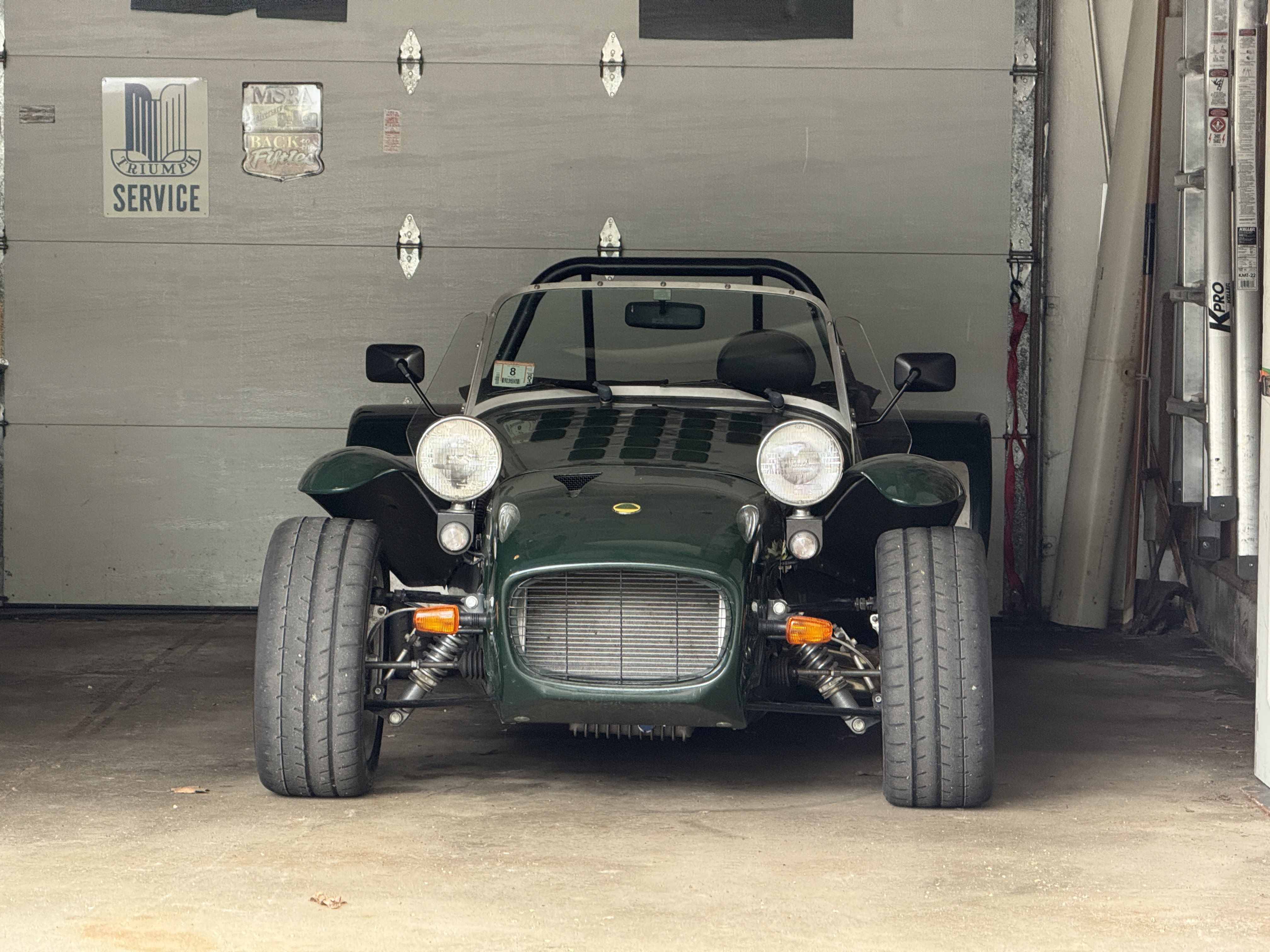
https://www.flickr.com/photos/pethier/ Birkin in garage, backed up to shop door
-
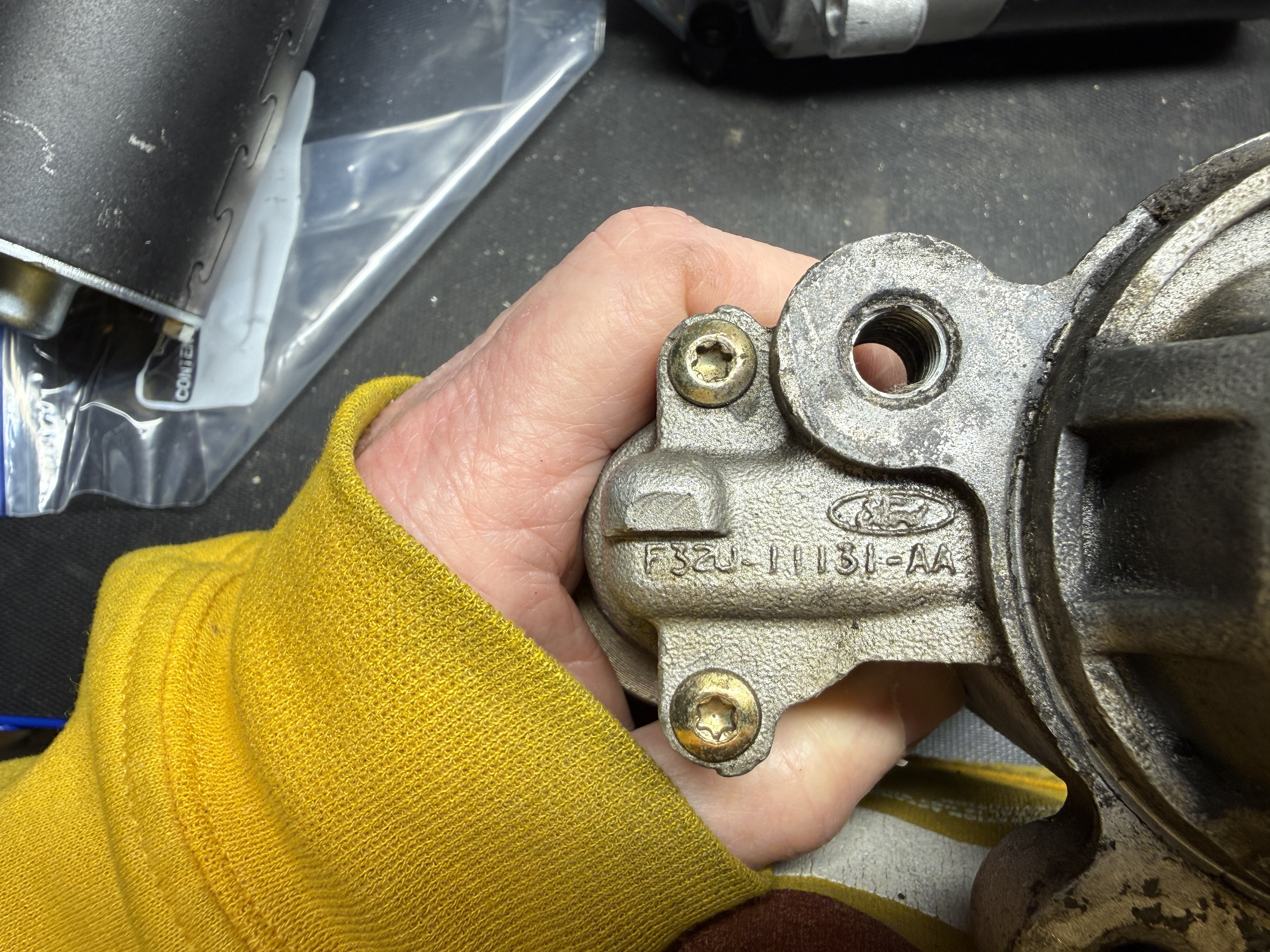
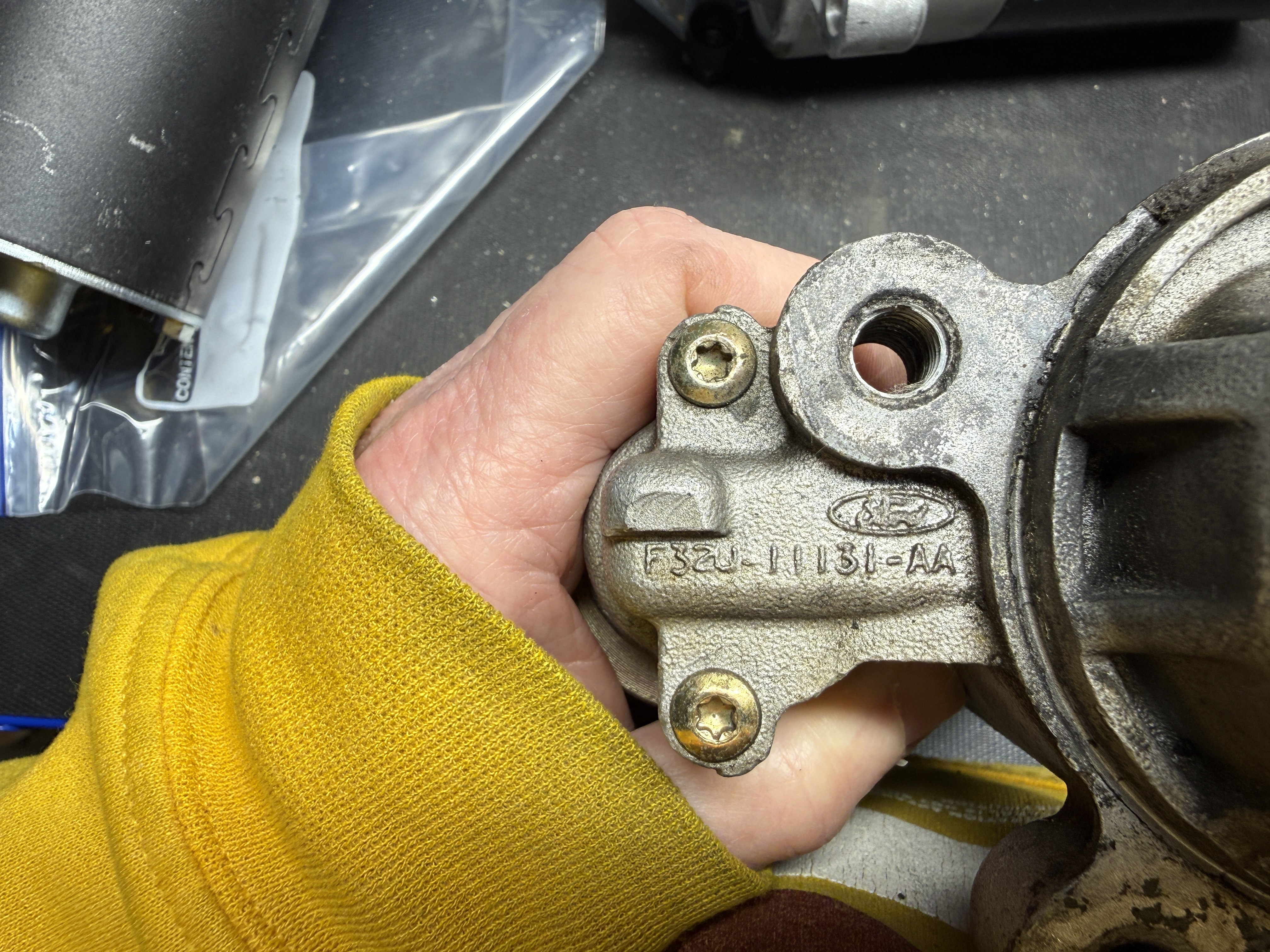
The starter from the green Birkin has lots of Bosch South Africa notations and a little Ford oval. It has no number on the part of it shown in the photo below. =================================================================== The starter from Steve's Birkin has a Ford number. F32U-11131-AA
-
@JohnCh only once. When we were out of gas I attempted to crank the starter twice. Seemed like definitely out of gas. As soon as get got the 2 gallons of fuel in via jerry can , cranked and started immediately. Definitely seemed like out of gas.
-
If your totals and fill procedure above are accurate, and assuming your car wasn't used to smuggle anything into the country via a hidden compartment in the fuel tank, I wonder if you experienced a fuel delivery issue, that is discrete from your gauge accuracy? Either some kind of blockage in the tank or the fuel pump cutting out? Has this only happened once?
-
 The Caterhams sold in the USA with Zetec engines came with the starter on the right hand side from the drivers seat and up higher under the intake manifold. The picture you are showing has the starter mounted low on the left and it would be below the exhaust. There are flywheel differences that affect the starter motor and clutch. It is my understanding that Caterham never sold Zetec powered cars in the UK. The cars in the UK with Zetec used a bell housing like yours. I do not have any experience with Burkins, but the T-9 transmissions in Caterham all have the longer input shaft. You might be able to find a starter alternator rebuild shop who can identify the starter, but there aren’t many around any more. Race line in the UK might be able to help you. They sell all the different parts.
 - Yesterday
-
The starter is on the left side of the engine as shown in the 11Budlite photo. These starters were held in with M10x1.5mm socket-head cap screws. On the Birkin one of these bolts is loosened with a long extension setup 8mm hex drive in the cockpit through a hole in the footwell. This was a surprise to me, since the Caterham footwell allowed me to reach all the starter bolts from under the car. I think on the Birkin I am going to replace that socket-head cap screw with a hex bolt that can be tightened with an open-end wrench.
-
I do not blame you for not following the bread crumbs. To recap: The original Caterham 1700 Super Sprint engine, bellhousing, and T9 transmission is now in another state, destined to be installed in a Lotus 7. My autocross friend Steve is building his Birkin into an electric car. He sold me all his gasoline stuff, including Zetec, Birkin bellhousing, and T9. I had a problem (too goofy to recount here) with "The Steve Engine". "The Steve Engine" is from a 1996 Contour. Ron, another autocross friend, is an engine mechanic and dyno tuner. Ron is going to clean and balance "The Steve Engine". To fill in, I bought a junkyard engine from a 1996 Contour (after learning my lesson by buying the wrong Zetec). Alerted by our fine friends here on USA7s, I checked out a Birkin for sale up north in Minnesota (no, not in Lakeland where others had assumed), and bought it. This Birkin has a Zetec, Birkin bellhousing, and T9. I am soon going to provide more information and photos on these starters I have.


.thumb.jpg.9ffdd2cf708d472aae35e80097bfc46d.jpg)