
Origin7
-
Posts
126 -
Joined
-
Last visited
Content Type
Profiles
Forums
Store
Articles
Gallery
Events
Library
Everything posted by Origin7
-
This would be a good question for the folks over at Keith Franck's forum: https://vintagetechnologygarage.groups.io/g/sidedraft
-
@wdb I'm glad to hear you had the same success that I had with Keith's process. He's a wealth of knowledge. Are you running a wide-band O2 sensor? Leaning out at high RPMs is sometimes a fuel pressure issue. I don't have this issue, but I still plan on installing a Malpassi regulator and gauge in the near future to ensure I'm getting sufficient fuel to the carbs. Another important thing I've encountered tuning these carbs is how important it is to fully heat soak the engine before tuning. Warming it up to operating temp in the driveway is not enough. You really need to drive it for 15 mins or so to adequately heat soak it. I am seeing a 0.5-1:1 drop in AFR as the engine fully warms up.
-
One looks newer than the other. Perhaps there was a rebuild at one point, and a cam was used from a different DCOE variant. There are a number of different 40 DCOEs....18, 151, etc. If all other things remain the same, you would get different amounts of fuel. You might be able to observe this by looking down the air horns and observing the spray from the pump jets. They should spray at the same time and for the same duration.
-
Wow, the Nodiz setup looks nice. I wish I saw that before buying the 123. It looks like I can still grab the rpm data from the 123 ignition, but I'd need a logger or rasberry pi setup to record it.
-
My pleasure! I've attached the Weber manual as well if you'd like to upload it to docs. Keith's forum gets really technical, which I like. But I need to be in the right mindset to absorb everything. Data logging would be great. I am interested in seeing how you do this. I have a bluetooth 123 Ignition, but I am not sure how to pull that data and combine it with the AEM AFR data. That will be a future project. Weber_Repair_Document.pdf
-
For those of you tuning and learning about Weber DCOE carburetors, you may be in the same situation I was, where finding good information and knowledgeable advice has become increasingly difficult. I’m starting this thread to share information that others may find useful, and I encourage everyone to add their own experiences and insights. With that said, I want to recognize the work that Keith Franck has been doing. He runs a forum focused on Weber carburetor tuning and also manufactures custom Weber components. His forum can be a little difficult to find and isn't the most intuitive to navigate, so with Keith's permission, I've uploaded several of the documents he's written. His white paper, in particular, has been immensely helpful. Keith mentioned that it is due for an update, but even so, I found the information to be invaluable. https://vintagetechnologygarage.groups.io/g/sidedraft One thing I would highly recommend is installing a wideband O₂ sensor. I think it's almost essential if you're new to tuning carburetors and don't have much experience interpreting plug color, engine sound, exhaust smell, and the other subjective methods that experienced tuners often rely on. I installed an AEM X-Series, and it's been an excellent tool. It was easy to install, simple to set up, and completely removed the guesswork. Another key lesson I learned from Keith was to measure the fuel level with the carburetors installed on the car rather than relying solely on setting the float height while they're disassembled. Keith used to sell a tool for this, but he no longer offers it. I ended up using the depth rod on the back of a vernier caliper along with a flashlight. If you watch the fuel surface closely, you can see exactly when the meniscus is disturbed, making it surprisingly easy to get an accurate measurement. Going through this process revealed that my fuel levels were nowhere near the recommended 25 mm target. Correcting them nearly eliminated a lean bog that I had been chasing by richening the idle circuit. I still have some tuning left to do and will continue to post updates. Keith also designs and manufactures his own emulsion tubes and jets, which I may try next. Feedback from the community has been very positive. If anyone here has used them, I'd be interested in hearing about your experience. Weber_DCOE_Tuning_White_Paper.pdf Fuel_Level_Setting_Instructions.pdf

-
If anyone here buys this for parts, let me know. There are a lot of parts I'd love to scoop up.
-
Thanks! I had a feeling that was the case. Wow, the G-Wagon lights are close. They aren't inexpensive, though.
-
Has anyone ID'ed who manufactures these lights? It looks like they could be made by Sanube, but it's difficult to tell. Trying to determine if these are bespoke for Caterham or an off-the-shelf design.
-
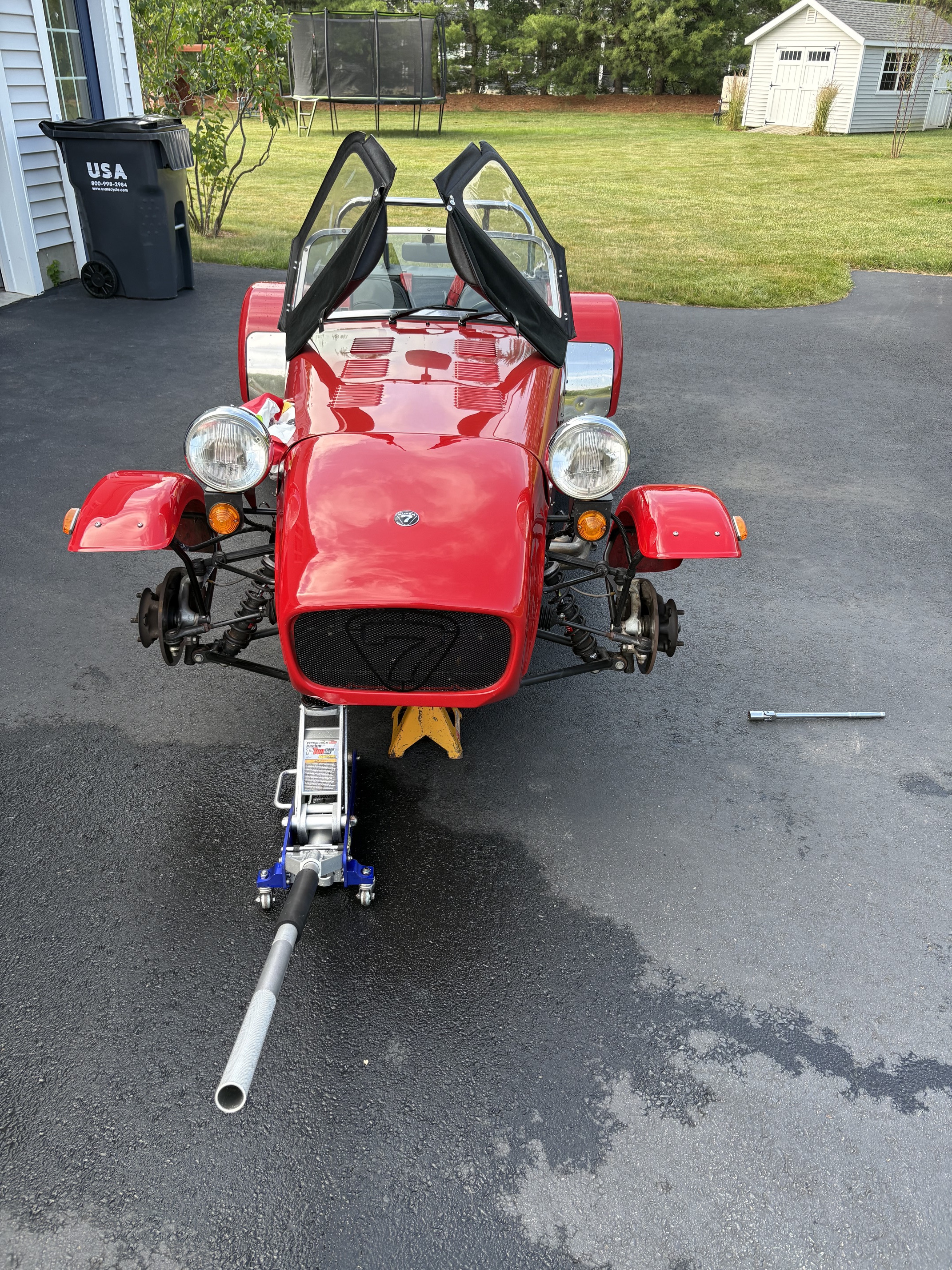
haha, it's not as bad as it looks. According to Turn7, this is the way to put a 7 on jack stands.
-
Sunday morning, wheels off cleaning.
-
Getting kids around cars and giving them something to be passionate about is such a gift. Those small moments can have a profound impact. I went for my first ride in a Caterham when I was seven years old, and looking back, that experience probably played a big role in motivating me to pursue an engineering degree. My capstone project was a stress and strain analysis of a Locost chassis. Now, decades later, I’ve been fortunate enough to buy the very same car I first rode in as a seven-year-old. Today, my own kids (seven-year-old twins) absolutely love riding in it.
-
Thanks for the offer, Dan. I may be in touch.
-
Caterham Factory Incandescent Tail, Reverse and Running Lights
Origin7 replied to Pokey's topic in Parts For Sale / Wanted
I will very happily take these! PM sent! -
Updated post to include roll cage.
-
From my non-automotive/industrial experience, if these sensors have an LED they typically pulse ON/OFF when triggered. If you're sure a metal object is passing through the viewing area, and you're getting nothing out, it's toast.
-
I'm not certain, but I think engine OFF, ignition ON is legal in most states.
-
I leave my ignition ON and watch the gauge as I fill. When I hit full, I stop. I probably don't quite get it as full as I can, but no mishaps yet.
-
Thanks @JohnCh It’s nice to hear about PET. I work in the industry and actually tried developing a recycled PET filament about a decade ago. It didn’t gain much traction at the time, so it’s great to hear it’s being used now. It’s a good material and readily available. I’ve also been experimenting with high-durometer TPU in the engine bay. I’ll report back on how that goes.
-
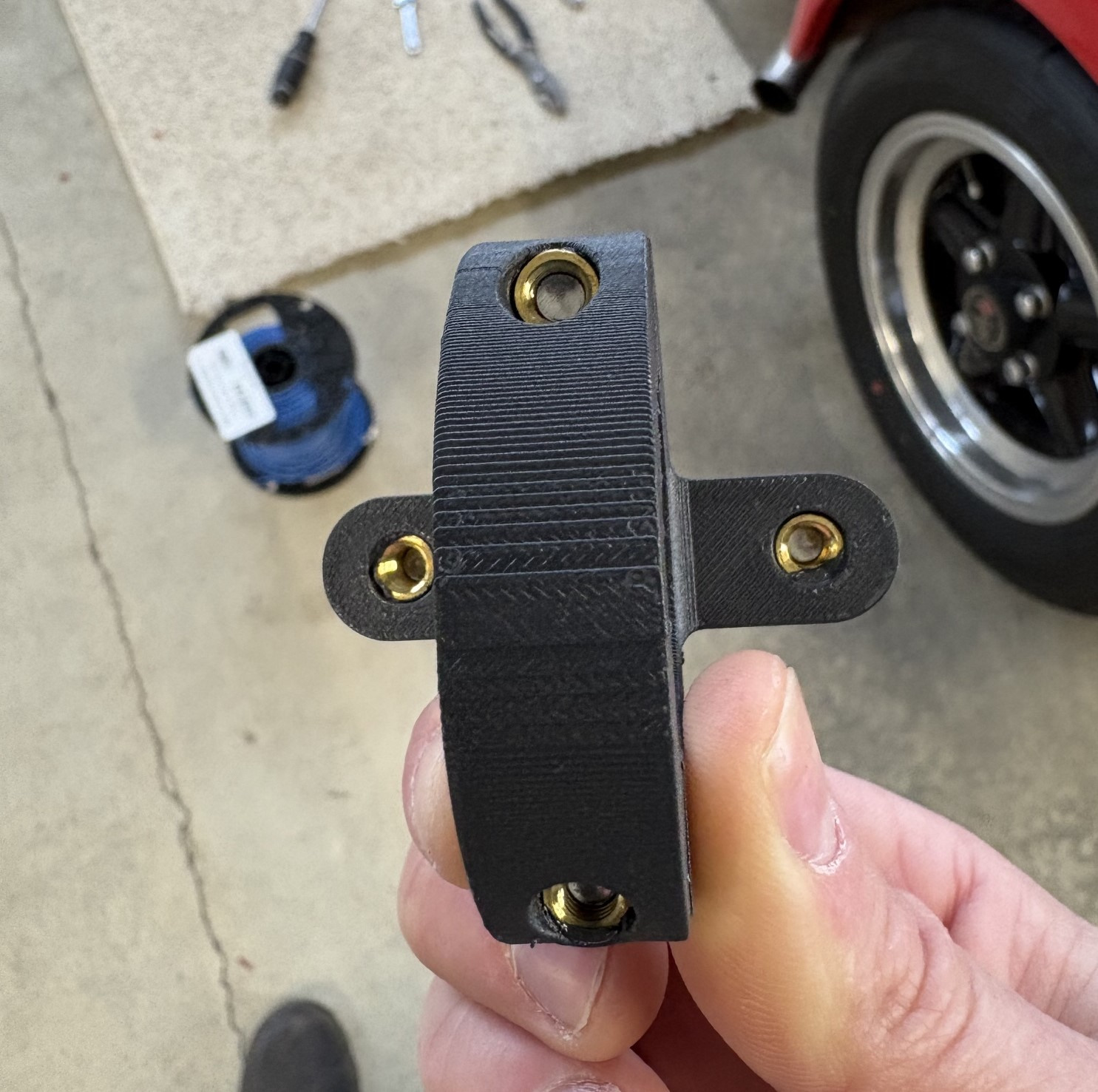
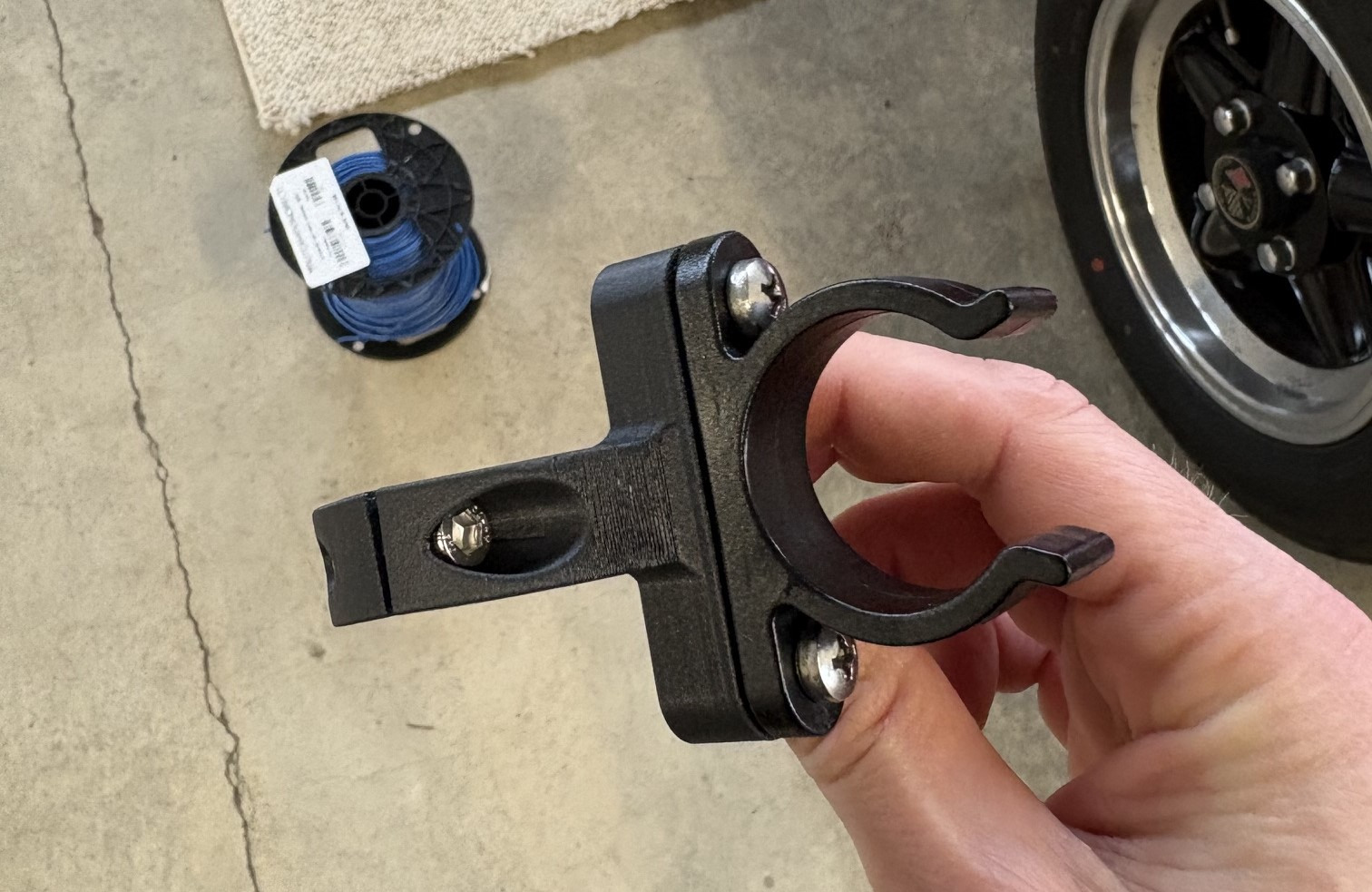
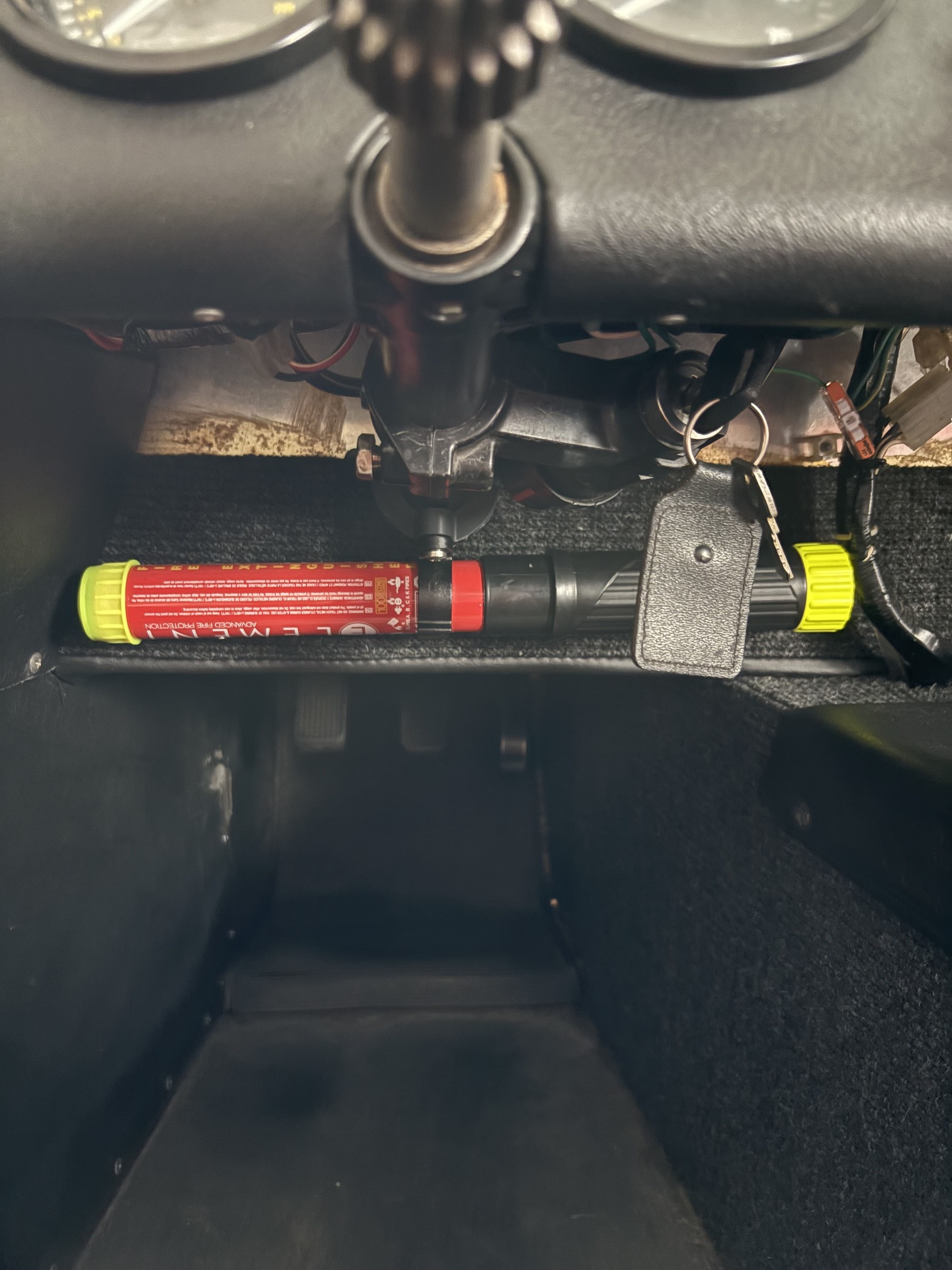
There is some good real estate under the steering column that I decided to put to good use. I used some brass heat-set inserts for threads. For everything outside the engine bay, I use PETG with carbon fiber. I highly recommend it. This area is a perfect fit for an Element Extinguisher. I realize these aren't as good as a bottle of novec 1230, but it will probably be sufficient for my needs.
-
@hahuang65 I am not sure how easy it would be from underneath, but if you can get the length, width, and height, you can calculate the approximate volume. Gallons = (LxWxH)/231
-
Curious why you'd remove the regulator. If the mechanical pump is maintaining 2-3 psi, maybe there is no benefit?
-
Can you get some rough measurements and calculate the capacity (roughly)? Then you know if you can only put 5 gallons in a 10 gallon tank, you have a problem. I am not exactly sure what that problem would be, but it's a starting point.
-
Great article and photography!
-
@IamScotticus fingers crossed. I'd rather be than wrenching at the moment.