
SENC
-
Posts
743 -
Joined
Content Type
Profiles
Forums
Store
Articles
Gallery
Events
Library
Everything posted by SENC
-
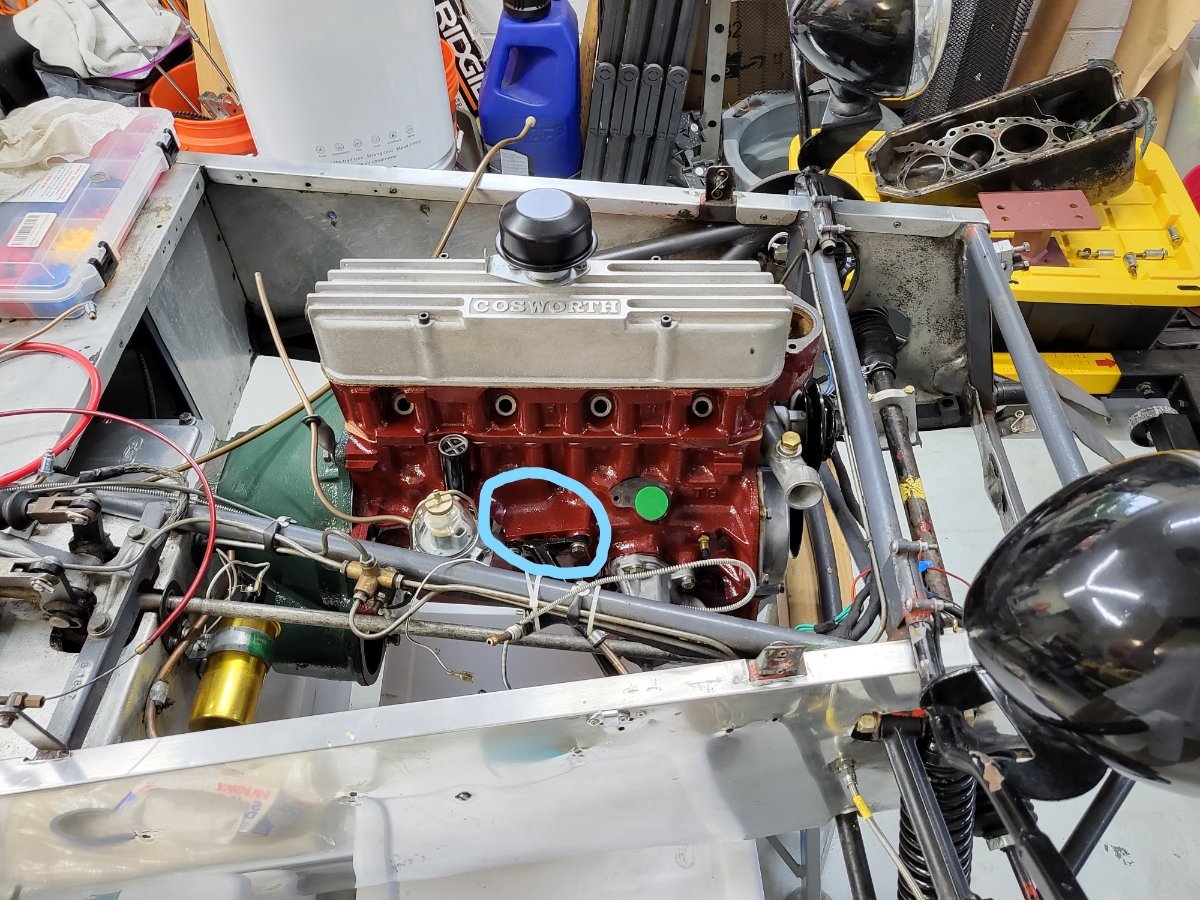
The SBH... number at the very bottom of the picture is likely the engine number... does it match the number on the block (RHS motor mount) or on any of the records? Head over to lotuselan.net, lots of knowledge there about the Lotus twin cam as it was used throughout the Elan's life, including Holbay iterations. Several there have access to extensive records and may be able to help confirm whether your engine was original to your car or, if not, what it may have originally been in. You might also find the following article on the Lotus-Holbay of interest... Engine Series – Lotus-Holbay | Colin Chapman Archive and Resource (colinchapmanmuseum.co.uk)
-
 @Mr Mark's new car post reminded me to finish this thread by adding engine number information. I don't have any personal knowledge of the coventry climax or bmc a engines that were used in early Lotus Sevens - please contribute if you do! The Kent Ford blocks, from pre-crossflow to crossflow to twink had the engine number stamped just above the right hand side motor mount. Years of paint and crud may make this hard to read - a lead rubbing may reveal it in that case, below is a picture of mine that revealed most, a second effort after cleaning confirmed the rest matched my records.
-
Looks awesome, can't wait to see more pictures. The engine number should be on the block just over the RHS mount.
-
Great looking car, and welcome! 68 was the crossover year for S2 to S3. There were twinks in some 68 S2s (called 2-1/2s), but I'm not sure the Holbays came along until later. The chassis number (should be stamped on the frame by the master cylinder mount) and engine number will help. John Watson, Lotus Seven Registrar is most knowledgeable and has access to many old records. Lots of helpful folks with twin cam, Weber, and gearbox experience/knowledge on lotuselan.net (Elans used the same).
-
Had a beautiful day to take a drive and tune some more.
-
Wow, scary. Glad you are recovering - lots to be thankful for, indeed.
-
They arrived just before Thanksgiving - thanks Craig! I have the earlier fan on my Seven, but a bearing is going bad in it - so this one will play substitute while I rebuild the other. I'd actually hoped I might just be able to swap blades, but the older style metal blade requires a larger diameter spindle. Thanks again!
-
just sent you an email
-
I'll give a 3rd nod of approval to those stands!
-
Had a nice, 70 mile break-in drive yesterday, and the little car ran very well. My old, spare clutch slave held up quite well, and as I started my journey home from the back country roads I'd been using for accel/decel I noticed the bearing noise was reduced. By the time I got home it was non-existent, so maybe got lucky on that one. Oil pressure was right on the money throughout, and engine temp stayed on the low side thanks to a 70 degree day and running without the bonnet. I took a shorter, 5-mile jaunt today to warm the oil back up before changing the break-in oil for regular oil, and ran strong, still no clutch noise and, more importantly, no smoking. I'm getting a little exhaust popping on lifting off the accelerator after a 3k-5k WOT pull, so some tuning is next on the list - but plugs looked decent and the engine sounded good and pulled hard, so perhaps not too far off. About only "negative" so far is a fair amount of engine oil draining from the filler cap (it is a breather, too) and pooling on the top of the rocker cover - enough that running yesterday without the bonnet resulted in a fine mist on the windshield from the air flowing over the engine at speed. I'm hoping that 50 weight will be less prone to do so than the lighter 30 weight break-in oil. But will work on a baffle if not, and not a big worry overall - the dipstick showed little to no loss on the day. Glad to have it back to a state it can be driven, and hoping for a few more weeks of good weather to do so. Thrilled the La Nina may mean a milder winter, so also hopeful for scattered opportunities throughout the winter. Thanks to all who contributed advice and guidance along the way!
-
Mine is like Tim's - essentially rubber "top hat" shaped washers that fit within the brackets on the chassis, and that accept (non-threaded) posts that protrude from the bottom of the radiator. I have it back together now, but will search for a picture.
-
Welcome Jim!
-
Stay tuned... I had a long and boring Zoom today and tool yhe opportunity to scan while listening in, so should have it available sooner than later.
-
That is a good find, @TheDingo8MyBaby, thanks! As many times as I've been to and through the simplesevens site, I never found that page. Some good information. So, that would place the Arch Motors start with the chassis later - my 65 also has a B. I understand your point about preserving some identifying information - on the flip side, in this day and age, I've wondered if full transparency for all to see doesn't provide as much protection (why risk a counterfeit of something that is publicly documented?). That wondering notwithstanding, I have a tendency to post/publish slightly altered pictures (cropped, zoomed, etc.) so that if one ever got used for something counterfeit I'd have the original basis. Silly and sad we have to go through this. Again, nice find.
-
Great looking car, and seeing in the write-up that Mick at xtraspecialsevens did the restoration work I think you can be assured it was quality work. I'll try to expedite getting a copy of the manual - or at least the short S3-specific section - photo-scanned. I know how eager I was to have similar information at hand when I acquired my S2. If you don't already have them, Tony Weale's Lotus Seven is a must-have, and Ortenburger's Legend of the Lotus Seven highly useful. @Christopher smith - I know there was a manual as early as Cheshunt (so published 1965 or earlier), as I've seen it - and would love to find one just to have with my Cheshunt car. I think the issue was they couldn't publish build instructions - but the owner's manual does have an entire section called "overhaul and rebuild".
-
Very exciting! Please post up some pictures and tell us about your car! Caterham produced a manual that included S2 through S4. This is the pinkish looking manual you'll see pop up on Ebay periodically. I have a copy, and am happy to grab a photo if you're looking for anything in particular. Also keep your eyes open for a Lotus Elan manual - they are more common and typically not too expensive, and some of the information is really useful for the Seven (gearbox, clutch, engine block - and if yours is a twin cam then the whole engine). @Croc - it is bound so can't run it through a scanner, but one rainy evening when I'm stuck inside or watching a ballgame, I'll do the cell phone camera scanner thing. I agree, it would be worth having it available as a reference for all.
-
Started up and ran well! I do have an issue, though, a whirring when the clutch pedal is fully depressed. Halfway and I'm getting engagement, no whirring, but depress further and it whirrs. New clutch, pressure plate, release bearing (good quality NOS) and spigot bearing. I suspect it is the release/throwout bearing, which would be engine back out to replace - but since it it NOS I'm may run it a bit to see if I get lucky and it is just old grease that has hardened and that softens up over time. Made a poor decision to try to back off the clutch rod nut to see if that would assist. I should have known the result, but wasn't thinking clearly. As you might guess, a little extra clearance was just enough to allow the piston in the slave to get to the tapered exit and to jam . Fortunately I was only a mile from home so my son picked me up and I gathered a spare and some tools and a bleed bottle and did something I could not have done on my Elan (without ramps or blocks) - a roadside slave cylinder swap. That got me home. I'll recheck all that this week, and maybe get to a break-in drive next weekend. Not how I wanted to spend the afternoon, but happy with a running engine that seems healthy - and I'm going to be cautiously optimistic I won't have to pull it back out for another throwout bearing swap.
-
She's back on her feet and full of fluids. Turned over without plugs to get fuel in the carbs and saw the oil pressure gauge start to move, so the battery is charging overnight and will see if she starts tomorrow. Well wishes and final words of warning or advice are welcomed!
-
@croc - to my knowledge Progress and then Arch stamped their frames from the start. There may have been a company in between, too. I don't know exactly when Arch started making the frames for the Seven, but at some point in the S2 range. A total guess, but the transition may be marked by the change in stamping location (frame at base of passenger seat to frame at master cylinders). The #B1431 frame above is from a 1962 - so likely earlier than 62? I'll check some of the resource books I have over the weekend.
-
Excellent addition to the garage! Welcome!
-
Several sources indicate the frame number is located in 1 of 2 places in S1-S3 Lotus. S1s and some S2s will have a metal plate with the number stamped on it welded to the frame just in front of the passenger seat. If someone has a picture of one they can add, that would be helpful. At some point (anyone know when?), the practice changed and the rest of the S2s and then S3s had the number stamped directly in the frame beside the brake/clutch master cylinder mount. I've added a couple pictures of these later stampings, and a drawing with the locations circled. Note this is a different number than the chassis number or VIN, and was frequently (always?) recorded with the chassis number in Lotus records, so together they are very helpful for confirming identification.
-
Lotus Seven Series 1C Replicas, Replacements and Real?
SENC replied to lotusman1951's topic in General Sevens Discussion
I remember thinking that was a pretty good price last year, and certainly the entire market has been moving up the last 6-9 months. Worth checking on it with John Watson at the lotus 7 registry to see if he knows any history or has any advice. -
Big ask! The Elan seems closer to reality pricewise.
-
The internet has made the world a LOT smaller, hasn't it!
-
I think this is right on - the plate itself is only 1 of several important factors in determining "authenticity", and the frame is the next good place to discuss. I started with the plate mainly because it is the most obvious and most discussed, and also easiest to replicate - so my goal there was to see if we could establish any obvious parameters that might help someone establish that a plate may be real or replacement (or fake). I'll post up some frame pictures and observations later, but want to reiterate what someone has already said in one thread or another here - that we are fortunate that there is a Lotus 7 Registry and a real expert there in John Watson who can help owners evaluate what they have (or are considering buying). He and the (limited) factory logs are the best source - but it would be nice to gather as much general intel and knowledge as we can.