Jump to content

SENC

Registered User
  • Posts

    719
  • Joined

Everything posted by SENC

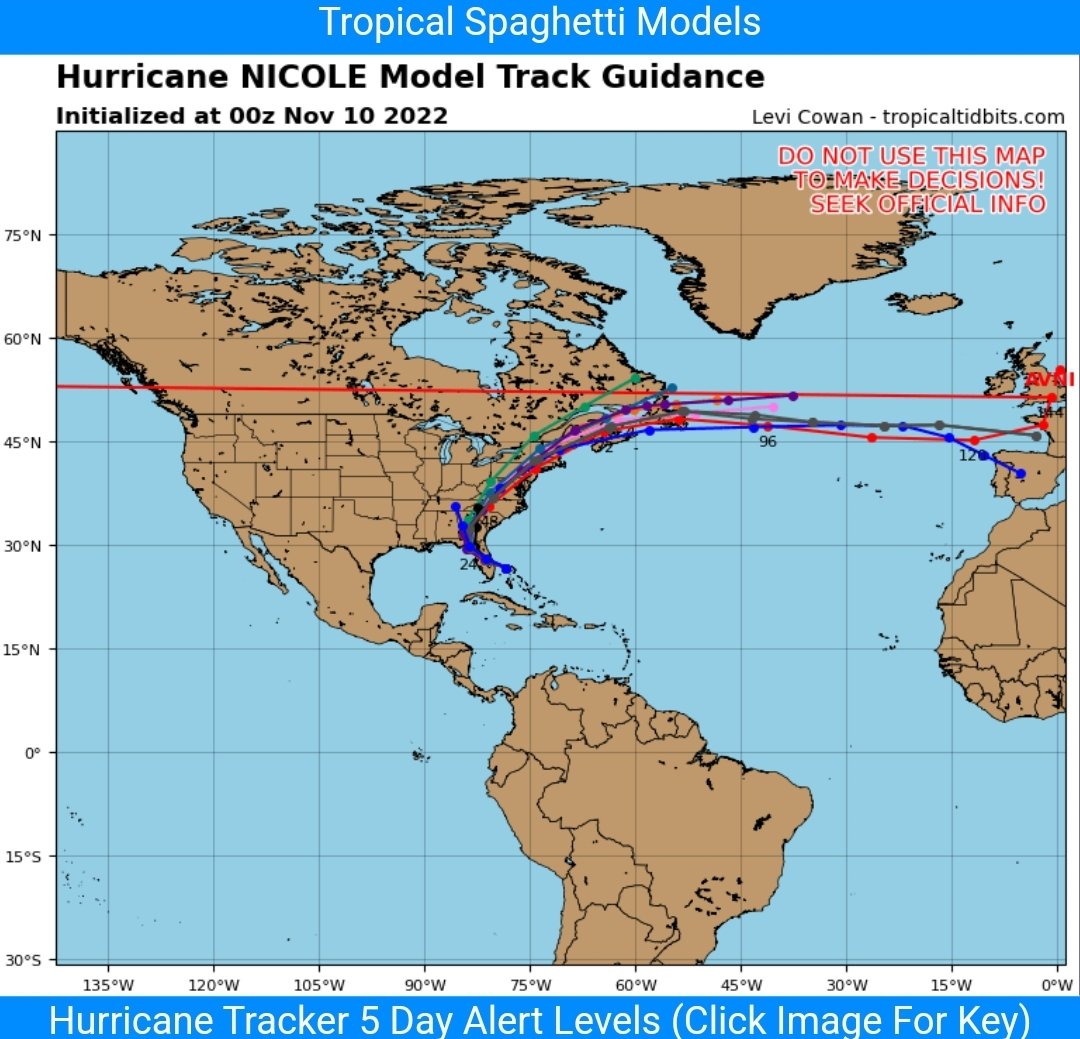
  1. Is it headed west? Hopefully a southerly route?
  2. I should recognize that @Crocwas dead-on about hurricane season, though. Hopefully Nicole will be gone before anything purple heads west. @UglyFast, you don't have any ex-es named Nicole, do you?
  3. But that's a cruise ship... Quit your worrying, @UglyFast, surely this won't happen again... We visited Sea Island GA not too long after this wreck in 2019, and had dinner at a golf club that had a great view of it. I have to say it was an impressive sight, the enormity of the ship on its side. The multi-year cleanup effort was fascinating to follow online. For those whoay not have followed the story at the time, the ship was carrying over 4,000 cars, including Porsches and Bentleys, into a massive roll-on/roll-off port nearby. Wondering if a lightweight, aluminum and fiberglass vehicle would fair any better.
  4. Yes, I realize it technically still is the season - but living in a part of the Carolinas that seems to be a magnet, I stop watching after about mid-October. The Sandys are thankfully rare, relatively speaking, and "feel" out of season to me. But now that you've given @UglyFastsomething else to worry about...
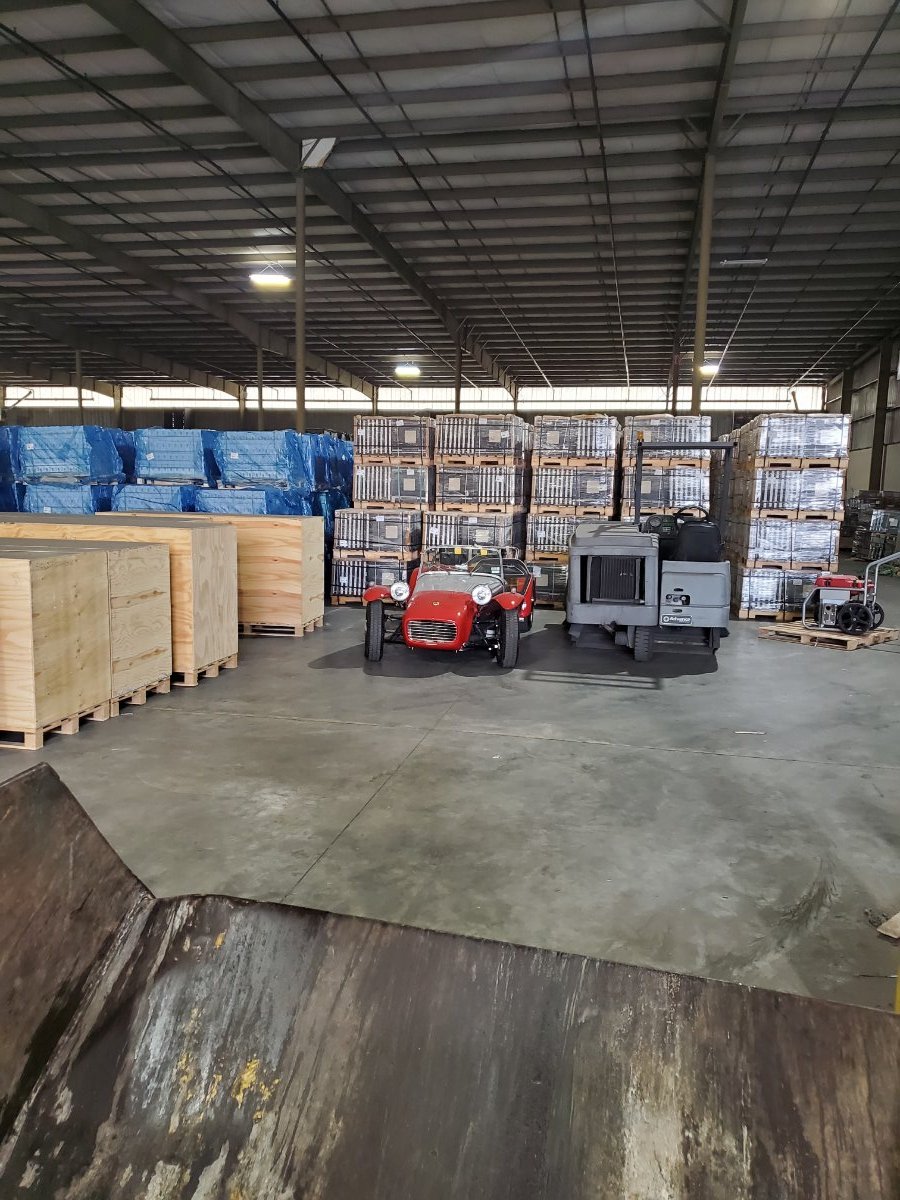
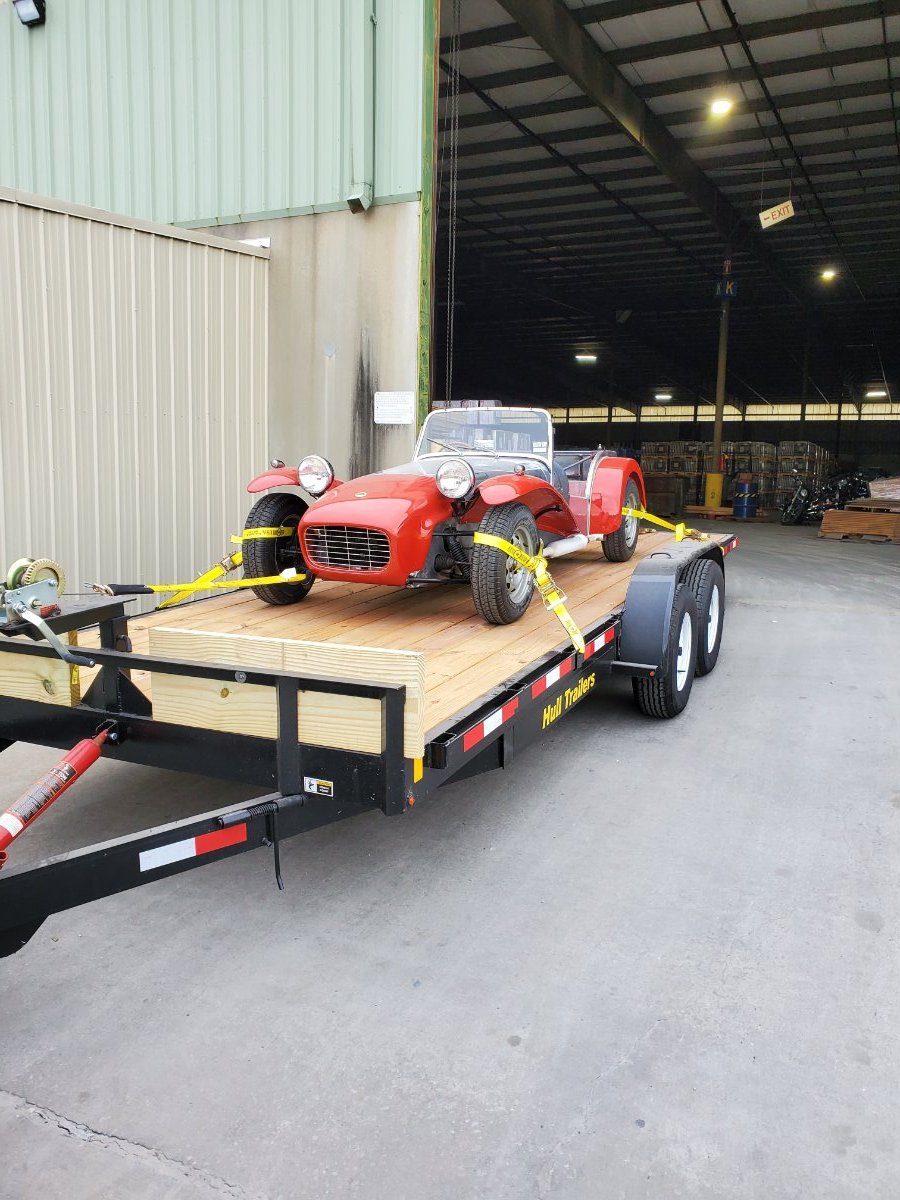
  5. As I recall, mine went from Southampton to Le Havre to Antwerp to Rotterdam to Amsterdam and maybe back to Le Havre before the long journey west. It then stopped in NY/NJ and Norfolk before it was unloaded in Savannah. I could locate which dock the ship (COSCO Vietnam) was on when it was in any port, and by watching the reported height above the waterline could tell whether they'd taken on more than they delivered at each port. It was really fascinating. I was glad it wasn't hurricane season, as I'm sure you are as well.
  6. I had a great time following my Seven through various European ports before it started across the Atlantic - the anticipation mounts!
  7. Bill - I've an old set I'm not selling but would be happy to pull out for measurements, detailed pictures, etc. if you need to start from scratch. Commercially, I'd reach out to Chris Mintoft at Redline and Mick at Xtraspecialsevens (both uk). John Donohue @SevenAmerica might have some leads stateside.
  8. Good read JB, thanks for sharing. Practical application and testing like this is always valuable to me in understanding how things work. The primary focus on airflow as a priority definitely rings true to me. The water pump and flow testing was also of interest, though I would have liked to see them measure flow in some way as they measured air flow. In Elan twinks, it is well known that the water pump simply doesn't push enough water at idle for good circulation (the same is surely true for our early Sevens) - that it really needs to be over 1500 rpm for sufficient flow to cool. Many have solved this issue with electric water pump conversions, some with smaller pulleys to lower needed rpms. I haven't changed either, instead relying on throttle blips if stuck at idle for any period.
  9. Agree with MV8, slower flow allows more heat transfer per unit of liquid... but increased flow means more of those units are passing through, so total heat transfer (generally speaking) increases with flow. A limitation to this, as MV8 mentioned, is when flow reaches a point it causes cavitation. There was a great discussion on this on lotuselan.net a few years back that I refer to periodically, I'll find and link. In the particular case of my precrossflow 7, as it was apparently designed for use w/o a tstat I adopted the opinion that operating without would not result in cavitation. So far, lack of overheating whether at long upper-rpm speeds or in low-rpm traffic suggest it is ok. https://lotuselan.net/forums/viewtopic.php?t=29674&f=39&start=0#p197209 and an on-point excerpt from that thread, if you don't wish to read the entire thing... As they say in the mythbusters - "warning a little science needed here" Heat transfer rate = K x A x LMTD K a nominal constant but determined by a number of geometric and surface condition factors including "Reynolds number" which is a measure of turbulence in the flowing fluid A the heat transfer area LMTD is the log mean temperature differential You are correct AHM in that there is no specific mass flow term but there is "Reynolds number" this typically increases with increasing fluid velocity increasing the K factor. Thus increasing mass flow through a heat exchanger typically increases heat transfer coefficient but the rate of change is nomrally small . The big effect as you observe is the increase in what is technically known a LMTD = "log mean temperature differential" as increasing flow means the flowing fluid heats up less as it pass through the engine and thus picks up more heat from the engine as there is more temperature differential driving the heat flow. It picks up less heat per unit of fluid flow but more fluid flow so overall more heat transfer from the engine, I think it is this complexity that people somethimes get mixed up with. In an engine you have two heat exchangers in series - the first is the engine sending heat to the coolant and the second is the radiator sending the coolant heat to the air. This makes the overall situation a little more complex but in general a faster coolant circulation will tranfer more heat --- which is why the thermostat opens to control the engine temperature. Removing the thermostat could cause a problem with the water pump cavitating and flow dropping off rather than increasing but i dont think this is a problem with the twin cam. Removing the thermostat reduces the pressure differential through the heater core so it will reduce the heater effectiveness. It also means a longer warm up time which is not good for engine wear. it may also mean the engine runs so cold that blowby contaminants stay in the oil and dont boil off leading to oil contamination and engine wear due to this also. cheers Rohan
  10. Not really, but I didn't put a ton of miles on it before removing the thermostat. That said, as I was attempting to solve the leak with the t-stat I remember thinking that the thermostat was a restriction in the system even when open (due to the cooling system design) and wondering if that restriction would impact how the swirlpot and system overall functioned. Mine comes up to temp reasonably quickly and then holds steady in the desired range very well - I only turn on the (small original electric) fan when I'm sitting still in traffic on a hot day. In that latter case I do need to blip the throttle periodically to get it above 2k to make sure the pump is pushing water, but I haven't had the temp fluctuations I sometimes experience in my Elan. It doesn't take much forward movement and natural airflow for temps to return right where I want to see them. Unlike the need to worry more about temp differentials due to our aluminum twink heads in the Elan and Europa, I think the precrossflow and crossflow heads heat up more evenly with the block so suspect there is a little less to worry about - but I'd defer to your better background and experience whether I'm just being hopeful.
  11. Precrossflows did not have then either, at least not those with swirlpots. That didn't stop people from adding them, and mine had one between swirlpot and head when I got it. I could never get that connection not to leak (gaskets, wellseal, hylomar) with the thermostat and, seeing no particular value to having it in my warmer climate I ditched it. I'm careful to let it warm before pushing it much, but it doesn't take long.
  12. https://usa7s.net/ips/topic/13390-early-lotus-seven-identification-plates-chassis-numbers-frame-numbers-and-engine-numbers/?do=findComment&comment=122817
  13. Mine is RHD and the frame number is just to the side of the master cylinder mount. I've not looked closely at any LHD versions to see if the stamping was done on the left side on them, but it may be that the stamping stayed in the same location (right side) regardless of driving side. Perhaps John D or one of the others with older cars will be along and know for sure. @eatonhong, @Christopher smith - do you know? Of course, it is certainly a possibility that the frame was replaced at some point. Our Sevens were much more highly and frequently modified either proactively or after an incident than the Europas and Elans. This makes them much harder to establish as original Lotus unless you're lucky enough to be able to track ownership and get good information from prior owners - on the other hand, they were generally modified to improve them, so as "provenance" erodes sometimes fun/reliability improve. Other than the registrars and protectors of the marque who rightfully focus on provenance, my experience is that most owners have these cars simply because they are exhilarating and raw and don't much care weather a frame is origin or not. Additional info... From simple sevens: http://www.simplesevens.org/anglocanadian/angloParts.htm There were two factory approved constructors of the mild steel Series 2 and 3 chassis, Arch Motors, and Universal Radiator. Arch Motors preceded their chassis number with the letters A/M. Universal Radiator used the letter 'B' (possibly followed by an 'L' if the chassis was left hand drive) with four numerals for the chassis number. This letter/number combination was normally stamped on the angular steel bracket that held the front mounting of the master cylinder bracket.
  14. The registry site doesn't change, but John is still quite active. He has records on many cars as well as access to the Lotus logbook (to the extent it still exists) - as I recall to get started he will ask you to complete a form (that is probably available on the register site) and provide some evidence of ownership. The simplesevens site is maintained by John Donohoe, a stateside expert on these cars. John is also a participant here and great resource - @SevenAmerica
  15. Great looking Seven! If you haven't already, be sure to reach out to John Watson, the historic Seven registrar - he will be able to help you more than anyone. But the number plate and LSB2xxx certainly fit the sequence properly for an LHD Lotus S3. I'm sure you're aware, but John maintains the historic lotus 7 registry site - http://www.lotus7register.co.uk/ser3page.htm - a tremendous resource for history and with some pictures that might help you. Also check out simplesevens.com, a site with pictures and histories of many Sevens. Are you the same jbcollier from the europa forum? Good luck with the car and your information search, and keep us posted!
  16. https://bringatrailer.com/listing/1963-lotus-super-seven-2/
  17. Excellent! Will enjoy following along!
  18. I've been using Redline 5w30 in my Elan for the last few years and more recently in my Seven. It is expensive, but high quality and has the necessary zddp. I was using Brad Penn before that in the Elan, but as I recall I started searching for a different oil when the Penn formulation changed and I couldn't confirm zddp content. The Redline came highly recommended by many at lotuselan.net.
  19. 116E 6050 J, which would make it a 1500GT head according to the picture Dingo posted. I'm interested in where that came from any any other information, as well.
  20. Dingo, I don't remember seeing this before, do you know the source? What do HC and LC stand for, high and low compression?
  21. Good article, MV8 - it still looks to me to be mostly an efficiency/fuel saving device though I can see that there could be some performance gains in engines with long duration cams. You have more experience and knowledge about these than I do - as cams get "wilder" don't we lose vacuum, so counteracting that benefit a bit? Or am I misunderstanding? @IamScotticus you can find meters that just measure dwell, or many multimeters either measure dwell or its inverse - so if you have a good MM check it for function before buying a new tool. I find it extremely useful. As MV8 said, using the feeler gauge and getting a prescribed gap should cause the right dwell to result - but checking dwell directly is confirmation. Surely user-error, but I often find I get close but sometimes just outside the desired dwell range with my feeler gauge - so with a meter I can adjust and get it right. This can affect performance - to short a dwell and the coil doesn't get full charge, too long a dwell and you've impacted timing. As I recall my twin cam and pre-crossflow engines both want 60 degrees of dwell, plus or minus 3 degrees, so suspect crossflow is similar if not the same.
  22. Agree. Also not sure why a vacuum dizzy is of interest, unless you're going for fuel economy or focused on meeting certain emissions objectives.
  23. Give Martin Jay at Distributor Doctor a call, I'll bet he can build one up to the spec you need. Then keep a couple extra sets of good points, condensers, and rotors and you're set. They really don't fail often with good parts, and are so much simpler to dx and rx problems. Build up a backup dizzy to have in your travel kit and if you have an issue you can swap quickly and save evaluation and points/condenser replacement for the bench.
  24. @ProfGriff - what Discovery do you have? I just picked up an 07 LR3 as a tow vehicle and partial DD. This has about 130k miles (almost 100k fewer than the 2010 F250 it will replace) and, hopefully, is nearing the bottom of its depreciation cycle. Will need to do a little work on it, but fortunately there is an active owner network and you can still do a good bit of the work on these yourself - and we have a solid local independent specialist for those things I can't do. Any tips or things to look out for?
×
×
  • Create New...