
IamScotticus
-
Posts
2,203 -
Joined
-
Last visited
Content Type
Profiles
Forums
Store
Articles
Gallery
Events
Library
Everything posted by IamScotticus
-
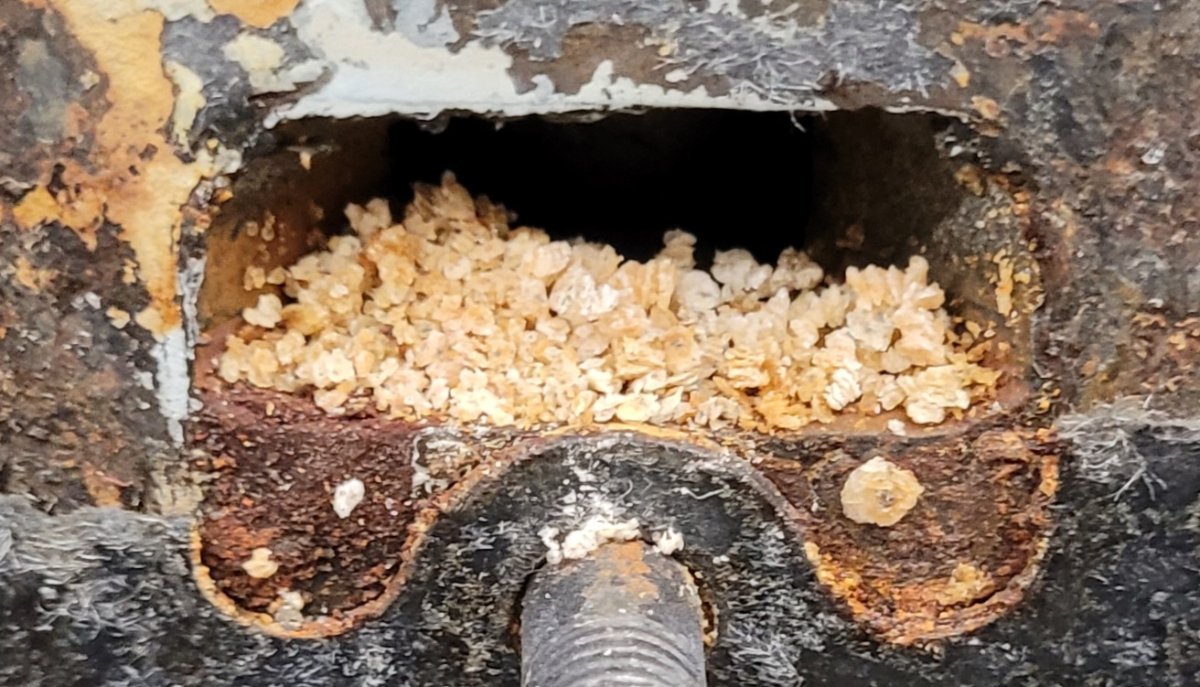
No advantages over the coolant reccomend by Ford or Caterham. The issue is the potential for deleterious affects on chemically incompatible non-OEM components throughout the system. Generally, all coolants cool the same, with alternatives like gells, water wetter, etc. being the exception, standard long life coolants differ in how they interact with the components they are in contact with. They work together as a system. When a coolant is recommended by an OEM, there is usually a materials compatability issue. If a coolant of any kind looses its effectiveness its likely something has happened to that coolant to get contaminated and change its properties. This is why a good flush is necessary. These 7s tend to sit for long periods leaving the coolant ample condition to sit and eat away on a rubber seal or gell and cryatalize from a remnant of an invasive element introduced like an additive or previous coolant or some other corrosion. Getting a clean slate baseline to work with from a flush and refill with an OEM approved coolant is your starting point for troubleshooting the other issues. Also, just plan on making your coolant system a regular maintenance item. Coolants, like brake fluid, go bad over time and contamination, not from use.

-
Drain, check liquid for anomalies, do a boil test on the thermostat in the kitchen, run a flush solution without thermostat (with heater open), drain and run several water flushes (with heater open), reinstall all and fill with a premixed coolant you will stick with and never mix with anything else. Test or eplace the expansion tank cap.
-

Where can I get a nose cone for a Series 2, Lotus 7?
IamScotticus replied to Bill's topic in General Sevens Discussion
anything new? -
Off-road, mud and a 7. Not something you hear or see everyday.
IamScotticus replied to w650gb500's topic in Seven Videos
https://www.motoringresearch.com/slideshow/take-a-look-at-james-mays-frankenstein-caterham/ -
Off-road, mud and a 7. Not something you hear or see everyday.
IamScotticus replied to w650gb500's topic in Seven Videos
You don't see the rope pulling it through the water -
Caterham announced new engine supplier - Horse
IamScotticus replied to Walshy7's topic in General Sevens Discussion
I don't download. Could you screenshot the relevant info? -
Pinto 2.0L bell to Mustang T5 trans adapter
IamScotticus replied to Mechtrpr's topic in General Tech
https://www.burtonpower.com/std-clutch-plate-ford-x-flow-ohv-kent-190mm-1-x23-c784af.html -
Where can I get a nose cone for a Series 2, Lotus 7?
IamScotticus replied to Bill's topic in General Sevens Discussion
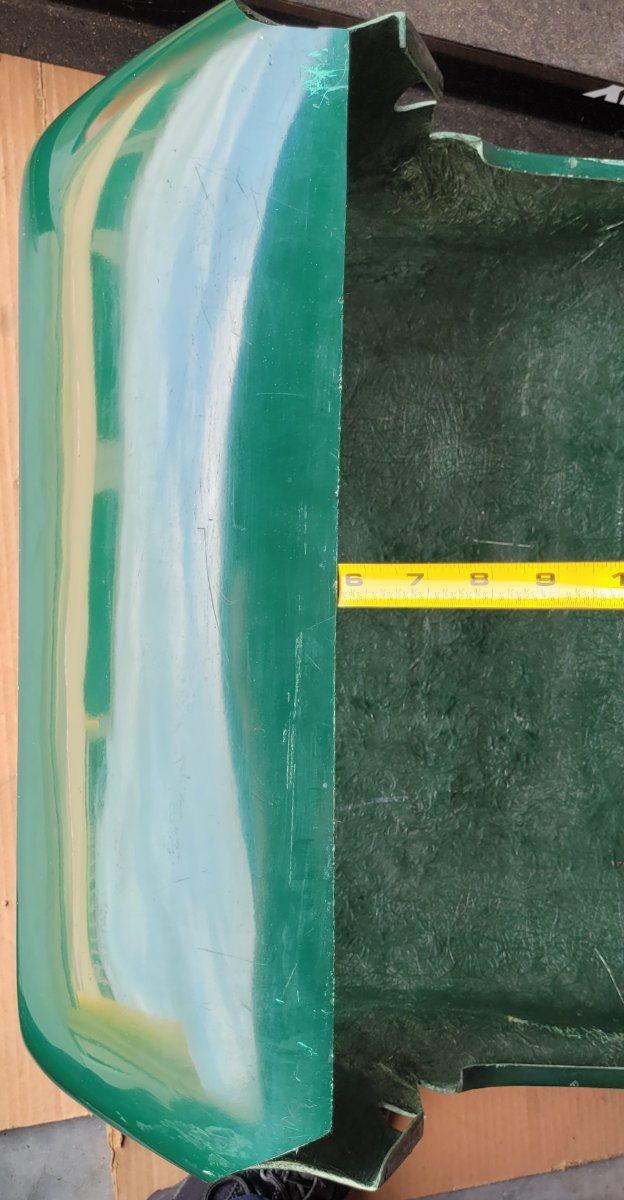
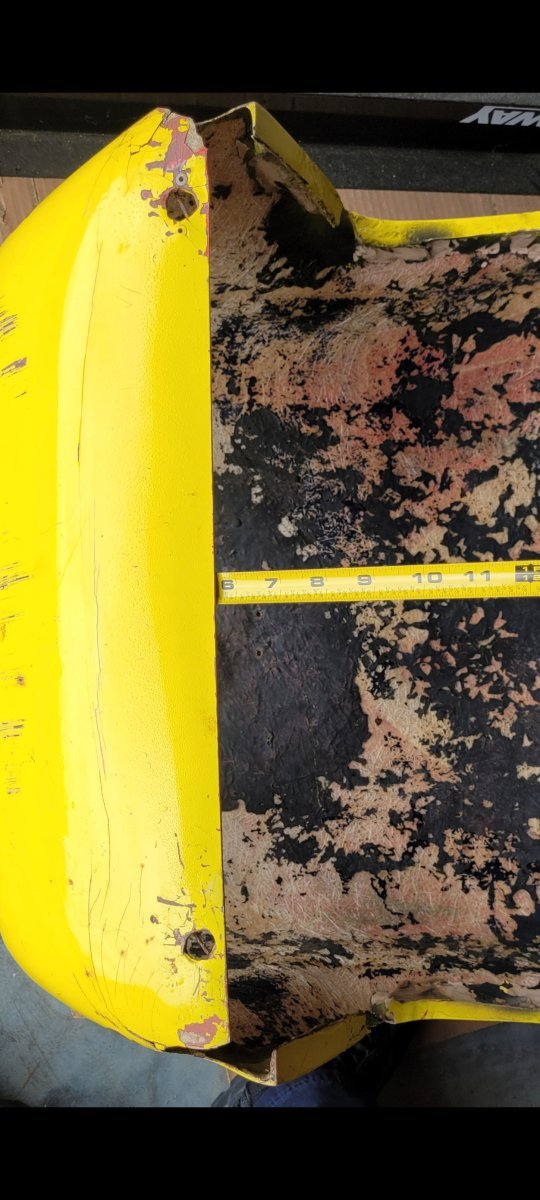
I will try to be more helpful I measured the nose lower skirt on an original Lotus S2/3 and from a reproduction made by DSK, from the period. They were both very close. LOTUS DSK
-
Where can I get a nose cone for a Series 2, Lotus 7?
IamScotticus replied to Bill's topic in General Sevens Discussion
Then that bottom edge should have reached the frame. They cut it short. I would ask for another, with corrections. Or take the opportunity to fab a hinge Piano hinge
-
Where can I get a nose cone for a Series 2, Lotus 7?
IamScotticus replied to Bill's topic in General Sevens Discussion
Do the headlamp brackets align under the openings? -
I looked at that first thing myself, and I'm going to disagree of your assessment of the bonnet angle. Cat nose heights vary from car to car, but my observation of Cat bonnet angles is they are nearly horizontal, especially on a DeDion. This requires some proof. The front bonnet height on my 96 is 6.25" and the and the scuttle is 9". A Lotus nose height is generally an inch shorter 5.25". The inch difference is more noticeable depending on the rear ride height which I believe S2s & 3s (live axles) ride ride higher in rear. With John's silhouette being perfectly horizontal, and to have the bonnet angle it does, is evident to me this is based on a S2 profile, or an artistic library has been taken. Regardless, I think the lines of the car are very good but the silhouette lines could be thicker or darker to pop better for smaller thumbs, etc. Yes it's a ridiculous argument. But it's fun.
-
The Regular Summary of Classified Ads of Se7ens Found For Sale
IamScotticus replied to Croc's topic in Cars For Sale
#2 of 12 -
I like the flares/clams (only Americans call them clams), but lets face it, flares are too per-war looking for the modern tastes. Think MGTD. Cat certainly drppped the clams adapting to the consumer tastes as well as competition best practices as allowed. The cycle wings became the standard equipment since the late 90s. After all, initially the flared wings were only a compromise to get into the American market. It is a fortunate coincidence the flares do compliment the 7 very well, IMO. But I would prefer to race with cycle wings.
-
What is the pipe diameter?
-
On FB https://www.facebook.com/share/v/1FxCjYEPPv/
-
It wasn't me, but I remember the incident.. A throttle cable on a Crossflow, I think, came lose and grounded on the fan switch or water temp terminals. Result was a fire. I have heard of the R clips on the Triumph LF14 caliper guide pins coming off. Weber DCOE inspection cover wing nuts need drilled and safety wired.
-
This has my vote so far
-
Then might as well have a steering wheel and standard windscreen
-
I think @Slonie silhouette is better there as it's a bolder line. It will pop
-
I like this if there were a 7 silhouette under the USA, left of the 7
-
You are not adding lightness
-
Solid...I like how the headlamp gets in there
-
I suppose there isn't enough market for the small carbs for Holley to stay in the game.
-
Wonder why Holly even bothered with the small carbs?
-
Looking for alternatives to the common 23/36, 38 DGAS. I can buy those new. Would like to find a new old stock 32DFM, or gently used take off, or "it was working when I removed it". Intended to use on a 1600 xflow