MV8
-
Posts
2,303 -
Joined
Content Type
Profiles
Forums
Store
Articles
Gallery
Events
Library
Everything posted by MV8
-
I'd use a screwdriver; put the tip over a collector loop, hook the spring on the shaft and the header, then move the screwdriver handle rearward so the spring slides down the screwdriver on to the collector loop.
-
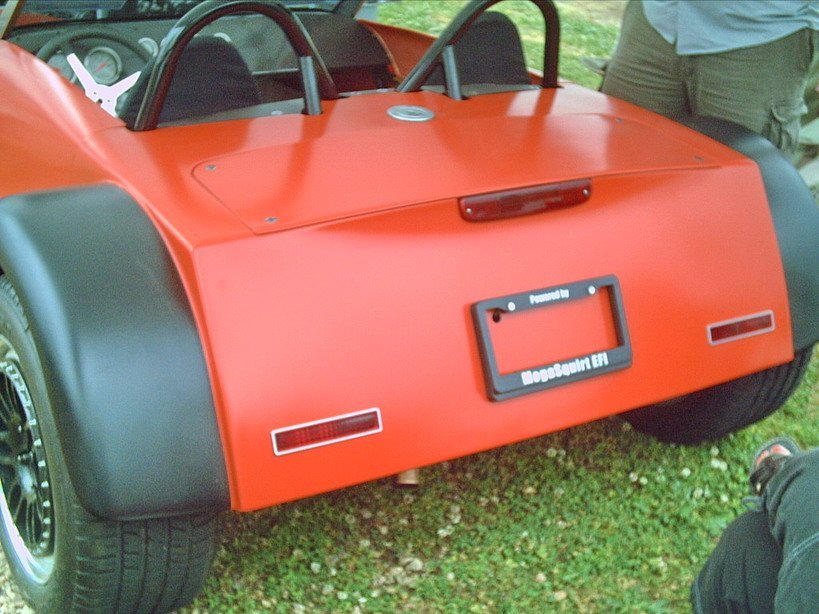
I took these pics in 2009 at Road Atlanta. Anybody know anything about the builder/kit? Searched for "Piper" but didn't find anything.

-
Didn't realize it was the same person on here recently that came up with the fuel gauge calibration module and spoke of sharing schematics.
-
After 60 days, my time is valuable enough to move on or (fwiw) complain to the BBB and CAT. Out of curiosity, I took a brief look online. No physical address; just a UPS Box for mail. No names. No personal pictures. No business license shown or found: https://professions.dol.wa.gov/s/license-lookup Anyone ever been there? Clubs in the area? Caterham should have an address and name if legit. You could also enquire about purchasing the car listed. Also on instagram: https://www.instagram.com/beachmanracing/ Despite all the flags, it could just be a person going through a rough time right now. I'm sure your money helps ease the suffering...
-
Most non-oem mfg parts or replacement parts do not offer any rust protection or if painted, not the highest quality. Socket head screws are normally black oxide coated which is not much better than bare. Those look bare. I'd use a bench grinder with a wire wheel to clean up the fasteners and flywheel teeth, then rustoleum rattle can satin clear most everything (including the pressure plate). Potential overspray is not an issue and the paint fills the metal surface so dirt clean up is easier. If I pre-treat, metal prep sold at Home Depot in gallons is mixed 2 or 3 parts water to prep (phosphorus) in a universal pump bottle. May take a couple light sprays over a couple days for the rust to go away. I let it dry and spray. I suggest having a jar of copper anti-sieze for most of the fasteners. It has a metal cap with an integral brush and should outlast you unless you are a mechanic. Costs about $12. I have a jar of nickel anit-sieze for exhaust fasteners. It is essentially oil with the appropriate powdered aluminum, copper, or nickel.
-

Expansion Tank Cap - Help Figuring Out The Correct Part
MV8 replied to Ctcat's topic in General Tech
May want to make sure the radiator cap has not been "upgraded" to a higher pressure rated unit. -
Selling a Canadian registered kit car into the US...problems.
MV8 replied to Jacques's topic in General Sevens Discussion
I didn't drill down fully and just looked to provide an arrow to references. In my opinion, importation of a 1987 vehicle is allowed under 49USC § 30112 (b) 9. I don't know a higher authority than that in this case and would inquire at the border in advance short of using a broker. I'm only discussing bringing it in. An email reply is better than a phone conversation. Always be polite, ask for names and be prepared to get it done ASAP if the word is GO. The State it goes to will have a say about equipment and possibly emission in order to be registered to operate on public roads. Some States may accept transfer from another State but not first time registration after importation of the same, unaltered vehicle. -
Selling a Canadian registered kit car into the US...problems.
MV8 replied to Jacques's topic in General Sevens Discussion
Overview letter: https://www.nhtsa.gov/sites/nhtsa.gov/files/documents/elig120115_v2.pdf Eligible but non-conforming Lists: https://www.nhtsa.gov/importing-vehicle -
Donnie, band saw for the rough cut and belt sander to smooth and radius the outside edge; piloted hole saws, uni-bit and files for openings. If no forming and it will be protected or covered with paint or vinyl, consider .050" 6061T6. If polished and some bending, 3003H14 in .063 or .080. Alclad is another option. Would a 2x4 sheet be long enough? Cost is about $50 from aircraft spruce. They may sell small sample packs to get a better idea of what you want.
-
That could work starting with the right length input shaft to shorten. There are at least five different length input shafts for the T9 and four are longer than 171mm with the clutch hub spline at different positions from the end. The most cost effective, straight forward, and quickest method would be to have someone clean, assemble, and put the 2.6 back in. Don't know what trans is in it yet. Maybe a 4 spd or the one that looks like a T5.
-
rdav, the 2.8 is not the only engine that will bolt up to the bellhousing you have for the 2.6. The mustang engine is a 90 degree v6 "essex" not a 60 degree v6 "cologne". The 2.8 will have a bolt-on adapter that converts the intake from a weber 2 barrel to a holley/motorcraft 2 barrel. Removing that to fit the weber will lower the height to that of the 2.6l. The intakes are not interchangeable between 2.6 and 2.8. These engines have solid lifters that require periodic adjustment. The 2.9 and 4.0 are hydraulic self-adjusting. Echoing slowdude, converting will require significant engineering work and knowledge to be successful; aftermarket support or not.
-
rdav, create a separate topic for your car and/or power train options.
-
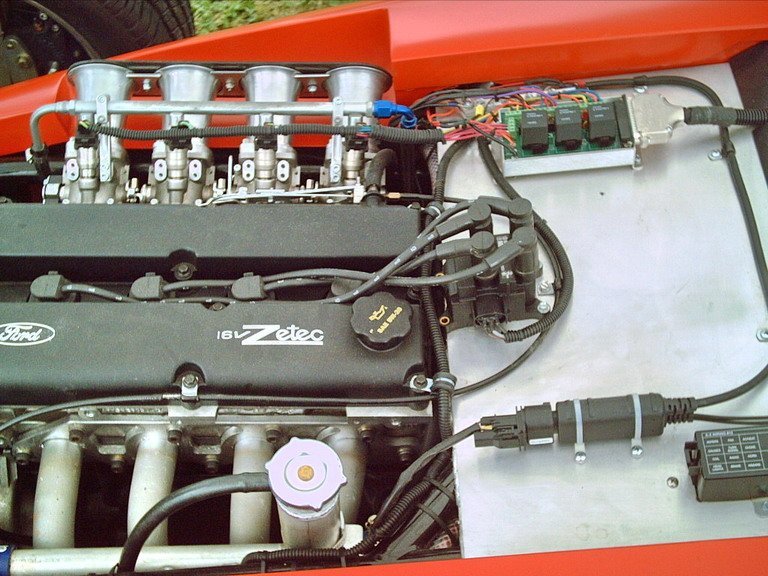
Only if the 2.6 needs rare parts, I'd look for the ranger 83-84 2.8l and 2 barrel or aftermarket intake or a 90-95 4.0l ohv with a diy slide throttle in place of the upper intake (to get the height down) and use megasquirt. An SOHC probably would not fit under the bonnet. Plan on oil pan/windage/accumulator mods to cope with oil supply when hard cornering.
-
195 or 205-50-15 would probably fit. 13 or 14 would allow for more sidewall height.
-
A bike motor will have a very long driveshaft that can have wiping problems at high rpm depending also on the tubing od.
-
Hello Skaggs, Zero if possible for everything (perfectly lined up). If not, split the differences between all the joints to minimize and equalize all the joints. It is also ok to have one section zero on either end if the other shaft angles are 1.5 or less and equal.
-
Clamshell-type fender installed to my 1993 Birkin
MV8 replied to drhasegawa's topic in General Sevens Discussion
Probably necessary to prevent stress cracking in the gel coat, long term. -
Clamshell-type fender installed to my 1993 Birkin
MV8 replied to drhasegawa's topic in General Sevens Discussion
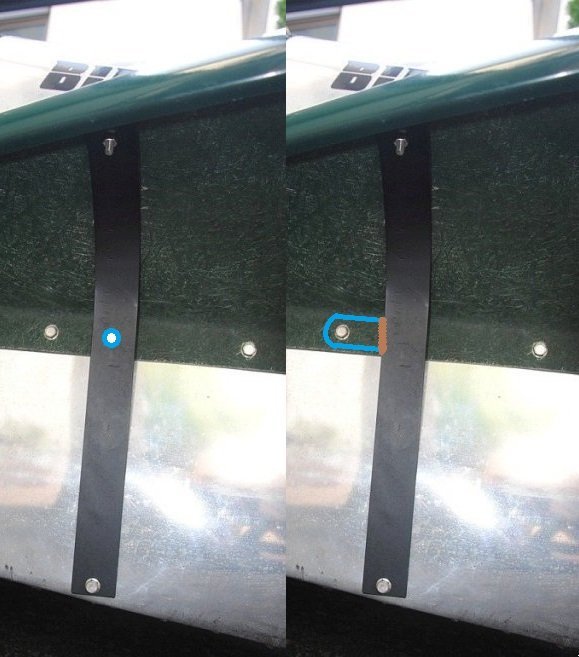
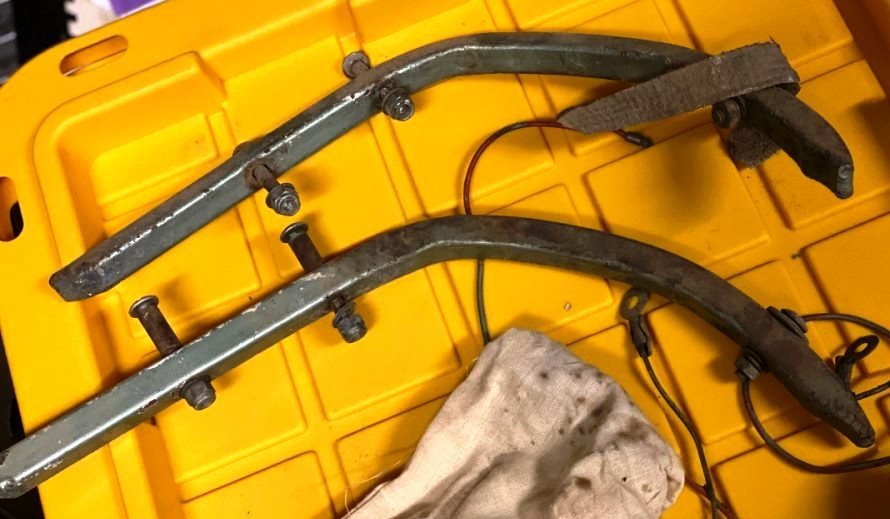
You might weld a tab or add a bolt to those braces and paint them. I assume there is no framing behind the skin in that area. See photos for suggestions, traditional braces, and the traditional location.
-
Push-button replacement for Dzus fasteners on Caterham nose.
MV8 replied to pethier's topic in General Tech
Southco makes stainless, winged dzus in standard and lion types. -
More stupid duratec questions (2021 360S): single- or dual-speed fan?
MV8 replied to Austin David's topic in General Tech
Looks like two separate fans. Would be odd to have four wires on one fan. -
Great color. Unusual.
-
More stupid duratec questions (2021 360S): single- or dual-speed fan?
MV8 replied to Austin David's topic in General Tech
What do you have a diagram of exactly? Is one of the two fan leads grounded or have B+ all the time or with the key on? -
I'd flush then use green conventional designed for older vehicles. If there is inadequate cooling, short of changing hardware, I'd use the gold. https://www.oreillyauto.com/detail/c/o-reilly/oil--chemicals---fluids/antifreeze/antifreeze---coolant---vehicle-specific/df3a6469dc0a/o-reilly-1-gallon-green-50-50-antifreeze-coolant/afz0/gal5050?pos=1 https://www.autozone.com/antifreeze-radiator-additives-and-windshield-wash-fluid/antifreeze-coolant/p/shoppro-engine-coolant-antifreeze-green-concentrate/540722_0_0?searchText=coolant
-
what is this crazy hot 68R (resistor?) under my dash? 2021 Caterham
MV8 replied to Austin David's topic in General Tech
68R is a good choice; better than suggestions of 40 ohm which would get much warmer and have enough current to require the extra diode. I calculated 55-59R as the lowest value in parallel. There is some current any time the key is on, running or not for the regulator. Considering the minimum current needed to operate the regulator and have a bright enough led versus excess current/heat, I might try a 100R of the same type/wattage or just add a volt meter. -
For the alt interference, just twisting the pickup leads is effective. The more twists per foot, the better. LAN cable would work but many extra pairs, thin wires, and a ground would need to be soldered to one end of the shield for grounding.