JohnCh
-
Posts
3,406 -
Joined
-
Last visited
Content Type
Profiles
Forums
Store
Articles
Gallery
Events
Library
Everything posted by JohnCh
-
Well so much for taking my hint…
-
Let me start by saying I'm more than a little annoyed that I lost $250 in Vegas because I bet this thread would have died a natural death a 1/2 page ago. I am, however, confident I will win my bet that @Bruce K and @Vovchandr will never agree on this topic. Given it's now down to just the two of you, perhaps it's time to consider taking this to PM? Unless, of course, someone here has money on this back and forth consuming another page. I'd hate my suggestion to cost anyone their chance to win big. Oh, and my attorney wanted me to mention that in no way should my post be misconstrued as an attempt to limit free speech. Hopefully that covers me.... -John
-
The error message shown when clicking on the broken image icon in Pethier's quote of your post, indicates that image was taken from a location that includes some parameters to prevent unauthorized use. Feel free to start a thread in the help section if you need assistance tracking down the issue on your end. BTW I am able to see the photo in both of your posts, just not the quote in Pethier's. -John
-

Caterham wants to hear from you!
JohnCh replied to IamScotticus's topic in General Sevens Discussion
The last two events were published to YouTube, so I suspect they will do the same with the upcoming event. -John -
We just had a significant server upgrade that runs the risk of introducing random issues. If you are seeing new problems that began after this morning, please report them in this thread and include the following information. Issue description Device (mobile, desktop, or both) Operating System Browser If this is an issue you've encountered prior to today, please do not report it in this thread as it will muddy the waters when troubleshooting problems from the upgrade. Instead, please start a new thread in the Issues & Help forum and indicate when you first noticed the problem. Thanks, John
-
- 1
-

-
I merged Bruce's post above into this thread for two reasons: @Vovchandr started it before Bruce posted Bruce placed his post in an old thread about starting a Politics, Religion, and Controversey forum, not as a new thread in that forum.
-
The Regular Summary of Classified Ads of Se7ens Found For Sale
JohnCh replied to Croc's topic in Cars For Sale
I'm in no mood for this so I will be blunt. This conversation in this thread stops here. Period. You want to further the commentary, then start a dedicated thread in the appropriate forum where people who don't wish to discuss or read about a polarizing political figure, or distortions about free speech, can ignore them. https://usa7s.net/ips/forum/37-politics-religion-and-controversy/ And to be crystal clear, any further comments here about my post or the ones above will be deleted. I am not making the effort to move them. So have a comment? Follow the directions above. -
Selling my Great British Sportscars Zero - California SB100 - SOLD
JohnCh replied to jmardy's topic in Cars For Sale
I changed the title to reflect the car is sold. @Crocand I will try to do this on ads in the future to avoid confusion. -
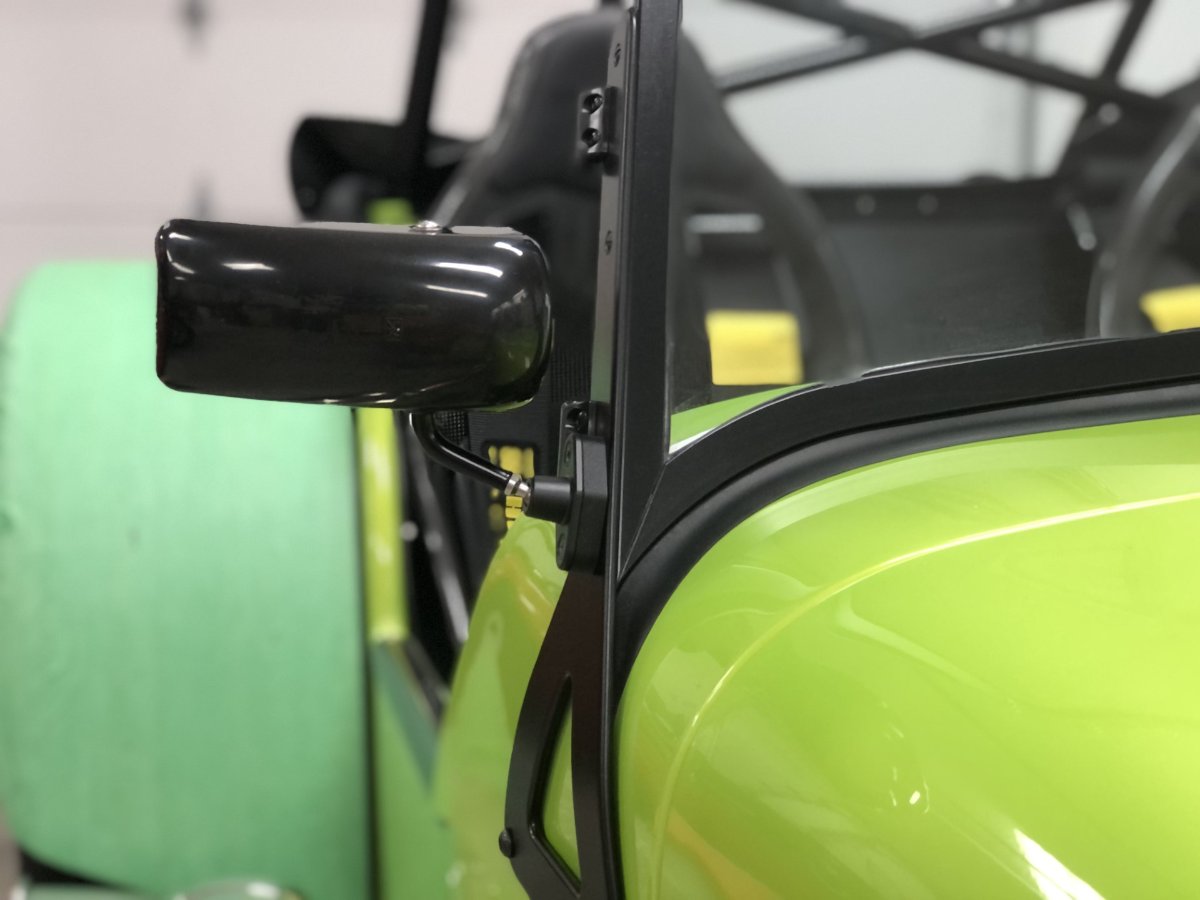
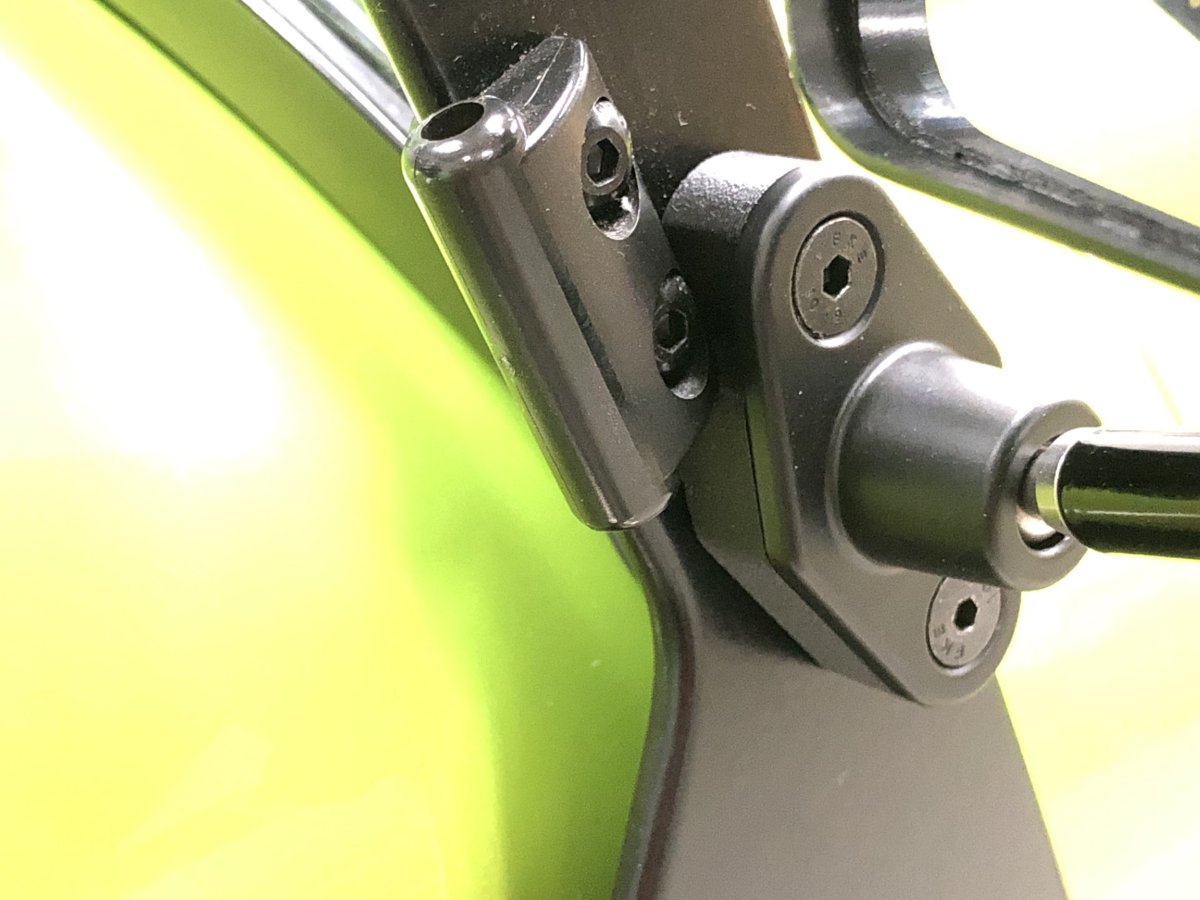
The Spa mirrors come in a few different sizes. Based on price and the picture, it looks like DPR carries the slightly larger GT, which is a little less tiny than the version most people use on Caterhams (68mm x 148mm vs. 52mm x 113mm). It's also the size I prefer. I've used the GT with convex mirrors on the Westfield for years and opted to stick with them for the Caterham. You can see the various versions on Merlin Motorpsort's site here and click on each to get the size info: https://www.merlinmotorsport.co.uk/s/mirrors/spa-mirrors With the combination of lowered floors and carbon fiber seats, the stock mounting location placed the mirrors in my line of site. Using the lower threaded ports rather than the ones in the middle as per stock, and printing spacers to work around the lower sidescreen hinges, lowered the mirrors nearly 4" which is fine for me.

-
If that's true, then I strongly suggest you never consider building a new Caterham from a kit. It's all flailing, all of the time
-
Sorry, but I'm not familiar with that error message and can only speculate that it is seeing a data point used as the denominator in an algorithm as zero. When the laptop is connected and the engine is running, is the Live adjustments screen showing data? If yes, then I'd go over the Data Logger Guide on their site again to see if you missed a step or left a required field as blank. I used the guide the first time I tried to log and it went smoothly and have never had an issue.
-
One thing to keep in mind is that the carbon fiber seats for the SV are 3-4cm wider than the version fitted to the S3. I found the SV seats too loose for my taste and special ordered the S3 version for my SV. More details and a dimensional drawing are available in this post:
-
When you wish to run closed loop, set the temp to correspond with the lowest coolant temperature where injection corrections are set to 0. Emerald typically sets this at 70C but no way of knowing if your injection corrections map was altered previously. You'll find this on the "Inj correction" tab.
-
Apples .heic format is unsupported so they come through as attachments that people must download. When uploading an heic from an iphone (or at least mine), or when emailing it, Apple does the conversion to a jpeg, but it appears that Macs, do not and require you to resave the pics as jpeg's first.
-
@papak, Apple's ,heic format is not supported by the forum. These typically convert to a jpeg when emailed from an iPhone or when uploaded to the forum from an iPhone (at least for me). However, if you are using a Mac, it may not do that and you'll need to save as a .jpeg before uploading.
-
Sorry, I thought you were referring to the AFR Corrections table, not the Feedback table. The trick Emerald showed me for turning on/off closed loop or adaptive at a global level was to set the coolant trigger to a very high value that the engine won't reach in normal operating conditions. In the screenshot above, that's why it reads 120C. When using Closed/Adaptive, it is changed to 70C.
-
Correct. No, you are changing the values in those cells. In the Emerald, + adds fuel or timing, and - removes fuel or timing. To enable adaptive, you need to have values in the lower right section of the tab shown below under "Conditions that enable update of the corrections table".
-
I don't recall how to turn on adaptive. I'd need to look at the manual or the software to jog my memory. The difference between closed loop and adaptive is simply that closed loop makes the changes live and does not store the values. Adaptive, identifies those live changes and stores them in an AFR corrections table. At some point you can accept all or some of those changes which in turn updates the map with the revised values. When you do this, it's a good idea to save the map with a new name so you can always revert to the original if needed. Another advantage of adaptive mapping is that it gives you a way to safely walk up on a big change when doing initial tuning. Closed loop and adaptive both have user settable values that limit the amount of allowable change. This is to prevent a massive erroneous reading that could create an overly rich or lean condition. As I recall, Emerald sets the default at a pretty conservative value. Maybe 5%? Now imagine the cell actually needs a 9% change. Closed loop won't get you there and will continually limit the change to just 5%. With adaptive mapping, you can update the base map with that 5% change, then the next time you run the engine, it will identify that additional 4% change needed and enable you to create an updated, accurate map.
-
Based on your questions, it sounds like you have not read the instruction manuals available at Emerald's site here: EmeraldM3D.com - Software / Manuals The Emerald K3/K6 Manual v 057 is a good primer and will help you understand the various terms and what the Emerald can do. It's not written for the expert. It's written for the average hobbyist. The Adaptive mapping aspect is covered in the section beginning on page 31. You want to use the Emerald to log data, not the Innovate. That simply feeds the AFR to the Emerald and won't tie that into other key parameters available to the ECU. The Emerald allows you to map multiple channels and its use is covered in the Data Logger Guide on the page linked above. Load site is a key item to log and is how the software identifies throttle input. Coupled to RPM, it equates to how much air is being ingested by the engine. The mapping tables generally have Load Site on left (the rows) and rpm on the top (the columns). The cells then contain the elements that table maps. e.g. timing, fueling, AFR.
-
Was there something amiss that caused you to make those changes? If you have the WBO2 working correctly, you can log the AFR, load site, and rpm to identify if anything is off and then address it. You can also turn on the adaptive mapping, plug in target AFR at each load site and rpm and just drive it. This should all be covered in the documentation available at Emerald's website. I can try to answer specific questions if you have them, but I may not know the answer off the top of my head as I haven't had the need to mess with mine for a few years.
-
There is a lot of info here and I'm not 100% certain I follow the issue you're chasing given the talk of tuners and midrange lean misfires. Is the following correct or did I miss something from a post above? You car worked fine with the loaded map for years. Let's call this your baseline map You had an issue with the WBO2 so replaced it and some wiring, after which the map switched to another map loaded into the ECU (we'll call it the starter map) and your problems began. Is the above correct? If so, is the goal to simply get the baseline map to operate as the default and have the working WBO2 for either closed loop mode or data logging? Did you make changes to that map while troubleshooting or is it unchanged from the past? Based on the answers to the above, I may have some suggestions based on my experience with the Emerald.
-
Honestly? It's not overwhelmingly promising. Given the sensitivity of the information, I'm not a big fan of sharing it with someone who joined the forum expressly to access it. Particularly when their IP points to the UK where the likelihood of misuse is much higher given the far larger number of Caterhams on the road. Ultimately, it's up to the person who owns the IP. If you PM me a username on Blatchat or pistonheads that I can verify by PMs there, and you have a positive reputation, I can share those results with him.
-
See this post:
-
To manage storage and page load times, all images are automatically resized to no more than 1000px x 750px. This is optimal for a forum and results in a much, much smaller image. Looking at your specific data, you have uploaded 340 images, with an average storage size after compression of under 300kb. Your largest is 770kb and you only have 20 that are larger than 500kb. Therefore, it's safe to say that uploading a resized image under 1.9mb won't impact quality. That said, you are about to reach the 100mb storage limit for an unpaid user, at which point you will no longer be able to upload images (Paid Members can store 500mb). I'm comfortable lifting both limits by 20% for now and will investigate a higher limit when I have time.
-
Posting in the General forum to maximize visibility. The outage over the past 24 hours was due to a failed autorenewal on the domain. Mazda had this set up to an active payment method, but not only did it fail, the registrar never contacted him to highlight an expiration issue, therefore no one knew about it until the site stopped responding. He worked with registrar to correct the payment issue about 6:15am PT yesterday but it took a full 24 hours for the change to propagate. To avoid this happening again, we will be changing the registrar to our forum ISP who is responsive and has proven error free over the past few years. -John
- 1 reply
-
- 4
-

-