JohnCh
-
Posts
3,416 -
Joined
-
Last visited
Content Type
Profiles
Forums
Store
Articles
Gallery
Events
Library
Everything posted by JohnCh
-
I can't imagine your frustration, particularly after all you had gone through with your build. Hopefully winter doesn't come early in Ottawa, and you can pile on some miles.
-
I merged the threads to keep this to a single build thread.
-
It can be difficult to reach Ken at Dave Bean these days. A few other US sources who may have the parts are: https://rockymountaincaterham.com/ https://www.beachmanracing.com/ https://www.rdent.com/
-
ProClip sells a very similar mount for the Elise that works very well. No vibration, seconds to remove and install, and doesn't leave a mark: https://www.proclipusa.com/products/855407-proclip-center-mount-lotus-elise-2012-20xx-lotus-exige-2012-20xx
-
 I agree with @Scott_. It sounds like a ground issue. I'd start by measuring voltage drop for each turn signal bulb assembly and see if one is an outlier.
 -
Caterham switched from the K-series to the Duratec ~2004. The Duratec version is commonly referred to as the R400D, although I don't know if that was the official model name from Caterham. My understanding is that the cams are the same in both versions, but the 420 uses the later, better flowing high-port head, vs. the standard Duratec head in the 400D. Hopefully someone can confirm or correct those statements.
-
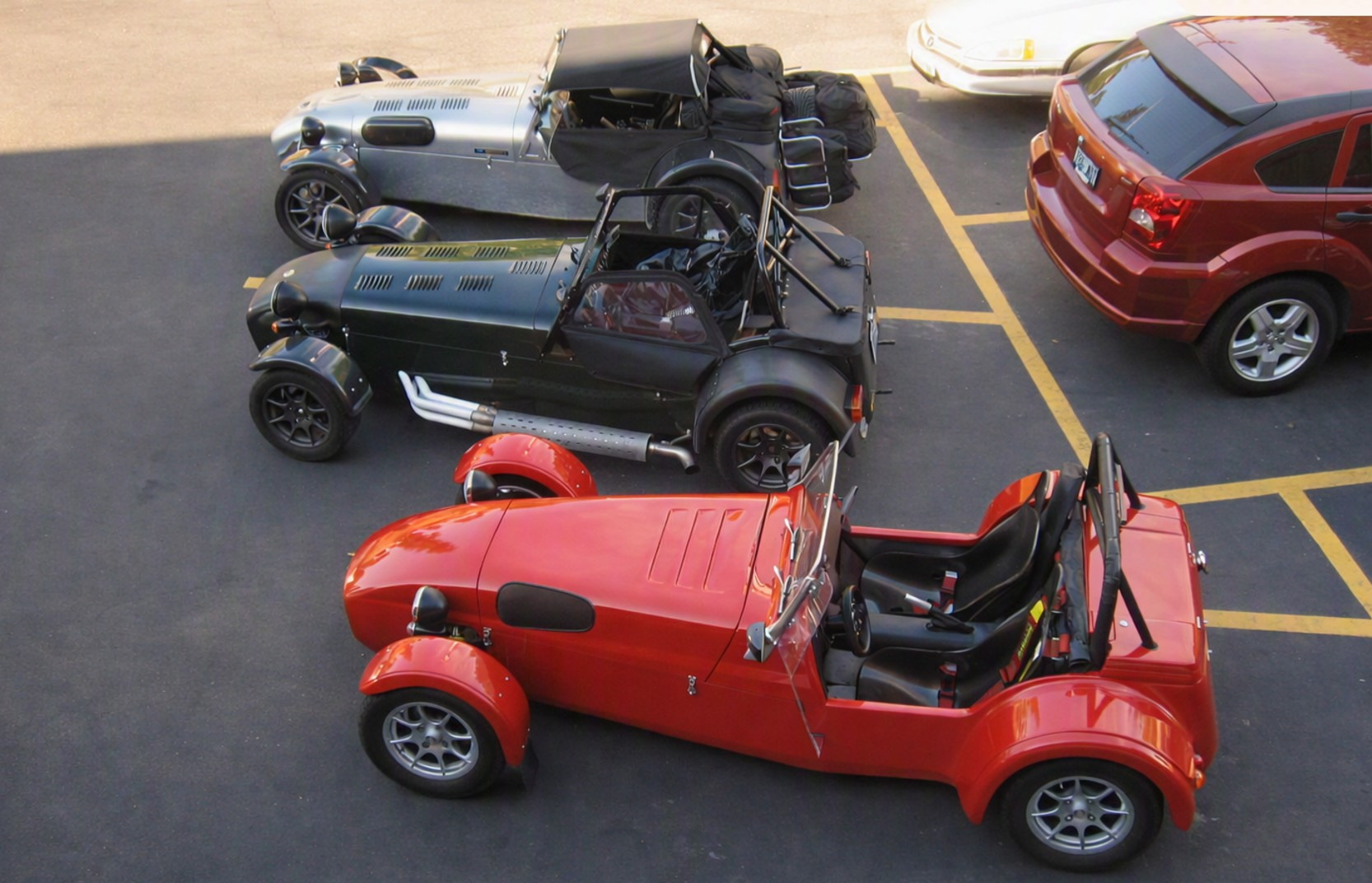
Breaking the rules here since (1) I didn't take the photo today and (2) it's my old car, now under @3739Davis's stewardship, but this picture landed in today's OneDrive "Memories from this day" email and it made me smile as I reminisced about the trip. This was taken in the hotel parking lot in Winthrop, WA on the way back from Monterey Car Week 2010. After the festivities concluded in CA, we headed north via back roads for 5 days until Winthrop, after which @Alaskossie continued on to AK in his recently acquired SV (Denver to Anchorage via LA and Monterey), while @Hudson and I headed south to my home in the Seattle area. Monterey was great, but the road trip was better. -John

- 451 replies
-
- 11
-

-

-
Thread title changed and thread moved to the Build Threads forum per @Darcy's request.
-
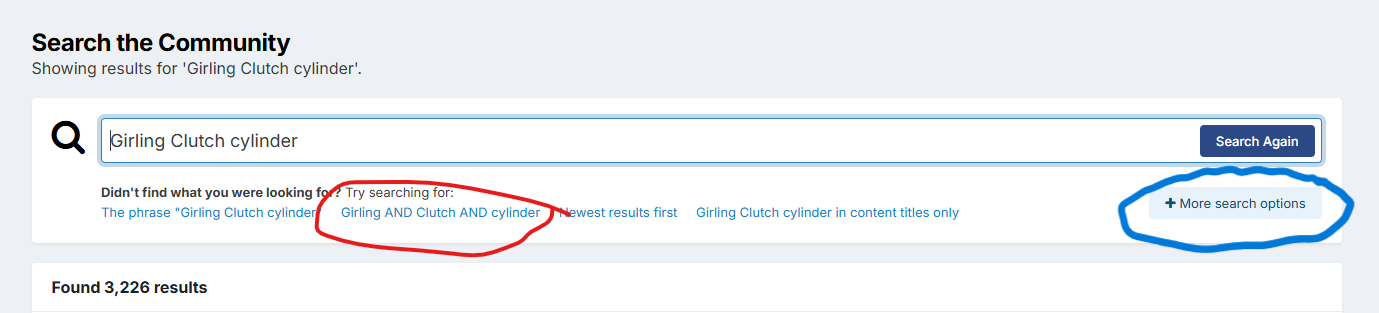
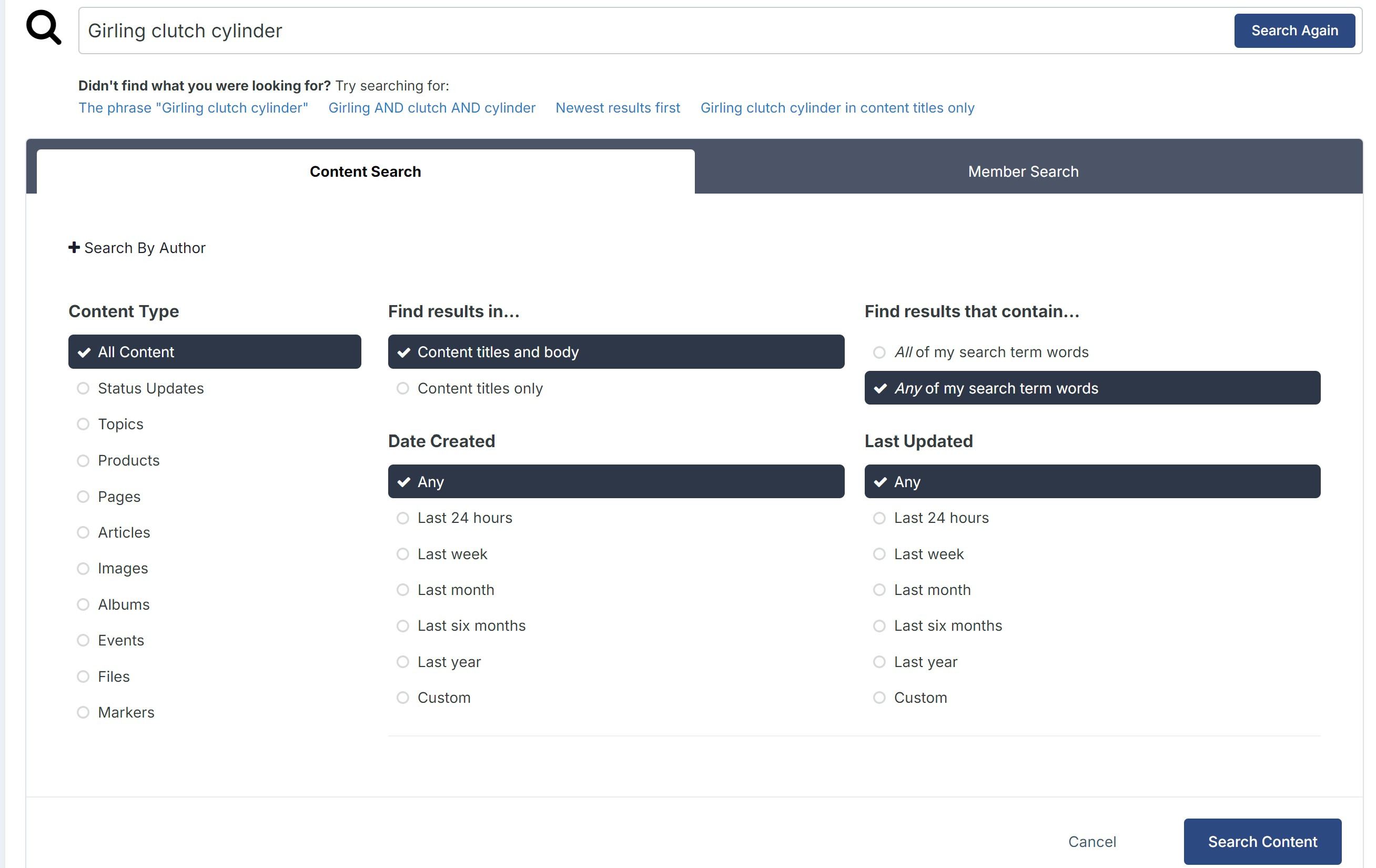
Forum Search Question - how to narrow a search?
JohnCh replied to Darcy's topic in General Sevens Discussion
Thanks @Vovchandr. @Darcy you can also click on +More search options to gain additional filters, or do a targeted site search using your preferred search engine.
-
It's hard to tell from that photo, but I wonder if it could have been done to increase clearance to an older wheel rim? A wide 13" wheel can get a little tight in that area.
-
@Barbosa please read through this thread and particularly the post linked below. You are a new user joining from Europe expressly for the purpose of accessing this sensitive information. You will need to provide proof that you're legit. Providing the immobilizer information to anyone who shows up here and asks is not that much different than simply posting it for anyone to see.
-
@gde31ff see this ad @rcollum just posted. If decent rubber is still available in 14" fitment, these are a much better option than new tires for your 16" wagon wheels, and at the price (free for pick up), they might be worth the drive:
-
Attention @Vovchandr, a new quote to add to your signature.
-
Good thread on bonnet and nose cone solutions below. For my bonnet, I'm using wooden arms on folding shelf brackets that store flat against the wall when not in use.
-
WTB - Wheels that are NOT Prisoner OR Wagon
JohnCh replied to gde31ff's topic in Parts For Sale / Wanted
There is a big difference in driving dynamics between the 15" and 13". Even going from 14" to 13" on my old Westfield was eye opening. Unless you have ride height issues or are simply unwilling to live with the limited tire options for the smaller wheel, get the 13". -
The Regular Summary of Classified Ads of Se7ens Found For Sale
JohnCh replied to Croc's topic in Cars For Sale
@gde31ff I was surprised that car went for so little. Provided there are no nasty surprises, it appears you got a great deal with plenty of upgrade potential. Don't forget to start a build thread when you begin digging into it. -
Soft Bits makes great products, but for various reasons, their supply and communication process can be quite leisurely -- sadly, the communication issue is a common refrain with many of the UK vendors who support our hobby. My Long Nose Shower Cap took over three months from order to shipment. My best advice when working with any small UK vendor is to be persistent with email and supplement with phone call attempts. Eventually one of those will get through and generate a response. If you do give up on Soft Bits, check with Caterham to make sure they don't have a half hood in stock. The website isn't always accurate from that perspective. Also, call some of the US dealers. Josh at Rocky Mountain and Bruce at Beachman Racing both stock a fair number of parts. One of them may just have a half hood in their inventory.
-
Driver Safety Gear for Time Trials and USA7s@NJMP
JohnCh replied to savagete2860's topic in General Tech
Sometimes I really love AI.
-
Looks great @hahuang65 I'm moving this thread into the 3D printing forum to keep posts on that subject together.
-
Driver Safety Gear for Time Trials and USA7s@NJMP
JohnCh replied to savagete2860's topic in General Tech
Another vote for the Schroth ASM FE. An additional benefit is they allow you to not only get the lap adjustment buckle quite close to the cam lock -- helpful if you have the composite seats -- but you can configure the lap belts as either pull up or pull down. I like pull down on the driver's side because it positions the excess belt material off my lap and I rarely need to adjust them. However, for the passenger side I like the pull up configuration, since I usually have to belt in newbies, and it's much easier to do that from outside the car with the pull up orientation than trying to explain to them how to do it themselves with the pull down style. -
For what it's worth, the 123 works great and is comparatively very quick and easy to install. The 3D ignition setup requires a trigger wheel on the crank pulley, a CPS with a bracket to fit the Kent block, a plug for the removed distributor, a coil pack, a bracket to affix the coil pack, a TPS with bracket that works with DCOEs, and then wiring everything together. In theory most of those installation parts are available in the UK, but I ran into some significant issues sourcing some of them and ultimately ended up making quite a few myself and outsourcing the crank and trigger wheel to a local shop to weld and true on a lathe. Hopefully it will all work.
-
@stevehello, please see the help guides, which cover how to use various aspects of the forum, including how to reply: https://usa7s.net/ips/articles.html/forum-help-guides/ If you have any questions or run into any issues, send me a PM and I'll try to assist (and yes, the help guides also cover how to send PMs )
-
The Regular Summary of Classified Ads of Se7ens Found For Sale
JohnCh replied to Croc's topic in Cars For Sale
My condolences. It doesn't get any better the further you get into it. I also drew the line on replacing the ECU with an Emerald for similar reasons. Wiring issues are common enough on new builds that I was concerned I'd be chasing an issue I thought I caused, which was really a fault of the factory harness. As much as I dislike the MBE, I don't regret that decision, but like I said, I have a feeling I will eventually regret leaving the LSD untouched. -
The Regular Summary of Classified Ads of Se7ens Found For Sale
JohnCh replied to Croc's topic in Cars For Sale
I strongly considered doing this with my car, but ultimately decided I didn't want to have the opportunity for finger pointing by Caterham if the remaining innards of the diff had any issues. When it comes time to replace mine, I am sure I will rue that earlier decision. -
The Nodiz is replacing a 123 Ignition in the removed Stromberg engine. Unfortunately, that doesn't do logging, so you would need something dedicated. The data logging on the Nodiz is straightforward. ME makes several ECUs for injected cars, and use the same software across the board, which includes data logging. The big difference with the Nodiz is that a relatively recent update removed the native AFR logging functionality. Previously you could input the calibration chart that correlated output voltage to specific AFR values, and it would store the latter for the data logs. Now, it just logs the voltage. Apparently, the logs are easily exported to Excel and the conversion can be done there. Sadly, I'm probably at least a month away from trying that out.