

CarlB
-
Posts
515 -
Joined
Content Type
Profiles
Forums
Store
Articles
Gallery
Events
Library
Everything posted by CarlB
-
I have one of there radiators as well and am very happy
-
There are lots of places on the web that tell you how to mount harnesses. You are correct the single crotch belt is mounted forward and the double one is mounted to the rear. I have not seen any place that says how the belt should be secured. The SCCA is not very specific. They allow belts to be attached to the floor if a large diameter washer or backing is used. My submarine belts are mounted with 1/8 inch aluminum plates top and bottom that are 4 inches long and 3 inches wide, as well as big steel bumper washers.
-
Thank you very much for the great pictures Croc.
-
You might want to look at this site. You have a replica of a Lotus and can title the car as a replica. https://www.dmv.virginia.gov/vehicles/reconstructed.html#:~:text=Every person who owns a reconstructed vehicle%2C specially,vehicle must be shown on the Virginia title. If you title as a 1962 Lotus there aren't any emissions and the safety equipment only has to match what was on the car originally.
-
Welcome to the Forum. I haven't been to many Cars & Coffee events but do enjoy them. I am not much of a early riser and my car isn't tagged. I live in Fairfax and it looks like we have several new owners in the DC area.
-
The Miata my be less trouble but nothing is more fun than a 7. Glad to hear you are thinking of keeping the car.
-
I can only second what John B has already said. What a great event! I was thrilled to finally get on track. I would encourage anyone on the forum who might not want to drive on track to come. This is a really fun event and you will meet some great people. I apologize to Kitcat for holding you up. However if the result is you keep your car, you will make all of us happy you can come out and play.
-

2021 Annual USA7s Event with NJMP Drivers Club - September 19/20
CarlB replied to Croc's topic in National Events
Thanks Croc -
2021 Annual USA7s Event with NJMP Drivers Club - September 19/20
CarlB replied to Croc's topic in National Events
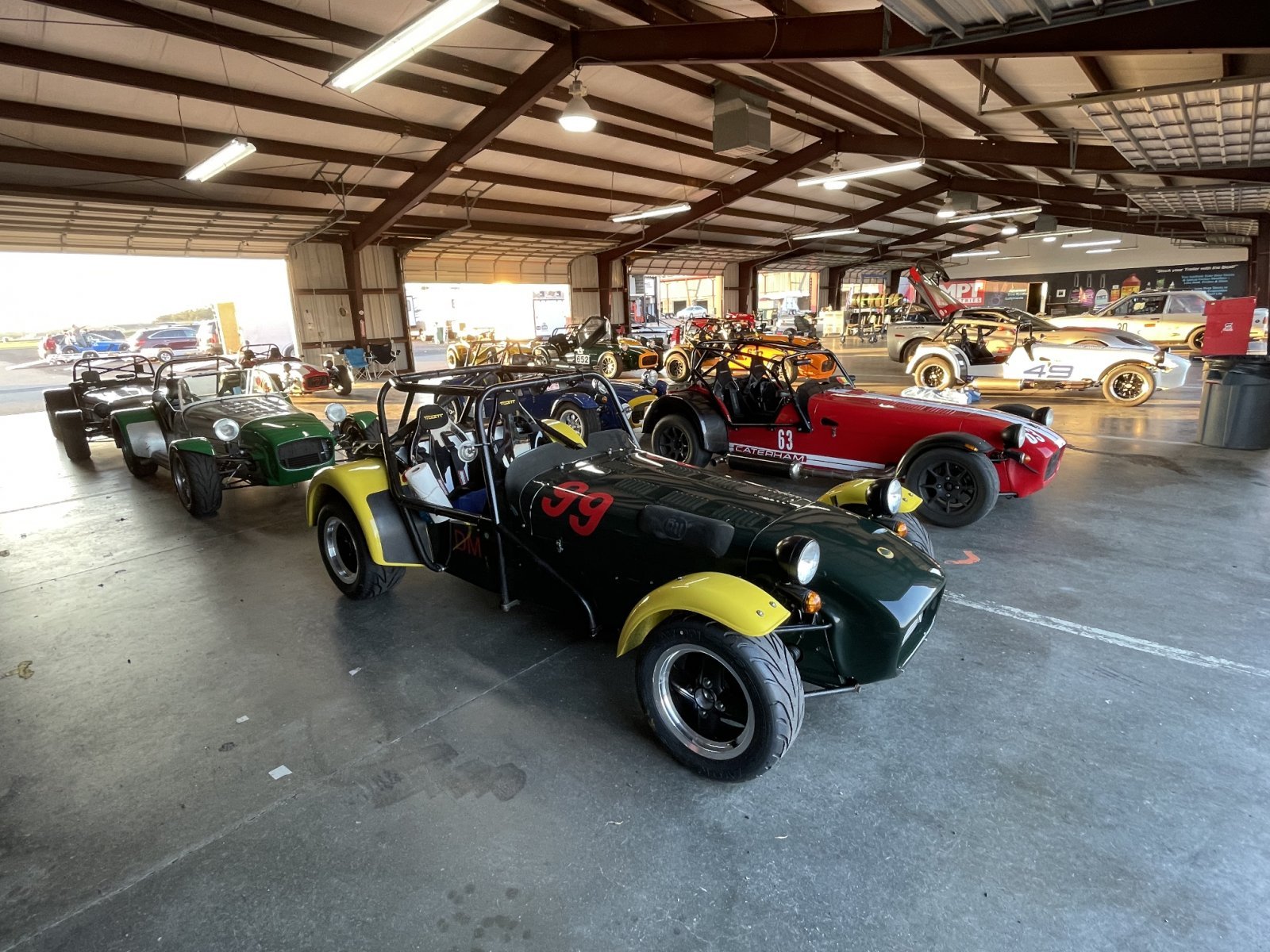
I forgot to ask. Will we be able to keep our cars in the garage or should I bring a pop up!? -
2021 Annual USA7s Event with NJMP Drivers Club - September 19/20
CarlB replied to Croc's topic in National Events
I got my clutch done and will finally make one of these great events. Vovchandr I understand your frustration. Last year I did not finish re-wiring my car in time. I look forward to seeing everyone and hopefully your car will run or can be fixed. -
If you do not have a stone, you can use a file and sandpaper. The file is flat.
-
Fingers crossed
-
Once upon a time a long time ago I was a Goodyear Race Tire Dealer. As a dealer we were given training by Goodyear and in my case Penske tire my distributor. The Track tire guy is correct about heat cycling tires. They have to be run on the car. Heat cycling tires makes them harder. If the car is getting the tire close to the temperature the compound will over heat, waiting makes the tire harder and stand up to the car better. If you follow Indy Car they talk about using scuff tires or new tires. The performance of a scuff might be better if the compound is slightly too soft. 3500 Pound stock cars with relatively skinny tires put sticker tires on and do not beak them in. They sometimes use scuffs. Putting a few laps with a cool down on new tires is a good idea, but if you can't it isn't a big deal. the break in gets the surface scuffed up so it will grip. It gives the driver a opportunity to make sure there isn't anything wrong, and it gasses some of the solvents used in the manufacturing. Even Hoosier's softest compound R25B doesn't get worked hard on our cars. Give them a slow warm up a few laps and a cool down. Inspect them to make sure everything is good and go out in the next session ready to go fast.
-
Thank you all for replying. I hope I have a solution on the way. I think I have a fix if it doesn't, I will make it work. Bruce Beachman is going through the same thing with a customer car. I am reasonably confident the slave cylinder (throw out bearing) was depressing the clutch in the static position. Kit Cat had a old post about getting a clutch from Clutch Masters and they were very helpful. Zetec cars came with a clutch used in the Focus ZX3. This is a 9 inch clutch and the finger height is different than what the stock replacement clutch people are selling now. The current replacement is a 9 1/2 inch clutch. Clutch Masters seemed to know the difference and were easy to work with. I should have the clutch Monday. I now know how much the clutch should push the clutch in and will make the measurements so I am confident the clutch is fully released before I put the car back together. If there is a issue, I learned a long time ago you can't work on a car without a lathe, a mill, a mig welder, and a tig welder. That aluminum plate the slave cylinder mounts to will get changed so the slave cylinder works. I want to thank Kit Cat and Vovchandr for there help. I have spoken to a number of people about this and will post a lot of information about this once I am confident of the solution. Bruce Beachman is a really good resource. He is trying to come up with the elegant solution. I want to get to NJMP. He is trying to find the parts used in the original design, so there isn't any need to make custom parts. My car is a very early if not the first Zetec car built. The car Bruce is working on is one that came with the SVT engine. The car Bruce is working on is original and it has the same Fidanza flywheel my car has. The SVT cars did not use the larger clutches the SVT Focus used.

-
I have a 1999 Zetec S-3 and broke the clutch at VIR. I contacted the clutch pressure plate manufacturer (LUK) and they told me the part number from the numbers on the pressure plate. When I got the new clutch it was 9 1/2 inches and the old one was 9 inches. LUK said it was superseded and it did bolt on. When I got it all together it was slipping badly. It appears the throw out bearing isn't letting the clutch engage completely. I am desperate to make it to NJMP!! Any help or good people to speak to would be greatly appreciated.
-
My Granddaughter goes to collage in Richmond. Unfortunately she is just getting back to school and can't go get the parts. JohnCh found some lash caps that are close. Speak to your machinist, he may be able to adjust the valve clearance by grinding the tips of the valves. This is a standard operation to adjust valve clearance. The issue would be if the valve tips stick up high enough from the spring retainers so the bucket tappet does not contact the retainer.
-
It is 150 miles from my house. How bad do you need someone to go down there?
-
XFlow randomly stops running, why and how to fix?
CarlB replied to TexasDreamer's topic in General Tech
You have a loose connection or broken wire that is disconnecting intermittently would be my guess and where I would look first. If everything goes dead start at the battery and check all the connections. Pay special attention to the ignition switch. If you are only loosing power to the engine, check all the wiring in the ignition system. -
You might want to sit in a car with the S-3 leather seats. They do not have sides and I think they are very comfortable. Cutting the Tillett seats apart would be very difficult. A lot of the strength is in the rolled edges and you would need to be very careful to maintain the strength.
-
I have the Kit Car Direct stone guards and I do like them, but I have a suggestion and I also had a issue. One was a prefect match for the stainless steel one that came off. The other side of the car was a different shape and I had to trim the carbon one. It wasn't hard. I used a cut off wheel. Be sure to cover up so you do not get carbon fibers on or in you. The other thing I would do differently is have them clear coated. That should stop the things that look like water spots. I do not think they are clear coated.
-
Hope it fits without cutting.
-
I have done it on my car. here are some pictures. When I got my car it came with a Newton Aero 300 cap and flange. I did not get the angled neck and had to make my own. To enlarge the opening to go from the Rover fuel neck I used a nibbler. I taped up the opening and determined the center. Then I drew a circle and cut it out. Once the flange fit I use the flange to locate the bolt holes.
-
Someone put different tappets in your engine. The Ford tappets do not use caps on the valves to adjust the clearance.
-
I got my car from someone who lives in Maryland. I think you can tag the car as a replica. You might want to check Maryland law. If you tell them that it is a replica of a 1965 Lotus it is my understanding that there isn't any emission testing and very little safety inspection requirements. I live in Virginia and while my car isn't tagged yet, Virginia has a similar law. Hope you are coming to the USA-7 Event at MJMP. Even if you do not drive it is fun to see all the cars and meet people.
-
Had not seen the Ford video before writing my comments above. I would still mill the head and check everything with a strait edge. Croc's block cleaning method will work better at removing rust. You can do it a home with a battery charge and a tank of water.

