MV8
-
Posts
2,303 -
Joined
Content Type
Profiles
Forums
Store
Articles
Gallery
Events
Library
Everything posted by MV8
-
Makes sense. One to tinker/mod/repair and the other ready to go at any time. Some insurance companies support carrying a policy on both but alternating coverage/payments which is parked for six months. Coverage is not dropped and reported to dmv so no fine.
-
What was the advantage to ordering from the dealer's website instead of directly from Cat's website?
-
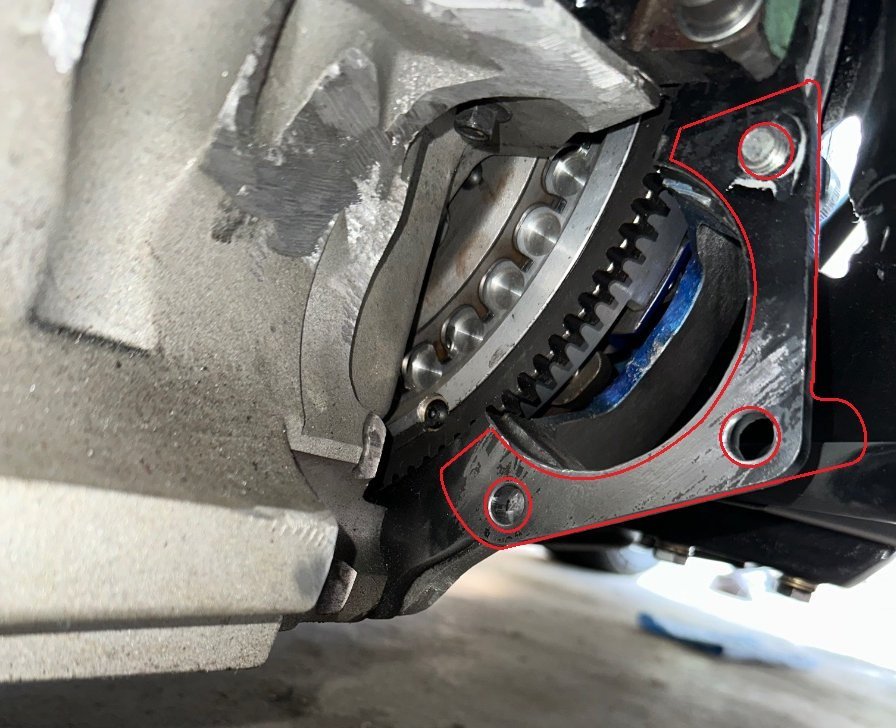
Understood 7westfield. I cross referenced and found this fitment to be a common starter for newer ford vehicle applications with up to 1.4kw output, gear reduction, permanent magnet units. I expect the same same diameter but longer. Mahle is generally industrial and commercial applications. Doesn't sound like you need a new starter though but good to know it is available domestically for around $50. The starter application includes a 2000 Ford Ranger 3.0l v6. You can also check clearance by pulling a sheet of paper between the installed starter and the block. The starter shim would look like this with a thumb tab to make it easier to hold during installation. More material can be removed from the block if needed for clearance.

-
I see you have marks on the flywheel ring gear from contact with the old starter gear. I also see where the engine block was ground away for starter clearance. Fabricated starter mount plates can have machining errors or generally sloppy enough to make things work properly. There are several things to check. Post pictures of the new starter gear , ring gear (where it can be seen through the starter window), and starter installed to show clearances. It could be the block was not ground enough for starter clearance. Ensure there is clearance between the engine block and the starter. Make the bolts finger tight, then you should still be able to rock the starter body back and forth on the mount plate a little. You should be able to rock it toward the block with the bolts slightly loose. If you cannot tell if there is clearance to the block, Use some play doh/ plasticine/ soft modeling clay on the block or starter, install the starter, then remove and look at the clay to see how thin it was squeezed out. Following on 7Wesfields suggestion, washers are typically too thick to keep the tooth engagement optimum, inconsistent in thickness, and so small in od that they don't evenly load the starter mounting flange. Take a sheet of paper and hold it over the starter mount flange with the edge up against the flywheel. Using a pencil or rub with your thumb over the sharp edges of the mount flange and bolt holes so they show on the paper. Cut the paper down to be a half circle shim. Cut out the holes with a hammer punch set (on ebay for gasket making and crafts). Trace the paper on to a cereal box. Make several tracings to make three shims out of the kraft paper that are flat (not burred up from cutting technique). Try different amounts of shim until the problem goes away, remove, measure the thickness with a six inch dial caliper (ebay for about $20) or take it to a machine shop to make your shim. I think an .050" sheet steel shim would be fine. You can buy the steel from home depot but it will need painting. You can also scan (not a pic-use a photo copier) the paper pattern and I will make you a couple .050" steel shims. It looks to be an 80s ford powered skidsteer/ 78-80 ford fiesta starter.
-
JB, moving the pedals and adjusting will not cause engine failure. It is true that a fork stop will limit crank travel from the release bearing through the pressure plate and extend service to an engine with worn thrust bearings. Bottoming of the release bearing against the crank won't occur with a pushrod adjustment when the problem is that the pedal is hitting the firewall before it can move enough fluid to release the clutch. When thrust bearings wear too thin, the shoulder of the crank (where the machining for flats to drive the slide-on oil pump ends) can be pushed too far forward, loading the very hard/brittle pump gear. Thrust bearing wear can be checked without engine tear down or removal by pushing the crank rearward in the block with a lever/screw driver, setting a dial indicator, then pressing the clutch pedal.
-
Use a deep socket and 1/4 drive to snug the clamps. I would expect to see slight indentation on the hose from the clamp band edge. If you need better clamps to fully tighten without stripping the clamp, I recommend Breeze brand clamps with a plated steel screw and stainless band. Order the size based on the outside diameter of the hose.
-

HELP! Rear-ended and shoved into the car in front of me :-(
MV8 replied to werthie's topic in Parts For Sale / Wanted
Werthie, it sounds like a minor repair. If it were in pieces with a little missing, it can still be repaired by someone with fiberglass experience. You might try a boat repair shop or a place that sells fiberglass parts or yellow pages under fiberglass. Personally, I'd make a mold after repairing so I could make them from scratch in the future. -
If the distance to the alignment shop is under 5 miles, I suggest a quick string check of the toe and sight down the side of the car on each side to look at the camber being the same for each side. Excess toe and obviously off camber will quickly feather and taper wear the tires.
-
Sorry to hear that. IMHO, all the shippers have similar issues. Curious as to what sort of part is not replaceable in this day and age. I cannot think of anything that cannot be made to at least appear original.
-
I agree about the 45d distributor with mag pickup would not work with the tach you have. I was just looking at potential caps. There is a side terminal cap for old ford tractors but I don't know that it would fit your distributor.
-
Looks like a special Lucas 45D cap and distributor to go on fords. The cap is supposed to be compatible with screws or clips but I don't know that it would fit the ford body and rotor. https://www.totalkitcar.com/2020/01/23/crossflow-distribution/
-
I recall something about a volvo cap with the terminals on the side. Have to do some research.
-
Impressive articles. For your link to work, add an "s" for secure https. The problem is the gen 1 tach is counting amperage fluctuation instead of voltage oscillation and electronics don't use enough current for the tach transformer to function. I suppose a common high speed switching micro relay could be switched using a jumper off the coil negative wire. The relay would have a resistor sized to provide just enough amps with 14.2vdc applied. Possibly a big transistor but I think the amps would be too much for it. I've not researched it; just for the sake of discussion.
-
I would have been tempted to swap in smaller chokes, giving up having near zero vacuum at WOT at 6000 for better part throttle operation covering 90% of normal driving. One could look at a typically combo with the smaller chokes as a starting point. You could get new chokes of your choice for about $150 shipped on ebay from Italy (not counting tariffs). Czech Republic has insane shipping.
-
There are many types of electronic ignitions and configurations. Perhaps you could share the article? It doesn't seem likely to be incompatible if the ignition is not multiple discharge, capacitive, or multi-coil.
-
Ride height looks good to me for unloaded. A silica blanket wrapping the muffler under the guard with phenolic washers would help to reduce the guard temp.
-
A slightly larger bore clutch master or smaller bore clutch slave would bring the release point away from the firewall. You may also be able to fit/adjust the pushrod to be longer if the pedal can start the swing further aft.
-
Remove the regulator.
-
You're funny. I wonder which cheese has the highest tensile strength? Grade 5 should be easy to find. Here are grade 8s (10.9 metric equivalent but they may have metric as well): https://www.mcmaster.com/products/screws/carriage-bolts-2~/high-strength-grade-8-steel-square-neck-carriage-bolts~~/
-
The speedwaymotors sliders have square holes so the carriage bolts don't turn. Easy to make tabs or stops to keep normal bolts from turning in the cat sliders.
-
Under what conditions is the psi increasing? How much? How are you checking it? Which holley regulator are you running (they all look about the same). What part numbers did you change? Was it running well before? Might try 115 if not running ethanol. Cat or not has nothing to do with it. You can run a single wide band.
-
Yes on both counts.........
-
Hydraulic brake light switch like the old VW Bugs and outside the (pedal) box. I think the throttle light switch is some sort of "gas-lighting"?
-
What makes you think the jetting is incorrect? If burning ethanol mix, it is helping offset the altitude. I suggest setting them the same based on a single wide band sensor. You can check pipe temps individually with a laser, water bottle, or run egt probes in the primaries and temp fit four gauges under the dash.