MV8
-
Posts
2,303 -
Joined
Content Type
Profiles
Forums
Store
Articles
Gallery
Events
Library
Everything posted by MV8
-
Pics, an '03 owners manual, assembly manual, and the model of pectel would help. I expect the fuel pump relay to be in a bank behind the dash panel that also contains a row of fuses that include the fuel pump fuse. I expect the fuel pump to be either in tank or within a foot of the tank and the filter near the pump. I expect an oil pressure switch (typically three terminals) is being used to keep the fuel pump on when the engine is running. This alone would result in a longer than typical crank period before the engine will start. An older oem ecu typically runs the fuel pump for a few seconds when the key is turned to run/start to prime for cranking to supplement oil pressure. This could also be done with a momentary "Prime" button where the relay switches the pump on when pressed and does not need to go through the key switch. Another, more complicated way is to power the relay through an isolated contact (to prevent back feeding) when the key is in the "start" position. There are many ways to do this.
-
Never use copper line. Nickel-copper is the good stuff. You could use galvanized or epoxied steel that are preassembled with fittings as they are much more difficult to flare with hand tools. You local parts store stocks them in the back in various lentghs from about a foot to six feet long with an assortment of fittings and line diameters. They also have the "nicopp" line in coils and looks traditional. That is what I'd use with the original fittings. Beware of copper looking brake line coils from China sold on ebay. Unlikely to have any nickel content. AGS is a good mfg for brake lines and fittings.
-
I'm thinking of newer models that used the bracket but have the plastic reservoir master from an oem donor that was not offered here, with a dual circuit and a seal to keep the brake fluid from being exposed to air and absorbing moisture. The top and bottom mounting stud arrangement is 90 degrees from most oems. A piece made to adapt a common, 90s aluminum and plastic domestic master would be an improvement and easier to find in the future or retrofit. Wilwood has masters with these features with a side by side bolt pattern.
-
If they run out of replacements, It could be sand cast or fabbed with the original as a pattern or scan to go by or modded to fit an easier to find master cylinder. I don't know if the original brkt material could be repaired by welding or brazing.
-
Does the pedal pivot shaft float or is it retained in some way to the housing? A 3d scan might be a good idea.
-
I'm also curious about the issues you having with the webers. I don't know any mechs in your area. Could also switch to a simpler induction with a single dcoe or downdraft intake and carb (with the lotus scoop for air cleaner clearance). Another option is an oem style plenum intake made to fit the kent with injector bosses for a fuel rail and a standard throttle body at the rear instead of four throttle bodies.
-
Jenvey is only one supplier of DCOE flanged ITBs but they are much more expensive. It is less work to tune your carbs than to convert and tune (using carb tuning skills with the key board). This guy had a base map from a fellow enthusiast to get a big head start. 911 but essentially the same process: https://pcaucr.org/2019/12/diy-webers-to-efi-conversion/
-
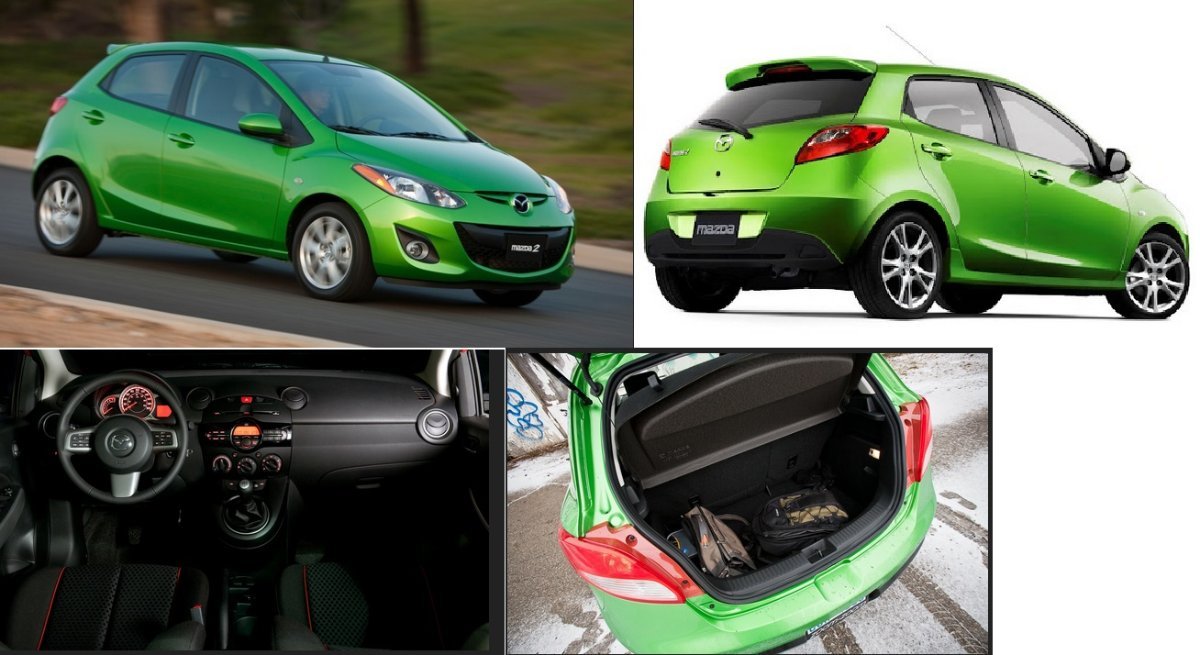
Where to begin... I bought the older Mazda2 2nd gen (07-14) to replace my last mazda econobox which had over 350k miles and was still going strong when it was totaled last year. It is a very basic car, with rear drums, traditional one-piece flywheel (versus dual mass), a clutch slave instead of a hydraulic release bearing, schematics are available, timing chain versus belt, etc. Think of it like a '90s Mazda 323 (funny that the wheels will interchange). It is so basic, it has no temp gauge; just a blue led for when it is cold and a red led for when it is too hot. Yes, I will be adding a gauge for personal comfort but the point is, it is basic, efficient transportation. However, my wife took it almost immediately, so I am driving the 30+ year old Mazda 323. I don't know anything about the 2015 and newer models.

-
Congrats! https://lowflying.lotus7.club/2001/2001_06_Jun.pdf
-

Purge valve and vapor canister for 2.0 Zetec?
MV8 replied to AccidentalSeven's topic in General Tech
Is this it? New Bosch in California for $52 on ebay: https://www.ebay.com/itm/323692756597?_trkparms=amclksrc%3DITM%26aid%3D777008%26algo%3DPERSONAL.TOPIC%26ao%3D1%26asc%3D20240131095853%26meid%3D66ca030562a4478da4c2f90090075ffb%26pid%3D101949%26rk%3D1%26rkt%3D1%26itm%3D323692756597%26pmt%3D1%26noa%3D1%26pg%3D4375194%26algv%3DRecentlyViewedItemsV2WithMLRPbooster_BP%26brand%3DOEM&_trksid=p4375194.c101949.m162918&_trkparms=parentrq%3A336ff7761940a47ec9ce375effffb18c|pageci%3A594146de-caeb-11ef-8b8d-3e3245280276|iid%3A1|vlpname%3Avlp_homepage -
Purge valve and vapor canister for 2.0 Zetec?
MV8 replied to AccidentalSeven's topic in General Tech
Why adapt when the part is available on this side of the pond? Maybe the hose is split or it isn't plugged in. It is just a two-wire solenoid like most everything back then. -
Mazda 2/Demio 5 spd.
-
If it were a clutch type LS, a friction modifier additive would be needed. Otherwise, you can use the normal diff oil. I'm guessing it has a Quaife ATB. You can check with a $20 usb probe camera through the filler (they have a built in adjustable brightness light). They went to BMW diffs around 2010. Prior to that, all are supposed to be 7". Probably a 3.62 or 3.92 ratio but ratios from 3.14 to 4.70 are also available.
-
I'd use a couple drops of superglue to close the cut. The cut can be seen in the other topic about these seats.
-
There are some like the aquastrip that say they are safe for gelcoat. Short of that, the newer "safe" strippers would probably not damage polyester and a heat gun with a hard plastic scraper may get enough of it off to sand the rest.
-
That's why I didn't say anything. If there is much room between the bonnet and engine, you could close that with spacers on the engine mounts then if needed, tweak the driveshaft ujoint angles by shimming the trans up. A small mirror and a $13 digital protractor would be useful for that. If you search on this site, there was a skid plate that was offered around 2010 that looked well designed. Some good pics so easy to have it replicated in 1/8" plate.
-
Out of those sizes, the 215-55 is the best fit for a 7 inch wide rim. It is more difficult for the tire shop to seat the bead when the rim is at the fringe of tire fitment as the tire does not put any pressure against the wheel bead unless rapidly inflated or a rubber ring tool is used. Also, if hitting a pot hole, it is less likely to have a bead come off the seat when operated at 18 or so psi due to the great side wall. The area of the side wall is a like a piston with 18psi pushing against it to keep it seated and the rim from slipping on the tire from braking or accel for a rear tire. Assuming the coilovers are height adjustable, for fitting, reset and align the suspension for the needed clearance to experience the change in handling. Bigger tires are heavier, so you may want to increase damping if it is adjustable. The big wheels look fantastic but there are trade offs.
-
A turbo or belt driven is more efficient overall. This would require a large high output alternator and limited use. Alternators are rated for peak, brief output levels. There is much heat loss in generating and then using the amps required. The engine load from the alt would need to be ramped up so no sudden full boost without some sort of load buffer. An alternator sized for this would be large and isolated/separate from sensitive electronics normally used on efi vehicles. A turbo uses the heat that would be wasted and offsets the need for a muffler restriction where this is entirely parasitic like a belt driven blower but with blow off valves, the output, load can be increased immediately by closing the bypass valve.
-
Aquastrip is about a third of the price, available locally, and safe for gel coat. https://www.homedepot.com/p/Aqua-Strip-1-gal-Safe-Marine-Paint-and-Varnish-Remover-650G1/203112317
-
I'm not surprised it has graduated to the only recommendation. The engine mfg specifies (usually whatever weight was used for certification). Some engines can tolerate other oil weights but there is a best weight for conditions.
-
Dstb, I did not intend to confuse you. Use whatever oil you want. Croc, was there a reason/issue for making the recommendation to correct something? it would be interesting to hear how a person at Cosworth (or anywhere) can support that over using the correct viscosity.
-
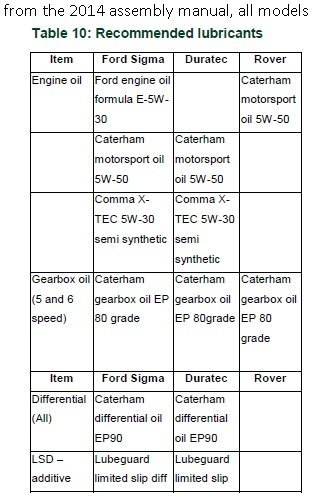
In a nut shell, run the oil viscosity the engine was designed to run. If pressure is dropping, change it more often, with better oil, or run a water/oil cooler sandwich. Here is a clipped image from the assembly manual. Yes they suggest that you buy their product (necessary for the rover engine) for use in other engines. No, there would not necessarily be any immediate problem obvious to a driver. Engines are designed for a specific viscosity at (oil not coolant temp which is lower) operating temp 100c/212f. At this oil temp, the correct oil viscosity results in the least amount of wear. There is a pressure bypass valve that allows the oil to bypass the oil filter when the oil is too thick due to oil temp, oil viscosity, and pump rpm. This is why an engine should be warmed up before being heavily loaded. The rover is designed to run 5w50. The duratec is not, so it will bypass more oil around the filter under all conditions. The bypass is a safety to prevent damage. A racing engine typically has the bypass blocked off and is gently warmed to operating temp by running without load or pumping warm fluid through it. Adding a dry sump or oil cooler typically lowers oil temp so the oil viscosity should be considered. Without an oil temp gauge, a good indication the oil is getting too hot is some pressure fall off as the oil change interval approaches, so a better oil or a cooler should be considered, not necessarily thicker oil. A worn engine that does not have adequate oil pressure can continue to be operated by using a thicker oil but it is still a compromise. Black oil is not "burned". Exposure to air over time will darken the oil. Dark does not mean the oil must be changed.
-
I hope he didn't put 5w50 in a duratec.
-
Also a good idea with vinyl to use a hole saw to port the wood backing here and there, to prevent damage from a person jumping in so the air in the foam has an exit versus ballooning the cover. For a more secure back, there are nut inserts for wood that go in from the foam side to accept a #12 screw and fender washer. Just need to ensure the screw is just long enough for the threads to be flush with the nut when tight.
-
'Tis the (upgrade) season! What are you doing?
MV8 replied to JohnCh's topic in General Sevens Discussion
There are too many different types of spherical bearings and conditions to limit lubrication to those with fittings. I'd use an aerosol lithium on the bearings and springs or you could just periodically use wd40 to clean and penetrate. Overspray of either will not hurt anything. I'd use dry graphite with a cable lubing tool on the throttle cable if it has not been previously lubed with grease. Dry lube is very messy and watery while the propellant evaporates to leave the graphite. Sounds like the dual spring is a good idea. May be the typical dual carb springs (dual in case one ever breaks). I'd also look in the throats to look for shiny areas inside where the butterflies may be rubbing on the bottom from the weight of the linkage on the outside.