MV8
-
Posts
2,303 -
Joined
Content Type
Profiles
Forums
Store
Articles
Gallery
Events
Library
Everything posted by MV8
-
There are two different metal pump impeller designs. One is cast iron and closed toward the block, the other is stamped steel with a semi-open face. Both have straight blades. I think the stamped version has more volume (cast iron version must be thicker) but the open face between blades reduces the efficiency. Most likely the most efficient would be stamped with a welded plate to close the openings between the blades on the block side. A slightly smaller pump pulley would work too.
-
You said it "Overheats very quickly". Under what conditions (closed garage idling a 1/2 hour, driving, etc)? Is it really overheating? Test the gauge and sender. Does the cooling fan come on? If it does, does the temp gauge jump higher at the same time? The replacement pumps are for higher output and displacement so I don't see a need for a more efficient pump with standard ratio pulleys. I don't think you've ever posted a photo of the engine.
-
Is there much differential temp when feeling the upper and lower radiator hoses? What else was done besides radiator work to prepare the cooling system after sitting 30 years (dry)? The radiator and head gasket act as filters to catch contaminants and will clog, restricting flow. If nothing else was done, I would expect to replace the head gasket, the coolant pump (due to bearing seals), the freeze plugs (for cleaning out the crevices with a screwdriver), and the hoses (look for cracks inside the ends when squeezed; hoses should be soft), and back flush the radiator off the car (better than not trying through it may be fine).
-
51516 is equiv to the 400s which is too long to start on to the threads. I would not run sl7098 for the reasons you mentioned. 51068 is a better choice than 51348 if it is short enough to start on the threads. It should have more filter media surface area for a longer life between oil changes.
-
Since I don't know the history, aside from normal troubleshooting, I'd clear the codes then note when/if they reappear and check right after they do. Each error has a number. "Fuel volume regulator" sounds like a p0003 for direct injected engines that have an engine driven high pressure pump as well as a typical pump in the tank and a inline filter between them. The sensor would be integral to the engine pump.
-
Dash control module.
-
I had an offline discussion about this about a year ago. I found that a wix 51348 is a suitable replacement for an FL400S that is about 3.5 inches long but otherwise the same filter (8-11psi bypass, anti-drain valve, full flow, etc). A chrome version is available from wix as this filter is used on some harley motorcycles, as well as many late model Toyota, Lexus, Dodge, Jeep, etc. 51394 also has an 8-11psi bypass and anti-drain valve and a smaller filter typically should be replaced at shorter intervals than the standard filter, even if the oil is not due to be changed. The filter bypass keeps the filter from over-pressurizing/ballooning but the block bypass may bypass the filter when the engine is cold or thicker oils are used or higher volume and pressure pumps, etc . Race engine builders in general often block the filter bypass but use stronger pump drives and restraint in operation during warm up.
-
Maybe it just needs eccentric dowels to correct?
-
Probably need to mod your sump for starter clearance. The T9 to zetec with high mount starter is for the euro SE where the intake is on the opposite side from the domestic zetec. The SE are also smaller displacements of 1.7L or less.
-

The Regular Summary of Classified Ads of Se7ens Found For Sale
MV8 replied to Croc's topic in Cars For Sale
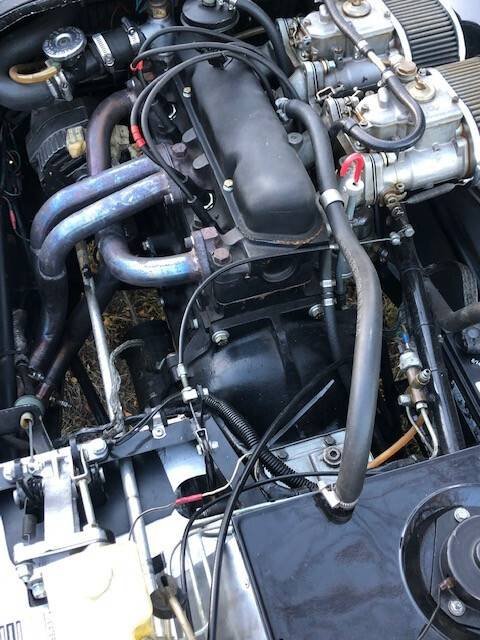
Looks very practical and well done for regular use. Carbs have the choke cable set up. Most everything is well routed. Not crazy about the fuel pump fitment. Could probably use new rubber fuel lines everywhere. The parking brake cable routing seems off but functional. Interesting custom air box for the carbs. Plenty of header to steering shaft and alternator clearance. No heater. Good engine to bonnet clearance. Looks to have plenty of suspension travel at the rear for a good ride. The side exhaust could be much higher for better ground clearance. -
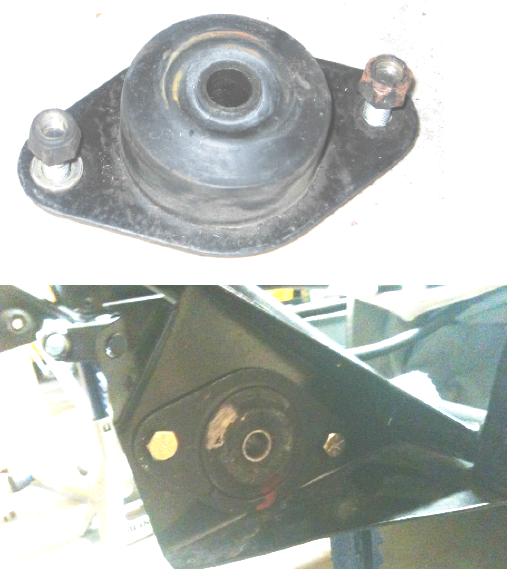
What is the reference for that number? S4 rear suspension link bushes are 636x2 (rear of upper links), Y9x10, and 6000x2 bolt on to the chassis (also used on the Esprit).
-
I'm confused because minisplit don't have ducts, just an air handler/evaporator for each space. Why can't you have ducts in the attic or along outside corners of a low ceiling? Don't forget the vapor barrier for condensation control and another layer of insulation to reduce it. Hip roof can have exhaust fans, continuous ridge vent exhaust, and fully open/screened/perforated soffits to pull ambient into roof. Build second floor, but stay downstairs or bury house a few feet would be the most efficient way.
-
A diagonal from above the upper hinge forming a sort of quarter window frame would help to replace the support lost by cutting out the upper window frame. A new frame with more cross-section through the hinge area could be locally reupholstered using the original doors as a pattern, with no diagonal. A fabricator and upholsterer should not need the car to prototype; just the doors if they don't bend to fit when installed since the new ones will likely be stiffer. Have them make a few sets for lower cost per unit and sell the others.
-
You could add joints and a support hanging off the chassis but the best fix is to make a header that fits between the slip joints and the head flange. Until then, I'd dimple the tubes as needed. You may not notice any difference in performance.
-
Road wheel torque for 12mm lug nuts on 1700 Super Sprint?
MV8 replied to pethier's topic in General Tech
If the hubs are just a spitfire design machined for M12 (reduced edge distance and no thicker flange), I'd be concerned about going to 80 ftlbs. -
I'll assume your car is no different from other S3 cross-flows I've seen, with 1&4 Y and 2&3 Y into a slip fit Y exhaust. Since a sharpie won't fit, I'd spray some paint on the area to coat the shaft and adjacent primaries, drive the car, then pull the upper section to place over a bag of sand and dimple #3 in the scratched area with a deep socket bigger than the shaft duct tapped to an extension (as a handle out of the line of fire) or use a piece of gas pipe and a short handled 10lb mallet. Pull the column and you can do the same to #4 on the car. If you use heat, it will be easier to dimple but it may not fit back on the car without extra work. The problem with going thinner shaft is the welding at the ends which will anneal the thinner shaft. Better to go after the root cause imho. Most of the ones I've seen are very tight but here is a pic of an '81 cat LHD that seems to have plenty of room. It even has a fat chevy 12SI alternator.

-
I assume you guys running sticky tires don't locate the upper balljoint with the anti-roll bar. Does Bean still sell the bolt-on kits?
-
The old mounts look serviceable. You can also look at the column and rack mounting for adjustment. The rack could be shimmed at the front to rotate the pinion down if that helps. A torque strap could be added to the left side of the engine to limit max movement Could be a simple as a saddle strap over the left mount and a screw in the center to provide a fine adjustment to total movement. I can draw something if it isn't clear.
-
Road wheel torque for 12mm lug nuts on 1700 Super Sprint?
MV8 replied to pethier's topic in General Tech
I would not go over 50ftlbs. Technique for even clamping is important. I clean the mounting surfaces and studs, start all the nuts, lightly seat in a cross pattern, spinning a four-way lug wrench, repeat pattern to snug, then torque to spec. Spin by hand naked eye observing runout at rims edge. Recheck torque in 100 miles. I may use a little anti-sieze on the mating surfaces and studs but that increases the actual clamp force so the torque should be lower. I have torque sticks that limit impact forces but rarely use air anymore. Geos and suzukis typically have lower specs. Consider the ifs is essentially triumph spitfire. -
I'm sure that is it. 6000 is the right number. Here is a pic. Also used as the rear radius arm mount on the Esprit.
-
https://www.youtube.com/@hajosteffen9288/videos
-
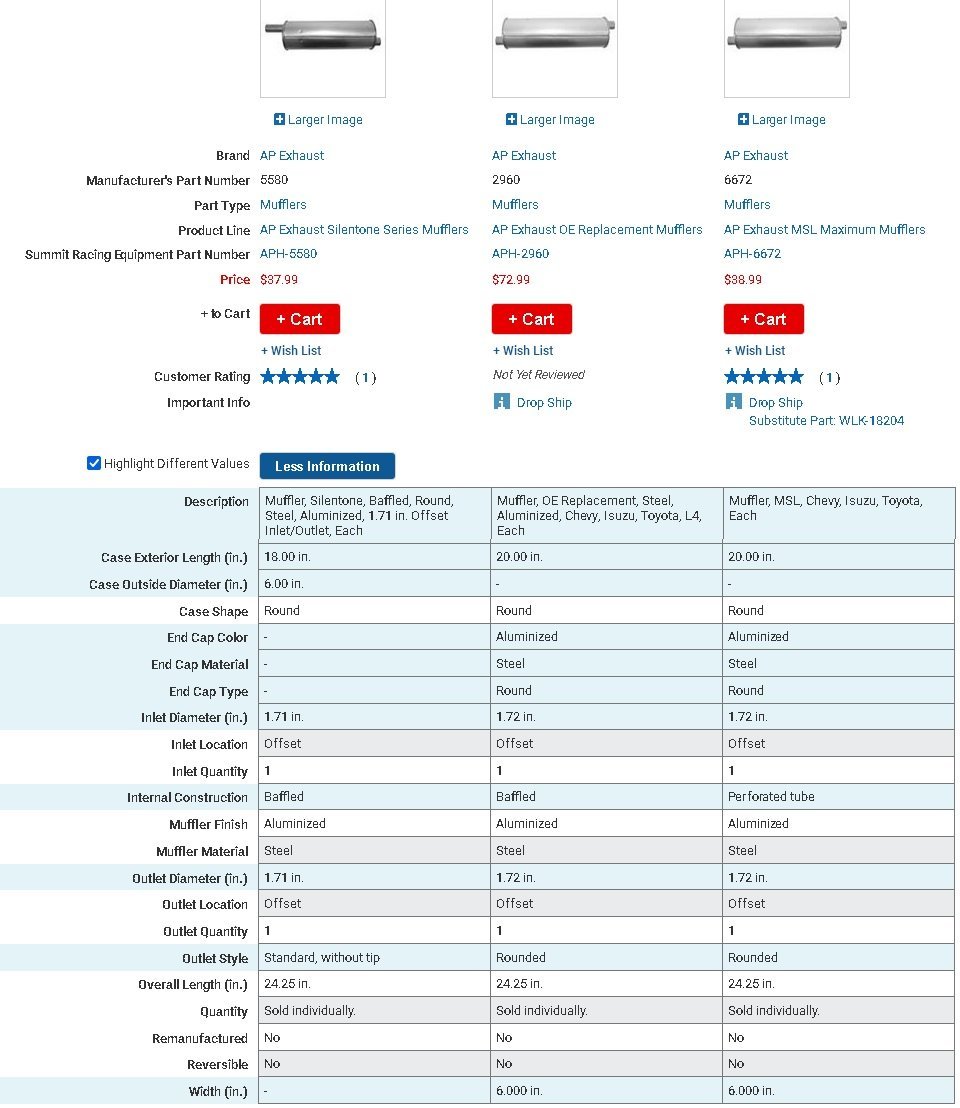
I narrowed it down based on fit and best muffling ability (appearance not so much but they could be skinned with stainless sheet is desired or ceramic paint). Twice the od and offset inlet to help compensate but likely moved back enough for the exhaust shop to provide a short piece of pipe offset/joggled to aid body clearance and allow max ground and wing clearance. Didn't look at glass packs or ovals, just round. There are some tractor mufflers that are practically identical but don't offer any improvement. For a bit larger/looser fit to the inlet: https://www.summitracing.com/parts/mpe-201-9994 and https://www.summitracing.com/parts/wlk-17816
-
Mustangs at least to 2010 can have a live axle. Plenty of non-car examples for small trucks and suvs. It seems to me that the weak point of the key could be eliminated with broaching of the hub for custom axles that are splined on both ends. Mark Williams and Moser are good sources for reasonable cost custom work. The axles could be made of a spring-like material such as 300m so the peak forces are muted. If the hub do not need to be removed from the axle ever for servicing, custom axles with integral hubs could be fitted. For similar cost, a light duty domestic axle could be fitted without a huge difference in unsprung weight and more cost effective options for ratio and traction.
-
Still looking for a deal on Weales' book. Just picked up Ortenburger's "legend" book ($7) and "The independents" book ($27) second hand in "very good" condition on ebay.
-
The pump must be replaced. I suggest an electric Carter pump but there are many options. Typical pump fuels contain ethanol which is hard on mechanical pumps. Electric pumps are generally more compatible with ethanol. A "last chance" filter near the carbs can prevent carb problems too. Here is a discussion on electric fuel pumps: