
twobone
-
Posts
796 -
Joined
Content Type
Profiles
Forums
Store
Articles
Gallery
Events
Library
Everything posted by twobone
-
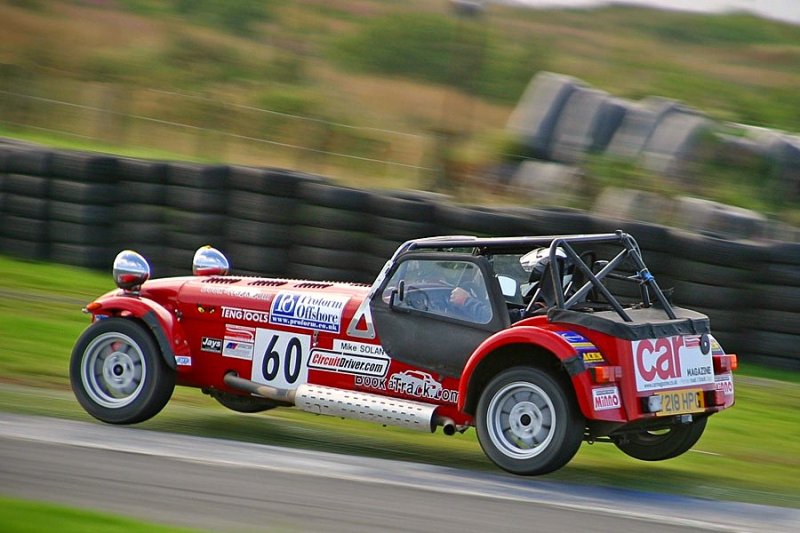
clearly having a good time
-
It is fabric covered. I agree, I wish there were better places to drive in my neck of the woods too.
-
paily pic

-
nice
-
My father-in-laws biological father was killed in an RAF B-25 Mitchell in a mid air collision over Burma in WW2. What I find incredible also is the true "world" nature of WW2. It really was a struggle against fascist tyranny on a global scale. At least then it was easier to understand and recognize the enemy. I think its harder today as the fight is not against "a people" or a gov't, but a radical belief.
-
Wow, I just finished watching a 2 hour HD special on the USAF bombers and fighters in WW2 leading up to D-day. 26000 airmen died, more than all the marines in WW2. Incredible bravery of those bomber crews heading out on daylight missions. Towards the end being used to draw out the Luftwaffe so the P-51s could neutralize them before the big invasion. WW2 really is a fascinating and terrible time in our recent history. I wish it was more of a focus in our current culture.
-
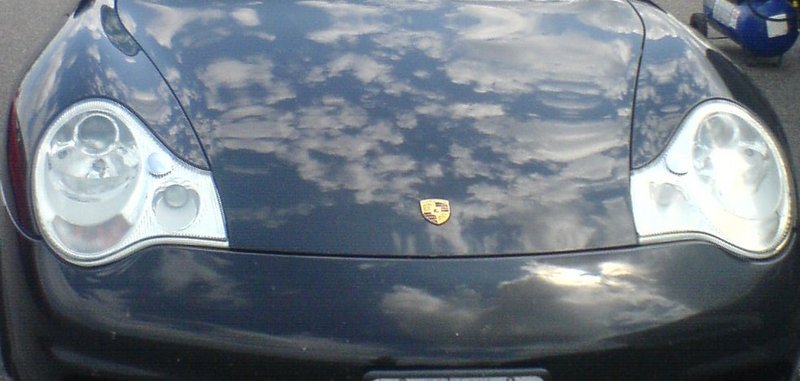
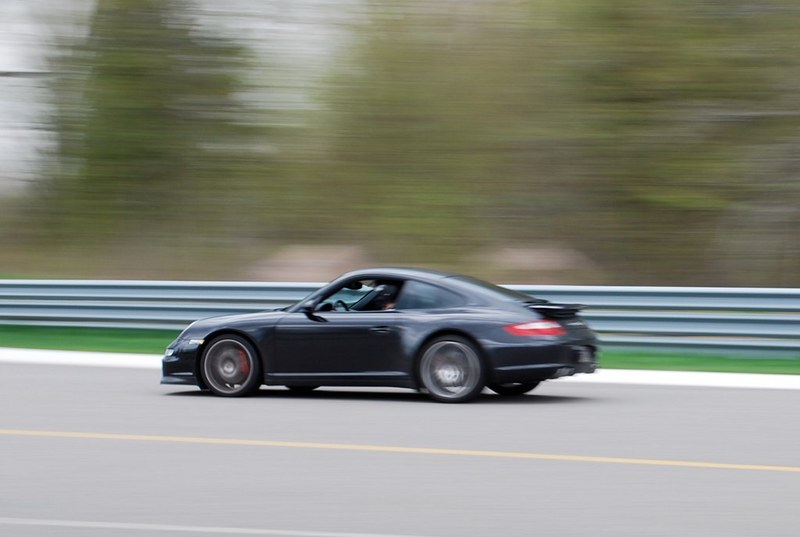
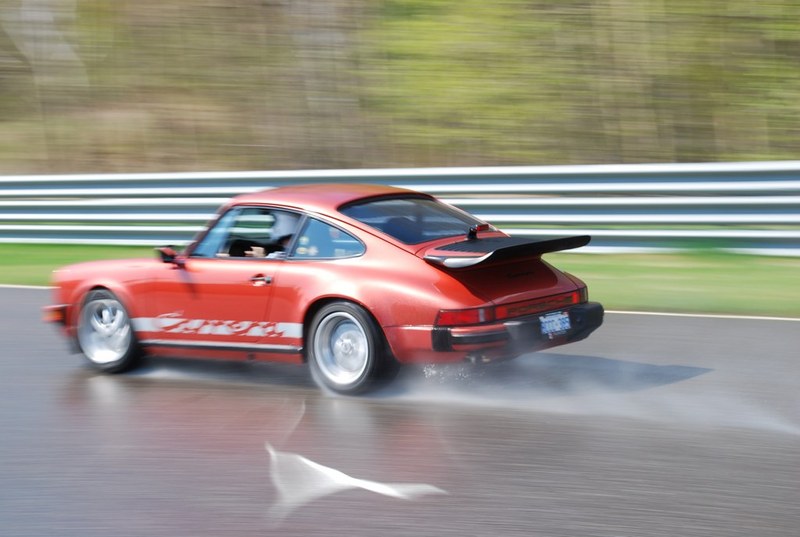
OK...so it was written when I owned a 911....but substitute Se7en for Porsche and Chapman for Norbert Singer and we are still talking the same language: DOES YOUR PORSCHE DREAM? It’s a strange question. Of course she doesn't dream. However you and I know that these are not just mere cars. They are an assembly of components crafted over decades of careful thought by engineers whose passion and mission is to deliver performance when combined and driven hard. If your car does not actually dream, then I'd like to believe that the thoughts and experiences of those engineers are part of the potential energy that exists within your Porsche. If you remember your high school physics; potential energy is the stored energy waiting to be released. The classic example is the energy in a pulled bow. Your Porsche has potential energy stored from 70 years of focused engineering. If you can't connect with my analogy, then perhaps you've never taken your Porsche to a track day or I’m a nut. I recently returned from a track day at Calabogie hosted by Bruce Gregory, one of the track owners. It was an amazing day. A key element of the Calabogie experience is the welcoming environment. The staff is there to make your day a success and it shows. Bruce took the time to talk to us about turning his dream of opening a track into a reality. Not an easy task in our “nanny-state”. The hard work paid off and what a dream job he has. Bruce spent as much time as we did on the track in his 996 GT3. A few comments about the track. It’s an automotive treasure and an instant classic. Nestled in the woods near Ottawa, it’s far from the commercialized concrete jungle of the GTA and better for it. The track is five km long, with 20 turns, sixty five feet of elevation changes and perfect driving surface. Getting back to the theory of “the spirit within” a Porsche. You may remember my story in February of 08’ about importing my 84’ Carrera coupe from a PCA member in Florida. I’ve continued the previous owner’s hobby of car detailing; hand rubbing several coats of sealant and wax onto her since the snow melted. Working on the exterior and interior up close has given me a deep appreciation for the craftsmanship put into these mid 80’s hand built 911s. Car detailing is however, a slippery slope. The danger is in thinking of your Porsche as only a thing of beauty. Norbert Singer didn’t work so hard on the racing development of the 911 just to have you park yours in the garage. Over the winter I made a commitment to myself and my car that I would get her out and exercise some of that engineering at the track. Taking your Porsche to the track is to me, like graduating from Porsche high school and starting a Weissach PhD. I spend most of my idle time (aka the GO train commute) reading about Porsches. Last winter, I consumed at least twenty five Porsche magazines along with Vic Elford’s Porsche High Performance Handbook and Paul Frere’s Porsche 911 Story. So, I have a fairly good grasp of each mechanical component including its development history and the theory or black art of 911 handling. Unfortunately, very little of that conceptual understanding can be experienced on Ontario roads. It’s only at the track where the history and the spirit of a Porsche comes alive. About 30 kms into my track day at Calabogie, the car and I settled into a rhythm and dialogue. The quality of the car’s feedback, the performance of the brakes and the eagerness of that flat six reminded me that my car is directly related to countless 911s that ran and have continued to win endurance races for over 40 years. I connection allowed me to relax and feel the parts moving in unison. As I transitioned into turn 6 (Big Rock), I could feel the suspension compress as the torsion bars twisted, a millisecond later the steering lightened ever so slightly as the rubber molecules lost their grip on the hard asphalt and all four tires began to slip in unison as I “tracked-out” towards the next apex. It’s in that one and a half second that the Porsche legend and my car came alive for me. . Another moment came as we speared down the front straight, the track wet from a recent thunder. The sun was now high in the sky and a mist rose from the warming track. We were following a bellowing black 997 4S. Its wide rear haunches sent up twin matching vortexes of spray that sparkled like diamonds. As he passed the kink, I watched his spoiler slowly lift into the slip stream as its electronic brain decided to increase the level of down force. A moment of automotive and visual perfection. Game on then! My car and I were eager for the chase. Sadly my third magic experience of the day is shared only by the lucky few who own a GT3. Bruce took me for a few hot laps in his 996 GT3. He must have thought I was scared silent, because I didn’t speak a word for the full 10 minute lap session. I just wanted to absorb every sensation that comes with track time in a GT3. If you know your Porsche history and the lineage of the GT3 motor, you cannot sit in a GT3 when it’s pulling hard and not be transported into the cockpit of a GT1 racecar at LeMans. The linear and never ending pull of that motor combined with the sound of all those exotic metals meshing in perfect unity at 8000 RPM is the holy grail of engine experiences. Add to that the physics defying handling of a GT3. When Bruce really leaned on the brakes, the G forces were so great that it felt like I was standing upright on the floor boards even though I was strapped tight in a five point harness. The way the car drifts in perfect harmony without body roll or any sense of nervousness is a testament to the performance driven development focus at Porsche. Even though we hit 240 km/h on the back straight and were taking turns at 120 that you and I would take at 50 km/h in our family car, I never felt a hint of fear. I knew the car was a perfectly honed system in the hands of an experienced driver. So I’ll leave you with these thoughts and opinions. If you own a Porsche and don’t take it to the track, you are cheating yourself of a quintessential part of Porsche ownership and you are not being fair to the spirit of your car. You are also, in a way being disrespectful to the engineers who worked so hard designing your car to perform. It’s like buying a Picasso and leaving it wrapped in brown paper in your basement or capturing a cheetah and keeping it in a cage. Let me next address your fears. It is extremely unlikely that you will crash your car at the track. The handling limits of your car are so far beyond your current capabilities, that the margin of protection is huge. How do I know? I was driving as hard as I dared and I was passed by everyone like I was standing still. It is the experienced track drivers who strive to push beyond their cars exceptional limits that I’ve seen put it into the guard rail. Secondly, your car will not explode or leave you stranded. Your Porsche is over-engineered and designed to be experienced on the track. My car never runs better than after a day at the track. These last few days I’ve been torn. Part of me wants to get out in the garage and wash off the brake dust and polish the paint back to a shiny luster. Then I look at the streaks of dust running the length of the car, the splattered bugs on the headlights and reflect on the track scrubbed tires and pause to wonder what does my Porsche want? Does she want another night to dream?
-
from Flikr
-
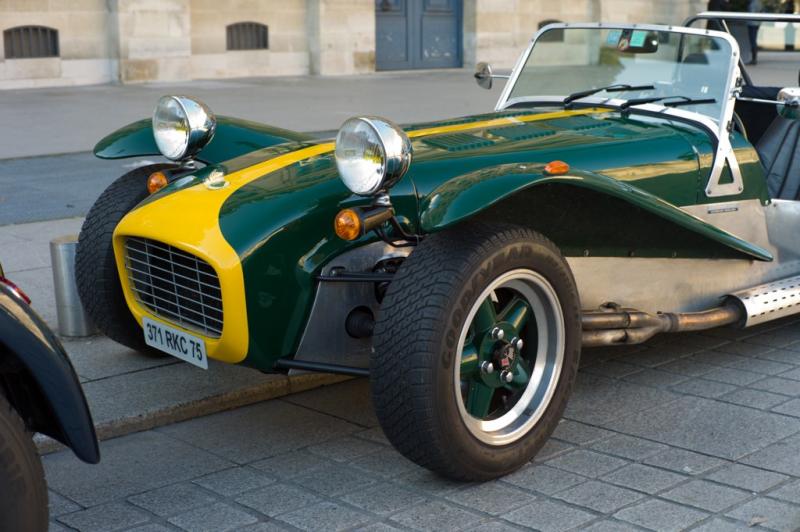
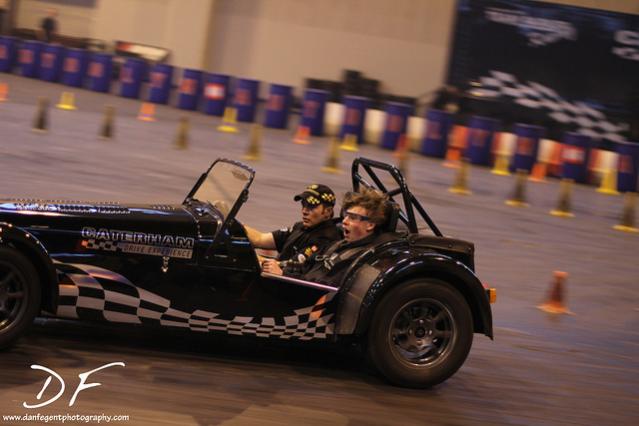
Wonderful shot John. I love giving kids a drive. They live in a world of minivans and its fun to show them what the joy of driving is really about! My 9 year old son always has a good giggle in my car. PS - are those 205/60/13s on the front?
-
from flikr
-
I'm a massive fan of these guys. I now have 5 of their shirts. Great quality, fast efficient shipping http://stores.ebay.co.uk/Uber9-Custom-Design/F1-Grand-Prix-Designs-/_i.html?_fsub=1823584&_sid=81617087&_trksid=p4634.c0.m322
-
pics
-
Definitly cool. Very useful for those with mobility issues. Also a bit scary. I sit in my office all day. What if I never stood up? If I wanted to go see my boss I would just glide over... I just worry about these kinds of devices making our kids and our kid's kids chunky-monkeys
-
cool cars
-
Cold Inflation Pressures Optimum cold inflation pressures are chosen to achieve optimum hot inflation pressures. Optimum cold inflation pressures are determined by: 1. event distance and, 2. vehicle weight and 3. camber settings. Pressures shown below are for inflation with compressed air. Event Distance - Dry Tarmac Vehicle Weight 4 laps or more Very short - hillclimbs or maximum 3 laps. Very Light Light 800kg - 1000kg 20 - 26 psi 21 - 28 psi Heavy 1000 - 1400kg 23 - 27 psi 26 - 32 psi Very Heavy > 1400kg 27 - 35 psi 31 - 38 psi Hot Inflation Pressures Hot inflation pressures indicate the suitability of the cold inflation pressures. Where hot pressures are too low, start with a higher cold inflation pressure or vice-versa. Pressures shown below are for inflation with compressed air. Vehicle Weight Optimum Hot Inflation Pressures Very Light Light 800kg - 1000kg 24 - 32 psi Heavy 1000kg - 1400kg 28 - 40 psi Very Heavy > 1400kg 37 - 42 psi Hot Inflation Pressures Guide: The hot inflation pressures shown above have a large range. This takes into account the variances in vehicle weights within the ranges shown, as well as axle weights, for example: a front-engine, rear-wheel-drive vehicle with a front weight bias will usually give best results with hot pressures that are 2-4psi higher on the front axle compared to the rear axle. Changing hot inflation pressures by small amounts ( 1-4psi ) can be used to fine-tune handling: Changing hot inflation pressures to change handling bias should be used for fine-tuning only. Improving overall grip levels should be done by tuning spring rates, sway bars, suspension geometry etc., using lap times and pyrometer readings to asses changes. Reduce Oversteer reduce rear axle hot inflation pressure Increase Oversteer increase rear axle hot inflation pressure Reduce Understeer reduce front axle hot inflation pressure Increase Understeer increase front axle hot inflation pressure Hot Inflation Pressures NOTE: Tyres with full tread depths used on dry tracks will have more tread flex and therefore more heat build-up compared to tyres with reduced tread depths. One result of this heat build-up is slightly increased pressure build-up. The amount of pressure build-up will decrease as tread depth decreases. Hot & Cold Inflation Pressures for Proxes RA1 & Proxes R888: Due to a casing construction that has less sidewall deflection compared to the Proxes RA1, the Proxes R888 will provide optimum performance with hot and cold inflation pressures which are 2 - 4psi lower compared to the Proxes RA1 with the same using conditions. WET CONDITIONS & INFLATION PRESSURES For wet tracks (STANDING WATER) increase pressures by 4-10 psi compared to dry track pressures. Increasing the pressure for wet tracks makes the tyre's contact patch smaller, making the tyre less susceptible to aquaplaning. There is less heat build-up on wet tracks, therefore less pressure build-up. This is another reason cold inflation pressures need to be higher than those used for dry conditions. For optimum performance on tracks where there is standing water, tyres with new depth or close to new tread depth will provide optimum performance. Buffed or worn tyres (3 - 1.5mm tread depth) will be susceptible to aquaplaning where there is standing water. It is recommended that tyres used on wet or damp tracks are given a short "scrubbing-in" session before they are used competitively to remove the layer of mould release on the new tyres. Without "scrubbing-in" the tyres will be slippery until this layer of mould release agent is worn away. Camber Settings Toyo motor sport radials will provide optimum cornering grip with camber settings between negative 3 and 6 degrees on steer axles. Where adjustment is possible, negative camber on drive axles will also improve cornering grip. Optimum camber angles will provide optimum cornering grip, and therefore will be an important contributing factor for improving lap times. NOTE: On some vehicles a lack of negative camber can over-heat the outside tread shoulder causing grip levels to drop-off suddenly and in some cases cause blistering of the outside tread shoulder. Large heavy, front engine cars are most susceptible to this type of tyre damage. CAMBER SETTINGS & INFLATION PRESSURES Where camber adjustment is limited or class rules limit the amount of negative camber allowed, increasing cold inflation pressures may help to prevent the outside tread shoulder over-heating. This also applies to vehicles that are used on the street as well as the track, where the camber settings are a compromise for this dual purpose. Where this is the case, adding 3 - 4psi to recommended cold and hot inflation pressures usually helps to prevent the outside tread shoulder overheating. Increasing inflation pressures to prevent the outside tread shoulder overheating where more negative camber is needed for optimum tyre performance and grip is only recommended where camber adjustment is not possible, and is not always effective (testing the pressure increase will confirm wether the increased inflation pressure improves lap times). Tread Depths & Tyre Performance on wet & dry surfaces All grooved motor sport tyres will have some tread flex. On dry surfaces tread flex reduces overall grip levels and therefore lap times. To optimise dry grip levels with grooved race tyres, tread flex needs to be minimised. The more groove area or "void" a tread pattern has, the greater the amount of tread flex there will be in dry conditions. PROXES RA1 - This pattern has a tread depth of 6mm or >6mm when new and has enough groove area to be very effective as a "wet" with new tread depth or close to new tread depth. For optimum dry track performance, buffing will make a large difference in grip and endurance for the Proxes RA1 and is highly recommended. Buffing will also provide more even tread wear and a slower wear rate. PROXES R888 - This pattern has 5mm of tread depth when new and minimal groove area on the tread shoulders for optimum dry track performance. Buffing the Proxes R888 will provide a small improvement for cornering grip on dry tracks. PROXES RR1 - This tyre is designed for wet weather use only and will provide optimum aquaplaning resistance with new tread depths. Aquaplaning resistance reduces as tread wears. The tread compound of this tyre will over-heat very quickly where a dry line begins to appear. Tread Temperatures As for most motor sport tyres, Toyo motor sport radials can be slippery when cold. Caution needs to be exercised until the tyres have had some time to warm-up. For the Proxes RA1 tread compound and the Proxes R888 & Proxes RS1 "GG" tread compound, grip levels will be low when the tread temperature is less than 55 degrees Celsius. Optimum operating temperatures for the Proxes RA1 tread compound and the Proxes R888 & Proxes RS1 (slick) "GG" tread compound is between 75 and 95 degrees Celsius. Over 100 degrees Celsius, grip levels drop-off rapidly. Rim widths and tyre performance Toyo motor sport radials will provide optimum performance where the rim size allows the sidewall to have little or no protrusion from the rim flange. Each Toyo motor sport radial product information page includes a link to download a PDF file that quotes dimensional information, including approved rim widths. Where possible, use of minimum rim widths should be avoided. For most sizes, optimum tyre performance will be provided with rim widths that are from the mid point to the maximum in the range of approved rim widths shown. Street use The Toyo Proxes RA1, Proxes R888 & Trampio R8881 are legal for use on public roads but recommended for competition or use on closed circuits. Grooved, street legal race tyres are designed for users who need to drive their vehicle to and from the circuit, and / or where the class regulations specify that street legal tyres must be used. When compared to high performance or ultra-high performance tyres, when used on public roads, Toyo motor sport radials will: 1. have comparatively poor ride comfort. Toyo motor sport radials have a steel sidewall ply to minimise sidewall deflection for optimum cornering grip. 2. be susceptible to "tram-lining" / "tracking". The casing stiffness provided by the steel sidewall ply and wide belt packages used on Toyo motor sport radials make them susceptible to tram-lining caused by road irregularities common on public roads. 3. have faster tread wear. The tread compounds used on Toyo motor sport radials provide much higher grip levels compared to high performance or ultra-high performance tyres rather than long tread life. 4. be slippery when cold. Due to the tread compounds & construction types, grip levels will be low until the tyres have had some warming-up. This will be especially noticeable in cold and / or rainy conditions. 5. be susceptible to aquaplaning when used with low tread depths (3 -1.5mm) on wet roads, especially in heavy rain conditions. Users need to exercise caution in these conditions with careful monitoring of vehicle speed to avoid aquaplaning. The Proxes RA1 pattern is the exception. The Proxes RA1 has a void ratio that makes it resistant to aquaplaning, where tread depths are >4.5mm.
-
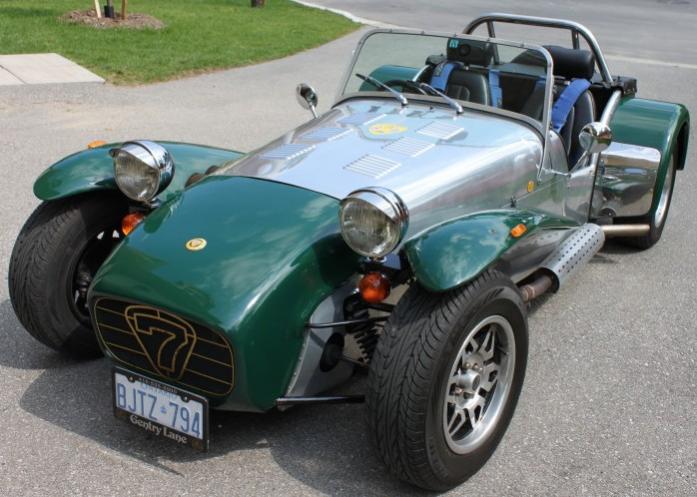
I'd like to beef up my rather skinny stance. My tires have lots of tread left, but I can't find a date on them and they are starting to "age-crack".
-
Interesting observation. For a very very short time I had RA1s on my 911 (which I sold to buy the Caterham). I found them not very grippy or confidence inspiring. Then again, I never got any heat into them. I'm hopeful the R888 will serve me well. They are also a fair bit cheaper. Lets hope my lower back can handle the harder sidewalls
-
bball7754 Can you post a pic if you have one handy of your car?
-
John, You are a prince among men! I may end up finding I lose a bit of steering delicacy, but I'd like to beef up my stance a bit. Thanks
-
I know the standard thinking is a 185 tire on a 13X6 rim. Just curious if anyone has had experience with a 205 tire on a 13X6? I have read in other forums for other cars that you can have issues with over-size tires. Interestingly, Toyo has the R888 description for rim size for the 205/60/13 as: 5.5 - 6.0 - 7.5
-
Oh my, this video makes me want to spec "up" my Caterham!
-
drool....can't wait!
-
Bono is a puppet! I was at a concert and had seats behind the stage. Bono reads everything from a teleprompter, song lyrics and most tellingly even his seemingly off-the-cuff political commentary in mid concert. Made me wonder, does he have someone else writing all of material? Is he just a puppet?
-
I'm going to be a bit contrarian on this one.... Relationships are a two way street. Did this guy ever sit down with his significant other and tell her how important cars are to him? In her mind, without some frame of reference, this jeep maybe just another appliance. If you owned a fridge and it kept sucking up cash, and your wife kept saying she wanted to keep pouring money into it because it matched her dishwasher, you would probably be really pissed. 90% of women just don't understand what makes us tick....so we have to actually sit them down and explain it. Sadly, they often forget once they see us behaving outside of what they consider normal in their world. However a gentle reminder of the rules of engagement helps get things back on track, i.e. "no complaining about my car hobby as long as I'm being responsible about the other aspects of our lives"
-
thanks guys My wife (who is wonderful and cuts me tons of slack) gets caught up in the allure of owning a place and the idea of going up weekends to collingwood (closest ski place and where she grew up). I may just have to build a logic based argument that says: -Figure out how often you would want to go up.....figure out what that would cost to rent. -Then show how much money we would be saving as well as the opportunity cost of leaving that money in savings as oppossed to investing in an asset that assumably has a lower rate of return. She will still pull out the "you only live once card", but perhaps the rent idea will show she can still enjoy the lifestyle but at a lower cost. Lastly....flowers helps