
IamScotticus
-
Posts
2,396 -
Joined
-
Last visited
Content Type
Profiles
Forums
Store
Articles
Gallery
Events
Library
Everything posted by IamScotticus
-
Bad link now. Is he still doing business?
-
The CSU should operate without the springs. A return spring should be there to prevent a running problem. If you have a spring tension measuring device like a trigger pull gage, we could compare mine to yours.
-

Photo of your car you took today
IamScotticus replied to Xhilr8n's topic in General Sevens Discussion
Clever Who's lovely S4 in there? And the event picture on 7/11 is taken at a 7-11? Who has time to plan this stuff?
-
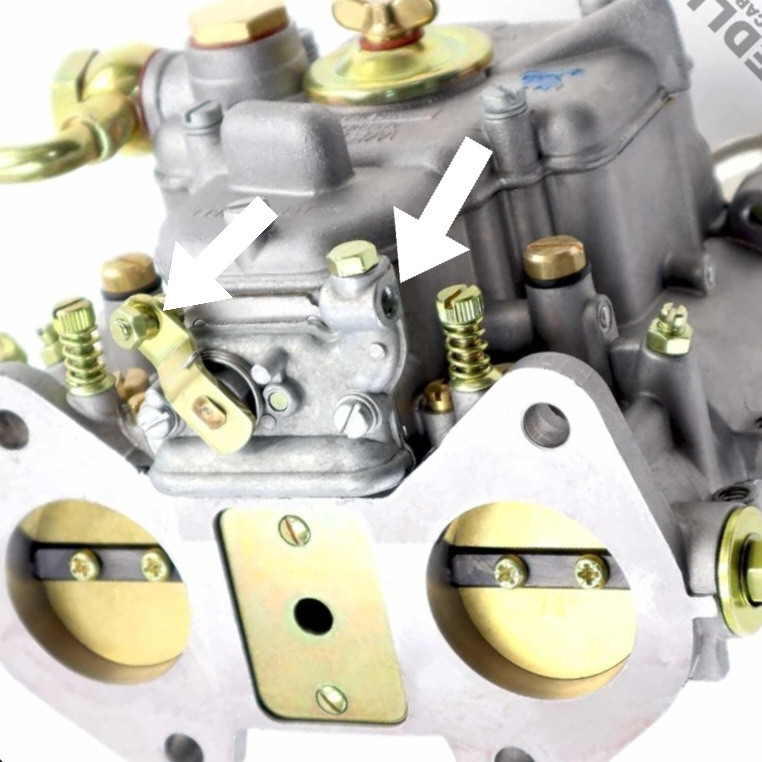
The cable housing is clamped on the clamp on the first carb and the wire passed through the lock nut on the enrichment lever to the lock nut on the next enrichment lever. Tighten the cable clamp. With the end nut tightened on the cable first, pull the cable to the fully open position. Move the lever of the first carb to fully open position and tighten. Release cable and check for lever closure. Provide enough slack in cable for engine movement. I do not have any additional springs connected to the choke enrichment system on my setup. Alternatively, a piece of rigid tubing may be placed over the connecting cable between levers to help the 2nd lever close if it binds. Also, notice the hole in the back plate. This is an improvement earlier carbs didn't have. If you don't have a hole, drill one.
-
Have you weighed sending Arch the whole stripped chassis?
-
WTB - Wheels that are NOT Prisoner OR Wagon
IamScotticus replied to gde31ff's topic in Parts For Sale / Wanted
I measured my Mini's back spacing at 4". -
WTB - Wheels that are NOT Prisoner OR Wagon
IamScotticus replied to gde31ff's topic in Parts For Sale / Wanted
Check for any caliper clearance issues
-
WTB - Wheels that are NOT Prisoner OR Wagon
IamScotticus replied to gde31ff's topic in Parts For Sale / Wanted
Not Prisoners. HPC maybe? -
WTB - Wheels that are NOT Prisoner OR Wagon
IamScotticus replied to gde31ff's topic in Parts For Sale / Wanted
There's VTO https://www.vtowheels.com/shop/page/7?search=Classic+8&attribute_value=3-9&attribute_value=3-2&attribute_value=3-17&attribute_value=5-31 These are the VTO 13x6 Minilite style in 4.25" PCD with +22mm offset: https://www.vtowheels.com/shop/page/7?search=Classic+8&attribute_value=3-2&attribute_value=5-31&attribute_value=6-86 Offset is the spacing of the inside hub face relative to the centerline of the wheel. Positive is outward, negative is inward. Backspace is the depth of the inside rim from the hub face. Therefore, the Backspace of a 6""wide wheel with a 0.0 offset is three inches. The Backspace of a negative one inch offset is two inches. This is the measurement that will keep you from hitting the sway bar. I could be wrong. -
WTB - Wheels that are NOT Prisoner OR Wagon
IamScotticus replied to gde31ff's topic in Parts For Sale / Wanted
This is a job for AI. When you know the offset, back space, inside spoke clearance etc, reqired, make an inquiry on Chat GTP, or other AI, and it will likely find good answers. Here's measurement from my Two Gates 13": Two Gates Minilite repros: wt= 11.56 lbs Offset +22mm/.86" Backspace 122mm /4" Another great source is the UK Caterham & Lotus 7 club https://www.caterhamlotus7.club/. There are some sites that list wheels by PCD, but no extensive details https://m.roadkillcustoms.com/wheel-bolt-pattern-cross-reference/ From my notes: PCD 4.25/108 Width, Hub 14" 1968> Alpha Romeo Spider 14x6, 69.1 Audi: 85-90 Quattro 14x6, 63.4 88-95 Quattro 80/90 14x6, 69.1 89-91 90/100 14×6, 57.1 85-90 Coupe 14x6, 57.1 FORD 95> Contour 14x6 63.4 95-00 Countour ? , 63.4 81-90 Escort 13x5.5, 63.4 81-95 Explorer 13x5.5, 63.4 78-88 Fairmont /Tbird, 14×5.5, 63.4 78-88 Granada/ LTD2, Fairmont, Tbird 14x5.5, 63.4 79-93 Mustang 14x6, 63.4 74-78 Mustang 2, ?, 63.4 81-88 Tbird ?, 63.4 83-94 Tempo, 13x5.5, 63.4 Mercury 74-86 Capri, 14x5.5, 63.4 80-85 Cougar, 14x5.5, 63.4 99-02 Cougar ?, 63.4 82-83 LN-7, 13x5.5, 63.4 81-87 Lynx 13x5.5, 63.4 85-89 XR-4ti 14x6, 63.4 78-85 Monarch/ Marquis/Zepher 14x5.5, ? 95-96 Mystique, 14x6, 63.4 83-85 Topaz, 13x5.5, 63.4 86-94 Topaz, 14x5.5, 63.4 78-85 Zepher, 14x5.5, You got the backyard hotrod builders https://www.speedwaymotors.com/shop/weld-racing~1-10026_10116_10191_10844_11834_11905?facet=l_diameter%3a57541*l_wheel_bolt_pattern_%28in.%29%3a324613*l_wheel_diameter%3a224023*l_width%3a57382 Are these NASCAR steel types road legal? Is anything we use road legal? Do we care? -
WTB - Wheels that are NOT Prisoner OR Wagon
IamScotticus replied to gde31ff's topic in Parts For Sale / Wanted
What is the PCD? You are either Triumph 3.75" or Ford 4.25". If your live axle, long cockpit, you're Triumph Ital Marina, its 3.75". DeDion is Ford (except for very early '85-ish) is 4.25". If you have Ford ( you should), the wheel gods have shown favourably down upon you. if you are Triumph, you'll be lucky to get Minilites, Revolutions, or Slot Mags from the vintage formula Ford and Spitfire scene. Try Racingjunk.com. Go 13" with 185/70 rubber for street. Don't donk your 7. Give the link to the BAT listing. Here: https://bringatrailer.com/listing/caterham-seven-5/ Yes, finding 13" rubber is a Shitshow. Not much better for 14" either. But it's no excuse to go larger. All the racers are on 13". And your Tyre pressures are 20 psi or less. Also know your spare tire carrier center bung is at a certain height for a certain radius. Go too far outside of this and you may have mounting issues. Measure your bunghole to rack distance. I reccomend using rubber trucker hold downs to secure wheel to frame so it doesn't bounce too much and as a 2nd hold down. https://truckertowerstuff.com/products/21-tarp-strap-epdm-rubber-truck-tie-down -
I agree they are Dunlop type. I think Cat had these on the basic 170 Zuki? But this looks like a Live axle car.
-
Can I get an ID on these wheels?
-
Lovely Elan
-
I would ask Pierce Manifold. or buy two matching replacements. https://www.piercemanifolds.com/category_s/245.htm
-
1971 Lotus 7 series 4 hasn't run in 46 years
IamScotticus replied to stevehello's topic in Build Threads
sitting that long... Clutch frozen to the FW, all brake cylinders rusted, freeze plugs eroded, Rings frozen, all rubber brake, clutch and coolant hose need replacing, carb pump diaphragms, steel fuel tank rust, dried crank seals, alternator water pump drive belt, tires, steering rack grease, A-frame center bush esp if its been soaking in oil. Diff oil refresh. Valve spring compressions because you've had a couple of them being squished for 40 years. front and rear hub bearing repacking. Then we can talk electrics. -
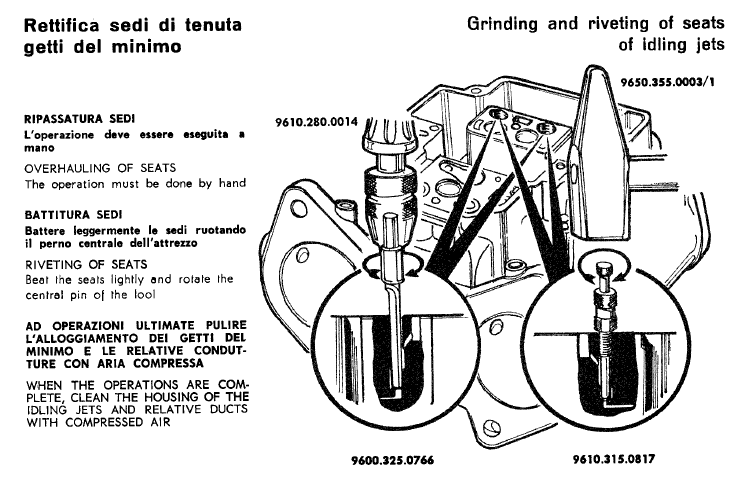
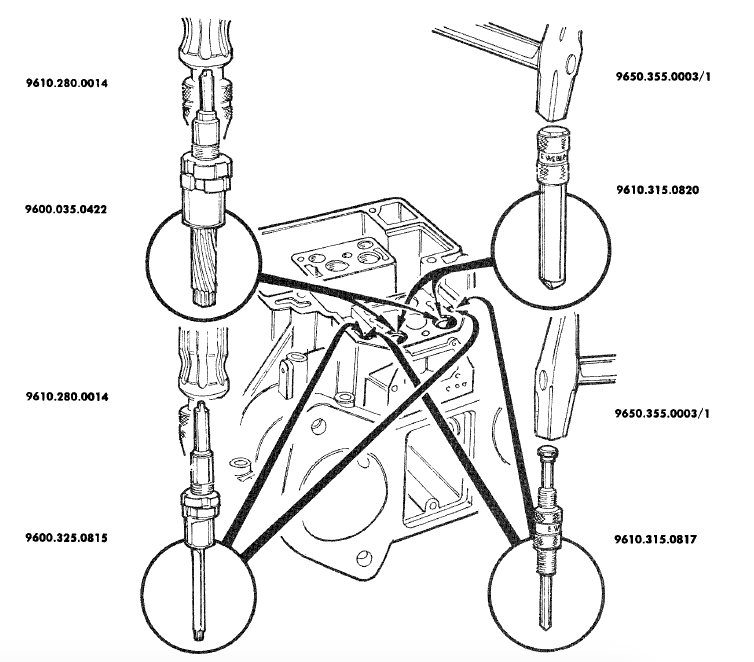
I have seen this done ij a vintage film clip, and always wondered what was going on here? Or was it on Ford Vs. Ferrari? Can anyone explain the purpose of "beating" and "grinding" the seats? Isn't this hammering hard on the threads? Or is this a separate plunging tool? Are the bottoms of these seats so rough from casting or tooling they need finishing?
-
I wonder how much of Rimmer is Rimmer after the merger with Moss?
-
WTB/B Spirfire rear hubs & parts
IamScotticus replied to IamScotticus's topic in Parts For Sale / Wanted
VTR? I don't know that one. Too many possibilities. Especially with V. Or was that "TTR"? -
WTB/B Spirfire rear hubs & parts
IamScotticus replied to IamScotticus's topic in Parts For Sale / Wanted
Thanks for the references. I did get a pair of hubs to play with. But I have plenty of other bits to scrounge around for. I need that blue taper matching test compound. Know of any? -
Pm me with offers please.
-
Author hasn't been here since March last year
-
Photo of your car you took today
IamScotticus replied to Xhilr8n's topic in General Sevens Discussion
You care enough for your kid's safety to have net on the trampoline, but you risk your life in that contraption! -
New Caterham Book Nov. 2026
IamScotticus replied to IamScotticus's topic in General Sevens Discussion
Bump -
Yes, swamp. You can add hurricanes to the equation. I doubt a small hole of 1/16" will annoy the tootsies too much. The hole can be a gap in the seal between the lid and housing. And who drives in the rain? Mike, with as much seat time as you have, You've probably had plenty of wet track days. Also, the mid-90s were not great powder coated frames.