MV8
-
Posts
2,303 -
Joined
Content Type
Profiles
Forums
Store
Articles
Gallery
Events
Library
Everything posted by MV8
-
 Check the other side of the tire. Back then, only one side had to be stamped with the date.
 -
A plug or cap made for coolant won't last long when exposed to today's fuel. Fuel rated hose has a special liner; sometimes just thin-walled nylon tube. Plugging/capping is a bad idea unless the tank is not equipped with a large vent pipe. This vent is not to be confused with the normal tank vent that either dumps to atmosphere on very early road cars or race cars or is stored in a canister containing charcoal pellets. The canister vapor's restricted orifice release to the intake manifold is controlled by a closed when cold coolant thermo-switch on carbureted vehicles or computer via vacuum solenoid on efi vehicles. The 5/8 pipe is a tank vent for rapid filling without spitting out of the filler neck and down the side of the car. It provides the displaced tank air a path around the incoming fuel. Oems typically have a large, 3 inch or so vent hose within a 1.25 or so filler hose or a side tank vent hose like your new filler.
-
Imho, the 13s are best for unsprung weight but I understand the appeal. Increasing rim size, tire width, or decreasing aspect ratio increases unsprung weight. If the yokos are stamped DOT legal and the end of the code is three letters instead of four, then the tires are at least 22 years old now and at least seven years old when installed. Not unheard of for a tire shop to put on new old tires. Customers don't normally look at them. I sold tires and parts at Pep Boys in high school a few decades ago. I'd put a cheapo touring tire on but put the white wall on the inside unless you want to be emulate Balchowsky's old Yeller. Fun to drift around on those. https://m.roadkillcustoms.com/the-junkyard-racer-that-inspired-the-shelby-cobra/ I manually change my tires and use an Italian, track side spin balancer designed for mounting on the back of a truck. I can use the internal motor or just spin it by hand to the required rpm. Usually I can take the old tires back to the seller for dumping for a fee or make use of my counties annual recycling day to drop off up to 10 or so.
-
It needs to be fuel hose and low pressure hose is fine and more flexible. That is a common size for marine fuel line (J1527).
-
There is no blanket answer on adapters except that they add unsprung weight (on top of the bigger wheels and tires), increase the scrub radius (a minimum thickness is necessary for strength and to clear the original studs), can increase radial runout if not carefully installed (wheel spinning off-center). The design details and installation are important. I'd just replace the 13 inch wheels for bolt-on 14x6.5 with 185-60-14 tires after it is running, charging, etc. Tires have a shelf life even when no cracks are visible. I would expect your car to have 4x10⁸ all around.
-
A good quality urethane vinyl, 3m spray adhesive, exacto blade the openings in an X pattern and push the "fingers" through the holes, old-school smelly weatherstripping adhesive in a brush top can to glue the fingers down on the back side. Could be smooth or a pattern. Care for more emu? Gator? carbon?
-
If the rear rims are 8.5", you need at least a 225. Tires are spec'd for a rim width range by the tire mfg. You could have the rims narrowed one inch from the inside (so they stick out the same amount) to bring them to the max rim width for a 205-60-13 in R888. Generally, take the tire tread width in mm, divide by 25.4 to convert to inches, then add 3/4 inch for max rim width.
-
I would take a six inch piece of steel 3/8 rod (or whatever rod is a little bigger than the lock opening), a bench grinder to slightly taper the rod end, a hammer to drive it into the lock (which will also help loosen it), then a couple a vice grips to rotate the rod while pushing it into the lock. Don't try to crank it. It needs a tear down, cleaning, and reassembly of the same parts unless there is a glaring issue. Consider you could probably sell it for more than 10k as-is and avoid the headache.
-
Lotus 7 series 2 rear axle housing-free
MV8 replied to Christopher smith's topic in Parts For Sale / Wanted
This one is very well done with a morris axle, aluminum diff carrier and other bits. Just food for thought: http://www.britishracecar.com/CraigChima-Lotus-Seven.htm -
Lotus 7 series 2 rear axle housing-free
MV8 replied to Christopher smith's topic in Parts For Sale / Wanted
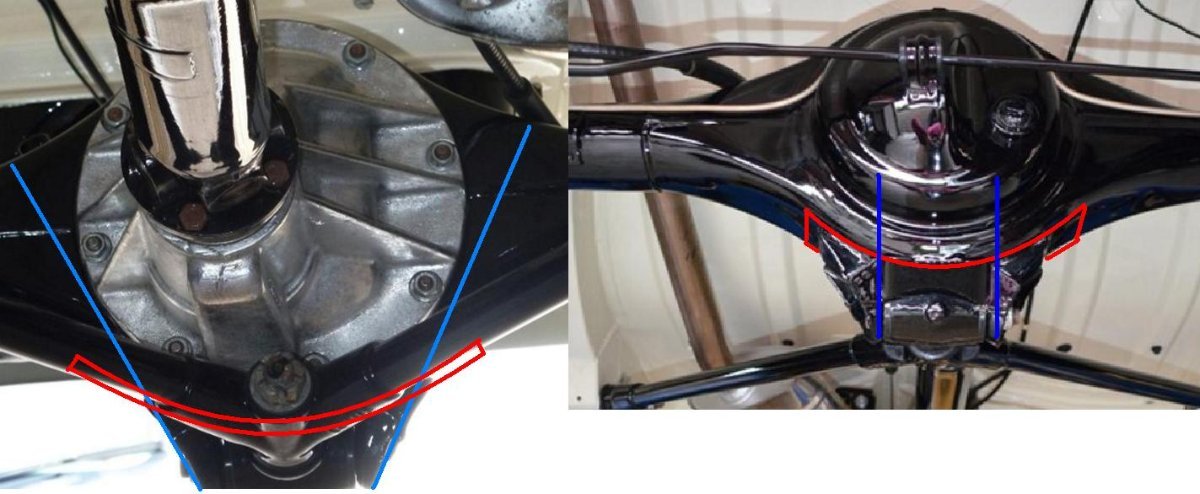
I think the original bush in new condition would actually be better for traction loads than a spherical since it would provide some compliance to absorb the peak load, but once it gets oily and/or deteriorates a bit, it could be worse as DSK indicated in the link you provided. A spherical would be unaffected less affected by a leak or the twisting of the original type rubber from roll or one wheel bump. Here is a cortina axle which could be further reinforced, but it already looks much better. I guess the cortina has a much longer arm with less angular change so the bush can be rotated 90 for no bind in roll, plus the flanges are further apart. The steg seems a bit extreme if you are not racing and just want better reliability.
-
Lotus 7 series 2 rear axle housing-free
MV8 replied to Christopher smith's topic in Parts For Sale / Wanted
Assume this is the bottom center mount on the diff, I think converting the lower arm trailing bush to a 1/2 inch spherical and spreading the diff mount over a larger area would prevent future cracking. Making a new arm and modding the diff, while keeping the originals sounds reasonable. -
If you have ports to connect to, a motorcycle carb sync gauge set is about the same price as a unisyn and will let you see them all at the same time for balancing.
-
Pinion seal source? 2016 CSR 260 with Ford Sierra differential
MV8 replied to mca's topic in General Tech
A sierra is a Merkur XR4Ti here and the diff is shared with the Merkur Scorpio which uses the same pinion seal but those numbers don't match it. It could be the only difference is the U.S. spec seal has an added dust lip that might interfere with the pinion flange and could be cut back with a razor blade. Take a look at SKF 15882 or Timken 2011s or you could just buy this one: https://shop.grahamgoode.com/grear-pinion-oil-seal--ford-sierra-sapphire-escort-rs-cosworth-4wd-ggr1118-79296-p.asp -
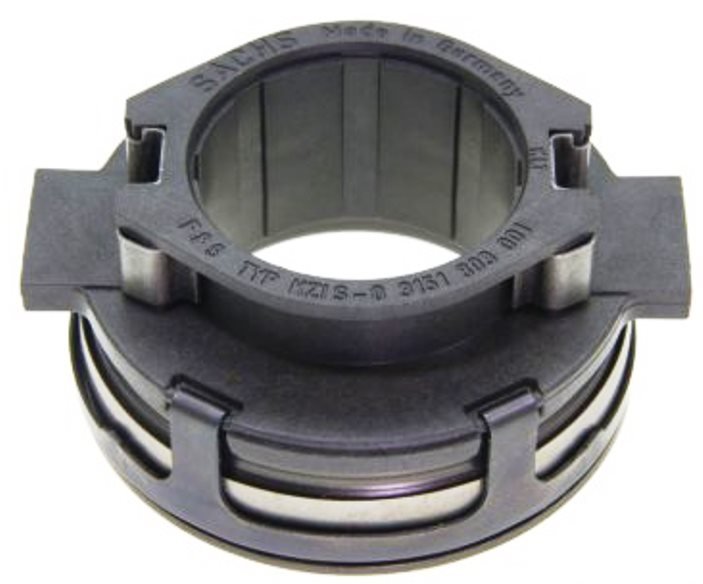
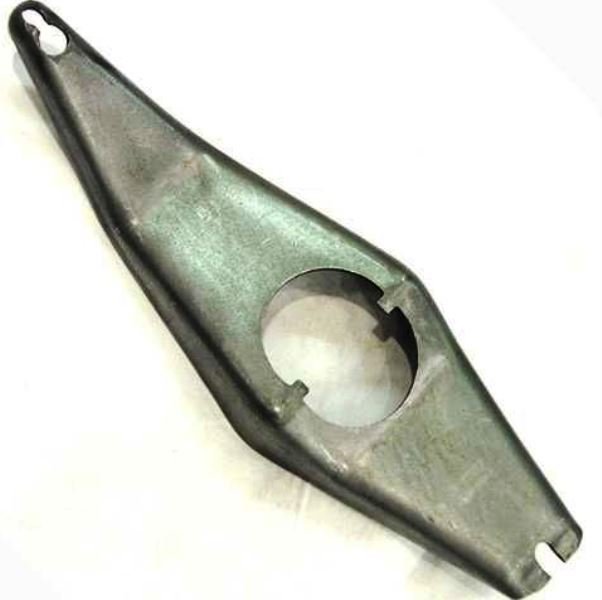
Looking at the trans side of the release bearing and engine side of the fork. It can't go far. Just snaps into the two slots.
-
Bell, washer, spacer, head.
-
How about a pic? I think you are referring to the ball stud for the release fork pivot. I've not seen any with spacers. Usually a ball stud is one piece that just screws into the bell and has a fixed location in the bell. Adjustable ball studs have a threaded washer and jamb nut with a way to rotate the stud.
-
Regarding the desk, I chuckled a bit myself but they exist! They have to. Still, it's tough to execute a position dispassionately. Perfect place right here for a joke that I am not going to make. Agreed Croc. Always follow the rules where they exist (check that State code) but don't give them any ideas for new ones. I'm fully satisfied when the actual rules are followed. No creative rule interpretation desired or required. Stepping away from this rabbit hole.
-
I'll add that while registration in a State should be fairly straight forward with intelligent, caring people across the desk, but emission checks are entirely separate issue narrowed to specific counties and not State wide.
-
Take a look at Vermont. RV folk often have mail forwarding addresses. The primary issue is the State where you operate over 50% of the time. Check your State code. Ownership by an LLC in another State with you as a member is another option. There is also the technical sale of the vehicle to someone in a State whereby it may not be registered as a new model, then resold back to the builder and transferred. It pays to fix up older models in heavy handed jurisdictions. A grey market import would actually be easier since it has to be at least 25 years old.
-
I doubt it. The purpose of the spin is to de-aerate as it collects and to prevent oil dropping from any height to minimize splashing that would aerate the oil further. Scavenge pumps pickup air and oil. A baffle near the pickup helps so the oil that just fell is not directly/immediately picked up. Chamfering any internal sharp edges/corners from fittings or the intersection of drilled passages helps too.
-
Dan, if you bend the last 2-3 inches of fuel pipe away from the panel about 15 degrees, it will be much easier to fit the hoses. A little lubrication on the bender "ORL" grooves and trying to slide/pulling the handle helps. A roller bender like a Wilmar W80674 is handy for close, smaller radius bends. Flaring steel line is difficult due to the clamping force required. Use a bench vice to clamp the flare tool off the car. Besure to deburr the edge of the flare with a fine flat file if it is for a slip-on hose. The edge can shave tiny slivers of rubber into the line that can cause problems later. Blow out the lines with compressed air before connecting the hoses to make sure nothing is inside. For brakes, I'd use common epoxy steel premade brake lines and couple or adapt as needed. You could use the same for fuel. Dorman has compression fittings for joining sections of steel fuel line and repair kits to replace quick connect fitting barbs. Straight 1/4 inch and tree shaped 3/8 inch bastard/double cut carbide rotary files with a 1/4 inch shank for use in a normal drill are handy for slotting and deburring.
-
I think Vovchandr is talking about a throttle cable. I've used bike brake (thicker) cable for throttle before and I agree that can work well for that.
-
Looking for Pre- S-Type Seat Headrests
MV8 replied to YVR-SuperSprint-1700's topic in Parts For Sale / Wanted
Mgb headrests may fit and are much easier to find new from moss, used or new on ebay, or local to rebuild or simply check the fit. -
Problem solved but thinking out loud, a mod to reduce eye friction and keep the cable from flexing at the base of the rigid fitting with something semi-rigid would greatly extend the life. Maybe a split piece of plastic then wrapped with the fitting shank in a good tensile strength tape would do it but not pretty. I wonder if the other design pedal with the hook and oval-squarish eye turned 90 deg works better. At least the design is more common. A 300 lb tensile is about all that is needed considering around 45 lbs of foot pressure with a 5:1 pedal.
-
+1. The caliper bracket as a bolt-on to the upright is the most obvious thing to me imho. I have spitfire and gt6 uprights in front of me (currently restoring a spitfire with modern bits) but you can compare the diagrams on the Moss Motors site under the "front suspension" section.