JohnCh
-
Posts
3,406 -
Joined
-
Last visited
Content Type
Profiles
Forums
Store
Articles
Gallery
Events
Library
Everything posted by JohnCh
-
Thanks @Rosteri , I'll keep that in mind and add it to the troubleshooting list. However, this pump is designed to work in tank and pulling from a filter, although much smaller and a different design than the Hydramat. Also, it happened a few times at idle, when demand on the pump was very, very low. A big concern is Deatschwerks giving the pump the all clear, then after reinstalling it, the issue goes away or is very, very sporadic making it even harder to troubleshoot.
-
The full plan if the pump checks out is to Get SBD to confirm the TPS spikes are not indicative of an issue. If they are not, then: Try getting it to repeat the issue while driving on my property with bonnet removed and action camera affixed to windscreen, pointing downward at the fuel pressure gauge and streaming live to my phone. Using extensions currently on order, place multimeter in front of me and attach the alligator clips to the fuel pump terminals. If still inconclusive: Plumb in a fuel pressure sensor to log everything and confirm that fuel pressure issues do not occur prior to Lambda going lean.
-
@sf4018 that's what I plan to try if Deatschwerks states the pump is ok. My initial assumption was that's the issue, but then testing with the multimeter showed 12v at the pump terminals (post relay) while the engine was dying, rather than immediately prior. If the pump checks out okay, then I'll assume user error with that reading (twice!) and bypass the relay to see what happens.
-
Thanks @Anaximander , those little things are always the hardest to track down. I'm using the Caterham ECU with a revised map from SBD who distribute that ECU. The installation is factory until the fuel pump, and the only electrical change in that ecosystem is swapping the PWM module with a relay still controlled by the ECU. The initial running issues feel like they are down to the map which will be sorted on the dyno. My objective was simply getting it running well enough that it can be safely driven there. The issue that has me on hold appears to be the fuel pump. If that's not it, I'll confirm with SBD if the odd TPS spikes when the engine is stalling are normal or indicate an issue elsewhere, including with the ECU. If that is also a "no", there are a few other things to test once the fuel pump is back provided the issue remains somewhat repeatable. Intermittent issues are always a challenge. -John
-
Curious to know how long it will take them to sort that "minor" mistake.
-
Inputs, but not that implementation. The MAP sensor used by Caterham is actually a combination sensor that is used for barometric and air temperature. Load Site is only controlled by TPS.
-
Thanks @MV8, a few additional details based on your advice. This is a TPS-only system using a Colvern unit which is the common TPS on Jenvey installations. That spiking is only occurring after the Lambda has started going lean. It's normal everywhere else, so at this stage I don't think it's a TPS issue, but I have spares in case that becomes a problem. Lambda is provided by a single WBO2 with an AEM X-Series EUGO controller feeding the MBE which SBD programmed to read based on AEM provided calibration data. At this point, things are run open loop -- i.e. it is purely in read mode so has no impact on running conditions. I also went through all the other logged data and everything appears normal. No unexplained corrections, temperature spikes or dips, no error codes, etc. Thanks, John
-
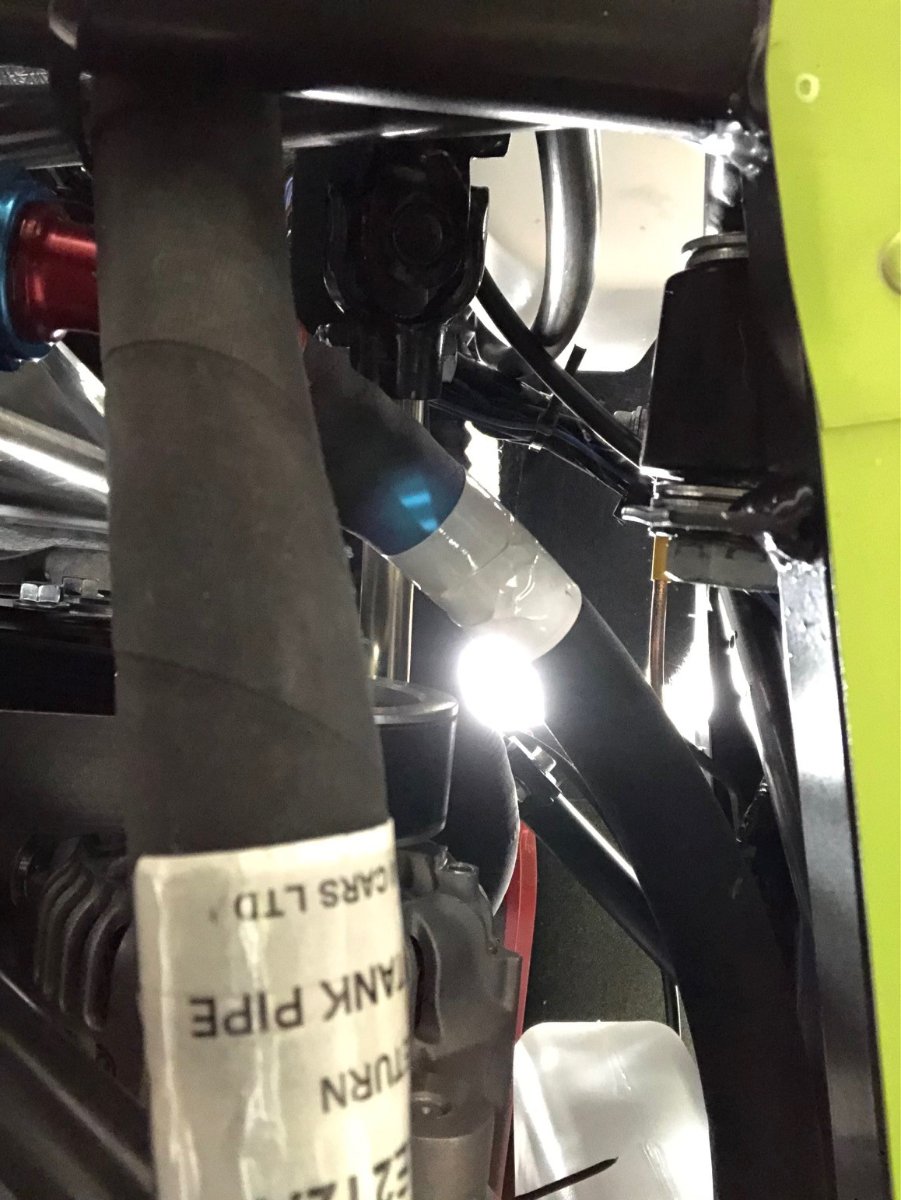
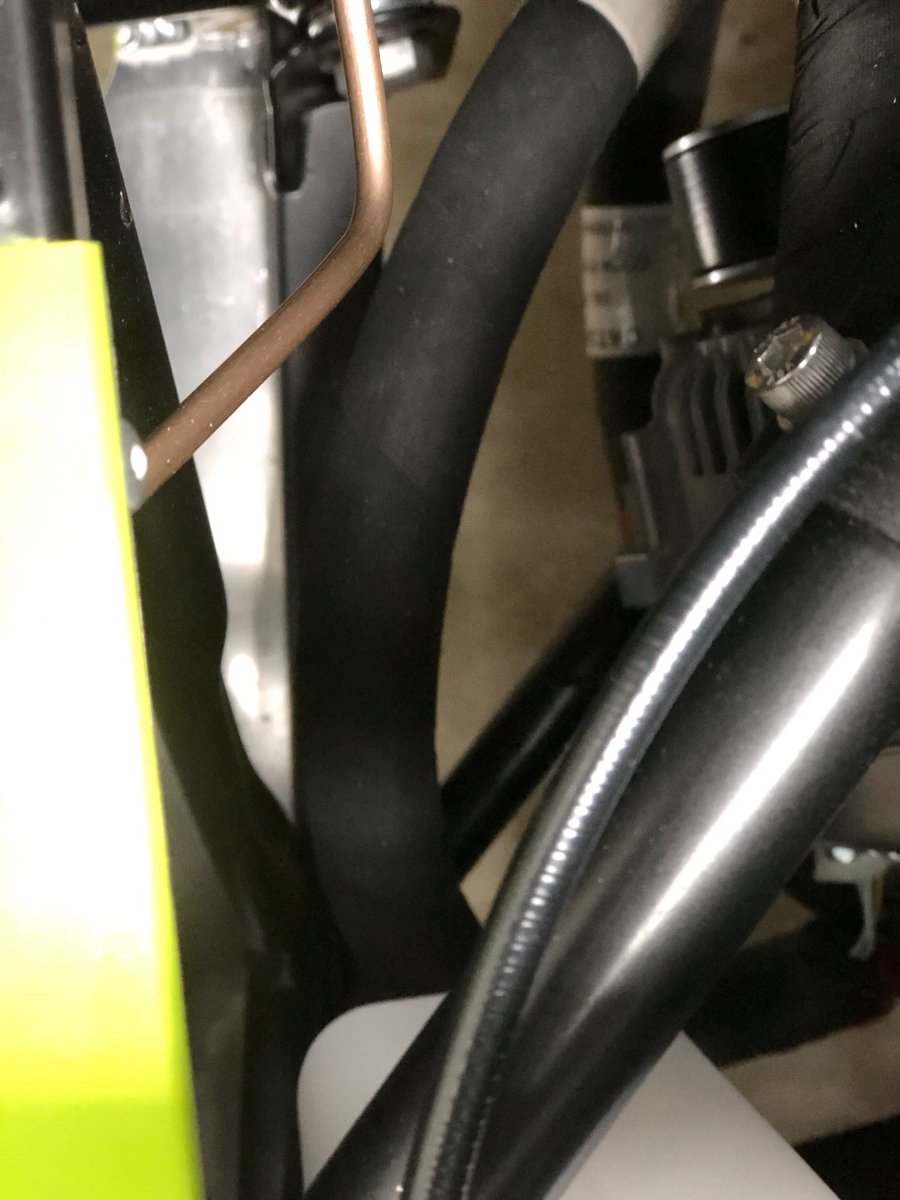
Here are two hastily taken photos to supplement those provided by Wallisek. For reference, the first photo was taken with the phone on the ground looking up at the bottom of the chassis. The top of the photo corresponds to the front of the car. The second photo shows that same hose from above. Although it doesn't look like it in the photos, there is clearance to the chassis tube. Don't let the white plastic bottle at the bottom of each photo confuse you. I mounted my windscreen washer bottle there to get it out of the way. -John

-
Just heard back from SBD regarding scheduling time to go over my questions. I was wrong about the hourly rate I mentioned earlier. It's 160 GBP for "up to an hour." That's over $200 at the current exchange rate. As @sf4018 wrote earlier, very expensive. -John
-
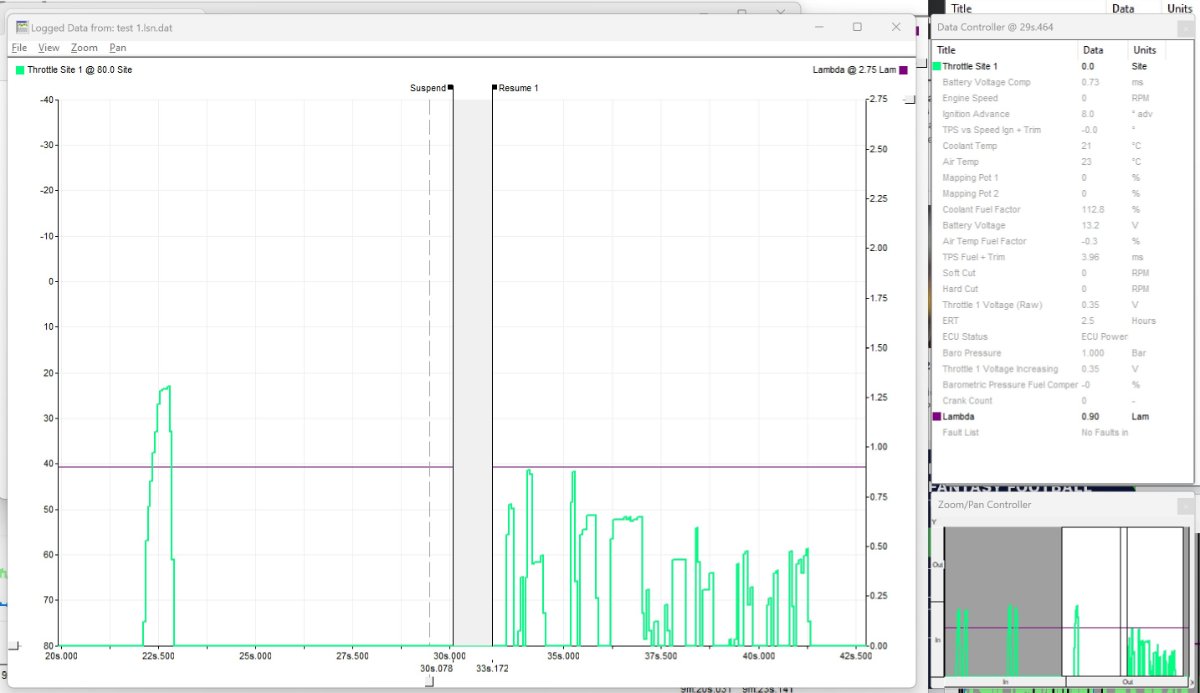
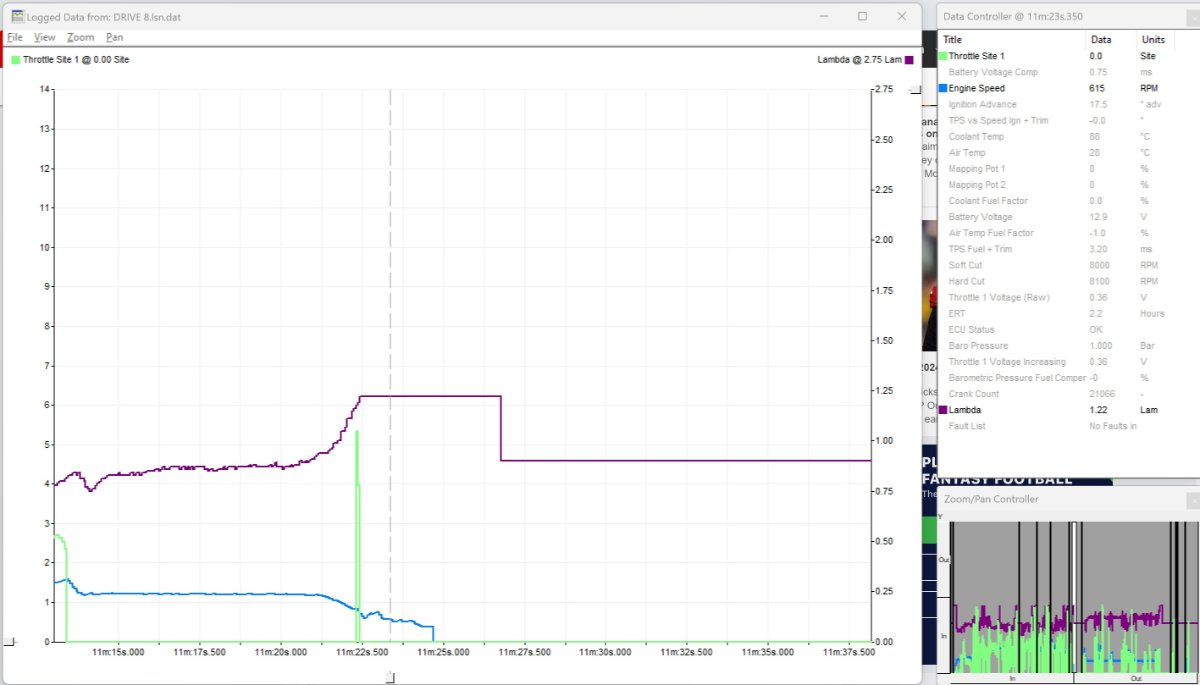
I looked at ore of the logs and that really rapid TPS spike frequently occurs after the engine has gone full lean and is stalling. An example is below. I then tried to rapidly blip the throttle to see if I could replicate that instant increase and decrease. As you can see, they are not that instantaneous. BTW the grid lines in both screenshots represent 1.25 second intervals, but I can't get the SBD graphing software to make the grid lines the same width. The scaling appears to be tied to the length of the logging session and this one is too short, slightly increasing grid line width compared to the previous screenshots. The nature of these spikes makes me wonder if it's an artifact from how the ECU reacts as it's shutting off from rapidly reduced crank speed. Any thoughts? The fuel pump went back to Deatschwerks yesterday. I hope to hear back from them in about a week. -John
-
Routing it between the chassis tube and side skin is specific to the S3. It is a fiddly fit on the SV - I remember a lot of swearing when I did mine -- but it will fit without rubbing. If no one has a picture, I'll see if I can take one later. -John
-
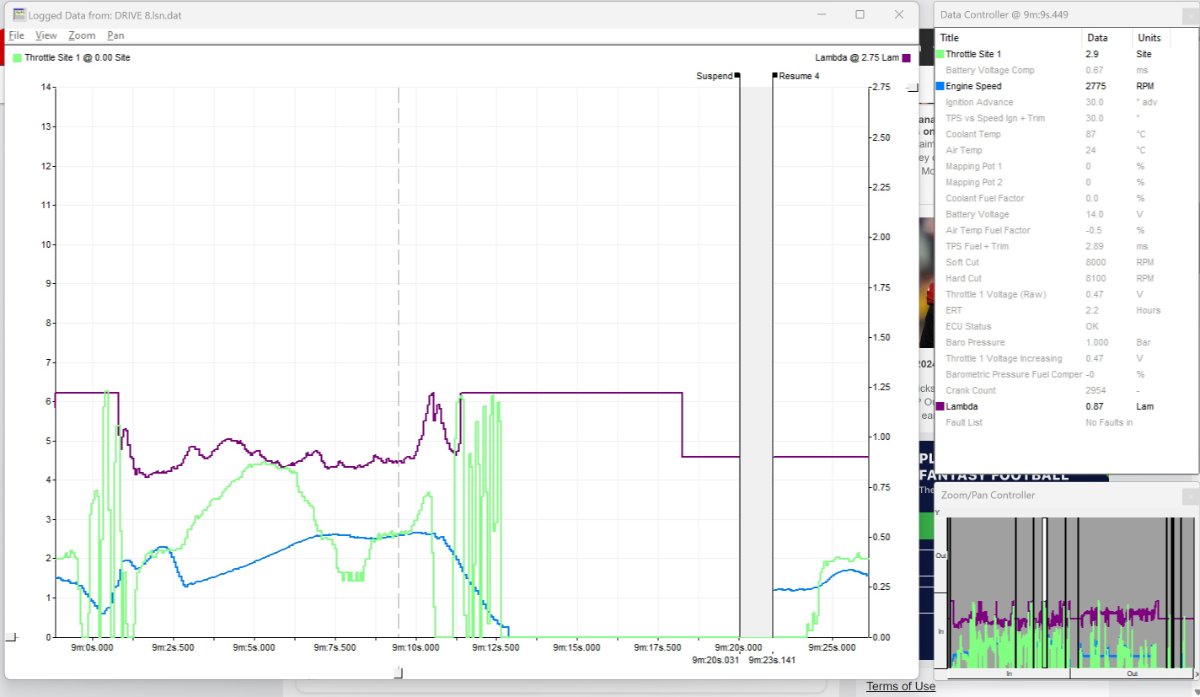
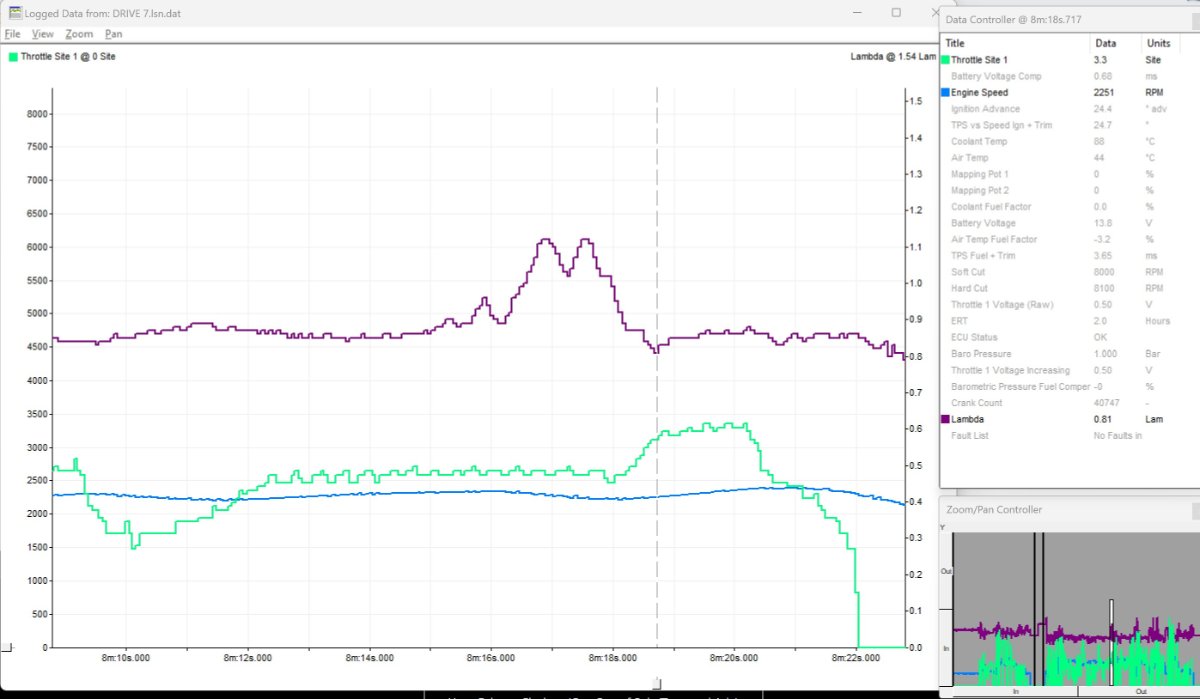
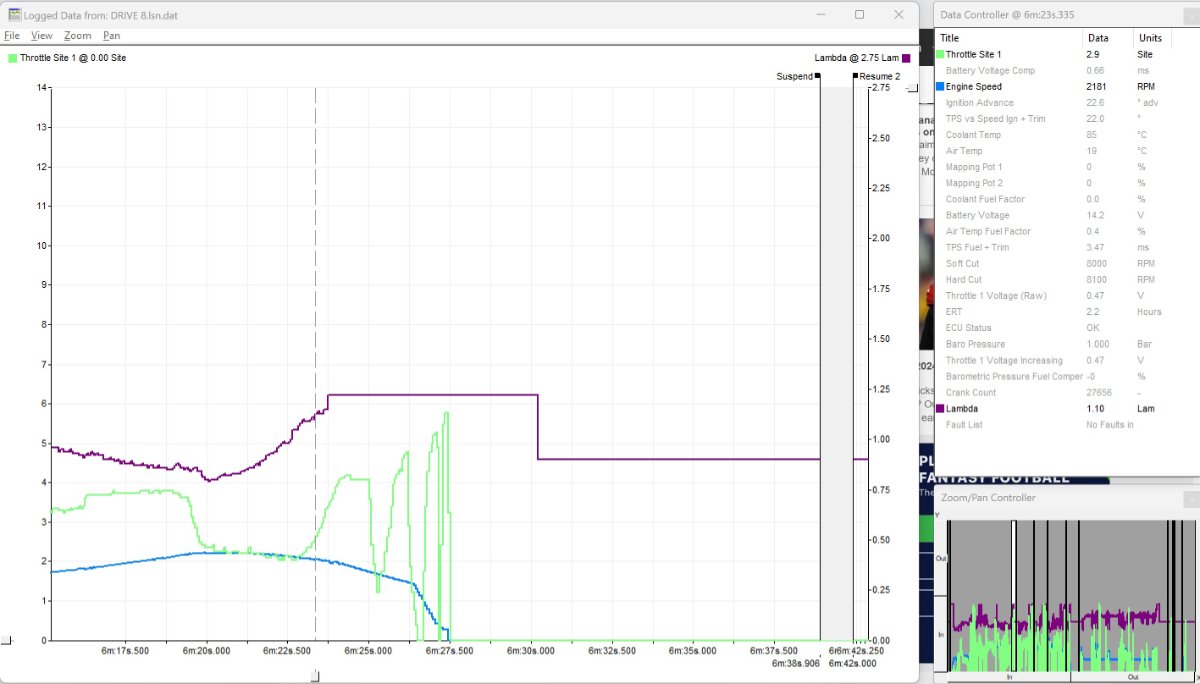
Thanks, @MV8, this is essentially what I did earlier. I didn't have jumper leads long enough to place the DVM in my lap, but it did reach the back of the tunnel. As the issue would start, I could swivel my head to see the reading. The initial diagnosis made while watching the fuel pressure gauge was what led me to do the DVM setup. The logs show a very minor rpm dip (100 rpm?) when the spikes were brief. Here is an example I screen captured when going over the logs from an early drive on Saturday while chasing the initial mixture issues. The spike doesn't go fully lean, reaching about 1.12 and lasted nearly a second. This next one shows when it led to a stall while driving. As you can see, it started to lean up which led me to add a small amount of throttle then some quick blips to see if anything would change as the revs went to zero. And lastly leading to a stall while idling. I'm not sure if I intentionally blipped the throttle, or that was a result of me moving in the seat to look at the DVM or the fuel pressure gauge. That said it is very brief - 1/10 of a second? -- and with no ramp or fall off. Can that happen with a mechanical throttle setup? I'll look for more examples like that when I have time later. -John
-
I didn't add a fuel pressure sensor (hindsight...). However, when testing in the driveway I pulled the bonnet and could see the fuel pressure regulator gauge from the driver's seat when leaning forward. It fell off a cliff when the lean spikes hit that led to a stall. To be fair, there was a slight lag as I looked to the gauge, so I won't claim 100% certainty, but it's close. The pump is out of the tank and the fuel is evaporating. I'll pack it up tomorrow and send it back for evaluation. -John
-
Here is what SBD told me: "Because you are going to be using a normal fuel pump and regulator, I have programmed the same pin to be simple on/off output to control a relay that you will have to fit which will replace the standard Ford electronic fuel pump control module. Please note that this will be a switched ground as all output are on the 9A4 ECU. " I used this waterproof relay and located it in the same location as the control module next to the tank. I have the wiring information with color codes in my notes. Happy to dig those out if you need them. As for SBD being pricey. Don't get me started. Unlocked ECU was 583 GBP, the special sauce cable to connect it to a laptop is 160 GBP, and the map was an additional 320 GBP. Any support is extra. I don't recall the exact price but it was in the 125 GBP per hour ball park. By comparison, the Emerald is 695 GBP for an ECU with a lot more features (4 wheel traction control, switchable maps on the fly, knock control, etc.), the laptop connection cable is 20GBP, and they give you starter maps gratis. They also don't charge for support and when I have offered in advance to pay for some extra help if needed, I was always told not to worry about it. Unfortunately, getting SBD to do a live session on roads is difficult for me. As @Croccan attest, cell service is really poor in my area. I may still use SBD to help with the dyno session. -John
-
Thanks, but I'm not using that controller. Since I have a return system controlled by a pressure regulator, SBD had me replace it with a normal relay that the MBE still controls for on/off only. The thinking is that if you are in a crash that kills the engine, the MBE will cut power to the pump and stop it from emptying the tank. The fact that the terminals on top of the tank, which feed the pump, were still showing 12v when the engine was going full lean and stalling, and not going to 0v until after the engine stops, makes me think it's the pump or an in-tank connection.
-
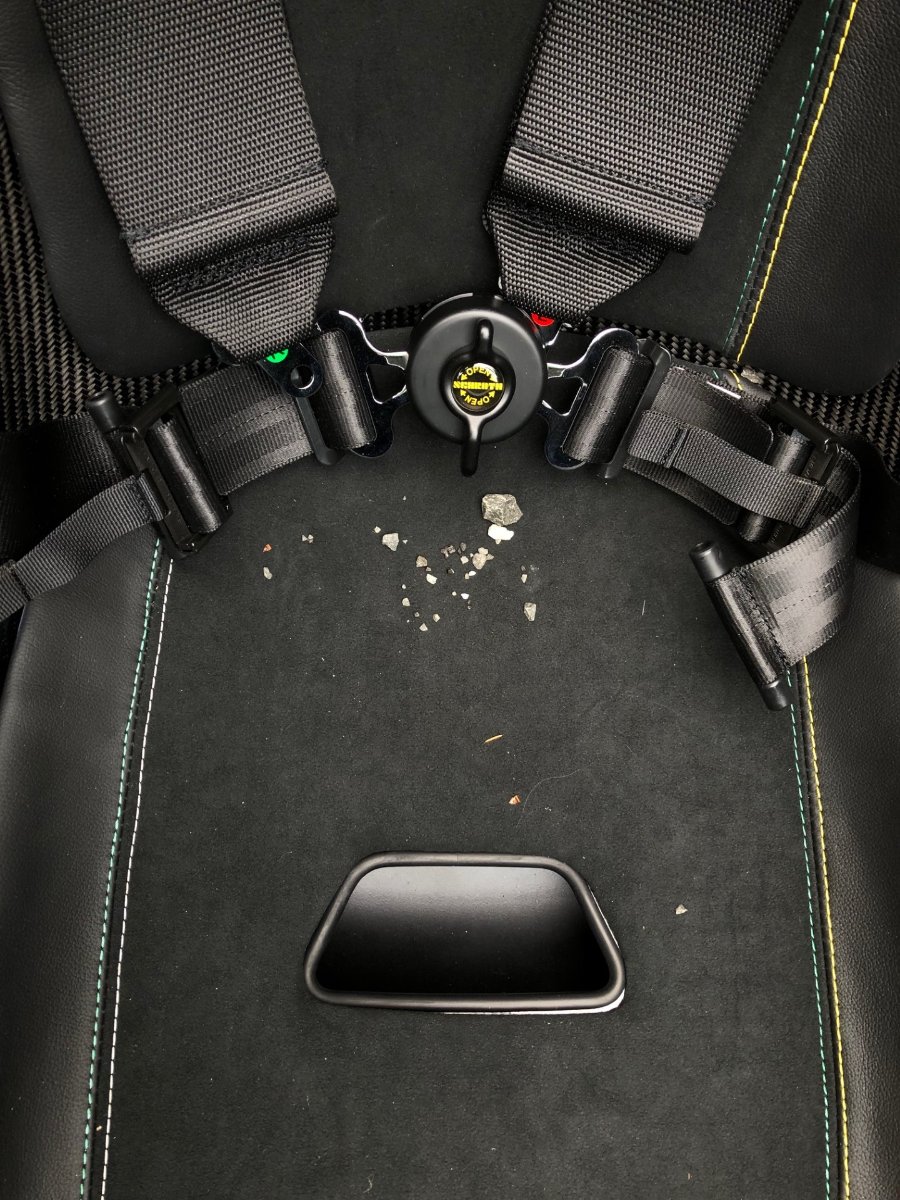
I was finally able to make time on Friday to pick up a 3-day trip permit. To make monitoring things easier while driving, the AiM display was reconfigured to show both Lambda and the TPS load site outputted from the MBE. Budget PPF was then temporarily applied to the rear wings to prevent my long gravel driveway from chewing them up, and as indicated by the second photo of the passenger seat, that was a good idea. The Avons like to throw up gravel. The first proper drive of about 2 miles revealed the map is much farther out than the 3 starter maps I've received over the years from Emerald. With light throttle, shift points around 3000 rpm, and speeds limited to 25-30 mph, the mixture was swinging between too rich and too lean. Digging into the logs and more drives totaling another 10 miles revealed both a map issue and a hardware problem. Whenever the accelerator was depressed even a very small amount, the mixture suddenly went lean, then quickly recovered. I'm assuming this is an acceleration enrichment setting that requires tweaking. One for SBD. The other issue took some troubleshooting. Initially there were very random and unexplained full lean spikes (1.22 lambda) lasting a fraction of a second and visible in the logs. On Sunday morning, after covering just 2 miles in cool temperatures, a spike was long enough that the engine stalled. Fortunately, it easily restarted. This stall-then-restart procedure happened about 7 or 8 more times on the 2 mile trip home, then several more times during subsequent driveway testing, including when the car was stationary. The cause? The fuel pump was cutting out. As a safety measure, the MBE cuts power to the pump when the engine stops. That was my initial guess as to the problem. However, multi meter testing showed 12v to the pump with the engine running, then remaining at 12v when the engine would go full lean and start to die, then 0v after it stalled and the MBE cut power. I hope to pull the pump tonight then return it to Deatschwerks tomorrow for further testing. Other weirdness, albeit minor, concerns the CAN output from the MBE to AiM. Although all the readings in AiM have faithfully followed what was showing in Easimap, load site was different. The extremes weren't too far out, with the readings in Easimap ranging from 0-14.8 vs. 1.1-14.3 on the AiM. But in the middle, things were way off. A reading of 5 in Easimap was just 2 on the AiM and a reading of 10 was just 5. As a test, TPS voltage was swapped for load site, and to my surprise the readings were once again perfectly in sync. Given the load site is a calculation based on the TPS voltage this is a little odd. Hopefully it's an easy fix with a setting. -John
-
Looks like the Admin dropped the ball here. @panamericano was trying to quote @Vovchandr who had quoted you in his response, then Panamericano accidently inserted his own text within that quote box. I try to catch these when they occur and edit them, but I missed this one. As a reminder to everyone, this User Guide addresses how to perform single and multiple quotes in a post and includes this specific scenario. There will be a test later -John
-
Good Road & Track article from last year on this subject: https://www.roadandtrack.com/car-culture/a40849184/inside-a-tuning-shop-when-the-epa-comes-knocking/ -John
-
Sadly, that list appears to include the people in the factory who assemble the cars
-
One thing to consider is the visibility/effectiveness of the indicator at night when the headlights are on. I know modern cars with DRLs doing double duty as indicators dim the output of the DRL on that side, but not sure how that would work when the indicator is in the headlight. Dimming the headlight seems like a bad idea, but not sure you could actually see the indicator flashing when the headlight is at full power. Has anyone been there/done that who can comment? Thanks, John
-
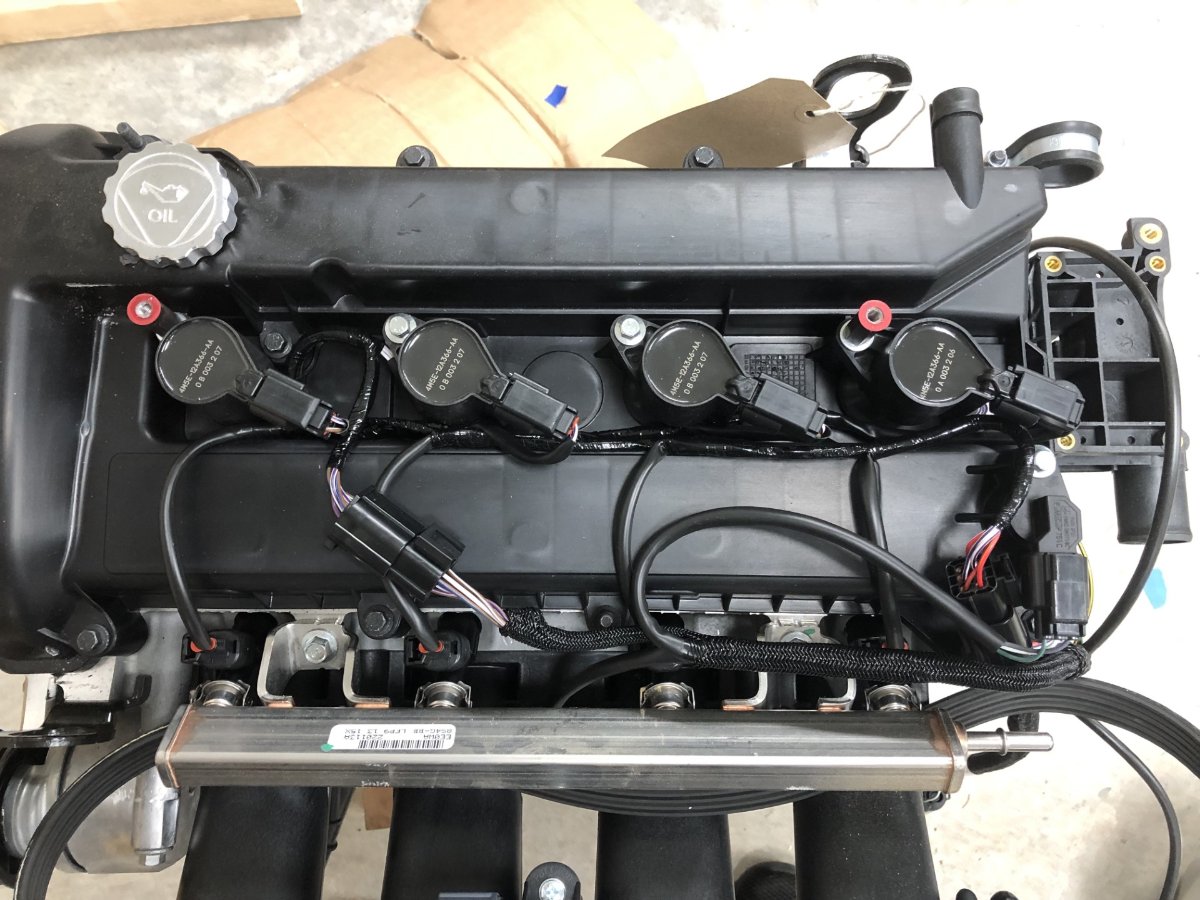
I was wrong about the location. I was going from memory and confused that connector location with the one used for the injectors. The CoP connector is shown below between the front two cylinders. -John
-
The factory immobilizer disables two functions: cranking and either fuel or spark -- I seem to recall it's the latter -- but not all three. The 420 uses a 36 pin harness for the MBE that attaches to the chassis loom, then a separate connector with a lot of pins that mates the engine loom to the chassis loom. Connections between the engine loom and MBE are hidden within the bowels of the chassis. Also, to avoid confusion, the 420 uses coil on plug not a coil pack, however, the engine loom does put all 4 CoP connections through a single connector located towards the back of the head.
-
The ECU is an MBE 9A4. 36 pins. Pinout information is here: https://sbdmotorsport.co.uk/wp-content/uploads/pdf/MBE9A4-PinoutIssue_F.pdf -John
-

Greetings and a Few Questions From a Wannabe Seven Driver
JohnCh replied to rider's topic in General Sevens Discussion
You deserve an award for your perseverance. -
Greetings and a Few Questions From a Wannabe Seven Driver
JohnCh replied to rider's topic in General Sevens Discussion
I think the key question is are you interested in learning? These cars are pretty simple to work on. Yes, some aspects are challenging, but as long as you have space, are willing to invest in tools, ask questions, and when necessary are comfortable swearing up a storm to coerce the car into compliance, you'll find most things are doable. And ignore Vlad's car. Some believe it's cursed (hmm... CURSED7 fits on a license plate, but that's a different thread.) Rumor has it a klutzy software guy was the previous owner If you are building from new, you will miss out on the joys of correcting a previous owner's mistakes and shortcuts. -John